
Yuantai Crane for Better Solutions:
Energy-Saving | Space-Saving | Cost-Efficient | CE/ISO/EX
Monorail cranes & monorail systems for sale. Straight & curved monorails, ceiling mounted & free standing monorails for your application & uses.
Monorail Cranes
| Product Type: | Monorail Crane |
|---|---|
| Lifting Capacity: | 1-20 ton |
| Span: | As request |
| Lifting Height: | As your requirement |
| Working Class: | A3,A4 |
| Ambient Temperature: | -20-+40 ℃ |
| Crane Price Rangs | More Inquiry Form |
| $500-$9700 | |
| [email protected] 008615038346929 | |
Overview
Monorail Crane for Linear Material Handling – Selection, Cost & Custom Solutions
Monorail cranes are most useful in manufacturing applications where materials must be moved repeatedly from one location to another. The monorail hoist and trolley are powered by a single stationary beam, which is typically an H-beam or an I-beam.
A monorail crane is a type of crane that can be used in place of traditional overhead cranes and conveyor belts. The monorails are typically used to relocate materials or products within a constrained space. The design of a monorail crane is simple and can be compatible with the structure of a building without major changes.
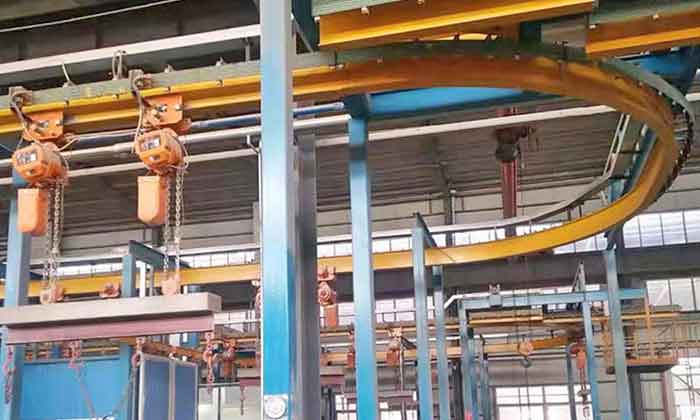
Assembly operations, material transport to workstations, and lines where parts are blasted, painted, or coated are some examples. Monorails can also be used for material handling in places where a bridge crane cannot be used.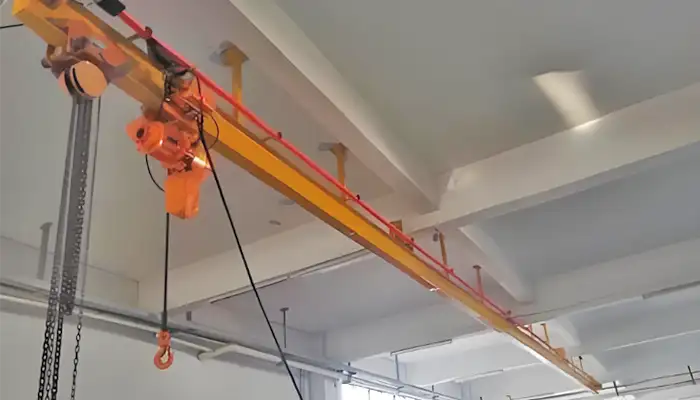
Is a Monorail Crane the Right Choice for Your Workshop?
A monorail crane is designed to move materials along a fixed, linear path, making repetitive lifting safer and more efficient. If your workflow mostly follows a straight or slightly curved line, this system can streamline operations, but it's not suitable for full workshop flexibility.
The main benefit of a monorail crane is its simplicity. It runs overhead on a single rail and moves materials point-to-point without complicated setup or maintenance.
- Production lines needing consistent material transfer
- Assembly stations where parts move from one point to another
- Facilities replacing manual transport or conveyor systems
Monorail cranes are most effective where materials follow a predictable, repeated route. They save time, reduce accidents, and improve workflow efficiency.
- Assembly lines: transferring parts smoothly between workstations
- Painting or coating lines: moving items without manual handling or interruptions
- Warehouses: transporting goods between storage and loading/unloading zones
- Processing lines: moving semi-finished products efficiently and consistently
Not every workshop benefits from a monorail crane. Consider your workflow before investing.
Ideal applicaitons:
- Production lines with fixed stations and predictable paths
- Workshops with long, narrow layouts maximizing overhead space
- Tasks involving repetitive, consistent lifts
- Cost-effective alternative to conveyors or forklifts
Not ideal applications:
- Workspaces requiring full coverage of multiple areas
- Lifting tasks needing free movement to different points
- Operations with frequent side-to-side or cross-travel requirements
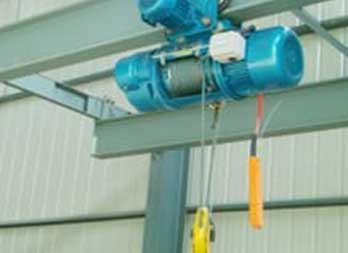 Fixed Monorail Hoist
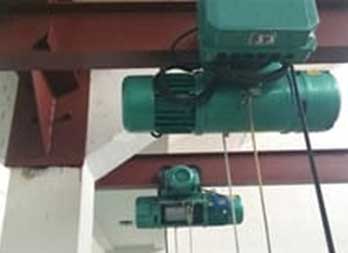 Straight Monoral Crane
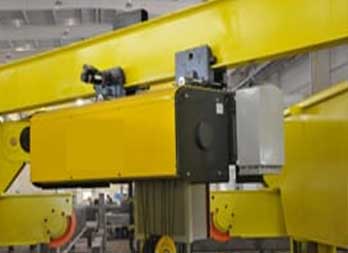 European Type Hoist
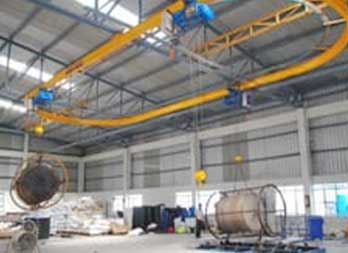 Annular Monorail Crane
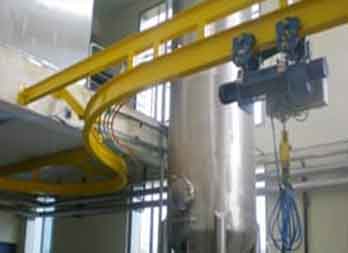 S Type Monorail Crane
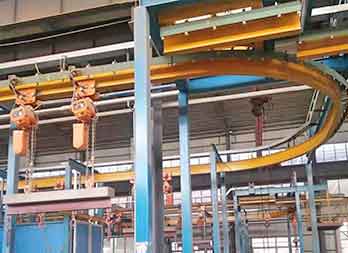 Freestanding monorails
Types of monorail cranes
Monorail systems can be designed to accommodate for many material handling situations and challenges, though configurations typically fall into one of two categories:
- Straight monorail crane - A basic monorail crane setup that allows the trolley hoist to move from one point to another along a straight steel beam. (A-B point travel path).
- Curved monrail crane -An advanced system that allows the trolley hoist to move along a curved or bending beam. (Can be configured with multiple transfer switches in some cases).
- Ceiling mounted monorail crane -Monorails mounted on the ceiling require no floor space for support columns. The monorail tracks are flush-mounted parallel to the ceiling beams, as well as cross-mounted to the ceiling beams. Mounted with any length drop-rods (sway bracing required), including slope hangers.
- Free Standing Monorails - Provide permanently installed monorail systems over long spans where no existing structures are available for mounting. Cantilevered systems, H-frame systems, and T-frame systems are examples of freestanding monorail configurations that are ideal for parallel monorail lines.
A monorail hoist system is ideal for applications where the load handling must follow a precise and pre-established route, thus tracking the path of the installed monorail beam.
Typical Monorail Crane System Configuration
The basic layout of a monorail cranes are relatively simple, but every component plays a role in safety, efficiency, and smooth operation. Below is a breakdown of the main components and optional features you might consider when planning your setup.
Main Components of a Monorail Crane
The core components of a monorail cranepart plays a critical role in load handling, safety, and efficiency.
The monorail beam is the track that supports and guides the crane. Selecting the right beam ensures smooth movement and load safety.
- I-beams: common for light to medium loads; ideal for small production lines or component transfer.
- H-beams: stronger and suitable for heavy-duty lifting tasks in steel mills, warehouses, or machining workshops.
- Beam choice affects span, stability, and hoist compatibility.
The hoist lifts and lowers loads, making it the core of your material handling system.
- Wire rope hoists: ideal for heavy loads and long lifting heights, such as moving steel coils or machinery parts.
- Chain hoists: compact and cost-effective for lighter items, small assembly lines, or short lift distances.
- Choosing the right hoist type impacts durability, efficiency, and maintenance needs.
The trolley moves the hoist along the beam, enabling precise material positioning.
- Manual trolleys are suitable for smaller loads or occasional use.
- Motorized trolleys ensure smooth travel over long spans or frequent operations.
- Stable trolley movement is essential for safety in workshops, painting lines, and assembly operations.
Reliable power ensures consistent crane operation and minimal downtime.
- Festoon cables: flexible and cost-effective for short to medium spans.
- Conductor bars / busbars: suitable for long travel distances and high-frequency lifting tasks.
- Selecting the right power supply reduces operational interruptions in production or warehouse environments.
The support structure carries the crane and its loads, ensuring safety and stability.
- Ceiling-mounted supports save floor space, ideal for narrow workshops or high-traffic areas.
- Freestanding frames are needed when overhead structures are unavailable, common in retrofit workshops or outdoor yards.
- Properly designed support ensures longevity, safe lifting, and minimal vibration during operation.
Optional Features for Monorail Cranes
Depending on your workflow and production requirements, optional features can increase flexibility, efficiency, and automation in your monorail crane system. These additions are tailored to specific industrial needs rather than being standard for every installation.
Curved tracks allow the crane to follow bends in your workshop, providing seamless material flow across multiple stations.
- Ideal for assembly lines with non-linear layouts.
- Reduces the need for manual handling or additional transfers between workstations.
- Common in paint shops, component transfer lines, or multi-machine processing areas.
Adding multiple hoists allows simultaneous lifting of several loads along the same rail.
- Useful in workshops handling multiple parts at the same time, such as automotive or machinery assembly lines.
- Reduces downtime by allowing parallel operations on different stations.
- Supports higher productivity in warehouses or processing facilities with frequent lifting requirements.
Switch points enable the trolley and hoist to transfer between different tracks, supporting multi-station operations.
- Ideal for production lines with multiple processing areas connected to one main rail.
- Eliminates the need for manual relocation of hoists between tracks.
- Common in steel component workshops, packaging lines, or material sorting areas.
Some monorail cranes can connect to automated control systems for precise and repeatable lifting operations.
- Integration with PLCs or remote control allows programming of lift sequences for consistent workflow.
- Reduces human error in high-frequency or high-precision operations, such as electronics assembly or metal processing.
- Supports future expansion for smart factory environments or automated warehouses.
Monorail Crane vs Overhead Crane – Which One Do You Need?
Choosing between a monorail crane and a traditional overhead crane can be tricky if you don’t clearly understand how each system fits your workflow. Both have their place, but they serve very different purposes. Picking the wrong type can lead to higher costs, inefficient lifting, and even safety issues.
A monorail crane is designed for straight, point-to-point material movement. It’s simple, cost-effective, and works best when your loads travel along a predictable path. An overhead crane, on the other hand, can cover an entire workshop with full X-Y-Z movement, making it ideal for general lifting tasks that are less repetitive or more spread out.
Here’s a practical comparison to help you decide:
| Feature | Monorail Crane | Overhead Crane |
|---|---|---|
| Movement | Linear | 3D (X-Y-Z) |
| Coverage | Limited | Full workshop |
| Cost | Lower | Higher |
| Flexibility | Low | High |
| Best for | Production line | General lifting |
Key Takeaways:
- Monorail cranes are perfect if your workflow is fixed, repetitive, and linear. They save floor space and are generally less expensive to install.
- Overhead cranes are better when you need freedom to lift anywhere in the workshop, handle variable loads, or serve multiple stations.
If your operation sometimes falls in between these two extremes, you can also consider hybrid solutions, such as monorail cranes with switch points or multiple tracks to add flexibility without the full cost of an overhead crane.
Choosing the right system upfront not only saves money but also reduces downtime and maintenance headaches later. Knowing the strengths and limits of each type makes it easier to select a solution that fits your workflow, space, and budget.
Benefits of A Monorail Crane System
Monorail systems are flexible and can be used in almost any setting. They also facilitate modification and expansion. Whether you need to build a larger overhead crane system or expand your production floor, a monorail crane system can be quickly adapted to your company's changing needs and available space. Our tracks can be integrated into a complete system with varying track sizes, customized curves, and switches.
- Fast - By design, a monorail transports loads "up and over" the rest of your production floor, providing a more direct path from point A to point B and increasing facility efficiency.
- Controlled - Your monorail crane ensures that any operator can maintain constant visibility and fine-control while remaining safely out of harm's way through a combination of automated systems and push button pendants.
- Customizable - Do you need to move product from one area of your plant to another (or even to another building)? The many customization options available, from curves and slopes to integration with existing systems and application specific features, can make a monorail system a boon for any production line.
H Beam & I Beam for Monorail Hoist
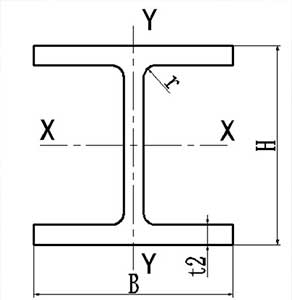 H beam
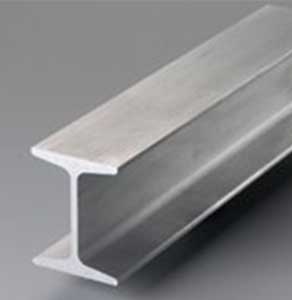
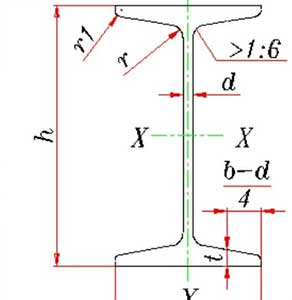 I beam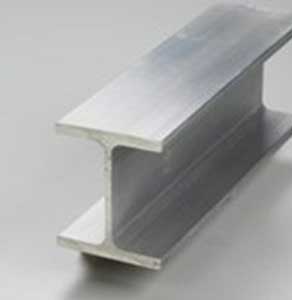
Some Specification of H Beam(According to practical choose different model)
|
Type |
ModelHeight*Width |
Section Size mm |
Section Areacm2 |
Weightkg/m |
|||
|
H*B |
t1 |
t2 |
r |
||||
|
HW |
100*100 |
100*100 |
6 |
8 |
10 |
21.9 |
17.2 |
|
125*125 |
125*125 |
6.5 |
9 |
10 |
30.31 |
23.8 |
|
|
150*150 |
150*150 |
7 |
10 |
13 |
40.55 |
31.9 |
|
|
HM |
150*100 |
148*100 |
6 |
9 |
13 |
27.25 |
21.4 |
|
200*150 |
194*150 |
6 |
9 |
16 |
39.76 |
31.2 |
|
|
250*175 |
244*175 |
7 |
11 |
16 |
56.24 |
44.1 |
|
|
HP |
200*200 |
200*204 |
12 |
12 |
16 |
72.28 |
56.7 |
|
250*250 |
250*252 |
14 |
14 |
16 |
82.05 |
64.4 |
|
|
300*300 |
300*305 |
15 |
15 |
20 |
135.4 |
106 |
|
Some Specification of I Beam(According to practical choose different model)
|
Type |
Size mm |
Section Areacm2 |
Weight kg/m |
|||||
|
h |
b |
d |
t |
r |
rl |
|||
|
12.6 |
126 |
74 |
5 |
8.4 |
7.0 |
3.5 |
18.118 |
14.223 |
|
14 |
140 |
80 |
5.5 |
9.1 |
7.5 |
3.8 |
21.516 |
16.890 |
|
16 |
160 |
88 |
6.0 |
9.9 |
8.0 |
4.0 |
26.131 |
20.513 |
|
18 |
180 |
94 |
6.5 |
10.7 |
8.5 |
4.3 |
30.756 |
24.143 |
|
20a |
200 |
100 |
7.0 |
11.4 |
9.0 |
4.5 |
35.578 |
27.929 |
|
20b |
200 |
102 |
9.0 |
11.4 |
9.0 |
4.5 |
39.578 |
31.069 |
|
22a |
220 |
110 |
7.5 |
12.3 |
9.5 |
4.8 |
42.128 |
33.070 |
|
22b |
220 |
112 |
9.5 |
12.3 |
9.5 |
4.8 |
46.528 |
36.524 |
|
25a |
250 |
116 |
8 |
13 |
10.0 |
5.0 |
48.541 |
38.105 |
|
25b |
250 |
118 |
10 |
13 |
10.0 |
5.0 |
53.541 |
42.030 |
Application: When to Choose & When Not to Choose a Monorail Crane
Practical Applications of Monorail Cranes
Monorail cranes are most valuable when your workflow has predictable, repeated material movement. Buyers care about whether the crane fits their actual operations rather than just industry labels.
Move parts or subassemblies from one workstation to the next smoothly, keeping production flowing with minimal manual handling.
- Transfers components without stopping the line, improving throughput.
- Reduces the risk of worker injuries and repetitive strain.
- Ideal for automotive, electronics, and light machinery assembly lines.
Safely lift and transport heavy coils, sheets, or machinery components along a fixed path, reducing the risk of accidents.
- Supports predictable, linear transport between machines or workstations.
- Reduces manual handling for heavy or awkward loads.
- Applicable for steel processing plants, fabrication workshops, and machinery assembly.
Automate movement of items through spray or coating booths for consistent coverage and minimal handling damage.
- Maintains a controlled, repeatable path through finishing areas.
- Reduces surface defects caused by manual transport.
- Works well for automotive, metal fabrication, and appliance finishing lines.
Move goods directly between loading docks and fixed storage areas efficiently, saving time and labor.
- Optimizes warehouse material flow with minimal floor congestion.
- Reduces reliance on forklifts for repetitive movements.
- Ideal for factories, distribution centers, and storage facilities.
Lift items from conveyors to packing stations or between processing areas efficiently to keep operations flowing without bottlenecks.
- Ensures smooth transfer of goods along predictable paths.
- Reduces handling errors and product damage.
- Suitable for food processing, pharmaceuticals, electronics, and consumer goods packaging.
When Should You Choose a Monorail Crane?
Monorail cranes are best for workshops or production lines where loads follow a predictable path. They provide efficient, safe, and cost-effective lifting without taking up valuable floor space.
Monorail cranes are ideal when materials move along a single, defined route. They ensure predictable, linear handling, keeping your workflow smooth and organized.
- Automotive assembly lines transporting car bodies or components
- Paint or coating lines where items move through sequential stations
- Machining or stamping stations handling steel sheets or aluminum coils
- Parts or component transfers in packaging lines that follow a consistent route
When the same load is moved multiple times per day, monorail cranes keep lifting cycles consistent and safe. They reduce operator fatigue and minimize the chance of errors.
- Moving molds, die sets, or machine components in metalworking shops
- Handling steel coils or sheet metal in fabrication facilities
- Transporting finished goods or pallets in warehouse assembly lines
- Lifting components repeatedly along a conveyor or production path
Monorail cranes work overhead, freeing up floor space for forklifts, carts, or other equipment. They are ideal for elongated facilities where a full bridge crane would be too large or costly.
- Warehouses or storage halls stretched 20–50 meters in length
- Production halls with narrow aisles in automotive, electronics, or metal fabrication
- Small-scale workshops needing efficient overhead material transfer
- Facilities requiring minimal floor obstruction for multi-station operations
A monorail crane can replace existing material handling methods like conveyors or forklifts, improving efficiency and reducing long-term labor costs.
- Aluminum extrusion lines or steel coil handling in metal processing plants
- Part transfer between machines in machining or packaging operations
- Warehouse operations moving bulk goods from loading to storage areas
- Production lines seeking safer and faster alternatives to forklifts
Monorail cranes are easy to install, operate, and maintain. They provide just the right lifting capacity without the complexity or expense of full bridge cranes.
- Facilities handling loads from 1 ton to 10 tons, such as steel coils or heavy components
- Mid-sized workshops needing reliable lifting without large capital investment
- Plants where quick installation and minimal maintenance are priorities
- Operations requiring straightforward operation for multiple shifts
When a Monorail Crane Is NOT the Right Choice
A monorail crane is excellent for straight, predictable material flow, but it's not suitable for every lifting situation. Understanding its limitations helps buyers avoid costly mistakes and select the right system for their facility.
Monorail cranes follow a fixed path, so they can't cover multiple zones or corners of a workshop efficiently. If you need wide-reaching material movement, consider overhead or gantry crane systems.
- Warehouses with multiple storage aisles and docking areas
- Production halls where materials must travel between separate machining centers
- Facilities requiring movement across long spans in more than one direction
Monorail systems perform best when the workflow is consistent. If your loads frequently change position or the lifting points vary, a linear rail won't keep pace.
- Workshops handling irregular or bulk materials like scrap metal or steel billets
- Facilities with dynamic assembly lines or shifting production layouts
- Operations where manual or automated trolleys need to access multiple random points
Tasks needing side-to-side travel in addition to forward motion can't be handled efficiently by a monorail. Systems with X-Y-Z movement or multiple crane axes are necessary for flexible operations.
- Steel fabrication shops moving large plates between multiple cutting and rolling stations
- Warehouses requiring pick-and-place across aisles and bays
- Automotive or electronics lines where parts must move between multiple parallel conveyors or stations
Monorail cranes are limited to a single path, so if multiple stations require lifting access in different directions, the system won't suffice. You may need multiple cranes or trolleys to achieve coverage.
- Production lines with several workstations needing independent lifting at the same time
- Assembly halls where components move to multiple stations in parallel
- Facilities needing simultaneous lifting at different points for packaging or processing
Key Design Considerations Buyers Often Overlook
Even experienced buyers can miss small but critical details that affect safety, long-term performance, and future upgrades. Paying attention to these now ensures your monorail crane performs reliably for years.
Ensure your ceiling or roof can safely support the combined weight of the monorail crane, hoist, and maximum load.
- Check structural beams or roof supports before installation.
- Under-rated structures may require reinforcement or redesign.
- Critical for heavy-duty applications in steel mills, workshops, or warehouses.
Monorail beams must be straight and level within tight tolerances to ensure safe operation.
- Even minor misalignment can cause uneven wear and reduce hoist lifespan.
- Careful measurement and adjustment by the installation team is essential.
- Important for high-speed production lines and precision handling tasks.
Plan ahead: can you extend the track or add extra hoists as your workflow grows?
- Design for expansion to avoid costly retrofits later.
- Supports scalability in evolving production or warehouse layouts.
- Useful for facilities expecting higher production volume in the future.
Leave enough room around the crane for inspection, lubrication, and repairs.
- Crowded installations increase downtime and complicate servicing.
- Ensure safe access to hoists, trolleys, and power systems.
- Key for workshops with frequent load handling or high safety standards.
Confirm the crane's electrical system matches your workshop's voltage and frequency.
- Mismatched power can cause inefficiency or damage hoist and controls.
- Consider options like festoon cables, busbars, or conductor rails.
- Essential for facilities with mixed equipment voltages or international sourcing.
Consider weatherproofing, corrosion protection, and hoist enclosures based on the environment.
- Outdoor cranes need coatings, waterproof hoists, and control protection.
- Indoor cranes may require dust, humidity, or temperature resistance.
- Ensures reliability for harsh industrial environments, chemical plants, or outdoor storage areas.
Monorail Crane Technical Selection Checklist
Gathering clear specifications before requesting a quote ensures your monorail crane fits your workflow perfectly and avoids unnecessary delays or miscommunication with suppliers.
Determine the maximum load your crane will lift, plus a safety margin.
- Consider the heaviest items, including pallets, coils, or machinery components.
- Choose a capacity that covers occasional peak loads without risk of overloading.
- Typical capacities range from 1 ton to 10 tons for workshop monorails.
Measure the total distance the crane needs to cover.
- Include space for end stops or potential future extensions.
- Longer spans may require stronger beams or motorized trolleys.
- Crucial for production lines, warehouses, and coating or assembly operations.
Decide whether the crane will follow a straight line or navigate curves.
- Curved tracks may require specialized trolleys or additional support beams.
- Straight tracks are simpler and cost-effective for linear workflows.
- Important for connecting multiple workstations or avoiding obstacles in the workshop.
Determine how high the hoist must lift your loads.
- Impacts hoist type selection and beam height.
- Consider overhead obstacles, mezzanines, and clearance for workers or equipment.
- Critical for assembly lines, coating booths, or loading/unloading operations.
Choose between wire rope or chain hoists based on load and lift height.
- Wire rope hoists are ideal for heavier loads and longer lifts.
- Chain hoists are compact, cost-effective, and suitable for lighter, short lifts.
- Consider the speed, frequency, and precision needed for your workflow.
Specify how often the crane will operate and under what conditions.
- A3 is suitable for moderate, occasional use.
- A5 is for frequent, heavy-duty lifting operations.
- Align duty class with your production volume to avoid premature wear.
Confirm your workshop's electrical parameters.
- Correct voltage and frequency ensure reliable crane operation.
- Prevent downtime or damage to hoists and controls.
- Consider existing power infrastructure and international sourcing requirements.
Choose the right support for your workshop layout.
- Ceiling-mounted cranes save floor space in long, narrow workshops.
- Freestanding support frames are needed if the ceiling cannot carry the load.
- Installation method affects beam design, load capacity, and safety.
Custom Monorail Crane Solutions
Not every workshop or production line fits a standard monorail design. Custom monorail solutions let you tailor the crane to your workflow, load requirements, and environment, ensuring safer lifting and smoother operations.
The track design determines how the crane moves through your workshop. We can create layouts that match your production flow exactly.
- Straight track – Perfect for linear workflows like assembly lines or conveyor transfers.
- Curved track – Navigates around corners or obstacles, connecting multiple stations without extra handling.
- Multi-branch track – Supports more than one lifting route, allowing service to multiple work areas from a single installation.
Custom monorail cranes can be synced directly with your production workflow, ensuring materials arrive exactly where and when they are needed.
- Reduces manual handling and errors in fast-moving lines.
- Supports consistent throughput for assembly, packaging, or coating lines.
- Ideal for high-frequency transfer of components, pallets, or semi-finished goods.
For workshops handling flammable gases, dust, or liquids, explosion-proof cranes ensure safety without sacrificing efficiency.
- Hoists and electrical systems are designed to meet strict safety standards.
- Common in chemical plants, paint booths, and metal powder handling areas.
- Minimizes downtime while maintaining regulatory compliance.
Outdoor monorail cranes are designed to withstand weather conditions while maintaining reliable operation.
- Beams, hoist enclosures, and control systems are weatherproof and corrosion-resistant.
- Ideal for construction yards, storage yards, or outdoor loading operations.
- Handles temperature changes, rain, and sun exposure year-round.
Custom attachments help handle specialized loads safely and efficiently.
- Hooks, grabs, magnets, and clamps designed for coils, sheets, pallets, or heavy components.
- Reduces risk of damage to materials during transfer.
- Supports diverse industrial applications, from steel mills to warehouses.
Multiple control methods let you operate the crane safely and efficiently, matching your workflow requirements.
- Pendant control – Reliable for short, manual operations where operators are close to the load.
- Remote control – Keeps operators clear of hazardous or high-traffic areas, improving safety.
- Automation integration – Ideal for high-volume or repetitive workflows, connecting to PLCs or production control systems for precise, repeatable operations.
Installation & Layout Options
Choosing the right installation method is as critical as selecting the crane itself. The layout and support structure affect operational efficiency, safety, and long-term reliability in your workshop or production line.
Ceiling-mounted monorail cranes are ideal when your workshop has a strong overhead structure. They save floor space and provide an unobstructed path for long, linear workflows.
- Mounts directly to existing ceiling or roof structures.
- Saves valuable floor space for production or storage.
- Perfect for long, narrow workshops or assembly lines with fixed material flow paths.
- Supports light to medium loads efficiently while minimizing installation costs.
Freestanding support frames allow you to install a monorail crane independently of the building's ceiling. This is useful when overhead reinforcement is impractical or expensive.
- Uses columns or frames to support the track independently of the building.
- Suitable for workshops without strong ceilings or where ceiling reinforcement is costly.
- Can be designed to handle heavier loads or multiple parallel tracks.
- Flexible layout options for retrofitting existing production halls or storage yards.
Integrating the monorail with existing steel frameworks can reduce construction costs while optimizing available space. This approach works well for workshops with mezzanines, platforms, or machinery supports.
- Attaches to existing steel structures, minimizing new construction.
- Effective in workshops with unique layouts or limited space.
- Supports medium to heavy loads depending on the steel framework strength.
- Ideal for industrial facilities with pre-installed structural supports.
In complex operations, multiple monorail tracks can serve different workstations simultaneously, improving efficiency and reducing manual handling.
- Allows multiple cranes to operate on separate tracks or converge at key points.
- Useful for production areas with parallel processes or multi-station material handling.
- Switch points enable routing loads to different stations without additional manual handling.
- Supports coordinated workflows in high-volume manufacturing, coating, or packaging lines.
Why Choose Yuantai Better Cranes as Your Monorail Crane Supplier
Choosing the right supplier is just as important as selecting the crane itself. You need a partner who understands your workflow, delivers reliable equipment, and supports you from design to installation. Here's why buyers trust us for monorail crane solutions.
We are a direct manufacturer with extensive export experience, ensuring competitive pricing and knowledge of international shipping and standards.
- Direct factory supply eliminates middlemen and reduces costs.
- Reliable delivery with streamlined communication throughout the order process.
- Understanding of global safety and quality standards for export markets.
Every workshop is unique, so we provide custom monorail crane solutions tailored to your workflow, lifting requirements, and space.
- Customized layouts for straight, curved, or multi-branch tracks.
- Custom hoist attachments, capacities, and control options.
- Future-proof solutions with options for expansion or multi-line systems.
Our cranes meet international CE and ISO standards, giving buyers confidence in safety, durability, and consistent quality.
- CE and ISO certified products for global compliance.
- Adherence to strict safety and quality regulations.
- High-quality materials and proven manufacturing processes ensure longevity.
We assist with pre-shipment inspections so buyers can verify specifications, load capacity, and quality before delivery.
- Supports third-party or client inspection before shipment.
- Detailed reporting on specifications, load tests, and finishing.
- Minimizes risk of errors, mismatches, or surprises on arrival.
Unlike suppliers who only sell hoists, we provide full monorail crane solutions including beams, trolleys, hoists, power systems, and installation guidance.
- Complete crane system from design to delivery.
- Integrated power supply, support structures, and control systems.
- Expert advice on installation, workflow optimization, and safety.
Monorail Crane Price – What to Expect
Monorail crane pricing varies based on your load requirements, track length, and any custom features. Understanding the main factors helps buyers anticipate costs accurately for their specific workshop.
Prices depend on load capacity, track length, and complexity of the layout.
- Light duty: $1,000 – $8,000 – Suitable for 1–2 ton loads and short tracks, often used for light assembly or small component transfers.
- Medium duty: $8,000 – $20,000+ – Handles 5–10 ton loads, longer tracks, or layouts with curves or multiple hoists.
- These ranges are indicative; actual cost is determined by workshop conditions and customization requirements.
Multiple factors influence the total cost of a monorail crane.
- Capacity: Heavier loads require stronger beams, trolleys, and hoists, increasing material and manufacturing costs.
- Track length: Longer tracks need more steel, supports, and sometimes higher-capacity hoists.
- Straight vs curved design: Curved tracks, switch points, or multi-branch layouts require custom engineering and specialized trolleys, which add cost.
- Hoist type: Wire rope hoists are typically more expensive than chain hoists, especially for heavy loads or long lifts.
- Customization level: Features such as multiple hoists, automation, weatherproofing, or specialized controls further increase the price.
Monorail Crane Buyer FAQs
These FAQs cover practical concerns from buyers, including applications, workshop conditions, typical loads, purchasing considerations, and cost.
A monorail crane is usually sufficient if your materials move repeatedly along a fixed path.
- Ideal for assembly lines, coating stations, or point-to-point material transfer.
- Not suitable for full workshop coverage or flexible X-Y movement.
Typical capacities range from 1 ton up to 10 tons depending on the hoist and beam.
- Light-duty chain hoists suit small components or maintenance tools.
- Wire rope hoists handle heavier industrial loads like steel coils, machinery parts, or bundled pallets.
Yes, with proper weatherproofing and protection measures.
- Use corrosion-resistant coatings, enclosed hoists, and explosion-proof components if needed.
- Electrical systems should match environmental requirements (humidity, dust, temperature).
Tracks can be designed to cover your required distance, including curves if engineered properly.
- Straight tracks are simplest and most cost-effective.
- Curved tracks or multiple switch points require specialized trolleys and precise alignment.
- Longer tracks may require intermediate supports to prevent sagging.
Choose based on load weight, lifting height, and frequency of use.
- Chain hoists: compact, cost-effective, ideal for short lifts or low-frequency operation.
- Wire rope hoists: durable, suitable for heavier loads, long lifts, and high-duty cycles.
Measure the vertical space from floor to ceiling and consider load clearance and hook travel.
- Include extra height for safety and any fixtures or obstructions.
- Consider future equipment or workflow changes to avoid rework.
Prices typically range from $1,000 for light-duty systems to over $20,000 for heavier, customized configurations.
- Factors affecting cost: capacity, track length, hoist type, straight vs curved layout, and optional features.
- Pre-shipment inspection, installation, and specialized controls may add to the total cost.
Yes, with proper layout planning and custom design.
- The track can run along machines, conveyors, or workstations to reduce manual handling.
- Multi-branch systems can serve multiple stations from one installation.
Leave enough clearance around the track and hoist for safe operation and service access.
- Crowded spaces can limit hook travel and increase risk during maintenance.
- Consider ceiling height, aisle width, and crane swing for smooth operation.
Include load weight, track length, layout, lifting height, and type of materials handled.
- Details about workshop layout, environmental conditions, and usage frequency help create an accurate design and cost estimate.
- Mention optional features like curved tracks, multiple hoists, or automation for precise pricing.
Use a monorail for linear, repetitive lifting and an overhead crane for full workshop coverage.
- Monorail cranes are cost-effective and simple but limited to fixed paths.
- Overhead cranes offer flexibility, higher load capacities, and X-Y-Z movement for larger or variable workflows.
Yes, if the initial design allows for additional track sections or hoists.
- Plan for potential extensions or extra lifting points during initial installation.
- Future-proofing reduces downtime and costs when production grows.
A structural assessment should be conducted to confirm load-bearing capacity.
- Ceiling-mounted cranes require strong, reinforced beams.
- Freestanding supports are an alternative if the building structure is insufficient.
- Safety margins are essential to avoid structural stress or deflection.
Look beyond price; consider specifications, certifications, support, and included services.
- Check hoist type, track material, duty class, and optional features.
- Verify CE/ISO certifications and pre-shipment inspection support.
- Consider installation guidance and long-term maintenance options.
Get Your Monorail Crane Solution & Quotation
Ready to move forward? The fastest way to get an accurate solution and quotation is to provide clear details about your lifting needs and workshop setup. This ensures we can design a monorail crane that fits your workflow perfectly and avoids unnecessary back-and-forth.
Before contacting us, please have the following information ready:
- Load weight – Maximum and typical load weights, including any bundles or unusual shapes.
- Track length – Total distance the crane needs to cover, including end stops or potential future extensions.
- Workshop layout – A simple diagram or floor plan showing production lines, machines, or storage areas.
- Application description – Details about the type of materials handled, lifting frequency, and environmental conditions (indoor, outdoor, dusty, or humid).
Main Parameters Needed to Get Custom Monorail Cranes
What information should we provide in order to obtain a precise quotation and the best design?
- Max lifting capacity: ___ton?
- Lifting height (hook center to ground):___m?
- Any special requirement on lifting speed?
- Loads conditions:___
- Power supply: ___(380V/50HZ/3Ph)
- Working frequency: like how many working times/day, hours/time?
Providing these details upfront allows our engineers to create a tailored monorail crane solution that matches your production workflow, load requirements, and safety standards.
Product Detail
Support

30 Ton Overhead Crane Price: Designs,Smart Budgeting & Buyer Tip
30 ton overhead crane for sale, good price. Check design options, budgeting strategies & essential buyer tips to get the best 30 ton overhead crane price. Read More
15 Ton Overhead Crane Price: Factory vs. Local Fabrication
Compare costs and benefits of factory-built cranes versus locally fabricated structures to find the best 15 ton crane solution. Read More
20 Ton Overhead Crane Price, Customized 1& 2 Girder EOT Cranes
Explore price ranges and options for 20 ton overhead cranes, including custom single and double girder EOT models.Get your 20 ton overhead crane price! Read More
10 Ton Overhead Crane Price: Practical Guide for Industrial Buyers
Get latest 10 ton overhead crane for sale price! Check crane design choices & practical tips for industr gantry crane buyerto get good price gantry crane! Read More
5 Ton Overhead Crane Price — Real Insights for New Buyers
Check 5-ton overhead crane costs, key options & how features, duty class & industry use affect final price. Get latest 5 ton overhead crane for sale price! Read More
2 Ton Overhead Crane Price: Ideal for Startup Workshops
Affordable solution with flexible options for small workshops needing efficient, budget-friendly overhead crane systems. Get 2 ton overhead crane price ! Read More
10 Ton Single Girder Overhead Crane Specifications
Signel girder overhead crane 10 ton specifications, main types of cranes designs, drawings & projects for your reference to get your customized 10 ton crane. Check now. Read More
5 Ton Overhead Crane
5 ton overhead crane for sale, Economical single girder design & Cost-effective demag-type double girder crane.Check 5 ton overhead crane specs now. Read More
10 Ton Double Girder Bridge Crane
Double girder overhead cranes 10 ton for sales, various double girder bridge cranes with electric hoist trolley& open winch trolley, customized for your use. Read More
50 Ton Overhead Crane for Sale: Specify, Compare, Close the Deal
50 ton overhead crane for sale. Learn to specify, compare suppliers, finalize your 50 ton overhead crane purchase confidently & efficiently. Yuantai Crane Read More
1-Ton Overhead Crane for Sale, Custom 1-Ton Overhead Cranes for Every Operation
1-ton overhead cranes for sale, customizable to fit your operation's unique needs, enhancing efficiency and safety Read More
5 Ton Double Girder Overhead Cranes Customized Design Options
5 Ton Double Girder Overhead Cranes Customized Design Options for Tailoring Precision in Material Handling in Various Industrial Sectors. Get your design! Read More
60 Ton Overhead Crane
60 ton overhead crane for sale. General double girder crane & processed overhead crane for unique purpose,eg. explosion proof, automated crane for sale. Read More
40 Ton Overhead Crane & Bridge Crane
Overhead crane 40 ton for sale. Double girder overhead crane, with hoist trolley & open winch for heavy duty load handling. Check 40 ton overhead crane specs. Read More
30 Ton Overhead Crane
30 ton overhead crane, top running double girder overhead crane design, custom featured bridge crane for sale, cost-effective crane price. Get your design! Read More
25 Ton Overhead Crane
25 ton overhead crane for sale. Double beam bridge crane, with tailored specifications for your use. Contact us to get your custom overhead crane 25 ton. Read More
20 Ton Bridge Crane & Overhead Crane
20 ton overhead crane for sale, double girder top running bridge crane 20 ton with tailored specifications, hoisting system & crane control for your use. Read More
15 Ton Overhead Crane
15 ton overhead crane for sale, good price, Customized 15 ton overhead cranes can be designed with single girder or double girder design for your applications. Read More
7.5 Ton Bridge Crane
7.5 ton bridge crane for sale, types of overhead cranes designs & configurations for selection. 71/2 ton overhead crane for sale, get your crane design now. Read More
10 Ton Overhead Crane for Sale UK – Underhung Bridge Crane 10 Ton
Explore how Yuantai Crane’s 10-ton underhung bridge crane improved efficiency, safety, and cost-effectiveness for a UK workshop installation. Read More
16 Ton Single Girder Overhead Crane for Belarus
Yuantai Crane's 16-ton single girder overhead crane, designed for Belarus’s industrial needs, offering reliability, strength, and efficiency. Read More
2 Ton, 3 Ton, 5 Ton, and 10 Ton Overhead Cranes in Portugal-Case
Single girder overhead cranes (2-10 tons) for sale, offering versatile, high-performance lifting solutions across Portugal’s industries. Read More
5-Ton Single Girder Crane for Material Handling in Argentina
Discover how a 5-ton single girder crane boosted efficiency, reduced downtime, and enhanced safety in Argentina's manufacturing facility. Read More
Tailoring 5 Ton Overhead Crane for Low-Ceiling Facilities
Custom-designed 5-ton cranes optimize lifting height, space efficiency, and performance in Bolivia's low-ceiling gable roof facilities. Read More
Coordinating Tandem Operations: 5 Ton Cranes in Hong Kong
Explore challenges and solutions for coordinating tandem operations with 5-ton overhead cranes in Hong Kong's industrial landscape for enhanced efficiency. Read More