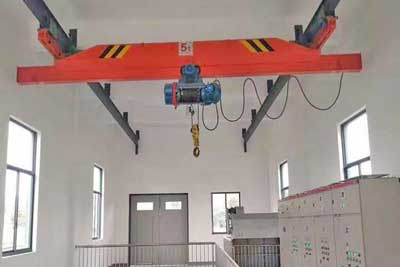
Underhung,Underslung & Under Running Crane
Underhung Overhead Crane & Underhung Bridge Crane
Underhung crane & Underslung crane is an overhead crane, mounted on workshop ceiling structure, to save floor space & crane cost, 0.25 ton to 10 ton.
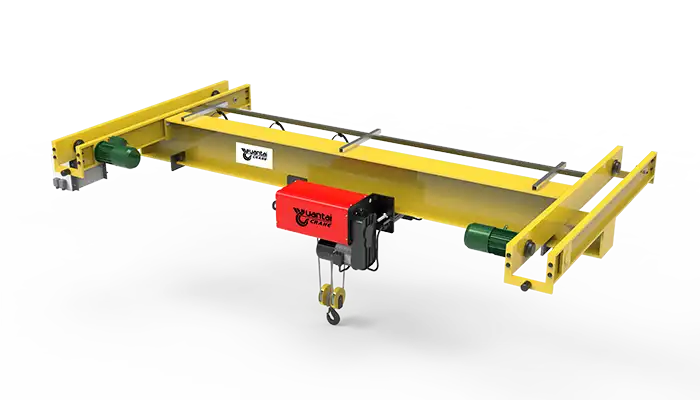
Yuantai BetterCrane | Energy-Saving | Space-Saving | Cost-Efficient | CE/ISO/EX

Underhung crane & Underslung crane is an overhead crane, mounted on workshop ceiling structure, to save floor space & crane cost, 0.25 ton to 10 ton.
An underhung overhead crane is a type of bridge crane that travels along the underside of the runway beams instead of sitting on top. This design makes it perfect for facilities where ceiling height is limited or space is tight. Unlike traditional top-running cranes, underhung cranes save valuable floor and headroom while still offering reliable lifting performance.
These cranes are widely used in factories, warehouses, and workshops where every inch of space counts. They are ideal for lifting loads ranging from a few hundred kilograms up to 15 tons, depending on your requirements. Because they run beneath the support structure, installation is often simpler and less expensive, avoiding the need for heavy runway beams or extensive structural reinforcement.
Key benefits include:
If you are looking for a crane that combines efficiency, safety, and practical performance, an underhung crane is a solid choice. Contact us for a custom underhung crane solution, and we can help you determine the right capacity, span, and hoist type for your facility.
Yuantai Crane's underhung overhead cranes are designed for efficiency, safety, and space-saving operations. From light-duty workshops to hazardous environments, Yuantai Crane offers 1–10 ton capacity cranes with flexible spans and reliable hoists. Choose from explosion-proof underrunning cranes, multi-point suspension cranes, European-style rope hoist suspension cranes, LX series underhung cranes, and cantilever suspension cranes—all built for smooth operation, easy installation, and long-term performance. Find the right underhung crane solution for your facility today.
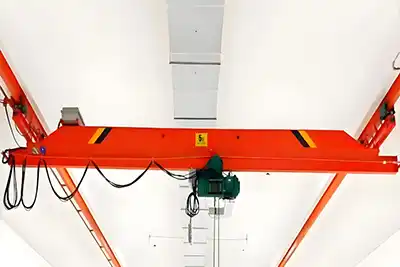
Explosion-Proof Underrunning Overhead Cranes (1 to 10 Tons): Ensuring Safe, Efficient Lifting in Hazardous Environments with Custom Solutions
Inquiry Online Leave a Message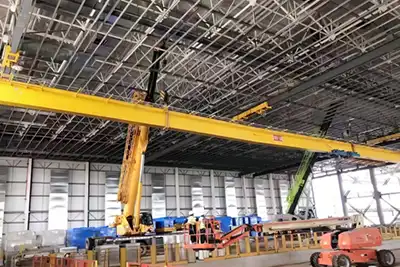
Designed for heavy lifting, this crane offers synchronized operations, high customization, and precision, ideal for specialized industrial applications
Inquiry Online Leave a Message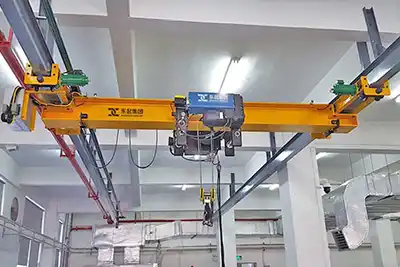
Single girder bridge crane with suspension crane design & European standard electric hoist. Your workstation overhead crane & ceiling mounted bridge crane. Get your suspension crane design & price.
√Overhead Crane Type: NLX, √ Capacity : 1~10 ton, √ Span: 3~15m, √ Working Class:A3, A4
Single girder overhead crane with underslung crane design, cd/md wire rope hoist/ chain hoist, light duty workshop overhead crane, ceiling mounted crane. Get underslung crane design NOW!
√Overhead Crane Type: LX, √ Capacity : 1~10 ton, √ Span: 3~15m, √ Working Class:A3
Suspension cantilever bridge crane, underslung bridge crane with cantilever design or telescopic cantilever design for limited space to enlarge working space.
Inquiry Online Leave a MessageWhat is an Underhung crane? How much does a 10 ton overhead crane cost? What are the three basic types of overhead cranes? What is a monorail crane?
Underhung overhead cranes are compact, ceiling-mounted cranes designed for efficient material handling in limited spaces. Ideal for light to medium-duty lifting, these cranes save headroom, reduce installation costs, and provide flexible lifting solutions for workshops, warehouses, and industrial facilities. Explore their types, features, applications, and maintenance tips to choose the right underhung crane for your needs.
An underhung crane, sometimes called a single girder underhung crane, is a compact type of overhead crane that travels along the underside of a runway beam rather than on top of it. This design allows the crane to operate in areas where ceiling height is limited, making it a practical choice for industrial material handling in smaller workshops, warehouses, or assembly lines.
The crane typically consists of a bridge beam, a trolley with an electric hoist (wire rope or chain), end trucks, and a control system. The trolley moves along the bridge, while the bridge itself moves along the runway beam. This allows for smooth movement of loads both along the length and width of the facility, giving you full coverage without taking up extra floor space.
Key differences between underhung and top-running cranes:
Typical capacities and spans:
This makes underhung cranes a practical, space-efficient solution for industrial material handling, especially when a compact crane design is required. They are ideal for lifting small-to-medium machinery, assembly components, or bulk materials in a controlled and efficient manner.
Underhung overhead cranes come with standard features that make them safe, efficient, and easy to operate in most industrial settings.
Common features include:
Underhung bridge cranes can be customized with extra features to make lifting safer, easier, and more efficient.
Common optional features:
These options help make an underhung crane more flexible, safe, and reliable for your facility.
Underhung cranes are more than just compact—they bring a lot of practical advantages for everyday industrial operations. They’re designed to fit into spaces where traditional top-running cranes would be impractical, while still providing reliable performance for lifting and moving loads. Whether you’re running a small factory, a low-ceiling workshop, or a warehouse with tight aisles, these cranes make life easier for operators and maintenance teams alike.
Practical benefits include:
Because of these advantages, underhung cranes are often the go-to solution for industrial material handling where efficiency, safety, and space management are important.
Underhung cranes are versatile tools that fit into a wide range of industrial settings. Their compact design and flexibility make them suitable for facilities where traditional overhead cranes might be too bulky or costly. These cranes handle materials safely and efficiently, allowing teams to focus on production without worrying about lifting constraints.
Common industries using underhung cranes include:
Typical types of loads handled:
Lifting ranges for underhung cranes:
Thanks to their low headroom and space-efficient design, underhung cranes are particularly useful where precision, safety, and operational efficiency are required. They make material handling in compact or busy facilities much easier and more reliable.
Selecting the right underhung crane for your facility can make a huge difference in efficiency, safety, and long-term operation costs. While it might seem simple at first, there are several practical factors you need to consider to ensure the crane fits your specific needs. This guide will help you understand how to select an underhung overhead crane that works best for your operations.
Key factors buyers should consider:
Proper underhung crane installation and regular maintenance are essential for safe and efficient operation. A well-installed crane not only lasts longer but also reduces downtime and maintenance costs. Even a small mistake during installation can lead to operational issues or safety risks, so it’s worth paying attention to the details.
Installation tips:
Routine maintenance practices:
Choosing a CE and ISO-certified underhung crane supplier adds extra confidence. Certified manufacturers ensure that the crane meets international safety standards, uses high-quality components, and provides proper documentation for maintenance and inspections.
Buying the right underhung bridge crane requires understanding your lifting needs, workshop space, and operational requirements. Typical capacities for underhung cranes range from 1 to 15 tons, with spans from 3 to 15 meters. Prices vary based on lifting capacity, span, hoist type, and optional features—light-duty cranes start around $8,000, while medium-duty or customized cranes can cost $15,000 or more. Knowing your facility's requirements helps you choose a crane that is safe, reliable, and cost-effective.
When it comes to selecting an underhung crane, working with a trusted manufacturer makes all the difference. Yuantai Crane has been providing reliable, high-quality cranes for industrial facilities worldwide, combining proven engineering with flexible solutions tailored to your needs.
Reasons to choose Yuantai Crane:
As a leading Chinese crane supplier and one of the best underhung crane manufacturers, Yuantai Crane combines quality, affordability, and expert service.
Request a Free Quote Today and let us help you find the right underhung crane for your facility’s unique needs.
Q: What is an underhung overhead crane?
A: An underhung overhead crane is a type of crane that runs along the underside of a runway beam instead of on top.
This design saves headroom and floor space, making it ideal for compact workshops, low-ceiling factories, and warehouses while still allowing reliable material handling.
Q: What is the maximum load capacity of an underhung crane?
A: Most underhung cranes have capacities ranging from 0.5 to 15 tons.
The exact capacity depends on the crane’s span, hoist type, and runway design; for heavier loads, a top-running crane may be more suitable.
Q: Can an underhung overhead crane be installed in a low-ceiling factory?
A: Yes, underhung cranes are designed specifically for low-ceiling spaces.
By traveling beneath the runway beam, the crane requires less headroom than traditional top-running cranes, making it practical for tight or compact facilities.
Q: What is the difference between single girder and double girder underhung cranes?
A: Single girder underhung cranes have one bridge beam, while double girder underhung cranes have two.
Single girder models are simpler, lighter, and cost-effective for light to medium-duty lifting, while double girder underhung cranes can handle heavier loads and longer spans.
Q: How much does an underhung overhead crane cost?
A: Prices typically range from $8,000 to $30,000 depending on capacity, span, and customizations.
Factors affecting cost include lifting capacity, span length, hoist type, electrical setup, and optional protective or environmental features.
Q: How do I select the right underhung crane for my facility?
A: Consider the span, lifting height, load weight, hoist type, and environmental conditions.
Evaluating these factors ensures the underhung overhead crane fits your facility’s needs, operates safely, and can handle future upgrades if necessary.
Q: What types of hoists are suitable for underhung cranes?
A: Wire rope and chain hoists are commonly used on underhung overhead cranes.
Wire rope hoists handle heavier and frequent loads, while chain hoists are compact and better for lighter tasks or lower lifting heights.
Q: What maintenance is required for an underhung crane?
A: Regular lubrication, inspections, and part replacements are essential.
Check the bridge, trolley, hoist, hooks, chains, and limit switches to ensure smooth and safe operation while extending the crane’s service life.
Q: How difficult is underhung overhead crane installation?
A: Installation is generally simpler than top-running cranes but requires careful alignment and electrical setup.
Proper runway beam alignment, secure electrical connections, and pre-operation safety checks are crucial to ensure the crane operates reliably.
Q: Are underhung overhead cranes suitable for industrial material handling?
A: Yes, underhung cranes are widely used in manufacturing, automotive, assembly lines, and warehouses.
Their low headroom and compact design allow efficient and safe lifting of small to medium loads in busy or constrained facilities.
Q: Can an underhung crane be relocated to a new facility?
A: Yes, underhung cranes can often be reinstalled in another location.
Their lighter bridge and runway requirements make relocation feasible, though professional assessment is recommended to ensure proper installation and safety.
Q: Where can I buy a reliable underhung overhead crane?
A: Trusted suppliers like Yuantai Crane provide CE and ISO-certified underhung cranes with customization options.
Look for a certified manufacturer that offers after-sales support and free quotations, ensuring the crane’s capacity, span, and hoist type meet your facility’s requirements.
Access our product brochures, technical datasheets, manuals, and company documents.Download brochures, technical documents, and product information to learn more about Yuantai Cranes’ solutions.
Watch Yuantai Cranes in action through product demonstrations, installation guides, and real-world lifting applications. Our videos showcase crane performance, reliability, and advanced lifting solutions across various industries.
Check Yuantai Cranes’ products, industrial applications, installation projects, customer experiences, and global events and shows that showcase our expertise, quality, and commitment to reliable lifting solutions.
Use our interactive configurators to quickly select and customize crane solutions based on your lifting requirements. Find the right equipment by adjusting key parameters such as capacity, span, lifting height, and application conditions
Need Latest Crane Price? Please leave us the required Crane's Capacity, Lifting Height, Span, Travelling Length & Voltage for Quick Quotation. Yuantai Crane www.bettercrane.com

Hi, there. I'm Lydia Liang, in Yuantai Crane since 2016. With years experiences in material handling crane equiment and industries ,we know so well about chinese cranes and chinese crane maufacuers , the advantages and limitations. Contact us now to check what we, Yuantai Crane, can do for you! And we will reply your inquiry within 24 working hours.