Yuantai BetterCrane | Energy-Saving | Space-Saving | Cost-Efficient | CE/ISO/EX

yuantai crane
yuantai crane

Workshop Jib Crane Specifications
Compare Floor, Wall, Articulating & Portable Models

Choosing the right jib crane isn't just about picking a model off the shelf. The specifications tell you what each crane can actually do in your workspace. They help you avoid mistakes like buying a crane that's too short, too weak, or can't rotate where you need it. Understanding the numbers before you order saves time, money, and headaches later.

Main Types of Jib Cranes Specificaitons— Easy Reference Guide

This guide breaks down the four main types of jib cranes, their capacities, spans, lifting heights, rotation ranges, mounting styles, and key features. It’s designed so buyers can quickly understand which crane fits their workshop and lifting needs.

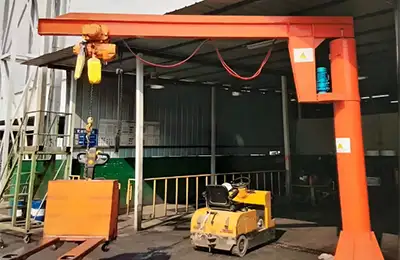
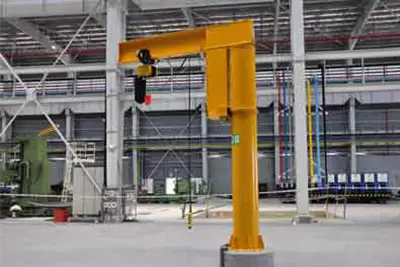
Floor mounted jib crane - A sturdy, fixed crane standing on a floor column. Ideal for repetitive lifting in one workstation or bay.

Key Specifications:

  • Capacity: 1–5 tons
  • Lifting Height: 3–10 meters
  • Span / Reach: 3–8 meters
  • Rotation: 180° standard, 360° optional
  • Mounting Type: Floor-mounted column with anchor bolts
  • Hoist Options:


    Electric wire rope hoist (for heavier or frequent lifts), Electric chain hoist (for light to medium loads)
  • Duty Class: A3–A5
  • Power Requirements: 380V/3-phase (single-phase for smaller hoists)
  • Optional Accessories: Limit switches, end stops, weatherproof cover, remote control

Tips for Use:

  • Ensure proper foundation design to handle full load safely.
  • Use 360° rotation only if workspace is clear of walls and equipment.

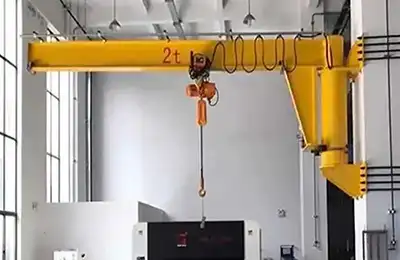
Wall Mounted Jib Crane - Attaches directly to a wall or beam. Saves floor space and works well in small or narrow workshops.

Key Specifications:

  • Capacity: 1–3 tons
  • Lifting Height: 2–6 meters
  • Span / Reach: 2–6 meters
  • Rotation: 180°–270°
  • Mounting Type: Wall bracket or support beam
  • Hoist Options:


    Electric chain hoist, Manual chain hoist for light loads
  • Duty Class: A2–A4
  • Power Requirements: Single-phase or 3-phase
  • Optional Accessories: Adjustable brackets, limit switches, protective covers

Tips for Use:

  • Verify wall or beam can handle full load plus dynamic forces.
  • Ideal for light-duty lifting and tight spaces.

Articulating Jib Crane - Has pivoting arms that swing or fold. Great for workshops with obstacles or multiple workstations.

Key Specifications:

  • Capacity: 1 ton
  • Lifting Height: 2–5 meters
  • Span / Reach: 2–5 meters
  • Rotation: 180°–270°
  • Mounting Type: Floor or wall-mounted with pivot arm
  • Hoist Options: Manual or electric chain hoist
  • Duty Class: A2–A3
  • Power Requirements: Single-phase or low-voltage electric
  • Optional Accessories: Lockable pivots, protective covers, custom arm lengths

Tips for Use:

  • Perfect for corners, machinery, or tight layouts.
  • Regularly maintain pivot joints for smooth operation.

Portable Jib Crane on Wheels - Wheeled or free-standing crane that can move across the workshop. Flexible for temporary jobs or shared spaces.

Key Specifications:

  • Capacity: 1–2 tons
  • Lifting Height: 2–4 meters
  • Span / Reach: 2–5 meters
  • Rotation: 180°–360°
  • Mounting Type: Free-standing, with lockable wheels or stabilizing base
  • Hoist Options: Manual or electric chain hoist
  • Duty Class: A2–A3
  • Power Requirements: Manual or single-phase electric
  • Optional Accessories: Lockable caster wheels, adjustable mast, safety stabilizers, protective covers

Tips for Use:

  • Always lock the wheels and stabilize the base before lifting.
  • Ideal for workshops with frequently changing lifting points.
Crane Type Capacity Lift Height Span Rotation Mounting Hoist Type Duty Class Ideal Use
Floor 1–5T 3–10 m 3–8 m 180–360° Floor Wire/Chain A3–A5 Heavy, fixed workstations
Wall 1–3T 2–6 m 2–6 m 180–270° Wall Chain A2–A4 Small spaces, light loads
Articulating 1T 2–5 m 2–5 m 180–270° Floor/Wall Chain A2–A3 Tight spaces, multiple stations
Portable 1–2T 2–4 m 2–5 m 180–360° Free-standing Chain A2–A3 Temporary or changing setups

Choosing the right jib crane isn’t just about numbers on a spec sheet. These tips help you pick a crane that actually works in your space and meets your lifting needs safely.


1. Match the Crane to Your Workspace

Check your workshop layout carefully. Make sure the crane can reach every area you need without hitting walls, machines, or other obstacles.

  • Tip: Don’t pick a crane that can’t rotate or extend far enough. A properly sized crane saves time and prevents accidents.

2. Check Foundation and Mounting

Your crane is only as strong as what it’s attached to. Different types of cranes need different support.

  • Tip: Floor-mounted cranes require reinforced concrete foundations. Wall-mounted cranes need strong beams that can handle the load safely.

3. Consider Duty Class

Duty class tells you how often and how hard a crane can work. Choosing the wrong class can shorten its life or create safety risks.

  • Tip: Use A3–A5 for frequent, heavier lifting. A2–A3 is enough for light or occasional use.

4. Choose the Right Hoist Type

The hoist affects how smoothly your crane lifts and lowers loads. The right hoist also reduces wear on the crane.

  • Tip: Use wire rope hoists for heavier loads. Chain hoists are better for smaller, precise lifts.

5. Don’t Overlook Accessories

Accessories improve safety and make your crane easier to operate. Think about what you really need for your workflow.

  • Tip: Limit switches prevent over-travel, protective covers keep dust and debris out, and remote controls allow safer operation from a distance.


5 Ton Jib Crane

Explore 5 Ton Jib Cranes for sale, including price, specifications, types, and customization options for workshops and industrial use.

Inquiry Online Leave a Message

3 Ton Jib Crane

3 ton jib crane for sale. 3 ton jib cranes with wall mounted jib crane & freestanding column mounted jib cranes for sale, with standard & custom options.

Inquiry Online Leave a Message

2 Ton Jib Crane

2 ton jib crane for sale. Check 2 ton wall & floor jib cranes for lifting, space efficiency, rotation range, installation, & workshop workflow suitability.

Inquiry Online Leave a Message

1 Ton Jib Crane

1 ton jib crane for sale. All on 1 ton jib cranes—types, specifications, pricing, installation & maintenance—to choose the best rotating lifting solution.

Inquiry Online Leave a Message
Jib Crane Tonnages & Specifications Basics

All you want to know

What is your jib crane capacity, lifting height, and span? Floor, wall, or pillar-mounted? Manual or electric hoist? Indoor/outdoor use? Rotation type, safety features, frequency of use, and environmental conditions?

FAQ — Jib Crane Specifications & Selection Guide

These FAQs provide practical guidance on selecting the right jib crane for your workshop, including mounting types, lifting capacities, hoist options, and maintenance tips. Use this to make informed decisions when buying an overhead jib crane or light/medium-duty workshop crane.

A: The choice depends on your available space, workflow, and lifting requirements.
Floor-mounted jib cranes are ideal for heavy-duty lifting and fixed production areas, wall-mounted cranes save valuable floor space in smaller workshops, and portable or mobile jib cranes provide flexibility for multiple workstations but handle lighter loads.
A: Measure the farthest horizontal reach for span and the maximum vertical hook travel for lifting height.
Always include a safety margin for collision prevention. Consider the dimensions of materials and obstacles in your workshop when determining the optimal span and lifting height for your overhead jib crane.
A: Only if there is sufficient clearance around the crane.
Floor-mounted cranes may rotate fully if space allows. Wall-mounted jib cranes typically rotate between 180°–270°, and you should check for walls, machines, or piping before selecting full rotation. Proper rotation planning ensures safe and efficient material handling.
A: Match the duty class to lifting frequency and load intensity.
Light-duty cranes (A2–A3) are suitable for occasional lifting, while medium or heavy-duty cranes (A3–A5) handle frequent, heavier loads. Choosing the correct duty class ensures longevity and safety for your workshop crane.
A: Choose hoists based on load weight and lifting precision requirements.
Wire rope hoists are preferred for heavy-duty, frequent lifting in industrial workshops, while chain hoists are suitable for light-duty, precise lifting tasks. Selecting the right hoist improves efficiency and safety.
A: Always follow the rated capacity of your jib crane.
Overloading can damage the crane, cause safety hazards, and void warranties. Include a 10–20% safety margin when planning lifts for overhead cranes.
A: Ensure the span covers all lifting points without overstressing the crane.
A span that is too long increases stress on the structure; too short reduces coverage. Measuring your workshop layout against the crane's reach ensures smooth operations.
A: Yes, most jib cranes can be tailored to your needs.
Customization options include arm length, lifting height, hoist type, rotation angle, and accessories such as limit switches, protective covers, and remote controls, optimizing your crane for your workshop.
A: Perform regular inspections, lubrication, and functional tests.
Check pivot joints, bearings, hooks, hoists, and chains for wear. Routine maintenance ensures long-term safety and prevents unplanned downtime for overhead jib cranes.
A: Yes, several accessories can enhance operation and safety.
Limit switches prevent over-travel, protective covers shield against dust and debris, and remote controls allow safer operation of light, medium, or heavy-duty jib cranes.
A: Choose crane capacity based on your heaviest expected load and application frequency.
  • 1–2 ton jib cranes: Light-duty workshop tasks, assembly lines, small material handling.
  • 3–5 ton overhead jib cranes: Medium-duty lifting, general workshop or maintenance use.
  • 10 ton cranes: Heavy-duty lifting, industrial workshops, warehouses, and manufacturing plants.
  • 15–20 ton cranes: Very heavy loads, steel mills, foundries, or large industrial material handling.
Consider duty class, span, lifting height, and rotation along with tonnage to ensure optimal performance and safety.
Get a quote    Energy-Saving | Space-Saving | Cost-Efficient | CE/ISO/EX

Inquire Yuantai Crane Now

Need Latest Crane Price? Please leave us the required Crane's Capacity, Lifting Height, Span, Travelling Length & Voltage for Quick Quotation. Yuantai Crane www.bettercrane.com