
Yuantai Crane for Better Solutions:
Energy-Saving | Space-Saving | Cost-Efficient | CE/ISO/EX
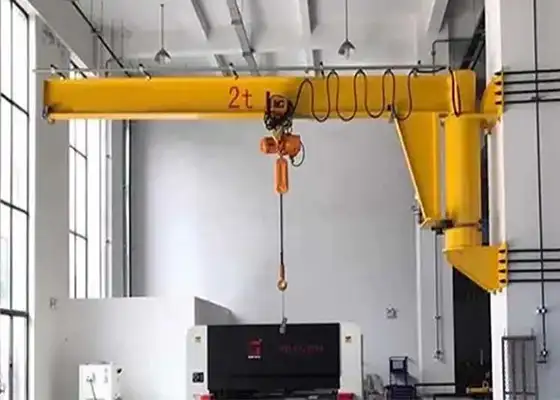
2 ton jib crane for sale. Check 2 ton wall & floor jib cranes for lifting, space efficiency, rotation range, installation, & workshop workflow suitability.
2 Ton Jib Crane
| Product Type: | Jib Crane |
|---|---|
| Lifting Capacity: | 2 ton |
| Span: | As your request |
| Lifting Height: | As your request |
| Working Class: | A3-A5 |
| Ambient Temperature: | -20-+40 ℃ |
| Crane Price Rangs | More Inquiry Form |
| $1,500 – $5,000 | |
| [email protected] 008615038346929 | |
Compare 2 ton wall and floor jib cranes for lifting, space efficiency, rotation range, installation, and workshop workflow suitability.
Introduction
A 2 ton jib crane is one of the most widely used lifting tools for light-duty handling. You’ll often find it in small workshops, warehouse loading areas, and assembly stations where workers need a reliable and simple way to move parts or equipment. It’s compact, practical, and easy to operate, which makes it popular among small and medium-sized businesses.
When buyers begin looking for a 2 ton jib crane for sale, one of the first questions that comes up is: Should I choose a wall jib crane or a floor jib crane? The answer usually depends on the type of building structure, the available space, and how the crane will be used in daily operations.
- Wall jib cranes are mounted to an existing wall or column, saving floor space but relying on the strength of the structure.
- Floor jib cranes, also called pillar jib cranes, are installed with a base on the ground. They require more space and a strong foundation but provide wider rotation and more flexibility.
Choosing between these two isn’t just about the 2 ton jib crane price. It’s about how well the crane fits into your workflow, the installation conditions of your facility, and how safe and efficient it will be in the long run. A good match reduces unnecessary costs, keeps productivity high, and avoids safety headaches later on.
Overview of 2 Ton Wall Jib Crane (Wall-Mounted Jib Crane)
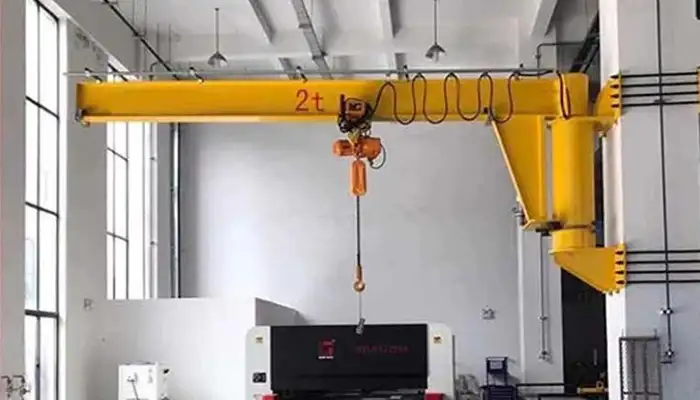
A standard 2 ton wall jib crane is mounted directly on a strong wall or column. It’s ideal for workshops or production lines where floor space is limited and lifting operations are focused along one side.
Standard Wall Jib Crane
The standard wall-mounted jib crane is compact, reliable, and easy to operate. It is suitable for most small to medium lifting tasks along walls or assembly lines.
- Lifting Capacity: 2 tons (2000 kg)
- Jib Arm Length: 3–5 meters
- Rotation Angle: 180°–200°
- Hoist Type: Manual or electric wire rope / chain hoist
- Construction: Heavy-duty steel, powder-coated
- Safety Features: Limit switches, optional overload protection
Optional Features
For workshops with special requirements, additional options are available to enhance functionality and flexibility.
- Folding Wall Jib Crane: Can be folded back against the wall to save space in narrow areas.
- Articulating Wall Jib Crane: Multi-section arm for precise placement of loads in confined areas.
- Extended Rotation: Up to 270° for special installation needs.
Special Considerations for Installation
Before installation, certain conditions must be met to ensure safety and performance.
- Requires a strong wall or column capable of supporting the full load plus safety factor.
- Adequate mounting height to achieve the desired lifting clearance.
- Limited rotation compared to floor-mounted cranes; plan workflow carefully.
- Ensure proper electrical supply if using an electric hoist.
Overview of 2 Ton Floor-Mounted Jib Crane (Pillar Jib Crane)
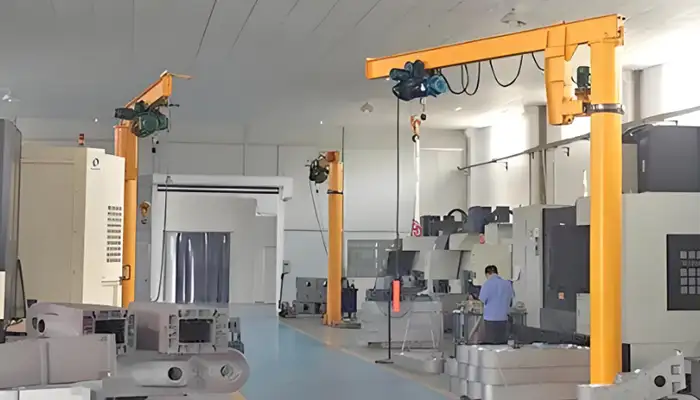
A standard 2 ton floor-mounted jib crane stands independently on a column anchored to the floor. It is ideal for open workshops, machining centers, or assembly lines where flexibility and rotation coverage are needed.
Standard Floor-Mounted Jib Crane
The standard floor-mounted jib crane is simple, sturdy, and covers a moderate rotation range. It works well for most open-workshop lifting tasks without depending on building walls.
- Lifting Capacity: 2 tons (2000 kg)
- Column Height: 3–5 meters
- Jib Arm Length: 3–5 meters
- Rotation: 180°–360° (typically 180° standard)
- Hoist Type: Manual or electric chain/wire rope hoist
- Construction: Heavy-duty steel, powder-coated for durability
- Safety Features: Overload protection, optional rotation limits
Optional Features
dditional features are available to enhance reach, rotation, or adaptability for complex workflows.
- Full 360° Rotating Floor Jib Crane: For maximum coverage in open spaces.
- Articulating / Multi-Segment Arm: Adjustable arm angles for irregular or tight areas.
- Extended Column Height or Jib Length: For special lifting clearance requirements.
Special Considerations for Installation
Floor-mounted cranes require careful planning to ensure stability and safe operation.
- Requires a solid concrete foundation for stability and load support.
- Column placement must avoid obstructing workers, forklifts, or other equipment.
- Full rotation cranes need extra clearance from walls or nearby machinery.
- Plan for power supply and hoist installation in advance.
Practical Advice for Buyers:
- Choose the standard wall jib crane if you have a strong wall and limited floor space.
- Choose the standard floor-mounted jib crane if you need rotation flexibility and open-area coverage.
- Optional features like folding arms, articulating segments, or extended rotation are useful but should be selected based on workflow, space, and lifting requirements.
- Always consider installation conditions, lifting height, and safety alongside the 2 ton jib crane price to make a cost-effective decision.
Typical Applications of a 2 Ton Jib Crane
Not every workshop or factory needs the same lifting setup. A 2 ton jib crane can be installed on a wall or on the floor, and each option suits different working conditions. Understanding where each type works best helps buyers avoid mismatched choices.
Wall Jib Crane Applications
A 2 ton wall jib crane is often chosen when floor space is limited. Since it's mounted directly onto a wall or a strong column, it doesn't block pathways or reduce working area. Buyers use this type of crane in:
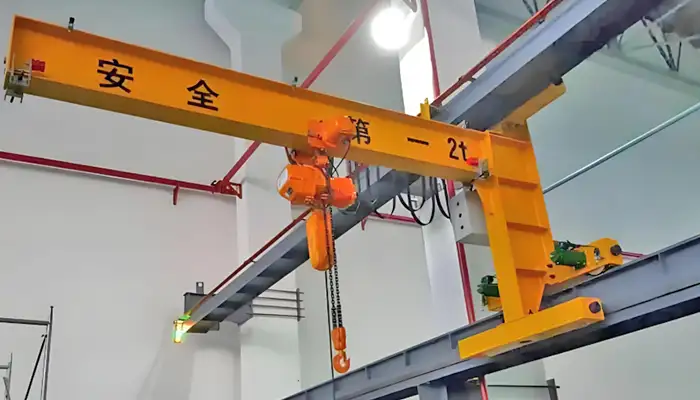
- Workstations along walls or assembly lines: Operators can swing the jib arm across a defined area, lifting and positioning parts right where they're needed.
- Loading and unloading smaller components next to machines: For example, feeding raw materials into a lathe or removing finished products from a milling machine.
- Workshops with tight layouts: A wall jib crane provides lifting power without putting a column in the middle of a busy workspace, which keeps traffic smooth for workers and forklifts.
This type of crane works well where the workflow is fixed and doesn’t require large coverage.
Floor Jib Crane Applications
A 2 ton floor jib crane, also called a pillar jib crane, is chosen for workshops that need flexibility. Unlike wall models, it stands independently on its own base, so it doesn't depend on building strength. Buyers often select this crane for:
- Open factory layouts where no supporting wall or column exists: This makes it possible to install lifting equipment even in the middle of a workshop.
- Machining centers, welding shops, or assembly zones that require 360° coverage: Workers can rotate the jib arm all around, covering multiple workstations with one crane.
- Handling molds, steel parts, or medium-sized equipment: Especially when items must be lifted from one side of a shop and placed on another without restriction.
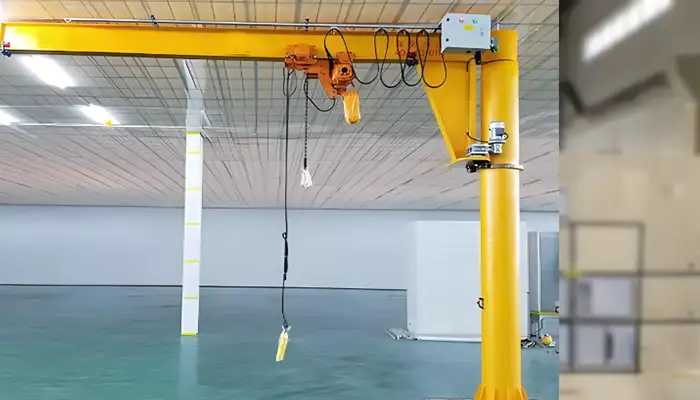 low headroom jib crane 2 ton for limited space workshop
 A floor jib crane costs a bit more due to the foundation work, but it pays off with wider working range and long-term adaptability.
Buyer Questions & Concerns Before Purchasing a 2 Ton Jib Crane
Before you place an order for a 2 ton jib crane for sale, it's important to slow down and think through a few practical questions. Buyers often focus only on the 2 ton jib crane price, but the total cost and performance depend on much more than the sticker price. Installation conditions, safety standards, and long-term flexibility are just as important.
A 2 ton jib crane is simple in design, but it needs to fit your workshop correctly. Here are the main points that most buyers check before making a decision:
- What is the actual 2 ton jib crane price including installation and hoist?: The hoist type, electric vs. manual slewing, and foundation work can all add to the cost.
- Do you have the right workshop conditions for installation?: Things like ceiling clearance, power supply, and available foundation strength decide whether the crane can be installed smoothly.
- How often will the crane be used?: Occasional lifting of light parts is very different from continuous operation. Frequency affects not only the crane design but also maintenance needs.
- Will the jib crane meet safety certifications?: Buyers often ask if the crane is CE or ISO certified, or if it passes local inspection standards. This avoids issues with regulators and insurance.
- Can the crane adapt if your factory layout changes later?: It's common for workshops to grow or rearrange. Thinking ahead avoids wasting money on a crane that becomes a poor fit in just a few years.
A 2 ton wall jib crane is economical, but it relies on the strength of your existing building. Buyers usually consider:
- Is there a strong wall or column to mount the jib arm securely?: Not all buildings have the reinforced structure needed. Weak support can be unsafe.
- Will a wall jib crane provide enough rotation and working range?: Most wall jib cranes cover only a limited angle. This is fine for side workstations, but not for large open areas.
- Is the mounting point high enough to give the required lifting height?: If your wall is too low, the crane may not provide enough clearance for the load.
- Does wall mounting limit future machine rearrangement?: Once fixed to a wall, the crane stays in one place. That can be a problem if your production line changes.
A 2 ton floor jib crane, or pillar jib crane, gives more freedom but requires its own footprint. Buyers often raise these points:
- Do you have enough floor space for a floor jib crane installation?: The column takes up ground area. In a crowded workshop, this may block other work.
- Is the foundation prepared to handle the load and anchor bolts?: A solid concrete base is required. Without it, installation may be costly or unsafe.
- Will a floor-mounted design interfere with forklifts or worker movement?: A standing column can interrupt traffic flow. Placement must be carefully planned.
- Do you need 360° rotation?: This is one of the main reasons buyers pick a floor jib crane. Full coverage makes it useful in open production spaces.
Practical Buying Tips
When purchasing a 2 ton jib crane, the decision should not be based on price alone. A lower 2 ton jib crane price may look attractive at first, but installation, foundation work, and after-sales support can quickly change the real cost of ownership. Here are some practical points every buyer should consider:
Look beyond the base price: Always ask suppliers for a full quote that includes the hoist, electrical work, installation, and any foundation requirements. A crane that looks cheaper upfront may turn out more expensive once hidden costs are added.
- A wall jib crane is often the more economical choice if your building has strong columns or walls to support it. The trade-off is limited rotation and a smaller working range.
- A floor jib crane requires a proper foundation and costs more at the start, but it provides 360° rotation and much more flexibility for changing workflows.
Before placing an order, double-check critical details with your supplier:
- Lifting height – Will the crane clear your tallest loads?
- Arm length – Does the reach cover your working area?
- Slewing range – How far can the arm rotate without obstruction?
When comparing offers for a 2 ton jib crane for sale, pay attention to what's included. A reliable supplier should provide:
- Warranty coverage
- Spare parts availability
- After-sales service and technical support
These practical steps help ensure that your investment in a 2 ton jib crane matches your workshop needs today and remains useful for years ahead.
Conclusion
Choosing the right 2 ton jib crane comes down to matching the crane type with your actual workshop conditions. There isn’t a one-size-fits-all answer, and buyers often make the best decision by weighing space, structure, and long-term needs.
- A 2 ton wall jib crane works best when you have strong walls or columns available and limited floor space. It provides reliable lifting in a fixed area without blocking workshop traffic.
- A 2 ton floor jib crane is the better option for workshops that need open layouts, flexible use, and full 360° lifting coverage. It requires more investment upfront, especially for the foundation, but pays off in adaptability.
In the end, buyers should not look at the 2 ton jib crane price alone. Balancing cost with site conditions, safety requirements, and future expansion plans ensures that your investment is practical, efficient, and long-lasting.
Product Detail
Support

5 Ton Jib Crane
Explore 5 Ton Jib Cranes for sale, including price, specifications, types, and customization options for workshops and industrial use. Read More
3 Ton Jib Crane
3 ton jib crane for sale. 3 ton jib cranes with wall mounted jib crane & freestanding column mounted jib cranes for sale, with standard & custom options. Read More
2 Ton Jib Crane
2 ton jib crane for sale. Check 2 ton wall & floor jib cranes for lifting, space efficiency, rotation range, installation, & workshop workflow suitability. Read More
1 Ton Jib Crane
1 ton jib crane for sale. All on 1 ton jib cranes—types, specifications, pricing, installation & maintenance—to choose the best rotating lifting solution. Read More
1 Ton Wall-Mounted Jib Crane for Sale in Cyprus
Buy a 1-ton wall-mounted jib crane in Cyprus with BX electric chain hoist, 8.8m lifting height, and optional accessories for workshops and light industrial use. Read More
5 Ton Jib Crane with Chain Hoist – Maldives Project
Discover our 5-ton jib crane with BZ chain hoist project in the Maldives. Reliable, corrosion-resistant, and versatile for floor, rotary, and cantilever jib cranes. Read More
Case- 6 Sets of Floor Jib Crane 4 Ton for Sale, Good Price
Compact 4-ton floor-mounted jib cranes, ideal for limited indoor spaces. Durable, efficient, and ready for immediate use. Read More
5 Ton Pillar Mounted Jib Cranes for Dam Maintenance
Customized 5-ton pillar jib cranes support efficient, safe dam maintenance with high lifting capacity and 360° rotation for accessibility. Read More
2-Ton Pillar Mounted Jib Cranes for Maritime Applications in Belgium
Custom 2-ton pillar-mounted jib cranes in Belgium designed for maritime applications, offering durability, corrosion resistance, and efficient load handling. Read More
Floor Jib Crane 10 Ton for Sale, Good Price Jib Crane Factory
10 ton floor jib crane for sale good price. 30 + years jib crane factory in China, customized floor jib crane design for Sudan factory. Check jib crane now. Read More