Overhead Gantry Crane for Precast Concrete Yards
Precast Industry
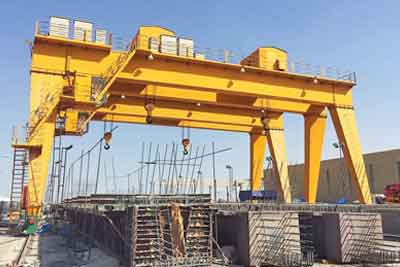
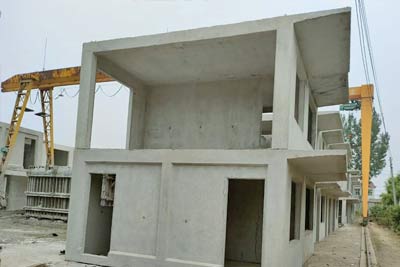
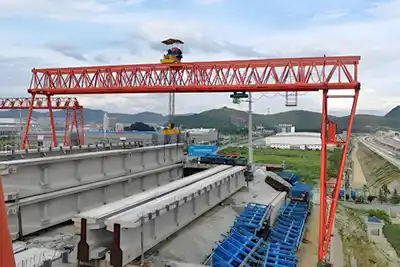
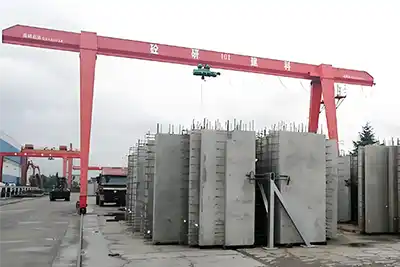
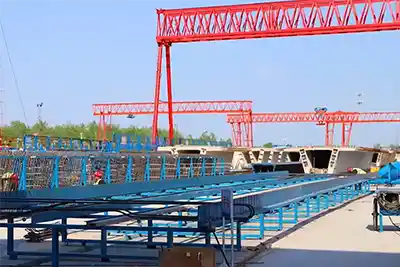
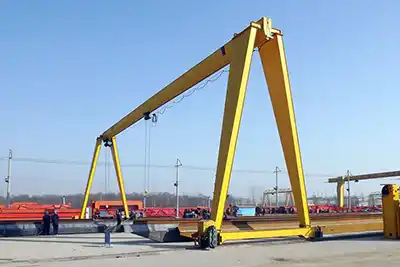
Truss gantry crane & box girder gantry crane for precast industry for precast concrete plate, beam & blocks handling in precast concrete plants & yards.
Yuantai BetterCrane | Energy-Saving | Space-Saving | Cost-Efficient | CE/ISO/EX

Truss gantry crane & box girder gantry crane for precast industry for precast concrete plate, beam & blocks handling in precast concrete plants & yards.
For Yard, Factory, and Heavy Component Lifting
Precast concrete plants and yards are harsh environments that need heavy lifting.Precast concrete production is not just about casting. It is about moving heavy, often fragile components safely and repeatedly. Beams, wall panels, pipes, and molds all require controlled lifting. A wrong crane selection does not just slow down production — it can lead to cracks, rework, or even safety risks.
Whether handling finished precast parts or bagged premixes, workers in the precast concrete sector must use gantry cranes and bridge cranes in the yard and in the plant. Cranes are critical to the productivity and efficiency of precast facilities, thus selecting the appropriate crane for your precast plant and yard is critical.
In any application, the duty rating of precast cranes or hoists is critical. Duty rating designates a specific service class, ranging from rarely to severe. It is determined using a variety of factors, including capacity, number of lifts in a specific timeframe, and operating circumstances. Working with a crane dealer or crane manufacturer in your area who follows your regional standards is crucial.
Precast plants do not operate in one single way. In most projects, lifting work is divided into three main stages: yard handling, factory production, and finished product storage. Each stage has its own lifting challenges, and the crane selection should follow those actual working conditions.
This is where the heaviest work usually happens. Large beams, slabs, and pipes are moved, stacked, and loaded for transport. The environment is open, and conditions are not always predictable.
Typical conditions:
In real applications, operators often deal with long components that can swing or bend if not handled properly. Wind can also affect stability, especially for panel or slab lifting.
Recommended cranes:
Practical tip:
For most precast yards, a gantry crane is the practical choice because it provides wide coverage without relying on building structures and allows easier expansion if the yard grows.
Inside the workshop, the focus shifts from heavy lifting to efficiency and precision. Cranes here support daily production, often working in cycles throughout the day.
Typical conditions:
In this environment, even small inefficiencies become noticeable. If positioning is not stable, it slows down mold alignment and affects production rhythm.
Recommended cranes:
Practical tip:
Double girder cranes are often preferred in precast factories because they offer better stability, smoother travel, and more precise load control, especially when handling molds or large panels.
Once the concrete elements are cured, the focus is on safe handling and storage. At this stage, damage is a real concern. A small crack during lifting can lead to rejection or repair work.
Typical conditions:
This stage is less about speed and more about control and safety. Loads are often lifted to stack in limited spaces, so positioning must be steady.
Recommended solutions:
Practical tip:
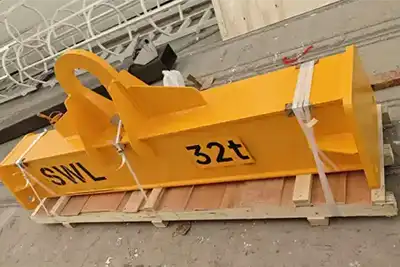
Using the right lifting tools makes a big difference. A standard hook may work, but a proper spreader beam or lifting device reduces stress on the concrete and improves overall handling safety.
Not all precast components behave the same during lifting. Some are long and flexible, some are wide and thin, and others are repetitive but require precise positioning. Understanding the actual load characteristics helps you choose not only the crane capacity, but also the right lifting method and control features.
Precast beams are one of the most demanding loads in a precast yard. They are heavy, long, and sensitive to uneven lifting force. Even a small imbalance can cause stress or visible bending.
Typical conditions:
In real handling, beams are rarely perfectly rigid. If lifted with a single hook or incorrect spacing, they may deflect in the middle, especially when freshly cast or not fully cured.
Key handling considerations:
Typical crane types used:
Typical capacity selection:
Practical tip:
If your beam length exceeds 15–20 meters, consider a two-hook crane or tandem lifting setup instead of a standard single-hook configuration.
Panels are widely used in building construction. They are thinner and more sensitive to movement compared to beams. The main challenge here is stability during lifting and positioning.
Typical conditions:
Key handling considerations:
Common lifting solutions:
Typical crane types used:
Typical capacity selection:
Practical tip:
For direct installation after lifting, anti-sway control and precise positioning save time and reduce manual corrections.
Concrete pipes are cylindrical and heavier than panels. Standard hooks are not enough, making secure gripping essential.
Typical conditions:
Key handling considerations:
Batch handling considerations:
Typical crane types used:
Typical capacity selection:
Practical tip:
If lifting in batches, confirm the maximum number of pipes per lift. This affects crane capacity and lifting tool design.
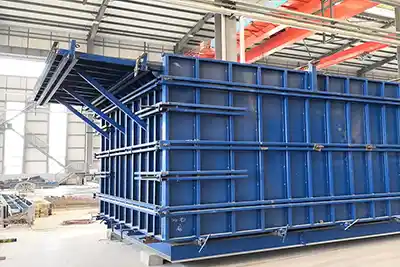
Molds and formwork are lifted frequently during production. The challenge is not just weight, but precision and repeatability.
Typical conditions:
Key handling considerations:
Recommended crane features:
Typical crane types used:
Typical capacity selection:
Practical tip:
On continuous production lines, focus on lifting speed consistency and positioning accuracy, not just maximum capacity. It directly impacts daily output.
Selecting the right crane depends on both where it will be used and what loads it will handle. Precast production typically requires two main types of cranes: overhead cranes for factory lines and gantry cranes for outdoor yard operations.
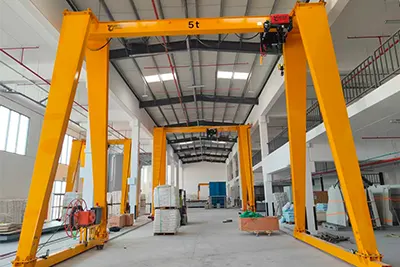
Overhead cranes are the backbone of indoor precast production. They provide stable, precise lifting for molds, panels, and other production components.
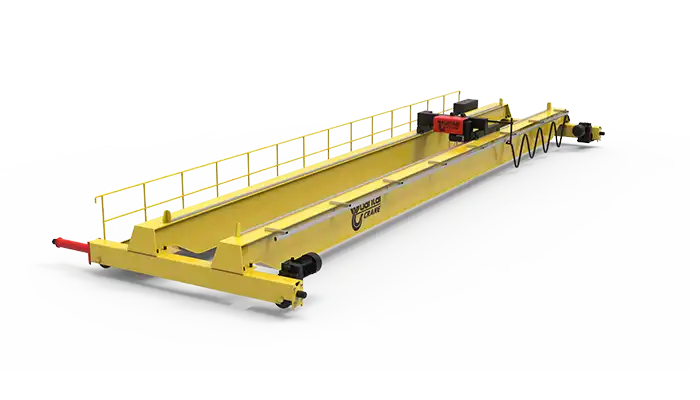 Double girder overhead crane for precasting conceret workoshop material handling with 5 ton 32 ton, up to 50 ton for your selection
 Typical capacity range: 5 to 32 tons
Applications:
Advantages:
Practical tip:
Double girder overhead cranes are ideal for heavier loads or when high accuracy is required, while single girder cranes are more economical for lighter, less frequent lifting.
Gantry cranes are designed for outdoor handling of precast components. They can cover large spans and handle heavier, bulkier loads in open spaces.
Typical capacity range: 10 to 50 tons
Applications:
Advantages:
Practical tip:
For very heavy beams or slabs (30–50 tons), a gantry crane is often the only safe solution for outdoor yards. Semi-gantry cranes can be used when space or structural constraints exist.
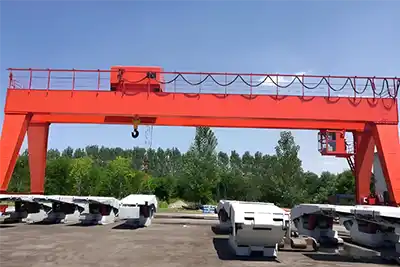
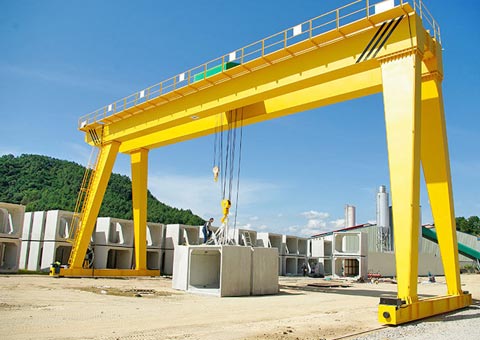
Gantry cranes is widely used to operate indoors or outdoors, and the lifting device is a hook. The main beam structure of the concrete crane is a double beam gantry crane.
The the precast concrete handling gantry crane moves longitudinally on the embedded track, and the gantry hoist trolley moves laterally on the crane gantry and the hook lift up and down to realize the movement and overturning of materials. There is a set of independent lifting mechanism on the trolley.
The gantry crane consists of gantry steel structure, trolley, crane traveling mechanism, electrical system and other main parts. The gantry crane working outdoors is also equipped with rail clamp, anchor device, anchor cable device, anemometer and other devices.
MH type single girder gantry crane adopts the wire rope electric hoist as the lifting mechanism, through the up and down movement of the lifting hook, the left and right movement of the hoist trolley, and the front and back movement of the gantry crane to form a three-dimensional working space to realize hoisting. It is widely used in open field conditions such as docks, freight yards, warehouses, and construction sites.
MH single girder gantry crane can be used to lift small project such as mold and concrete plates , or do the maintenance work.
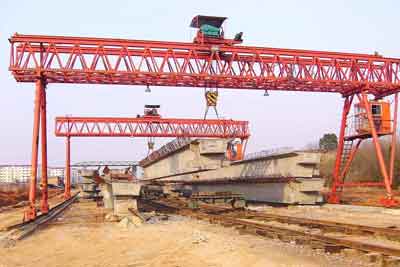
The engineering gantry crane can be used for bridge construction, bridge beam yards, and other locations. Its retrieval mechanism can be a moveable pulley block with a hook, spreader, or pin shaft. The gantry leg has an A-type form. The gantry structure is made up of a rigid leg and a flexible leg support structure, increasing the total flexibility and bearing capability of the gantry crane. Due to the high wind resistance, the truss gantry crane is widely used in windy outdoor applications.
To realize the movement, loading, unloading, and stacking of materials or concrete bridge beams, the engineering gantry crane moves longitudinally on the track , and the trolley moves laterally on the crane gantry and the lifting operation of the picking device. The trolley has a set of independent lifting mechanisms. The trolley comes with a rain cover.
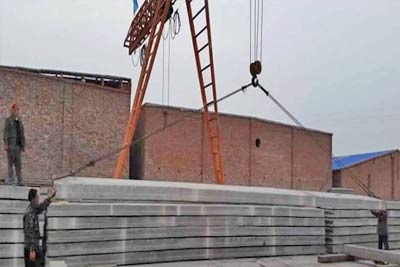 Truss gantry crane witn single girder design for precasting concrete plate handling
Truss crane, single girder gantry crane design, 3 ton -16 ton, for outdoor application with high wind resistance. Get your single girder truss crane.
√Gantry Crane Type: MH, √ Capacity : 3.2~32 ton, √ Span: 12-30m, √ Working Class:A3 - A 5
MH Type single girder truss crane is a type of single girder gantry crane, equipped with CD, MD hoist trolley, as the lifting system, crane operating mechanism, electric device and others. The structural form welded by angle steel or I-beam has the advantages of being low in cost, light in weight, and wind resistant.
Choosing the right crane for precast concrete handling is not just about picking the heaviest crane. You need to consider how you plan to use it, what loads you'll lift, and the environment it will operate in. A carefully chosen crane saves time, reduces maintenance, and keeps production smooth.
The crane must safely handle the heaviest component you will lift, including any lifting attachments or clamps.
Practical tip:
It's better to slightly oversize the crane than to risk overloading, which increases wear or causes accidents.
Different precast components behave differently under lifting:
Practical tip:
List all types of components you plan to lift, then select a crane capable of handling the most challenging load first.
Where the crane will operate affects the type, design, and safety features:
Practical tip:
Outdoor cranes often need weather-resistant coatings, rubber-tyred or rail-mounted mobility, and larger spans. Indoor cranes focus more on precision and compact footprint.
Practical tip:
Measure carefully. Underestimating height or span can lead to crane interference, limited reach, or additional modifications later.
Practical tip:
Match the crane class to your operational rhythm. Overworking a light-duty crane causes frequent maintenance.
The right crane works together with lifting attachments:
Practical tip:
Make sure the crane is compatible with these tools and can handle the combined weight safely.
Practical tip:
Design the crane for slightly higher capacity or modular adaptability. Retrofitting a crane later is often expensive and disruptive.
Concrete objects can be quite weighty! The precast concrete cranes and hoists' capacity is always an important specification. This ensures that the loads may be lifted safely. Lifting capacity is only one aspect of safe lifting. The attachments below the hook are also crucial. There are many below-the-hook attachments that can help you lift components safely and efficiently depending on the shape of the product you're lifting.
Because of the dust and water in the precast environment, components that can endure these factors are essential. The equipment must be engineered to handle high levels of dust in the air as well as wetness from the concrete mix. Precast industrial cranes and hoist travel motors, for example, must be protected from dust and moisture, or built in such a way that the quantity of traditional electrical components contained in them is minimized.
Electric wire rope hoists, such as the Yuantai Crane, are designed to work under these harsh conditions. With a conical rotor braking motor and a mechanical microspeed motor, the DH features limited electronics. This reduces the number of electrical components required for travel and braking while allowing the hoist to position the weight properly. A wide range of speeds is also possible with the conical rotor motor and mechanical microspeed motor, which helps to optimize the production process.
Get Your Tailored Precast Concerte Crane from Yuantai BetterCrane
Ready to find the right crane for your precast project? We can provide a customized solution that matches your loads, environment, and workflow.
To get started, simply provide the following details:
Once we have your information, we'll provide a suitable crane configuration along with a tailored quotation.
Practical tip:
Providing accurate details upfront helps us recommend the most efficient, safe, and cost-effective crane for your operation, saving time and reducing guesswork.
If you need to lift weights in a harsh environment, such as a precast yard or plant, work with a reputable crane manufacturer or dealer. Learn more about Yuantai Crane's precast cranes and hoists, which can withstand harsh conditions.
High-capacity 75 Ton gantry crane designed for heavy beam handling. Customizable solutions for efficient, safe lifting in construction projects.
Inquiry Online Leave a MessageThe 25-ton gantry crane is designed for outdoor precasting operations, efficiently lifting and transporting heavy beams and beam dies, ensuring safety, productivity, and durability in harsh conditions.
Inquiry Online Leave a MessageGantry cranes optimize precast wall handling, enhancing safety, efficiency, and cost-effectiveness in production, transportation, and installation of concrete panels.
Inquiry Online Leave a MessageOverhead bridge crane for sale. Custom 20-ton overhead bridge cranes improves mold handling efficiency, safety, and productivity in high-capacity precast plants.
Inquiry Online Leave a MessageEfficiently handles and erects precast and segmental box girders, ensuring safe, precise placement for large-scale bridge construction projects.
Inquiry Online Leave a MessageEnhance productivity and efficiency with 10-20 ton gantry cranes for handling medium-sized precast components in confined production areas.
Inquiry Online Leave a MessageSee how Yuantai supported a UAE 5 ton gantry crane project with customized hoist configurations, different lifting heights, and commissioning support.
32 ton container spreader beam supplied for 40ft container handling in Mozambique. Approx. 2.5 m beam with lifting chains included.
15 ton overhead crane project in Mexico with HD European system and steel structure. Practical industrial solution for reliable workshop lifting.
Need Latest Crane Price? Please leave us the required Crane's Capacity, Lifting Height, Span, Travelling Length & Voltage for Quick Quotation. Yuantai Crane www.bettercrane.com

Hi, there. I'm Lydia Liang, in Yuantai Crane since 2016. With years experiences in material handling crane equiment and industries ,we know so well about chinese cranes and chinese crane maufacuers , the advantages and limitations. Contact us now to check what we, Yuantai Crane, can do for you! And we will reply your inquiry within 24 working hours.