5 Ton Cantilever Gantry Crane for Sale in Poland | European Style
5 Ton European Style Single Girder Cantilever Gantry Crane for Poland
A Practical Material Handling Solution for Polish Manufacturing and Industrial Yards
In Poland's manufacturing and industrial sectors, equipment investments are often evaluated with a long-term perspective. Factory owners and production managers typically seek solutions that combine operational reliability, predictable maintenance costs, and measurable productivity improvements. When selecting a gantry crane, the focus is not only on lifting capacity but also on how the equipment contributes to efficient daily operations for many years.
This project demonstrates how a 5 ton European style single girder cantilever gantry crane was selected to support material handling activities in a Polish steel fabrication facility, where dependable performance, efficient use of yard space, and safe truck loading operations were key priorities.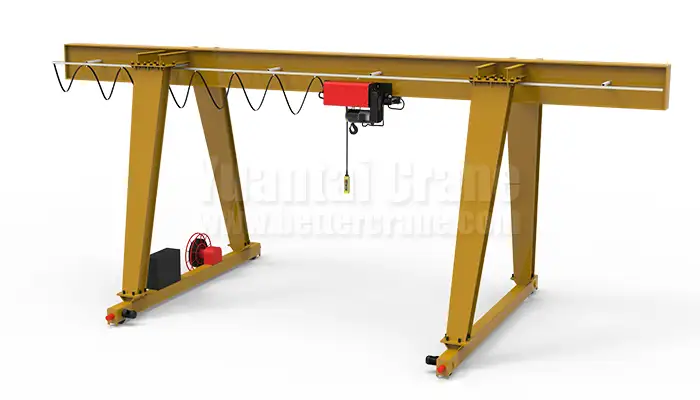
Customer's Operational Goals
(5 Ton European Style Single Girder Gantry Crane Project in Poland)
In many Polish industrial facilities, especially steel workshops and fabrication yards, the main focus is not only lifting capacity but how materials move day to day. This project follows that same thinking. The customer was not simply looking for a gantry crane for sale in Poland, but a stable material handling system that fits into real production work.
The site handles steel profiles, fabricated structures, and packaged components. Materials come in and go out every day. So the flow between storage yard, workshop area, and truck loading zone must stay smooth, without unnecessary waiting or backtracking.
It is simple in concept, but in practice it decides how fast orders are completed.
The customer's operational goals were clearly defined:
- Improve production flow between outdoor storage and fabrication workshop
- Reduce unnecessary internal transport, especially forklift double handling
- Increase truck loading and unloading efficiency in the yard area
- Support future production expansion without major redesign
- Invest in equipment with stable long-term service life and easy maintenance
In real industrial work, these points are closely connected. If material flow is slow, everything behind it slows down. One operator in the yard often says it directly: "If the crane waits, the whole line waits."
For this reason, the selected European style single girder gantry crane was expected to do more than lift loads. It needed to support a continuous working rhythm in the yard, especially during peak dispatch periods.
The final decision was to use a 5 ton gantry crane, not a larger model. This is a very typical decision in Polish manufacturing environments where investment control and operational realism matter more than oversized specifications.
The daily loads mainly included medium-weight steel assemblies and bundled materials. These do not require excessive lifting capacity, but they do require stability, repeatability, and safe handling.
Choosing a higher capacity crane would have increased steel structure cost, rail load requirements, and installation work, without real benefit to daily operations.
So the decision followed a straightforward engineering logic:
- Match crane capacity with actual working load, not theoretical maximum
- Keep structure weight reasonable for outdoor yard installation
- Avoid unnecessary cost in foundations and runway beams
- Maintain efficient operation speed for frequent lifting cycles
This approach is very common among Polish plant managers and engineers. As one practical saying goes in workshop discussions:
"Better a crane that works every day than one that is oversized but underused."
The selected configuration of the single girder cantilever gantry crane was not just about today's workload. It was also about long-term operating cost.
In many Polish industrial projects, the total cost of ownership is carefully considered, including:
- Electricity consumption during daily operation
- Maintenance frequency and spare part availability
- Rail wear and structural load on foundations
- Downtime risk during seasonal production peaks
The 5 ton gantry crane solution provided a balanced point between performance and cost control. It supports regular production without adding unnecessary complexity to maintenance routines.
In practical terms, it allows the factory to run daily operations with predictable behavior—no surprises, no overcomplication, just stable lifting work that fits the production rhythm.
Why a Cantilever Gantry Crane Was the Right Choice
(5 Ton European Style Single Girder Gantry Crane Project – Poland Application)
In many Polish industrial sites, especially older steel workshops and manufacturing plants, the layout has developed step by step over time. Storage areas, production buildings, and truck loading zones were often added at different stages, not planned as one integrated system.
So what happens in practice is quite familiar:
materials are stored here, processed there, and loaded somewhere slightly out of reach. It works, but not always in the most efficient way.
In this project, the customer was facing exactly this kind of situation. The goal was not to rebuild the yard, but to make better use of what already exists. No major civil works. No long shutdowns. Just a practical improvement in material handling flow.
This is where the cantilever gantry crane design becomes relevant.
Instead of limiting lifting movement strictly within the rail span, the cantilever structure allows the hook to extend beyond the main runway area. In simple terms, the crane "reaches further" into the working zone.
This small design change has a very direct effect on daily work. Materials do not need to be repositioned multiple times. Trucks can be loaded more directly. Operators spend less time adjusting material positions.
In Polish industrial practice, this kind of efficiency is often described in a straightforward way: "less movement, more work done."
Business Benefits of the Cantilever Gantry Crane Design
The decision to use a cantilever gantry crane in this 5 ton gantry crane project in Poland brought several practical and measurable advantages:
- Better use of available yard space
The crane can cover areas outside the main rail span, so storage zones do not need to be tightly aligned with crane tracks. This increases usable working area without expanding the facility. - Reduced need for additional infrastructure
There is no requirement for extra crane rails or separate lifting equipment for truck loading zones. One system handles multiple working points. - Improved loading access for transport vehicles
Trucks can be positioned closer to the loading area while the crane still reaches the load safely. This reduces repositioning time and simplifies coordination between crane operator and logistics staff. - More efficient storage layout
Materials can be placed based on production logic rather than crane limitation. That means better organization of steel profiles, fabricated parts, and outgoing shipments.
From an engineering point of view, the cantilever solution is not about adding complexity. It is about solving a layout limitation in a controlled way.
Instead of extending the entire crane runway or rebuilding the workshop structure, the cantilever section adjusts the working reach only where it is needed. This keeps the single girder gantry crane structure efficient while still improving coverage.
For many Polish manufacturers, this approach fits well with their investment logic:
- Keep the system simple
- Improve function without heavy construction work
- Avoid long production interruptions
- Focus on practical daily usability
Or in a more direct way often heard on the shop floor:
"If we can solve it without rebuilding everything, that is the better way."
After applying the cantilever gantry crane concept in this 5 ton gantry crane system, the material handling flow becomes more continuous.
- Loading points are easier to reach
- Material staging becomes more flexible
- Forklift dependency is reduced
- Yard congestion is minimized during peak operations
In real use, these changes do not look dramatic from a distance. But inside the daily operation of a Polish factory, they reduce small delays that usually accumulate throughout the day. And that is where real efficiency comes from.
Tailored Crane Specifications for the Poland Project
(5 Ton European Style Single Girder Cantilever Gantry Crane – Practical Design Case)
In many Polish industrial projects, especially in steel fabrication and outdoor storage yards, the most effective crane solution is not a standard catalogue selection. It is usually a result of matching real workflow conditions on site.
In this case, the European style single girder gantry crane was not selected first and then adapted. Instead, the design was built around how the customer actually works every day—how materials move, where trucks stop, and how storage is organized.
This is an important detail. Because in real factory operation, the crane is not an isolated machine. It is part of the material flow chain.
The 5 ton gantry crane for sale in Poland configuration was therefore defined based on:
- Typical steel bundle weight handled in daily operation
- Distance between storage zone and loading area
- Outdoor yard layout and travel path of the crane
- Truck positioning during loading and dispatch
- Available installation space without structural modification
Once these conditions were clear, the technical specification became straightforward and practical.
| Parameter | Project Specification |
|---|---|
| Crane Type | European Style Single Girder Cantilever Gantry Crane |
| Capacity | 5 Ton |
| Span | 16 m |
| Cantilever Extension | ±5.2 m |
| Lifting Height | 4.71 m |
| Hoist Type | European Low Headroom Wire Rope Hoist |
| Power Supply | 380V / 50Hz / 3 Phase |
| Control Method | Radio Remote Control + Pendant Control |
| Working Environment | Outdoor Storage Yard |
| Operation Mode | Frequent lifting cycles in yard logistics |
In Polish industrial environments, decision-makers usually focus on one practical question:
Will this equipment work every day without creating problems?
Not on paper. In real operation.
That is why the configuration of this single girder gantry crane system was kept balanced—no unnecessary complexity, no oversized structure, no features that do not serve daily production.
The selected 5 ton gantry crane with cantilever design provides a stable working range without pushing the structure beyond what is actually needed.
What the Design Delivers in Practice
- Adequate lifting capacity for real production loads
The 5 ton rating matches typical steel fabrication and storage handling tasks, without overdesign. - Efficient coverage of the storage and loading zone
The 16 m span combined with cantilever reach allows smooth access to both yard storage and truck loading positions. - Reduced structural weight for outdoor installation
A single girder design keeps the crane lighter, which helps reduce stress on runway beams and foundation requirements. - Lower maintenance demand in daily operation
Fewer components and simplified structure make inspection and servicing more predictable. - Energy-efficient operation for continuous use
European style hoisting and travel systems support stable movement with controlled power consumption.
European Style Single Girder Gantry Crane: A Strong Fit for Polish Industry
(Practical Perspective for 5 Ton Gantry Crane Applications in Poland)
In Poland's industrial environment—especially in steel fabrication, machinery production, and logistics yards—equipment is usually evaluated with a long working life in mind. It is not uncommon for plant managers to expect a crane to stay in service for many years, sometimes decades, with stable performance and manageable maintenance.
This is one of the main reasons the European style single girder gantry crane has become widely accepted in the region. It is not selected for appearance or trend, but for its practical engineering behavior in daily operation.
The design focuses on balancing structure and function. It is light enough to reduce load on rails and foundations, but still rigid enough to handle repetitive lifting cycles in outdoor conditions.
Key Practical Advantages in Real Industrial Use
In this 5 ton gantry crane for sale in Poland category, the European-style configuration is commonly preferred because it provides:
- Lightweight but structurally stable construction
The single girder design reduces dead weight, which is important for outdoor yard installations where ground and rail conditions must be carefully managed. - Reliable hoisting system built for repeated operation
The European wire rope hoist is designed for smooth lifting cycles, not occasional use. This matters in factories where the crane is used throughout the day. - Stable and controlled movement during operation
Travel and lifting motions are smoother, which helps operators position loads accurately, especially in tight loading zones. - Lower energy consumption during daily cycles
Efficient motors and frequency-controlled drives reduce unnecessary power spikes during start and stop operations. - Simplified maintenance access for technicians
Components are arranged in a way that makes inspection and servicing more straightforward, which is important for keeping downtime under control.
In many Polish manufacturing companies, investment decisions are not made only for current demand. They are usually made with a clear view of what the next 5 to 10 years of production may look like.
This is particularly true in steel processing, construction material supply, and logistics operations, where business volume can increase gradually but consistently.
A properly selected single girder gantry crane system gives this kind of flexibility. It does not need to be replaced when production increases moderately. Instead, it continues to support the same workflow with stable performance.
In this way, the crane becomes part of the long-term infrastructure of the business, not just a temporary machine on the yard.
Practical Benefits for Expanding Operations
- Supports increasing material flow without redesigning the yard system
- Allows integration with future production or storage expansion
- Reduces risk of early equipment replacement
- Maintains stable performance under higher usage frequency
- Keeps operating cost predictable over time
There is a practical mindset often found in Polish industrial decision-making. It is not about selecting the most advanced system on paper, but about choosing equipment that works consistently in real conditions.
That is why discussions often come back to reliability, service life, and cost control.
In many cases, this idea is expressed simply like this:
"Reliable equipment is an investment, not merely an expense."
This is not a slogan. It reflects how procurement decisions are evaluated in real factories—based on output stability, maintenance behavior, and long-term operating cost rather than short-term price alone.
The European style single girder gantry crane (5 ton class) fits this mindset well because it is designed to operate steadily in daily industrial use without requiring frequent adjustment or complex maintenance routines.
In this Poland application, the selection of a European-style gantry crane was not based on theory. It was based on how the equipment will actually be used on site:
- Continuous outdoor lifting cycles
- Regular truck loading and unloading
- Steel material handling with repetitive movements
- Requirement for long service life with predictable maintenance
Within this context, the 5 ton European style single girder gantry crane provides a balanced and practical solution that supports both current production needs and long-term operational stability.
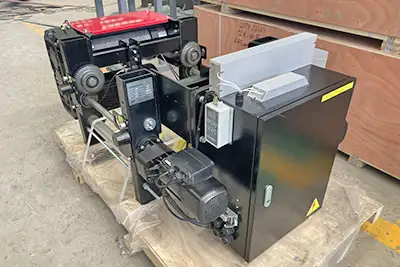 5 ton electric hoist for cantilever gantry crane
 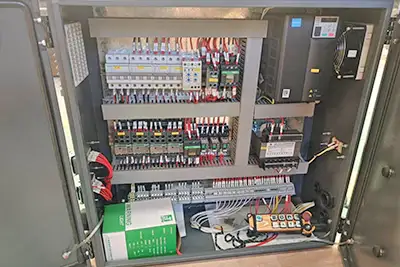 electric cabinet of 5 ton single girder gantry crane
 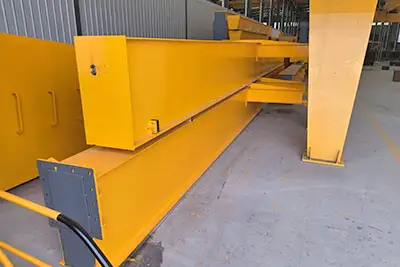 main girder of the single girder cantilever gantry crane 5 ton
 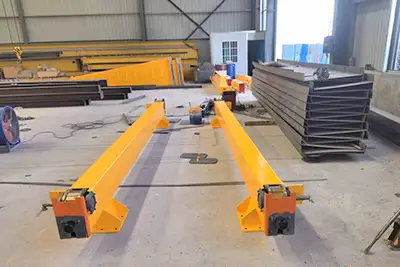 ground beam of the 5 ton cantilever gantry crane
 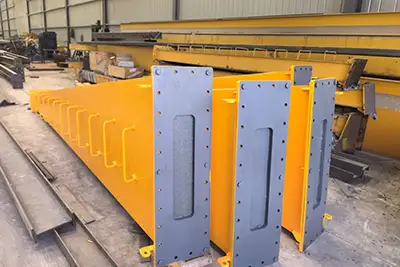 Supporting legs of 5 ton gantry crane with double cantilevers
 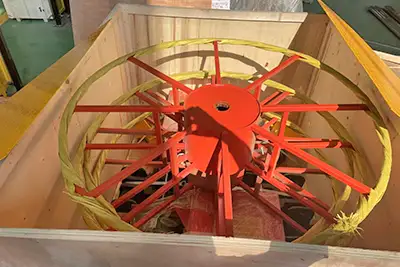 Power supply and other parts and components of cantilevered gantry crane 5 ton
 Designed for Poland's Climate and Working Conditions
(Outdoor 5 Ton European Style Single Girder Gantry Crane Application)
In Poland, industrial production does not stop because of weather. Steel workshops, fabrication yards, and logistics sites continue operating through cold winters, wet spring periods, and humid seasonal transitions. For outdoor lifting equipment, this creates a very practical requirement: the crane must remain stable and predictable in all conditions, not only in ideal weather.
This is why the 5 ton European style single girder gantry crane for this project was designed specifically for outdoor use, not as an indoor-adapted solution placed outside.
In real operation, the crane is expected to start in the morning even when temperatures are low, handle wet steel materials after rain, and continue working during snow periods without performance interruption.
This kind of environment is common in Polish industrial zones, especially in open storage yards and steel distribution facilities.
Designed Operating Conditions for the Gantry Crane
To match real working conditions in Poland, the gantry crane for sale in Poland (5 ton class) was configured for:
- Winter temperatures
Components are selected to maintain stable operation in low-temperature conditions, where lubrication behavior and metal contraction must be considered. - Rain and humidity exposure
Electrical and mechanical parts are protected to reduce moisture-related risks during frequent wet weather periods. - Snow exposure in outdoor yards
Structural design considers additional load conditions and safe operation during winter accumulation on crane surfaces. - Continuous outdoor industrial operation
The crane is intended for daily use in open-air storage and loading areas, not limited to sheltered workshops.
In practice, this means the crane is not treated as sensitive equipment requiring special conditions. It is designed to keep working under normal industrial exposure in Poland, where weather changes are part of daily operations, not exceptions.
For Polish industrial companies, especially in steel processing and manufacturing sectors, equipment investment is usually evaluated over a long lifecycle. The focus is not only on initial purchase, but on how the machine performs after years of continuous use.
This is particularly important for a single girder gantry crane system, where outdoor exposure is constant and operational cycles are frequent.
A key part of this project was therefore the application of a durable anti-corrosion protection system, designed to maintain structural condition and reduce long-term degradation.
Practical Asset Protection Priorities in Polish Industry
The design approach directly supports several long-term business priorities commonly seen in Poland's industrial sector:
- Extending equipment service life
Surface treatment and structural protection help slow down wear caused by weather exposure and daily operation. - Protecting capital investment value
The crane is treated as a long-term production asset, so maintaining structural integrity is essential for preserving its value over time. - Reducing avoidable maintenance costs
Better protection reduces the frequency of repainting, repair work, and unexpected downtime related to corrosion or environmental damage.
In real yard operations, maintenance interruptions are often more costly than planned production downtime. This is why Polish operators typically prefer equipment that can "stay in the field" without frequent corrective work.
For this 5 ton European style single girder gantry crane, the design goal is simple:
Keep the structure working, keep maintenance predictable, and avoid unnecessary interruptions caused by environmental wear.
Or as it is often understood in practical terms on site:
"The crane should work in the weather we have, not the weather we wish for."
The crane design for this Poland application takes into account real outdoor operating conditions, not theoretical standards alone.
- It supports year-round use in cold, wet, and snowy environments
- It is protected against corrosion and environmental wear
- It is structured to maintain long-term operational stability
- It helps reduce lifecycle maintenance costs for the customer
In this way, the European style single girder gantry crane (5 ton cantilever type) becomes a reliable outdoor working asset, suited to the practical realities of Polish industrial operations.
Productivity Improvements Achieved
(5 Ton European Style Single Girder Cantilever Gantry Crane – Poland Project Outcome)
After the installation of the European style single girder gantry crane (5 ton cantilever gantry crane), the customer's daily material handling process became noticeably more stable. In Polish industrial practice, this kind of improvement is often less about "speed increase on paper" and more about how smoothly the whole yard operates during real working hours.
Before, material movement depended heavily on forklifts and multiple repositioning steps. Now, lifting, transferring, and loading can be completed in a more direct flow between storage area and truck loading zone.
It is not a dramatic change in appearance, but in daily operation, it is felt immediately by operators and planners.
Operational Improvements Observed on Site
Following commissioning, the customer reported clear improvements in several key areas:
- Material flow efficiency
Materials now move in a more direct path from storage to loading. Fewer intermediate handling steps are required, especially for steel bundles and fabricated parts. - Truck loading speed
Loading operations became more structured. The cantilever reach allows better access to truck positioning areas without repeated vehicle adjustments. - Storage yard organization
Materials can now be placed based on production logic instead of crane limitation. This improves overall yard clarity and reduces congestion during peak periods. - Operator productivity
Crane operation is more consistent and less physically demanding compared to forklift-based handling. Operators can focus on positioning rather than repeated movement coordination.
In practical terms, one of the most important changes is not only speed, but predictability. The gantry crane for sale in Poland solution brought a stable rhythm to daily operations. When the crane is available and performs consistently, production planning becomes easier and logistics coordination becomes more reliable.
As one workshop manager might simply say: "Now we know how long loading will take. Before, it was always different."
In many Polish manufacturing and logistics facilities, the real operating cost of material handling is not only measured by crane lifting time. A large portion comes from indirect and often less visible factors.
This is where the 5 ton single girder gantry crane system delivered additional value beyond basic lifting performance.
Indirect Cost Reductions Achieved
After implementation, the customer experienced a reduction in several hidden operational costs:
- Lower forklift operating hours
Forklifts are now used mainly for short-distance positioning rather than heavy lifting, reducing fuel/electricity consumption and maintenance frequency. - Reduced internal transport movements
Materials no longer need to be moved multiple times between storage and loading zones. One direct lift replaces several handling steps. - Fewer material handling bottlenecks
During busy dispatch periods, the crane reduces congestion in the yard by handling loads more efficiently and directly. - Reduced product damage risk
Controlled lifting with a stable European style gantry crane reduces the chance of impact damage during transfer and loading operations.
These improvements are not always immediately visible in daily operations, but they accumulate over time. In many Polish industrial projects, this is where the real return on investment becomes clear—through reduced operational friction rather than just faster lifting cycles.
From a practical standpoint, the project did not only deliver a 5 ton gantry crane. It delivered a more organized working rhythm in the yard.
- Fewer unnecessary movements
- More controlled loading process
- Better use of manpower and equipment
- More predictable production planning
In long-term operation, these factors help the customer maintain stable output without increasing operational complexity.
Or in simple workshop language often heard in Poland:
"Less confusion in the yard means more real work done."
Why Many Polish Buyers Choose European Style Gantry Cranes
(5 Ton Single Girder Cantilever Gantry Crane Perspective in Poland)
When Polish companies evaluate a gantry crane for sale in Poland, the discussion usually goes beyond the initial purchase price. In most industrial projects—especially in steel fabrication, logistics yards, and manufacturing plants—the real concern is how the equipment will perform over its full service life.
A crane is not treated as a short-term purchase. It is a long-term production asset that runs every working day, often in demanding outdoor conditions. Because of this, decision-makers tend to focus on what happens after installation, not just the delivery stage.
In this European style single girder gantry crane (5 ton cantilever crane project) context, total cost of ownership becomes the key evaluation point.
Key Factors Considered by Polish Buyers
In practical procurement discussions, the following points usually carry more weight than the initial price alone:
- Maintenance costs over time
Buyers prefer designs that are simple to inspect, service, and maintain without frequent downtime or complex procedures. - Energy consumption during daily operation
With frequent lifting cycles in storage yards and loading areas, energy efficiency becomes a real operational cost factor. - Spare parts availability and replacement speed
Easy access to standard components reduces waiting time and keeps production running without long interruptions. - Equipment lifespan under real working conditions
Outdoor use in Poland requires cranes that can handle seasonal changes without rapid performance degradation. - Service accessibility and technical support
Quick technical response and clear maintenance guidance are valued more than theoretical specifications.
In practice, this means buyers are not only asking "how much does the crane cost?" but also:
- How much will it cost to operate it every year?
- How often will it require downtime?
- Can it support production without interruptions?
This is where the European style gantry crane design fits well into Polish industrial expectations—it is built around stable operation and long-term usability rather than short-term optimization.
In Poland's industrial sector, procurement decisions are often based on more than just technical specifications. Over time, companies tend to build relationships with suppliers who demonstrate consistency, reliability, and practical engineering understanding.
A crane project is rarely treated as a one-time transaction. It is closer to a long-term cooperation between the equipment supplier and the end user, especially when the crane becomes part of daily production flow.
For this 5 ton gantry crane project in Poland, the same principle applies.
What Polish Industrial Buyers Typically Value in a Supplier
In real procurement practice, buyers tend to prioritize suppliers who can provide:
- Clear and direct technical communication
Engineering details must be explained in a practical way, without unnecessary complexity. - Reliable engineering support during planning and installation
From layout confirmation to final commissioning, technical accuracy matters at every step. - Realistic project planning based on site conditions
Overpromising is avoided; practical constraints such as yard space, rail layout, and workflow are carefully considered. - Long-term service and cooperation mindset
Support after installation is often as important as the initial delivery.
In many Polish factories, trust is built gradually. It comes from stable performance, not marketing language. Once a crane system works reliably over time, the supplier relationship naturally becomes stronger.
As it is often understood in industrial practice:
"Good equipment is important, but a reliable partner is just as important."
For most Polish buyers, the decision to choose a European style single girder gantry crane is based on practical reasoning rather than preference for a specific design.
They look for:
- Stable daily operation
- Predictable maintenance
- Reasonable operating cost
- Long service life
- Clear technical support
The 5 ton gantry crane with cantilever design fits this logic well because it solves a real working problem in the yard while remaining simple enough to operate and maintain over time.
In real procurement situations, the decision can often be summarized quite simply:
- The crane must work every day without complications
- The cost must make sense over many years, not only at purchase
- The supplier must be dependable and technically clear
- The system must support production, not slow it down
This practical mindset explains why European style gantry cranes for sale in Poland continue to be widely selected across manufacturing, logistics, and steel processing industries.
Conclusion
The 5 ton European style single girder cantilever gantry crane supplied for this Poland project demonstrates how a carefully engineered lifting solution can support both immediate operational needs and long-term business objectives. With a 16-meter span, ±5.2-meter cantilever extension, and 4.71-meter lifting height, the crane improved storage yard efficiency, truck loading productivity, and overall material flow.
For Polish manufacturers and industrial operators, the value of a gantry crane is measured not only by its lifting capacity but also by its reliability, efficiency, and contribution to sustainable business growth. By focusing on practical performance, dependable operation, and long-term ownership value, European-style single girder gantry cranes continue to be a preferred choice for industrial facilities across Poland.