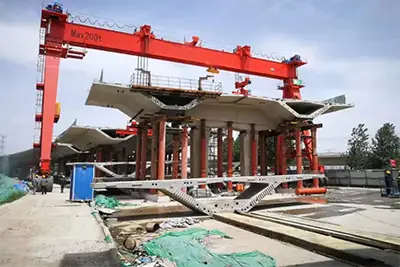
Rubber Tyred Gantry Crane (RTG) & Rubber Tyred Crane Systems for Industrial & Container Handling
Rubber tyred crane systems are mobile lifting machines used in storage yards and industrial sites where fixed rail tracks are not needed. They run on rubber wheels and can move freely on the ground. This makes yard planning simpler and more flexible.
At BetterCrane (bettercrane.com), rubber tyred crane systems are designed based on real working conditions in the yard. We do not only focus on the crane itself, but also on how materials move from one point to another during daily operation.
Different yards have different needs. Some handle steel coils, some handle containers, and some deal with precast concrete products. The crane layout should match that working flow.
- Designed based on actual yard operation
- Suitable for steel, container, and precast yards
- Flexible planning for future expansion
- Focus on practical material flow, not only specifications
In most projects, the key is not just choosing a crane. It is choosing a system that fits how the yard actually works day by day.
Get Tailored Rubber Tyred Gantry Crane Solutions for Your Material Handling Needs
Types of Rubber Tyred Lifting Equipment-Customized Options for Different Projects
Rubber tyred lifting equipment is not a single standard machine. It is a group of different crane types designed for different yard conditions, load types, and working flow.
In many projects, the selection is not only about capacity. It is also about how the yard is arranged and how materials move during daily operation.
Below are six common customized rubber tyred crane solutions used in steel yards, container terminals, and industrial storage areas.
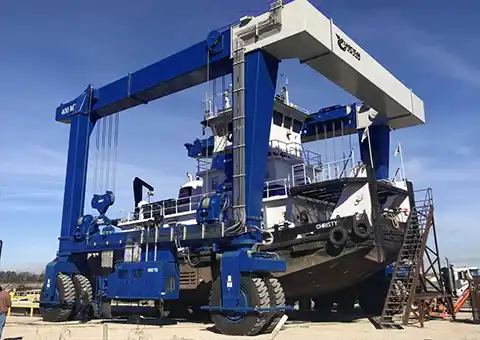
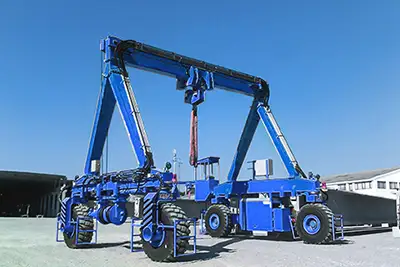
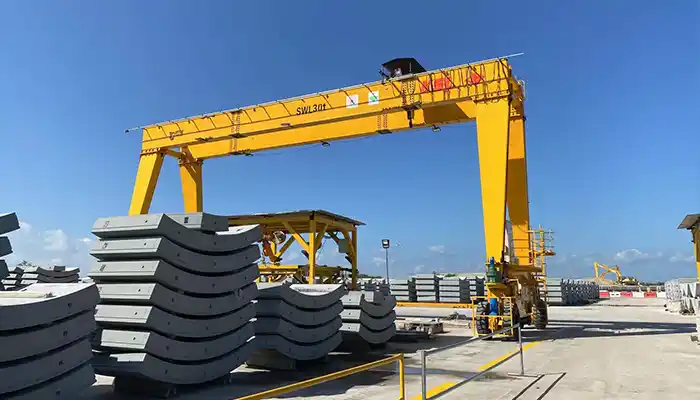
This type of rubber tyred crane is the most widely used type in heavy-duty yard operations for handling long, large, heavy and difficult to handled objets or weights, etc.
It is suitable for large-scale lifting tasks where both height and capacity are required.
Typical applications:
- Steel coil and slab handling
- Heavy precast concrete lifting
- General industrial yard stacking
Main technical range:
- Lifting capacity: 5 ton –900 ton
- Span: 5m–50m
- Lifting height: 5m–30m
This type is often selected when the yard needs to handle different load sizes in one system, without changing equipment frequently.
Get Tailored Rubber Tyred Gantry Crane Solutions for Your Material Handling Needs
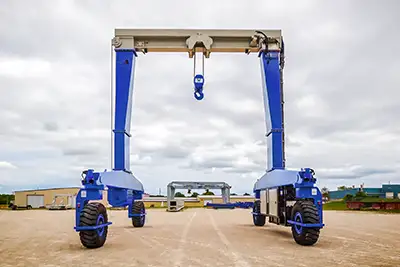
This is a lighter structure design, often used when the load is not extremely heavy but flexibility is required.
Typical applications:
- Medium material storage yards
- Workshop outdoor handling areas
- Limited space lifting operations
Main technical range:
- Lifting capacity: around 3 ton to 20 ton, customized available.
- Span: customized.
- Lifting height: custoized
It is often used in smaller yards where cost control and simple operation are more important than ultra-heavy lifting.
Get Tailored Rubber Tyred Gantry Crane Solutions for Your Material Handling Needs
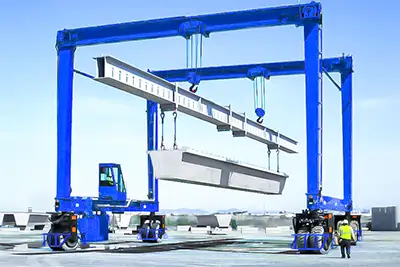
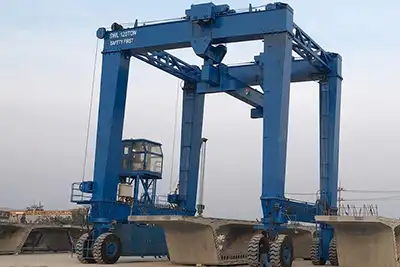
This type is designed for heavier and more stable lifting requirements.
Typical applications:
- Steel production yards
- Precast beam handling
- Heavy industrial material storage
Main technical range:
- Lifting capacity:1 ton to 20 ton
- Span: customized
- Lifting height: customized.
The single beam structure provides better flexibility, and much economical solution when the working requirement is not so demanding.
Get Tailored Rubber Tyred Gantry Crane Solutions for Your Material Handling Needs
This is a heavy-duty configuration designed for large span and high lifting height requirements.
Typical applications:
- Large steel storage yards
- Heavy equipment handling areas
- Container and bulk material yards
Main technical range:
- Lifting capacity: 3 ton to 80 ton, open winch trolley up to 320 ton
- Span:Customized
- Lifting height: Customized.
The A-frame structure helps improve stability during long-span lifting operations. It is often selected when the yard requires wide coverage.
Get Tailored Rubber Tyred Gantry Crane Solutions for Your Material Handling Needs
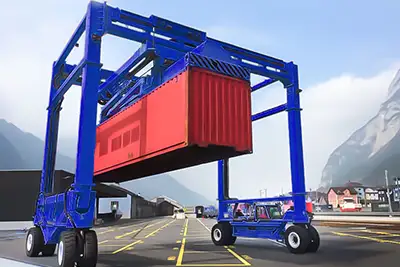
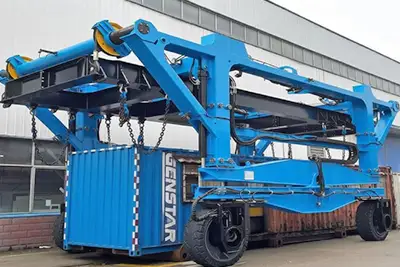
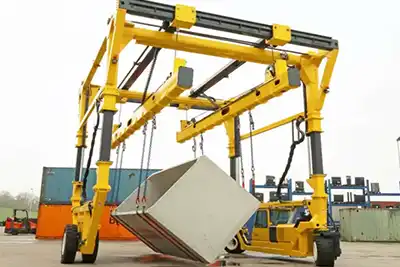
This equipment is designed for both lifting and transporting containers within the yard.
Typical applications:
- Container terminals
- Port loading and unloading zones
- Logistics distribution yards
Main technical range:
- Lifting capacity: 35 ton to 50 ton, tailored as per your solution
- Span: Customized
- Lifting height:Customized
Unlike RTG cranes, this type can carry containers over short distances, which helps reduce the need for additional transport equipment inside the yard.
Get Tailored Rubber Tyred Gantry Crane Solutions for Your Material Handling Needs
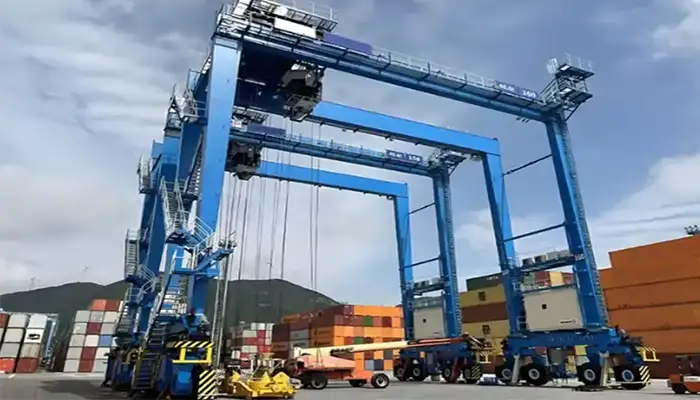
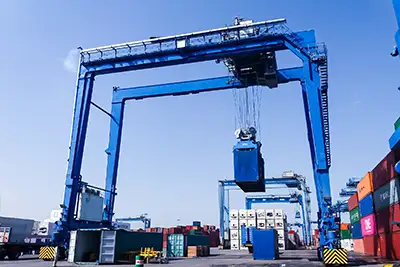
This is a dedicated solution for container stacking and handling operations.
Typical applications:
- Container storage yards
- High-frequency loading and unloading areas
- Intermodal logistics centers
Main technical range:
- Lifting capacity: 35 ton, 41 ton, 70 ton, and customized
- Span: 18m–30m
- Lifting height: 12m–22m
This system is often used when container turnover is high and yard space needs to be used efficiently.
Get Tailored Rubber Tyred Gantry Crane Solutions for Your Material Handling Needs
Application-Based Classification of Rubber Tyred Crane Systems
Rubber tyred crane systems are selected based on how the yard operates rather than fixed model categories. Different industries share similar handling needs, but the working conditions, load types, and movement patterns are not the same. Because of this, the application determines the final crane configuration.
Below is a simplified classification that removes repetition and groups similar working environments together.
This category includes container terminals, intermodal yards, ports, and large logistics hubs where materials need to move continuously between storage and transport areas.
Typical equipment used:
- Rubber Tyred Gantry Crane (RTG)
- Rubber Tyred Straddle Carrier
- Rubber tyred container handling systems
Typical capacity range:
- RTG crane: 30t–120t (container lifting configuration)
- Straddle carrier: 40t–60t
In these yards, the main requirement is not only lifting, but also frequent movement and fast repositioning across different container rows. Equipment is often selected based on how efficiently it supports container flow inside the yard.
Key working features:
- No rail infrastructure required
- Flexible movement across storage lanes
- Suitable for continuous loading and unloading cycles
- Supports high-frequency container handling operations
This category includes steel mills, fabrication plants, and industrial storage yards where heavy and dense materials are handled regularly.
Typical materials:
- Steel coils
- Steel slabs
- Bundled steel products
Typical equipment used:
- Industrial Rubber Tyred Gantry Crane
- Double Beam Rubber Tyred Gantry Crane
- A Frame Rubber Tyred Crane
Typical capacity range:
- 50t–900t depending on configuration
- Common working range: 80t–300t for steel coil and slab handling
In these applications, the focus is on controlled lifting and structural stability. The crane must maintain balance when handling uneven or long loads, especially during slow movement and positioning.
Key requirements:
- High structural strength for heavy-duty use
- Stable lifting performance under large loads
- Anti-sway control during operation
- Continuous working capability in industrial environments
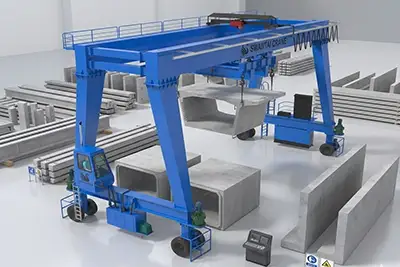
This category includes precast concrete yards, bridge construction sites, and temporary storage areas where large structural components are handled.
Typical materials:
- Concrete beams
- Slabs
- Bridge segments
Typical equipment used:
- Single Beam Rubber Tyred Gantry Crane
- Double Beam Rubber Tyred Gantry Crane
- A Frame Rubber Tyred Gantry Crane
Typical capacity range:
- 30t–200t depending on project scale and component size
These operations often require flexible yard layouts, because production stages and storage positions may change over time. Equipment selection focuses on adaptability rather than fixed installation.
Key advantages:
- No rail foundation required
- Flexible yard layout adjustment
- Suitable for changing production and storage zones
- Easy relocation within the working area
This category includes wind energy projects, shipyards, and large infrastructure assembly yards where oversized components need to be lifted and positioned.
Typical materials:
- Wind turbine towers and blades
- Large bridge segments
- Shipbuilding structural sections
Typical equipment used:
- Heavy-duty A Frame Rubber Tyred Crane
- Customized RTG systems for large-span lifting
Typical capacity range:
- 100t–600t depending on component size
In these projects, lifting height, span, and precision positioning are more important than speed. The equipment is usually designed for large-scale structural handling rather than repetitive cycle work.
Key requirements:
- Large span and lifting height capability
- High positioning accuracy
- Stable performance for long and oversized loads
- Adaptability to temporary or project-based yards
Get Tailored Rubber Tyred Gantry Crane Solutions for Your Material Handling Needs
Key Advantages of Rubber Tyred Crane Systems
Rubber tyred crane systems are widely used in modern yards because they remove many fixed-structure limitations and make layout planning easier. Instead of relying on rails, they operate directly on the ground, which simplifies both installation and future changes.
- No rail infrastructure required, reducing early construction work
- Flexible yard layout, allowing easy adjustment of working zones
- Suitable for both container handling and industrial material lifting
- Easy relocation between different areas within the same yard
- Lower civil construction cost compared with rail-mounted systems
- Scalable design, allowing future yard expansion without major modification
Featured of Rubber Tyred Crane Systems
The featured rubber tyred crane systems are tailored as per the tailored specificaitons of particular industrial sectors and application condtions, environments, and typical loads handling, etc. If you have any need of tailored rubber tyred overhead gantry crane system, please feel free to contact Yuantai Crane, who is aimed to offer better crane solution for your material handling.