Affordable solution with flexible options for small workshops needing efficient, budget-friendly overhead crane systems. Get 2 ton overhead crane price !
Introduction: Why Startups Choose 2 Ton Overhead Cranes
For small workshops and new manufacturing businesses, keeping costs under control is a daily concern. Whether you're just setting up operations or expanding into a larger space, lifting equipment becomes a necessary part of your workflow sooner or later. And that’s where a 2 ton overhead crane comes in — it’s small enough to fit compact spaces, strong enough for most light-duty lifting jobs, and affordable enough to not overwhelm your startup budget.
This size of crane is one of the most requested by workshop owners who handle parts, molds, dies, or light machinery. You don’t need massive lifting capacity right away — what you need is a dependable, safe, and reasonably priced solution that can grow with you. And yes, you want it without all the extra costs you don’t really need in the beginning.
Here’s what makes the 2 ton crane especially practical for startups:
- Just the right lifting capacity
Perfect for lifting jobs up to 2,000 kg — small molds, steel profiles, maintenance gear, or tooling. No need to overinvest in a larger crane that may sit idle 90% of the time.
- Fits into smaller workspaces
Available in compact single girder and even low-headroom configurations, a 2 ton overhead crane works well even in tight bays or under low ceilings.
- Covers long spans when needed
Even with only 2 tons of lifting capacity, these cranes can be built with spans up to 30+ meters, ideal for workshops with long production lines or spread-out workstations.
- Low maintenance and easy operation
Basic configurations often come with pendant controls and standard-duty wire rope hoists, keeping the operation simple and the maintenance needs low.
- Affordable pricing options
Depending on the design — overhead, gantry, or jib — pricing typically starts around $2,000 for portable options and ranges up to $40,000+ for larger spans and advanced features.
So, if you’re buying your first crane, this guide will help you figure out what really matters — what specs you actually need, what type fits your layout, and how to avoid overpaying. Let’s get into the practical details of choosing a 2 ton overhead crane that works for your startup’s needs — and budget.
Types of 2 Ton Overhead Cranes and Applications
When you're choosing your first crane, it’s not just about how much it can lift — it’s also about how it fits your space and your daily operations. A 2 ton overhead crane is versatile, but it comes in multiple configurations to match different environments, from small indoor workshops to outdoor work yards.
Startups often have unique layouts — maybe you're working with limited headroom, no existing runway beams, or needing to move the crane between bays. Thankfully, 2 ton cranes are available in fixed, mobile, and even wall-mounted designs to match different constraints.
Below is a practical look at the most common types of 2 ton cranes and where they work best:
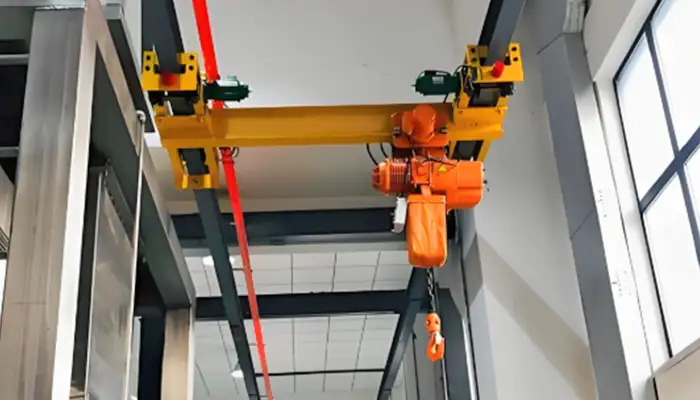
2 ton overhead crane with underhung design, NLX underhung overhead cranes
Common Types of 2 Ton Overhead Cranes
Single Girder Overhead Crane
This is the go-to solution for most small workshops. It runs on fixed beams across the building and offers a good mix of lifting power and efficient use of space.
- Best for: Fabrication shops, parts assembly lines, general light-duty lifting
- Why choose it: Lower cost, simple design, and fits in most small to mid-size buildings
- Bonus: Available in low-headroom versions if your ceiling height is limited
Double Girder Overhead Crane
A more robust version of the single girder. It offers more hook height (the hook can go closer to the top of the crane), and smoother lifting stability.
- Best for: Applications needing precise positioning or frequent lifting across long spans
- Why choose it: Better stability, higher lifting height, and optional features like service platforms or maintenance walkways
- Keep in mind: Higher cost and needs more vertical clearance
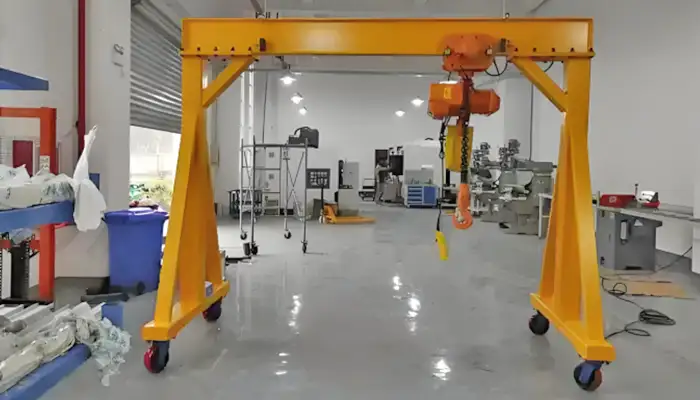
Portable Gantry Crane
Light, mobile, and cost-effective. These are not fixed in one spot and are often used for temporary jobs or maintenance tasks.
- Best for: Repair areas, equipment maintenance, or light part assembly
- Why choose it: You can roll it to where you need it, then store it out of the way
- Limitations: Limited height and span, not suitable for continuous production lifting
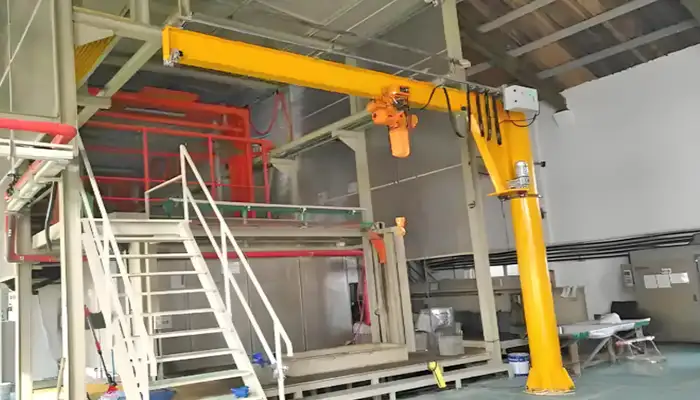
2 ton pillar jib cranes for sale
Pillar Jib Crane & Wall-Mounted Jib Crane
These cranes provide localized lifting in a small working radius. They’re fixed to a column or wall and allow manual or motorized swing movements.
- Best for: Lifting at workbenches, CNC machines, or packaging lines
- Why choose it: Saves space and keeps lifting near the operator’s station
- Design options: Pillar-mounted offers 360° rotation; wall-mounted saves floor space
Wall Travelling Jib Crane
This version of the jib crane moves along rails mounted to a wall. It’s a good alternative when overhead cranes aren’t feasible due to space or budget.
- Best for: Assembly lines along the walls, or workshops with structural constraints
- Why choose it: Provides travel without using up floor space or installing a full crane runway
- Note: Needs a strong wall structure for mounting and smooth movement
Electric Hoist
This isn’t a crane by itself but is often used as a hoisting unit mounted to beams, trolleys, or simple structures.
- Best for: Light lifting without needing a full crane system
- Why choose it: Very low cost, simple to use, easy to integrate into DIY or small setups
- Add-on option: Can be used with monorails or jib arms for guided travel
Each of these 2 ton overhead crane types serves a specific purpose. Choosing the right one depends on your building layout, lifting habits, and whether you expect to expand your operations in the near future. The good news? You don’t need to overspend to get a crane that works for you — just pick the format that fits your shop, and keep the extras to a minimum unless they’re truly needed.
2 Ton Crane Specifications & Price Table
When it comes to pricing a 2 ton overhead crane, many buyers are surprised at how much the cost can vary. The truth is, the price isn’t just about the lifting capacity — it’s about the type of crane, the span, the lifting height, the environment it’s going into, and what features you really need.
Below is a practical specification and price table to help you understand your options. This gives you a real-world look at what startup owners are paying, and what they’re paying for. It’s not just a list of numbers — it's a tool to help you compare what's available and figure out what’s necessary vs. what’s optional.
2 Ton Crane Types, Specifications, and Price Reference Table
| Crane Type |
Span (m) |
Lifting Height (m) |
Power Supply (V) |
Features / Application |
Price (USD) |
| Single Girder Overhead Crane |
7.5 – 31.5 |
6 – 30 |
220–480 / 3 phase / 50Hz |
Ideal for general workshop use; cost-effective, compact |
$1,500 – $8,000 |
| Single Girder Gantry Crane |
7.5 – 31.5 |
6 – 30 |
220–480 / 3 phase / 50Hz |
For outdoor or open indoor spaces; easy to install |
$1,800 – $10,000 |
| Portable Gantry Crane |
2 – 12 |
1 – 9 |
220–480 / 3 phase / 50Hz |
Mobile crane for occasional lifting or maintenance work |
$1,000 – $4,500 |
| Pillar Jib Crane |
3 – 12 |
3 – 8 |
220–480 / 3 phase / 50Hz |
Fixed to the floor; rotates 360°, used next to machines |
$1,500 – $4,000 |
| Wall Mounted Jib Crane |
3 – 8 |
6 – 30 |
220–480 / 3 phase / 50Hz |
Space-saving option; fixed to wall or structural columns |
$2,500 – $5,500 |
| Wall Travelling Jib Crane |
5 – 12.5 |
6 – 30 |
220–480 / 3 phase / 50Hz |
Jib crane moves laterally on rails; ideal for long assembly bays |
$2,800 – $8,500 |
| Electric Hoist (Standalone) |
– |
– |
220–480 / 3 phase / 50Hz |
Hook or trolley type; for integration with existing beams |
$400 – $2,000 |
Note:For the latest price and detailed quotations based on your specific requirements, please contact us directly. Prices may vary depending on the configuration, customization options, and order quantity.
What Affects the Final Price?
Even within the same crane type, pricing can vary a lot depending on your setup. Before asking for a quote, consider the following:
Lifting Height & Span
- The longer the crane span or higher the lift, the more materials and reinforcements are needed.
- A 2 ton overhead crane with a 9-meter span will cost less than one with a 30-meter span.
Environment and Usage
- Outdoor cranes may need corrosion-resistant paint, covers for motors, or stainless components.
- Hot or dusty environments (e.g. foundries, woodworking) may require sealed components.
Optional Features
- Inverter-controlled speed adjustment
- Wireless remote controls
- Anti-collision systems
- Rain covers for outdoor use
- Flameproof or explosion-proof designs for hazardous areas
Practical Tip
Always be specific when asking for a quote. Include:
- Span
- Lifting height
- Power supply
- Indoor/outdoor use
- Special environmental conditions (dust, rain, heat)
- Desired control method (pendant, remote, cabin)
These details allow suppliers to provide a realistic offer without delays or expensive change orders later on.
Getting the right 2 ton overhead crane is about balancing your needs with your budget. Don’t just look at the cheapest model — look at what gives you the safest and most efficient operation for your workspace. A slightly higher upfront cost for better controls or easier maintenance may save you more down the line.
2 Ton Overhead Crane Power Requirements and Setup Considerations
Before you order a 2 ton overhead crane, it's important to make sure it fits your power supply and your workshop layout. These are the basics that can either make installation easy or cause expensive delays.
Power Supply Basics
Most 2 ton cranes use 3-phase power between 220V and 480V at 50Hz. This is standard in most factories and industrial buildings.
But if your workshop only has single-phase power, you’ll need a special hoist made for that. It may also mean fewer features, like slower speeds or manual trolleys.
What to check before ordering:
- What kind of power do you have — 3-phase or single-phase?
- What voltage is available — 220V, 380V, or 415V?
- Is your power stable enough for running motors?
If you’re not sure, ask your electrician or supplier. It’s better to sort this out early than fix it later.
Setup and Space Considerations
Along with power, make sure your crane will fit the space where it needs to work.
Key things to look at:
- Runway beams or floor space — Overhead cranes need beams to run on; gantry cranes need rails or a flat floor.
- Headroom — Check how much space is available above the hook. Some cranes are designed for low ceilings.
- Control space — Think about where the operator will stand. Pendant controls need clear walking paths. Wireless remotes need a good signal and safe operating distance.
How to Avoid Overpaying for Your First Crane
If you’re buying your first crane, it’s easy to go over budget by picking the wrong type or adding features you don’t really need. Here’s how to keep your costs under control.
Make a Simple Checklist
Before you ask for a quote, answer these questions:
- What will you lift and how heavy is it?
- How often will you use the crane each day?
- How wide is the area the crane needs to cover?
- How high do you need to lift?
- Will the crane be used indoors or outdoors?
- Do you want basic pendant controls or a wireless remote?
This helps suppliers recommend the right setup without extras that add cost.
Don’t Choose Features You Won’t Use
Some options sound nice but aren’t needed for basic lifting:
- Variable speed (inverter) is useful but adds cost.
- Heavy-duty hoists are good for frequent lifting, but may not be needed for occasional use.
- European brands offer precision, but basic designs work well for most startups.
Choose Modular Designs When Possible
Modular cranes come in parts and are easier to deliver and install. This can save money, especially if your building is far from the supplier or hard to access.
Work With the Right Supplier
Choose someone who:
- Understands your type of work
- Offers support and layout suggestions
- Doesn’t push you to buy the most expensive model
Compare Options Before You Decide
Ask for a few options:
- A basic crane that fits your current needs
- A mid-range setup with helpful upgrades
- A version that can grow with your workshop
This lets you see what’s worth paying extra for — and what isn’t.
Buying the right 2 ton overhead crane means choosing a crane that works well today and still fits your plans for tomorrow. Keep it simple, stay focused on your real needs, and you’ll avoid overspending.
Comparing 2 Ton Overhead Crane Costs
When it comes to 2 ton overhead crane price and options, you’ll quickly notice there’s no one-size-fits-all cost. Prices can start around $2,000 for a simple portable gantry crane and go up to $40,000 or more for a fully-equipped overhead system with advanced features. What makes the price jump? Several things — and not all of them may be necessary for your job.
Let’s break it down so you know what you're paying for and what you can skip.
Common Price Ranges (USD)
Here’s a basic idea of what you might expect to pay:
- Portable Gantry Crane: $1,000 – $4,500
- Single Girder Overhead Crane: $1,500 – $8,000
- Gantry Crane (Single Girder): $1,800 – $10,000
- Wall-Mounted or Pillar Jib Crane: $1,500 – $5,500
- Electric Hoist Only: $400 – $2,000
These are base prices. Add features, and costs rise.
What Drives the Price Up?
Some upgrades are optional. Others may be essential based on your workshop needs.
- Custom span and lifting height
Longer spans or taller lifts require more steel and stronger motors. For example, a crane with a 30-meter span will cost much more than one at 7.5 meters — even if both lift 2 tons.
- European-type hoists
These hoists are compact, quiet, and have smoother controls, but they cost more than standard wire rope hoists. If your work involves precise movement or frequent lifting, it may be worth it.
Control systems
- Wireless remotes are convenient but more expensive than pendant controls.
- Variable frequency drives (inverters) allow smoother starts/stops and adjustable speeds. Useful in assembly lines, less important for simple lifting.
- Anti-sway controls or limit switches can be added for better safety — these also raise costs.
-
Explosion-proof or corrosion-resistant designs
If you work in dusty, wet, or flammable environments, you'll need special protection. These cranes cost more because of sealed motors, flameproof wiring, and stainless parts.
Which Costs Are Worth Paying?
It depends on your actual operations. Here’s a simple guide:
Pay extra for these if:
- You lift materials frequently every day (better hoist motor or inverter is helpful)
- You operate in outdoor, corrosive, or hazardous conditions (need weather or explosion-proof features)
- Your workers need better safety and ease of use (wireless control, limit switches)
Skip or delay these if:
- You only lift a few times per week
- Your workspace is indoors, clean, and has steady power
- Your production is simple, and you’re just starting out
A Practical Tip
When asking for a quote, don’t just say “I need a 2 ton crane.” Instead, give basic specs like:
- Span and lifting height
- Frequency of use (daily, weekly?)
- Indoor or outdoor use
- Power available
- Any special needs (low ceiling, remote control, etc.)
This helps suppliers give you a more accurate 2 ton overhead crane cost, tailored to what you actually need — not just what they want to sell.
Knowing where your money goes helps you choose the right crane without wasting budget on upgrades that don’t benefit your operation. Keep your goals in mind, and let your actual workload guide the choices.
Where to Buy a 2 Ton Overhead Crane
Once you've decided on the type and features, the next big question is — where do you actually buy a 2 ton overhead crane for sale?
You’ll find both local and international suppliers offering a wide range of options, but each comes with its own pros and trade-offs. For startup businesses, it’s important to look beyond just the price and consider delivery time, installation support, and after-sales service.
Local vs. International Suppliers
- Local suppliers
Offer easier communication, faster on-site support, and quicker delivery if they have stock. However, their prices are often higher due to domestic labor and production costs.
- International suppliers
Usually offer lower prices, especially from manufacturing hubs like China. The trade-off? Longer lead times, possible customs procedures, and the need for clear technical communication.
Why Many Startups Choose Chinese Manufacturers
Chinese crane manufacturers have become popular with small and medium workshops around the world — and for good reason.
- Lower pricing without compromising basic quality
- Most offer CE, ISO certifications, and follow standard design codes
- Strong experience with custom orders for different span sizes, lifting heights, and power voltages
- Many provide detailed drawings and online support, and partner with third-party inspection agencies
If you’re looking to stretch your budget while still getting a reliable system, sourcing from China can be a practical choice — especially if your team can handle simple installation or work with a local contractor.
What to Ask for in a Quote
To get an accurate and useful quote, include these details:
- Span (distance the crane needs to cover)
- Lifting height
- Power supply (voltage and phase)
- Usage frequency (daily, weekly, occasional?)
- Indoor or outdoor use
- Preferred controls (pendant or wireless)
Clear specs help avoid miscommunication and prevent costly changes during production or delivery.
Conclusion: Smart Investment for Long-Term Growth
Choosing a 2 ton overhead crane is a smart move for any small workshop or startup business looking to improve efficiency without overspending. It’s the right size for most entry-level lifting tasks, and it comes with enough flexibility in span, height, and control options to match real-world needs.
You don’t need the most expensive crane on the market — you need one that works well, fits your space, and supports your daily operations. When properly selected, a 2 ton crane strikes the perfect balance between cost-effectiveness and reliability.
And remember — today’s crane is not just about today’s workload. It’s about building the foundation for future growth. A well-chosen crane system gives you the lifting capacity you need now and the structure to scale up when your business grows.
Ready to take the next step toward upgrading your workshop’s lifting setup? Don’t settle for a one-size-fits-all solution. A 2 ton overhead crane can be tailored to fit your exact space, lifting frequency, and future goals — but only if the details are right.
Here’s how to get started:
- Request a customized quote
Share your workshop layout, lifting height, span, and power supply. A detailed quote with drawings will help you plan confidently and avoid surprises later.
- Get expert help choosing the right setup
Whether you’re unsure about the hoist type, control system, or crane structure, we’ll walk you through the options. We help you balance performance with cost — without the upsell.
- Ask about add-ons and services
Not sure if you need weatherproofing or extra safety features? Need help with crane installation or electrical work? We’ll guide you through corrosion protection, delivery, installation, and available warranty support.
Your first crane should work well, fit right, and last long. Contact us today and let’s find the right 2 ton overhead crane for your business.