Explore price ranges and options for 20 ton overhead cranes, including custom single and double girder EOT models.Get your 20 ton overhead crane price!
20 Ton Overhead Crane Price Guide: Customized Single & Double Girder EOT Cranes
Choosing the Right 20 Ton EOT Crane Starts with Understanding Your Needs
Electric Overhead Traveling (EOT) cranes, especially in the 20-ton range, are essential tools in many industries. From lifting heavy steel components in fabrication plants to handling bulky equipment in warehouses, these cranes do the heavy lifting that forklifts and manual labor just can't manage. When you're moving 20 tons at a time, reliability, safety, and the right configuration aren't just “nice to have”—they’re mandatory.
Why the Price of a 20 Ton Overhead Crane Isn’t One-Size-Fits-All
If you’re looking for a price tag right away, the answer is: it depends. Not to dodge the question, but the cost of a 20-ton EOT crane varies a lot based on several real-world factors. A simple single girder model can start from around $7,100, while a double girder crane with advanced lifting systems could go up to $45,900 or more.
Here’s what makes the difference:
- Girder Type
Single girder cranes are simpler, cheaper, and easier to install. Double girder cranes are built for more frequent use and tougher loads, and usually cost more.
- Lifting Height and Span
The higher the lift or the longer the span, the more steel, hoisting power, and control systems are needed.
- Application Environment
Cranes for steel mills, shipyards, or explosive environments need special design tweaks—like heat insulation or explosion-proof components—which adds to the price.
- Trolley Type
Hoist trolley vs. winch trolley—winch systems offer more control and power but are also more expensive.
- Voltage and Power Supply Requirements
If your site runs on 440V or 660V, your crane needs to match that—custom voltage solutions may also affect lead time and pricing.
Sometimes, the standard models just won't cut it. You might need a low headroom crane for tight spaces, or an electromagnetic crane for scrap steel handling. Maybe your environment is hazardous and requires explosion-proof protection. These aren’t optional features—they’re vital for getting the job done safely and effectively.
When talking about price, this is why asking, “How much is a 20-ton crane?” isn’t enough. A better question is: “What kind of 20-ton crane do you actually need for your site?” That’s where we come in.
We’ll help you match the right crane configuration to your exact application—no guessing, no overspending, and no missing safety requirements.
Factors That Influence the Price of a 20 Ton Overhead Crane
When it comes to buying a 20-ton overhead crane, the price isn’t just about the crane’s size. It’s a mix of design choices, working conditions, and how much customization is needed. Let’s break down the main factors that affect cost—so you know where your money’s going and what’s worth investing in.
Crane Type
Single Girder vs. Double Girder: Which One Suits Your Job?
This is usually the first decision—and it has a big impact on both price and performance.
Single Girder Cranes
- More affordable and simpler in structure.
- Ideal for light to moderate use.
- Easier to install and maintain.
- Typically limited in lifting height and accessories.
Double Girder Cranes
- Stronger and better for frequent, heavy-duty operations.
- Can carry larger hoists, magnets, grabs, or custom equipment.
- Offers greater hook height—useful when every inch of lift matters.
- More expensive due to extra steel and engineering.
If your operation runs multiple shifts or involves intensive use, double girder is worth the extra cost. For basic material handling or occasional lifts, single girder might be all you need.
Design Style
Standard, Low Headroom, or European Style?
The structure of the crane impacts how it fits into your workshop—and how much it costs.
Standard Design
- Traditional box girder structure.
- Cost-effective and widely used.
Low Headroom Design
- Designed for tight vertical spaces.
- Trolley runs close to the beam to save headroom.
- Slightly more expensive but solves clearance issues without rebuilding your workshop.
FEM (European Standard)
- Lighter structure, modular design, and precision components.
- Smooth operation with inverter controls and low noise.
- Higher cost, but ideal for advanced production lines or automation integration.
If you’ve got space limitations or want smoother, quieter operation, these upgrades may be worth the cost.
Application-Specific Features
Not All Cranes Do the Same Job—Some Need Extra Equipment
The working environment and material type can demand more than a standard hook and hoist.
Electromagnetic Crane
- Needed for handling steel scraps, plates, billets, etc.
- Adds a magnet system with power control—extra cost, but essential for metal handling.
Grab Bucket Crane
- Used in bulk material handling like coal, ore, or sand.
- Needs a heavier-duty trolley and grab control system.
Explosion-Proof Crane
- For chemical, gas, or dusty environments.
- Requires special motors, wiring, and enclosure—complies with strict safety standards.
Insulated Crane
- Used in high-heat areas like steel smelting or furnace zones.
- Equipped with thermal barriers and protective sheathing.
All of these add cost, but they’re not optional when safety or material type calls for it.
Span and Lifting Height
Bigger Span or Lift? More Steel, More Structure, More Cost
Span and height aren’t just numbers—they directly impact crane design.
- Longer spans require stronger girders and reinforced end trucks.
- Higher lifting heights call for taller support structures and longer wire ropes.
- More structural steel means more weight, transportation, and installation work.
Make sure your specs match your building. Oversizing wastes money. Undersizing could be dangerous.
Power Supply Requirements
Voltage Compatibility: Don’t Skip This Detail
Different regions use different voltages. Your crane must match it—or be customized to do so.
- Most cranes are designed for 380V/50Hz, 3-phase AC.
- Other common options: 220V, 415V, 440V, 660V.
- Frequency (50Hz or 60Hz) also matters—especially for imported cranes.
Mismatched power supply can mean extra costs for transformer systems or even delays if modifications are needed.
Customization Options
Tailored Controls and Features Can Raise Price—but Often Save Time and Labor
You don’t always need the standard setup. In fact, many buyers request extra features that improve daily operation.
- Remote controls or cabin control systems
- Variable frequency drives (VFD) for smoother lifting
- Special paint or anti-corrosion coatings for coastal or chemical sites
- Custom trolley speeds and hook designs
- Limit switches, overload protection, and anti-sway systems
You’re not buying a crane off the shelf—you’re buying a lifting tool that needs to work safely and efficiently in your factory. That’s why details matter.
20 Ton Overhead Crane Price Table – Quick Reference
Below is a clear comparison of different 20-ton overhead cranes, including both standard and specialized models. While all cranes share the same lifting capacity, the design, configuration, and intended use have a direct impact on pricing. Use this table as a reference when planning your crane investment.

single girder overhead crane 20 ton for sale
20 Ton Standard Single Girder Overhead Crane
- Span: 7.5–31.5 meters
- Lifting Height: 6–30 meters
- Power Supply: 220V–660V, 50–60Hz
- Price Range: $7,100–$18,300
20 Ton Low Headroom Single Girder Overhead Crane
- Span: 7.5–31.5 meters
- Lifting Height: 6–30 meters
- Power Supply: 220V–660V, 50–60Hz
- Price Range: $7,500–$19,300
20 Ton Explosion-Proof Single Girder Overhead Crane
- Span: 10.5–31.5 meters
- Lifting Height: 12 or 14 meters
- Power Supply: 220V–660V, 50–60Hz
- Price: Customized
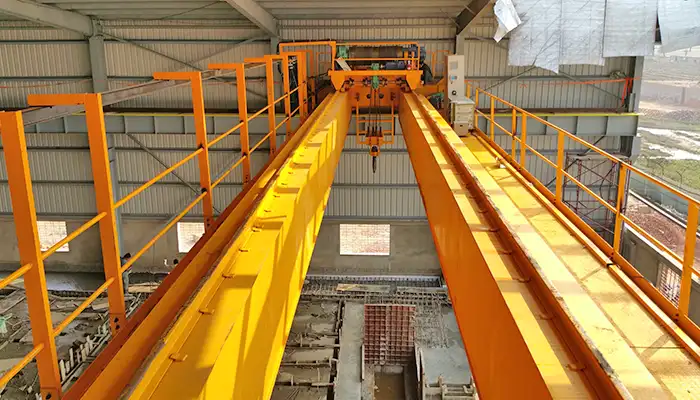
20 ton double girder overhead crane for sale
20 Ton LH-Type Double Girder with Hoist Trolley
- Span: 10.5–31.5 meters
- Lifting Height: 12 or 14 meters
- Power Supply: 220V–660V, 50–60Hz
- Price Range: $25,500–$45,900
20 Ton QD-Type Double Girder with Winch Trolley
- Span: 10.5–31.5 meters
- Lifting Height: 12 or 14 meters
- Power Supply: 220V–660V, 50–60Hz
- Price Range: $25,500–$45,900
20 Ton FEM Standard (European Design) Double Girder Overhead Crane
- Span: 10.5–31.5 meters
- Lifting Height: 16 or 18 meters
- Power Supply: 220V–660V, 50–60Hz
- Price: Customized
20 Ton Explosion-Proof Double Girder Overhead Crane
- Span: 10.5–31.5 meters
- Lifting Height: 12 or 14 meters
- Power Supply: 220V–660V, 50–60Hz
- Price: Customized
20 Ton Special-Purpose Overhead Cranes
20 Ton Grab Bucket Overhead Crane
- Span: 16.5–31.5 meters
- Lifting Height: 26 meters
- Power Supply: 220V–660V, 50–60Hz
- Price: Customized
20 Ton Electromagnetic Overhead Crane with Lifting Magnet
- Span: 10.5–31.5 meters
- Lifting Height: 12 or 14 meters
- Power Supply: 220V–660V, 50–60Hz
- Price: Customized
20 Ton Electromagnetic Overhead Crane with Magnet Beam
- Span: 22.5–34.5 meters
- Lifting Height: 15 or 16 meters
- Power Supply: 220V–660V, 50–60Hz
- Price: Customized
20 Ton Insulated Overhead Crane
- Span: 10.5–31.5 meters
- Lifting Height: 12 or 14 meters
- Power Supply: 220V–660V, 50–60Hz
- Price: Customized
| Product |
Span (m) |
Lifting Height (m) |
Power Supply |
Price (USD) |
| Single Girder Overhead Crane |
7.5–31.5 |
6–30 |
220V–660V, 50–60Hz |
$7,100–18,300 |
| Low Headroom Single Girder |
7.5–31.5 |
6–30 |
220V–660V, 50–60Hz |
$7,500–19,300 |
| LH-type Double Girder + Hoist Trolley |
10.5–31.5 |
12/14 |
220V–660V, 50–60Hz |
$25,500–45,900 |
| QD-type Double Girder + Winch Trolley |
10.5–31.5 |
12/14 |
220V–660V, 50–60Hz |
$25,500–45,900 |
| FEM Double Girder (European Design) |
10.5–31.5 |
16/18 |
220V–660V, 50–60Hz |
Customized Pricing |
| Grab Bucket Overhead Crane |
16.5–31.5 |
26 |
220V–660V, 50–60Hz |
Customized Pricing |
| Insulated Overhead Crane |
10.5–31.5 |
12/14 |
220V–660V, 50–60Hz |
Customized Pricing |
| Electromagnetic Crane + Lifting Magnet |
10.5–31.5 |
12/14 |
220V–660V, 50–60Hz |
Customized Pricing |
| Electromagnetic Crane + Magnet Beam |
22.5–34.5 |
15–16 |
220V–660V, 50–60Hz |
Customized Pricing |
| Explosion Proof Single Girder |
10.5–31.5 |
12/14 |
220V–660V, 50–60Hz |
Customized Pricing |
| Explosion Proof Double Girder |
10.5–31.5 |
12/14 |
220V–660V, 50–60Hz |
Customized Pricing |
Single Girder vs. Double Girder: Which One Is Right for Your 20 Ton Overhead Crane?
When dealing with a 20 ton lifting capacity, the choice between a single girder and a double girder overhead crane becomes even more critical. Both designs can technically handle 20 tons, but how they perform, install, and support daily operations varies greatly. Here’s what you need to know to make the right decision.
20 Ton Single Girder Overhead Crane
A single girder crane for 20 tons is designed with one main beam and a hoist trolley running beneath it. This setup is compact, affordable, and easier to install. However, it’s only suitable when working conditions align with its structural limits.
When a 20 Ton Single Girder Makes Sense:
- Cost-Saving Solution
Lower material and fabrication costs make it a good choice if your budget is tight but you still need a high-capacity crane.
- Simple to Install and Maintain
With fewer components and reduced complexity, it’s quicker to set up and generally easier to service.
- Works for Low-Frequency Operations
If you only lift occasionally—such as in maintenance shops, storage yards, or light manufacturing—this option can be practical.
- Best for Shorter Spans and Moderate Lift Heights
Ideal when span requirements are below 25 meters and when you have enough headroom to accommodate the hoist hanging below the girder.
Points to Consider:
- Limited hook height compared to double girder models.
- Not suitable for long spans, multi-lift tools (like magnets or grabs), or continuous-duty operations.
- Structure must be reinforced carefully to handle the 20 ton load safely.
20 Ton Double Girder Overhead Crane
Double girder cranes are the go-to design for industrial environments where 20 tons is lifted frequently, or where attachments and higher lift heights are needed. The trolley runs on rails on top of the two girders, allowing for maximum hook height and better structural strength.
Why Double Girder Is Often the Better Choice for 20 Tons:
- Higher Lifting Height
The hoist sits between the girders, giving you more usable vertical space—important when lifting tall loads or working in a tight vertical area.
- Stronger for Frequent or Continuous Use
Built for durability, this type is preferred for factories, steel mills, and shipyards where cranes work multiple shifts daily.
- Supports Specialized Attachments
If your crane needs to carry magnet beams, grab buckets, or rotating hooks, the double girder frame can support them securely.
- Better Stability on Longer Spans
Ideal for spans above 20–25 meters, especially when paired with a heavier trolley such as a winch-type hoist.
Trade-Offs:
- Higher upfront cost due to added materials, fabrication, and installation.
- May require stronger supporting beams or columns in your facility.
- Installation time and alignment need more precision.
For 20-ton applications, a double girder crane is usually the safer and more versatile option, especially if you plan to use it regularly or require any additional attachments. A single girder crane at 20 tons can work—but only in controlled conditions with light duty cycles and a focus on cost-efficiency.
If you're unsure which fits your needs, let us know your building layout, lifting frequency, and working environment. We’ll help you weigh your options based on real-life performance and not just technical capacity.
When to Choose Customized EOT Crane Solutions
A standard 20-ton EOT (Electric Overhead Traveling) crane might work for basic lifting tasks—but once your working environment becomes more complex or your loads become more specialized, customization becomes necessary. Custom crane solutions are designed to match your exact application, safety requirements, and physical workspace. Here’s when you should seriously consider going beyond standard models.
Complex Working Environments
Some workplaces demand more than just lifting strength—they require protection from harsh or dangerous surroundings. In these cases, a regular crane simply won’t hold up or comply with safety requirements.
Situations that require custom engineering:
- Hazardous Areas: Facilities dealing with flammable gases, chemicals, or fine powders (like paint shops or gas plants) need explosion-proof cranes. These cranes use spark-resistant motors, sealed wiring, and enclosed control systems to prevent ignition.
- High-Temperature Zones: In steel mills, foundries, or furnace shops, the heat can damage cables, motors, and structural components. Insulated cranes are built with thermal protection on the hook, hoist, and wiring systems to resist ambient and radiant heat.
- Dusty or Corrosive Environments: Cement plants, brick factories, and coastal yards expose cranes to abrasive dust or salt air. These conditions require sealed enclosures, anti-corrosion coatings, and ventilated motor housings for longer service life.
Space Restrictions
If your facility has limited space—either in height or in working area—a standard crane may not physically fit or operate efficiently. In these cases, custom solutions help you get the job done without tearing down your building.
Space-limited conditions that call for customization:
- Low Headroom Workshops: If your roof clearance is tight, a low headroom design with a specially engineered hoist and trolley can help maximize lifting height while staying compact.
- Narrow Bays or Support Constraints: If your runway beams or columns can’t support standard girder sizes, a custom-designed crane structure can reduce overall load while maintaining 20-ton capacity.
- Indoor-to-Outdoor Transfer Zones: Some workshops require cranes that pass through doorways or operate in both indoor and outdoor zones. Special weatherproofing and rail alignment features may be needed.
Specialized Material Handling Needs
Some loads require more than just a hook and a hoist. They may need controlled gripping, alignment, or stability during lifting. In these situations, the crane must be designed to carry and operate additional tools safely and effectively.
Examples of custom handling features:
- Magnet Beam Handling: Used for lifting long steel billets, sheet stacks, or coils. These cranes need to support electromagnetic beams, often with backup battery systems in case of power loss.
- Grab Buckets: Common in bulk material yards (sand, coal, grain, ore), where a hook won’t work. These cranes are equipped with electric or hydraulic grabs and need stronger trolleys and more precise control systems.
- Rotating or Spreader Hooks: For items that must be lifted from multiple angles or distributed evenly, custom hooks and attachment points ensure load balance and operator safety.
Your working environment involves fire, heat, dust, or corrosion. Your building has low headroom, limited clearance, or structural limitations.Your material handling involves non-standard loads like steel plates, coils, scrap, bulk materials, or hazardous goods
Custom doesn’t always mean more expensive—it means better aligned to your needs. A well-matched crane reduces downtime, improves safety, and often pays for itself through efficiency and longer lifespan. Let us know your environment and lifting challenges, and we’ll help design a solution that works from day one.
Why Choose Us for Your 20 Ton Crane Projects
When you're investing in a 20 ton overhead crane, you want more than just equipment—you want a reliable supplier who understands your industry, works with your conditions, and delivers exactly what you need. Here’s why buyers across the world choose us for their crane projects.
Certified, Proven Quality from a China-Based Manufacturer
We are a direct crane manufacturer based in China, offering competitive pricing without sacrificing quality. Every 20 ton crane we deliver is built to meet strict international standards:
- Certified by CE and ISO for safety, performance, and quality control
- Third-party inspection available (SGS, BV, TUV) for added peace of mind
- Strong welding, machining, and assembly capabilities at our production facility
We don’t just promise quality—we prove it with documentation and performance testing before shipment.
Tailored Solutions for Different Industries
No two crane applications are the same. We provide custom-engineered 20 ton crane systems to match the exact needs of your operation—whether you’re handling steel slabs, cement blocks, ship parts, or coils.
We serve a wide range of sectors:
- Steel and metal processing plants – electromagnetic cranes, magnet beam systems
- Cement and bulk material industries – grab bucket cranes, dust-protected systems
- Shipbuilding yards – high-lift, long-span cranes with robust anti-sway features
- Machinery workshops and general factories – single or double girder overhead cranes for regular production use
From design to delivery, we build your crane based on your site layout, power supply, and operating environment.
Free Design Support and Transparent Pricing
We understand that choosing the right crane is a technical decision. That’s why we offer:
- Free layout and solution consultation – just send us your building drawing or lifting requirements
- Factory-direct pricing – no middlemen, no markup
- Flexible offers – whether you need the full crane system or crane kits without the girder
You’ll get a solution that fits—not a one-size-fits-all model.
Request a Custom Quote
Ready to get started on your 20 ton overhead crane project? Requesting a custom quote with us is simple and fast.
How to Request a Quote
Just provide a few key details about your project through our contact form or by clicking the “Request Quote” button on our website. This helps us understand your exact needs and prepare an accurate quotation.
Information we’ll need from you:
- Crane span (distance between runway rails)
- Lifting height (maximum hook height required)
- Power supply details (voltage, frequency, phase)
- Installation site conditions (indoor/outdoor, building structure, environment)
Once we receive your information, our team will review your requirements and send you a detailed, customized quotation—usually within 24 to 48 hours. We’ll also include design suggestions or ask any follow-up questions if needed to make sure the crane fits your needs perfectly.
Don’t hesitate to reach out and start the process. A well-designed 20 ton overhead crane can boost your productivity and safety for years to come.