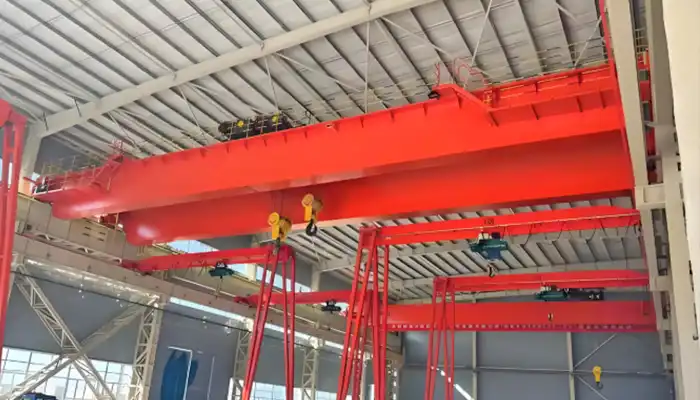
Introduction: Why Smart Planning Matters for a 30 Ton Overhead Crane
A 30 ton overhead crane isn’t just another piece of equipment—it’s a critical tool for lifting and moving heavy loads in demanding environments like steel plants, machinery workshops, and heavy fabrication lines. If you’re thinking of purchasing one, you already know this crane isn’t something you buy off the shelf or replace casually. It’s built for work. And it needs to be built right.
That’s exactly why careful planning before purchase is essential. The goal isn’t just to “get the job done,” but to make sure you get a crane that fits your operation, your layout, and your long-term goals—without wasting money on features you don’t need.
Why This Crane Matters So Much to Heavy Industry
Whether it’s loading billets in a steel mill or positioning heavy molds in a concrete product factory, the 30 ton crane sits at the heart of operations. It doesn’t just lift—it keeps the entire workflow moving.
- Core Equipment: It typically handles the heaviest and most valuable materials on site.
- Daily Use: In many plants, a 30 ton crane runs for multiple shifts a day. Downtime can stop everything.
- High Investment: It’s a capital purchase. Decisions made today affect maintenance, safety, and efficiency for the next 10–15 years.
Why Smart Planning Pays Off
A crane that’s under-designed for the job will wear out fast. One that’s over-designed will drain your budget. Striking the right balance requires smart thinking from both technical and sourcing perspectives.
- Understand real working needs: How much load, how often, under what conditions.
- Match specs to site: Span, lifting height, installation space, power supply—all must fit your building.
- Avoid hidden costs: Shipping, installation, and customization often add up if not discussed upfront.
What You’ll Learn in This Guide
This guide is written to help both engineers and procurement teams make better decisions before buying. It covers what affects 30 ton overhead crane prices, what specifications matter most, and how to reduce costs without cutting corners.
- Crane types and configurations: What setups are available and what they’re good for.
- Real-world pricing ranges: Know what to expect and what drives the cost.
- Technical specs and power requirements: Get the numbers right before asking for a quote.
- Common mistakes buyers make: So you don’t repeat them.
Stick with this guide, and you’ll walk away with the kind of insight that helps you ask smarter questions, avoid costly mistakes, and choose a crane that actually fits your needs—not just your budget.
30 Ton Overhead Crane for Sale: Common Types and Configurations
When you’re looking for a 30 ton overhead crane for sale, you're really choosing between a few key designs that affect not only the price but how well the crane performs in your specific environment. The choices you make here—hoist setup, girder type, span length, and whether it’s for indoor or outdoor use—can make or break the efficiency of your investment.
![30 Ton Overhead Crane for Sale:]()
30 Ton Overhead Crane for Sale, Types and Specifications
Why Double Girder Cranes Are the Go-To for 30 Ton Capacity
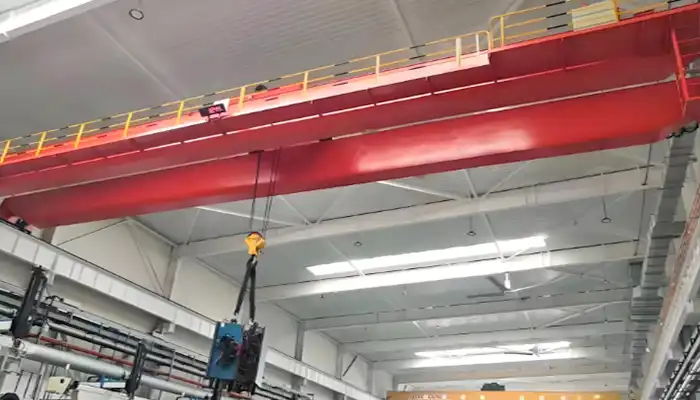
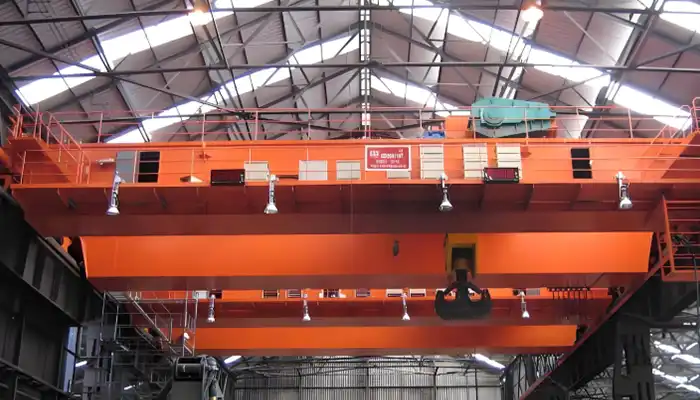
At this load level, a double girder overhead crane is almost always the standard. Unlike single girder designs, double girders can support heavier loads, longer spans, and taller lift heights with better stability and structural integrity.
- Increased lifting height: The hoist travels between the girders instead of below, allowing for higher hook positions.
- Better for long spans: Double girders can handle spans up to 35 meters or more, especially for large workshops or wide bays.
- Supports extra features: Walkways, maintenance platforms, and robust trolleys all mount easily on double girders.
- Durability under heavy use: Less deflection and fatigue over time compared to single girder cranes.
For a 30 ton capacity, single girder cranes are generally not recommended due to strength limitations, unless the application is extremely limited in span and usage.
Single Hoist vs. Twin Hoist: Don’t Overlook the Load Shape
One of the most overlooked yet important decisions is whether to use a single hoist or twin hoist setup. It's not just about capacity—it’s about load handling precision and stability.
- Single Hoist: Suitable for compact or centrally balanced loads. Simpler and more economical.
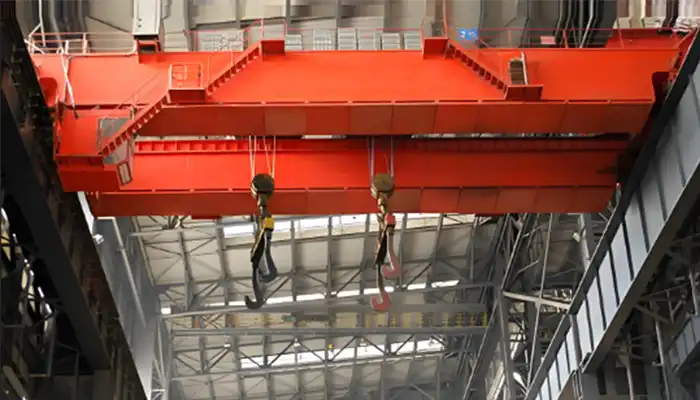
- Twin Hoist: Ideal for long or uneven loads like steel beams, coils, or concrete sections. The load can be lifted evenly from two points, reducing swing and stress on both the crane and the product.
For example: If you’re lifting 12-meter-long concrete molds, a twin hoist setup ensures both ends rise together, minimizing deflection or cracking.
![30 ton overhead crane with double hoists]()
Indoor vs. Outdoor Cranes: Don’t Forget the Environment
Whether your 30 ton crane is indoor or outdoor drastically affects the configuration.
- Indoor Use: Standard finish, less exposure protection, can rely on internal lighting and stable conditions.
- Outdoor Use: Requires weatherproof enclosures, galvanized or corrosion-resistant components, rain covers for hoists, and sometimes heating elements in control panels to prevent moisture-related issues.
- Wind Load Considerations: Outdoor cranes must be rated for local wind zones, especially if installed near coastlines or open yards.
Also, for outdoor cranes, adding a storm brake or rail clamp system can prevent unsafe movement during strong winds.
Common 30 Ton Overhead Crane Configurations
These are some of the most typical and effective setups that buyers choose when looking for a 30 ton crane for sale:
- Top-Running Double Girder with Wire Rope Hoist
Most common industrial solution. The hoist rides above the girders on a trolley system, offering high lift and reliable performance for continuous or heavy use.
- 30 Ton Bridge Crane with 18–30 Meter Span
Perfect for medium to large workshops or production bays. These cranes are custom-designed to match your building’s dimensions and workflow requirements.
- Customized Heavy-Duty System with Twin Hoists and Smart Controls
For complex operations like synchronized lifting, precise load positioning, or multiple working zones. Often used in steel fabrication or component assembly plants.
- 30 Ton Crane Kit (Hoist + End Carriage + Control System)
For buyers who can fabricate their own girders locally. Saves on shipping and allows for easier adaptation to existing workshop space.
Every configuration has its trade-offs, and the right one depends on how you're going to use the crane every day. Are you lifting once a day or every five minutes? Is your building wide, tall, and climate-controlled—or outdoors in a dusty, high-humidity yard?
Taking the time to match your operational needs with the right crane type will not only improve safety and productivity but also stretch your investment further.
30 Ton Overhead Crane Specifications: What Engineers and Buyers Should Know
Before asking for a quote or comparing suppliers, both engineers and procurement teams should get familiar with the standard specifications for a 30 ton overhead crane. These aren't just numbers on a sheet—they directly impact how the crane performs on your site, how safely it operates, and how easy it is to maintain. Knowing what each specification means in practice helps you avoid mismatches between what you buy and what you actually need.
Here’s what a typical 30 ton overhead crane looks like on paper, and what those specs mean in real-world terms.
Common Specification Overview for a Standard 30 Ton Overhead Crane
| Specification |
Common Range / Value |
What It Means in Practice |
| Rated Capacity |
30 tons |
The maximum load the crane is designed to lift—must not be exceeded. |
| Span |
10–35 meters (customizable) |
Distance between runway rails. Longer spans need stronger girders and more precise design. |
| Lifting Height |
6–20 meters (higher lifts available) |
Vertical distance the hook can travel. Affects headroom and building clearance needs. |
| Lifting Speed |
0.5–5 m/min (depending on hoist type) |
Impacts cycle time and lifting control. Slower speeds offer more precision for heavy loads. |
| Trolley Travel Speed |
2–20 m/min |
How fast the hoist moves horizontally across the bridge beam. |
| Crane Travel Speed |
3–40 m/min |
Speed at which the entire crane moves along the runway. Faster speeds suit longer bays. |
| Work Duty |
FEM 2M/3M or ISO M5–M7 |
Reflects expected frequency and load spectrum. Higher duty = more robust, longer-lasting. |
| Hoist Type |
Wire rope hoist (single or twin hoist) |
Twin hoist is used for long or unevenly loaded items. |
| Control Method |
Pendant, wireless remote, or cabin control |
Depends on site preference, load size, and operator access. |
| Power Supply (standard) |
380V/50Hz/3Phase (custom voltages available) |
Confirm your local voltage and frequency before ordering. |
Practical Notes for Buyers and Engineers
- Span and lifting height are not “off-the-shelf” values. They must be matched to your workshop layout, crane runway, and load handling process.
- Lifting speed affects your operation rhythm. Slow speeds are safer for high loads, but too slow in high-throughput systems can cause bottlenecks.
- Duty class should never be underestimated. If your crane will be working multiple shifts daily, going with a low-duty crane to save cost may lead to faster wear, breakdowns, or even safety risks.
- Custom voltages and controls are usually available. If you're outside of a 380V/50Hz region (like North America or the Middle East), be sure to confirm this early.
Don’t Just Copy a Spec Sheet—Match It to Your Real Needs
It’s tempting to ask for “standard specs” and leave it at that, but it’s not the smart way to buy a crane. Even within a single facility, different bays might require different span lengths, hoist speeds, or travel limits.
A few things you should always clarify:
- Are there overhead obstructions that limit lifting height?
- Is the load long, wide, or unusually shaped?
- How often will the crane be used, and in what conditions?
- Do operators need precise load placement or just basic lifting?
The more accurate your specifications, the more reliable and cost-effective your crane will be—not just on Day 1, but for years of operation.
Power Requirements for a 30 Ton Overhead Crane
Power supply isn’t usually the first thing buyers ask about—but it should be. A 30 ton overhead crane draws a significant amount of electrical power, especially when operating at full load, full speed, and over long spans. Misjudging the power requirements can lead to tripped breakers, inefficient performance, or even damage to your equipment.
Let’s break down what you need to know so that your crane runs safely and efficiently from day one.
Standard Operating Voltage for Industrial Cranes
Most 30 ton cranes run on 380V, 50Hz, 3-phase power. This is the standard across many industrial regions in Asia, Africa, and parts of Europe. If your facility already uses this voltage for other machinery, your crane can likely plug into the existing system with little to no adjustment.
- Common for heavy industry: Steel plants, heavy machinery workshops, and concrete production lines often operate with this voltage.
- Easy integration: When using compatible equipment, it reduces the need for voltage transformers or electrical redesigns.
Alternate Voltage Options Based on Region
If your project site is outside the 380V zone, you’ll need to specify your voltage clearly during the design phase. Manufacturers can usually customize the crane’s motor and control systems to match your local power grid.
- 400V / 415V: Common in some parts of Europe, India, and Australia
- 440V / 480V: Widely used in North America and parts of the Middle East
- Other voltages: Custom options are available, but may affect delivery time or cost
Make sure your supplier knows your exact voltage and frequency (Hz) requirements early—especially if you’re sourcing internationally.
Power Consumption Considerations for a 30 Ton Crane
A 30 ton overhead crane is built for heavy-duty lifting, and naturally, it consumes more electricity than smaller cranes—particularly under continuous or high-frequency operation. But not all cranes draw the same power all the time.
- High-duty cycle cranes: If your crane runs 2–3 shifts per day or lifts heavy loads constantly, power consumption will be considerably higher.
- Light-duty applications: Occasional use or low lifting frequency allows for lower energy demand.
Power-saving features to look for:
- Inverter (VFD) control systems: These allow variable-speed motor control and reduce energy use when lifting lighter loads or slowing down near endpoints.
- Energy-efficient motors: Ask about IE2 or IE3-rated motors for better performance per kilowatt.
Engineer Tip: Plan for Peak Load Spikes
When the crane starts lifting or suddenly changes speed, it can temporarily draw more power than its average consumption. This is where many facilities run into trouble—they size their power system for average load, not peak demand.
- Include a 15–20% buffer in your crane’s power supply design to account for startup surges and peak load changes.
- This margin helps prevent power drops, system alarms, or shutdowns during critical operations.
Key Questions to Confirm Before Ordering:
- What voltage and frequency does your facility use?
- How many cranes (or other heavy machines) will run on the same power line?
- Will the crane operate in high-duty conditions (e.g., multiple shifts, heavy loads)?
- Do you plan to integrate energy-saving features like VFD?
Power planning might seem like a detail—but when overlooked, it can turn into a major installation or operation issue. Confirm the electrical requirements with your engineering team and supplier upfront. It’s a small step that can save you time, money, and a lot of headaches later on.
How Much Does a 30 Ton Overhead Crane Cost?
When it comes to buying a 30 ton overhead crane, the price isn’t just a flat number—it’s a combination of many technical, logistical, and site-specific factors. Yes, you can get ballpark figures, but it’s important to know what’s included and what’s not. Otherwise, you might be comparing apples to oranges when reviewing supplier offers.
Let’s look at realistic pricing ranges based on common configurations, and more importantly, what those configurations actually mean for your budget.
Estimated Price Ranges for 30 Ton Overhead Cranes
Here’s a general breakdown of what different types of 30 ton overhead cranes cost. These prices are based on current market trends for factory-direct cranes from established manufacturers and assume basic features unless otherwise noted.
| Crane Configuration |
Estimated Price (USD) |
Details |
| Standard 30T Double Girder (Indoor Use) |
$12,000–$20,000 |
For workshops or factories with a 15–20 meter span, basic wire rope hoist, standard controls. Ideal for regular duty operation. |
| Mid-Spec Crane (Remote Control, Custom Span) |
$20,000–$35,000 |
Includes longer span (up to 25–30 meters), wireless remote control, upgraded trolley drive, and sometimes frequency control. |
| Heavy-Duty Crane with Twin Hoist |
$35,000–$50,000 |
For demanding applications such as synchronized lifting of long or uneven loads, often with intelligent control systems or smart load monitoring. |
| Crane Kit (Excluding Main Girders) |
$10,000–$20,000 |
Includes end carriages, hoist, control panels, and drives—designed for customers with their own girder fabrication capacity. Reduces shipping costs and simplifies logistics in remote or high-tariff regions. |
What Drives the Final Cost?
The price range isn’t just about the crane type—it depends heavily on how it’s built and what it’s built for. Even within the same capacity, the design and specification requirements can shift pricing significantly.
- Lifting height: A crane with 6 meters of lift will be much cheaper than one with 18–20 meters. Taller lift = more hoist cable, higher-strength drums, and extended trolley design.
- Span: Longer spans require stronger girders, heavier end carriages, and precision alignment, which increases cost.
- Crane travel distance: If your workshop or production line is long, you’ll need longer rails, more cabling, and possibly more robust power systems.
- Environmental considerations: If your crane is for outdoor use, or in a foundry or chemical plant, you’ll need added protection like rain covers, heat shields, anti-corrosion coatings, or even explosion-proof electrics.
- Duty class: A crane built for light-duty occasional lifting costs less than one designed to operate in continuous three-shift production.
Additional Costs to Budget For
Don’t forget that the crane itself is just part of the total investment. The following costs are often not included in the listed crane price:
- Shipping and freight: This can range from a few thousand dollars to tens of thousands depending on location, container size, and international logistics.
- Installation: Depending on local labor rates and site conditions, installation can add 10–15% to the total cost. You may also need a third-party erection team or certified technicians.
- Runway beams and supports: If you don’t already have them, this can be a major addition to your cost—especially if civil engineering or foundation work is required.
- Control cabling and electrical wiring: Especially for longer bays or outdoor systems, cable management systems can be a hidden cost.
- Operator training and commissioning: Some suppliers offer it free, others charge a daily rate. This includes load testing and final system checks.
Practical Tip: Always Ask What’s Included
When comparing quotes, don’t just look at the bottom line. Ask what’s included in the scope of supply. Some quotes include drawings, hoist load testing, and VFD control panels—others don’t. If you’re not sure, ask for a breakdown line by line.
Factors That Influence the Final Price of a 30 Ton Crane
Not all 30 ton overhead cranes cost the same. Even if two cranes have the same lifting capacity, the price can change a lot depending on how they’re built, where they’re used, and what extra features are included.
Here’s a simple breakdown of what affects the final cost:
Type of Hoist
The hoist is the heart of the crane—and it comes in different designs.
- Standard hoist: Good for basic lifting, slower speed, lower cost.
- High-speed hoist: Lifts faster and handles more cycles per hour, but costs more.
- Twin hoist: Used when you need to lift long or unbalanced items from two points at once—more expensive but better load control.
Working Environment
Where the crane will be used plays a big role in design and price.
- Indoor use: Standard design and finish, lower cost.
- Outdoor use: Needs weatherproofing, rain covers, and stronger coatings.
- Dusty, hot, or hazardous areas: May require explosion-proof parts or special cooling systems.
Control Method
How your operator controls the crane also affects the price.
- Pendant control: Basic wired control, most affordable.
- Remote control: Wireless control gives operators more freedom, slightly higher cost.
- Cabin control: Full operator cabin, used for long shifts or high-precision work—adds cost and space requirements.
Automation and Smart Features
Some cranes come with advanced systems that help with safety and efficiency.
- Basic system: Manual or semi-automatic, lower cost.
- Smart controls: Include anti-sway, position memory, or IoT monitoring—adds value, but also cost.
Delivery Region
Where the crane is going affects shipping and paperwork costs.
- Local delivery: Lower freight cost, faster lead time.
- International shipping: Adds costs for sea freight, import duties, customs clearance, and sometimes currency exchange.
Runway Beams and Installation Needs
Sometimes the crane price doesn’t include everything needed to get it up and running.
- Existing runway beams: If your building already has them, you save money.
- New structure required: Adds cost for steel beams, supports, and civil work.
- Electrical installation: Control cables, power lines, and busbars can be extra—especially in long workshops.
Quick Tip: When getting a crane quote, ask for a full scope of supply. What’s included and what’s not? That way, you can compare prices fairly and avoid unexpected costs later.
Buyer and Engineer Checklist: What to Clarify Before Getting a Quote
Before you ask a supplier for a price, it’s important to have clear answers to some key questions. This helps ensure the crane you get will actually fit your needs—and the quotes you receive are accurate and comparable.
Cost-Saving Solutions Without Compromising Performance
Buying a 30 ton overhead crane doesn’t mean you have to spend more than necessary. There are smart ways to save money while still getting a crane that’s safe, reliable, and fits your needs perfectly. Here are some practical tips to keep costs down without cutting corners.
Choose Crane Kits and Fabricate Main Girders Locally
- Buying a crane kit—which usually includes the hoist, end carriages, controls, and trolley—but fabricating the main girders at your local steel workshop can save a lot on shipping and customs.
- Local fabrication often reduces delivery time and lets you tailor the beam to your exact building dimensions.
Avoid Overspecifying Duty Class for Low-Frequency Usage
- If your crane will only be used occasionally or for light workloads, you don’t need the highest duty class.
- Choosing a crane designed for your actual workload means lower initial cost and simpler maintenance.
Consider a Twin Hoist Setup Only if the Load Demands It
- Twin hoists add cost, so don’t include them unless you really need to lift long or uneven loads.
- For most balanced or smaller loads, a single hoist works well and saves money.
Optimize Shipping and Delivery
- Choose regional ports or group orders together to reduce freight costs.
- If possible, plan for consolidated shipments to avoid multiple customs fees or transport charges.
Partner with a Certified Manufacturer Offering Free Layout Drawings
- Work with suppliers who provide free technical drawings and optimized hoist setups tailored to your application.
- This saves design costs and ensures you get a crane that fits right the first time—avoiding expensive modifications later.
Example Applications of 30 Ton Overhead Cranes
A 30 ton overhead crane is a versatile piece of equipment used across many industries. Each application has its own specific needs, which influence the crane’s design, features, and cost. Here are some common examples to help you see how the right crane matches the job.
Steel Mill: Twin Hoist Crane Handling Heavy Billets and Slabs
- Steel mills often deal with very heavy and awkwardly shaped loads.
- A twin hoist setup helps lift long billets or slabs evenly, reducing stress on the crane and the material.
- These cranes usually require high-duty class components and robust controls to handle continuous use in harsh environments.
Concrete Product Plant: Standard Double Girder Crane for Mold Lifting
- Concrete plants use overhead cranes mainly to lift heavy molds for casting.
- A standard double girder crane with a single wire rope hoist is often sufficient.
- Since usage is usually moderate, a mid-duty class crane can save cost while meeting all lifting needs.
Heavy Equipment Factory: Smart-Controlled Crane for Machinery Assembly Lines
- Assembly lines need precise and smooth lifting to position heavy parts safely.
- Cranes with smart control systems—such as anti-sway or load positioning—improve safety and efficiency.
- Remote control or cabin operation is common for long shifts and complex tasks.
Port Warehouse: 30 Ton Outdoor Crane for Container Handling
- Outdoor cranes at ports face harsh weather and need weatherproofing and corrosion resistance.
- They often have long spans and fast travel speeds to cover wide container yards.
- Safety features like anti-wind clamps and heavy-duty brakes are critical.
Each of these examples uses a specific combination of crane features and pricing models, depending on operational demands and local conditions. Understanding your application will help you select a crane that fits both your technical and budget needs.
![heavy duty overhead crane 30 ton for sale]()
Final Thoughts: Balancing Budget with Engineering Quality
A 30 ton overhead crane is more than just equipment—it’s a key part of your production process. Because of this, it’s important to think beyond the initial purchase price and focus on long-term value.
Why Long-Term Value Matters
- Cheaper cranes may save money upfront but can lead to higher maintenance costs, downtime, or safety risks down the line.
- Investing in a well-designed crane that fits your exact needs helps avoid costly repairs and replacements.
What Smart Buying Looks Like
- Understand the technical specifications that matter most for your operation: lifting height, span, duty cycle, and power supply.
- Consider design features like hoist type, control systems, and environmental protections.
- Evaluate your supplier’s reliability, certifications, and after-sales support.
Matching Budget to Real Needs
- Avoid overpaying for features you won’t use, but don’t cut corners on safety or durability.
- Align your budget with the actual demands of your workplace to get the best balance of cost, performance, and lifespan.
In the end, choosing the right 30 ton overhead crane means thinking carefully about your unique operation—not just chasing the lowest price tag. When you get this balance right, you’ll have a crane that keeps your business running smoothly for years to come.
Get a Quote for Your 30 Ton Overhead Crane
If you’re ready to move forward, now’s the time to get a detailed quote tailored to your specific needs.
- We offer customized solutions for both indoor and outdoor applications, ensuring your crane fits perfectly with your working environment.
- Our cranes come with CE and ISO certifications, giving you peace of mind about quality and safety.
- Choose between complete cranes ready for installation or crane kits if you prefer to handle local fabrication.
- Take advantage of our free technical consultation, including layout drawings and support with shipping logistics to simplify your purchase process.
Contact us today to get started and ensure your 30 ton overhead crane matches your exact requirements at the best possible price.