Gantry Crane For Sale
1–50 Ton Gantry Crane for Sale Price & Customization Cost
Gantry crane for sale price. Check 2 ton to 50 ton gantry crane pricing, customization options, & smart buying tips for 2 ton to 50 ton gantry cranes.

Gantry crane for sale price. Check 2 ton to 50 ton gantry crane pricing, customization options, & smart buying tips for 2 ton to 50 ton gantry cranes.
When buyers start looking for a gantry crane, the first thing they usually want to know is simple: “How much does it cost?”
It doesn't matter if it's a small workshop crane or a large outdoor gantry crane—price is always the first topic. A gantry crane is a major investment, and most buyers want to understand the cost early to plan their budget, compare suppliers, and avoid delays later.
Common buyer questions
These questions are straightforward, but the answer is not always simple.
A gantry crane's price depends on more than just lifting capacity. Many buyers think tonnage alone decides the cost, but span, lifting height, power supply, working environment, and duty cycle all influence the structure, hoist system, and electrical control. Without this information, any price given is usually just a rough guess.
Reasons precise pricing is hard:
Suppliers may give a "quick price," but it risks not matching the buyer's actual needs.
The goal of this guide is to make the pricing process easier for crane buyers. Instead of guessing or exchanging multiple emails, this guide shows you:
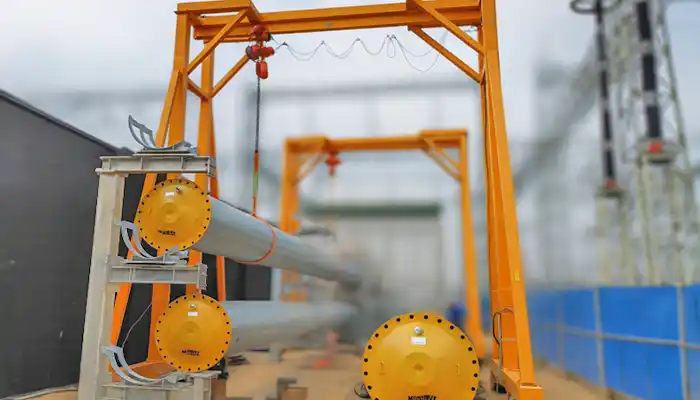
Portable gantry cranes are popular among buyers who want a simple, movable, and low-investment lifting solution. These cranes are compact and practical, making them ideal for light-duty tasks or locations where a permanent overhead crane isn't necessary. Even though they look simple, the price still depends on the basic specs you choose.
Typical Specs Buyers Commonly Choose
Most portable gantry cranes fall within the following ranges:
These parameters shape the cost because they determine the steel size, wheel configuration, and hoist selection.
| Capacity | Span (m) | Lifting Height (m) | Duty Class | Power Supply (V) | Lifting Speed (m/min) | Price (USD) | Action |
|---|---|---|---|---|---|---|---|
| 0.25 ton | 2–12 | 1–3 | A3 | 220–480/3/50 | 6–8 | $900–$9,000 | Inquiry Message Us |
| 0.5 ton | 2–12 | 1–4 | A3 | 220–480/3/50 | 6–8 | $1,200–$12,000 | Inquiry Message Us |
| 1 ton | 2–12 | 1–5 | A3/A4 | 220–480/3/50 | 6–10 | $1,500–$15,000 | Inquiry Message Us |
| 2 ton | 2–12 | 2–6 | A4 | 220–480/3/50 | 5–10 | $2,000–$20,000 | Inquiry Message Us |
| 3 ton | 2–12 | 2–7 | A4 | 220–480/3/50 | 5–12 | $3,000–$30,000 | Inquiry Message Us |
| 5 ton | 2–12 | 3–9 | A4 | 220–480/3/50 | 4–10 | $4,500–$46,000 | Inquiry Message Us |
| 10 ton | 2–12 | 4–9 | A4 | 220–480/3/50 | 3–8 | $7,000–$65,000 | Inquiry Message Us |
Note: Prices are indicative and may change with market conditions. For a precise quotation tailored to your needs, send an inquiry now.
Best For
Portable gantry cranes are a practical fit for:
These cranes are useful when the load is light, the work shifts often, or the floor layout changes from time to time.
To get an accurate quotation and ensure your portable gantry crane fits your workshop, site, or production needs, provide the following key details. This also helps you avoid unnecessary costs while choosing the right crane type and features.
Choosing the right crane type is the first step. Different portable gantry cranes are designed for different loads, mobility, and flexibility needs.
The crane's lifting capacity and height determine its structure, hoist, and power requirements. Accurate numbers ensure safety and cost optimization.
How the crane moves affects both cost and installation requirements. Clarifying travel type upfront prevents surprises later.
The type of hoist directly influences lifting speed, control, and durability. Providing this info upfront ensures you get the right match for your application.
The choice of wheels affects how smoothly the crane operates and its safety on different surfaces.
Knowing how the crane will be delivered and assembled saves time, labor, and cost.
Height flexibility impacts the versatility of your crane. Make sure your choice aligns with your lifting needs.
The environment where the crane will operate can influence paint, electrical protection, and materials used. Mentioning special requirements ensures the crane lasts and performs well.
Tips for Buyers:
Please fill in the details below to receive an accurate quotation tailored to your needs:
1. Crane Type (Select one)
2. Lifting Capacity
3. Lifting Height / Total Height
4. Total Width / Inner Width
5. Travel Type
6. Hoist Type
7. Wheels and Mobility
8. Assembly / On-Site Requirements
9. Operating Environment & Special Requirements
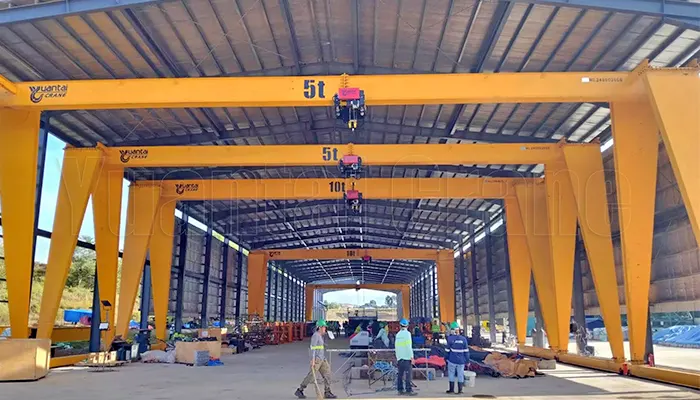
Single girder gantry cranes are widely used in workshops and outdoor yards because they offer a balance of capacity, span, and cost. They are simpler than double girder cranes but strong enough for most material handling needs under 20 tons. Buyers often choose them for manufacturing, metalworking, or light yard operations.
Typical Specs Buyers Choose
Most single girder gantry cranes fall within these parameters:
These specs influence steel size, trolley selection, hoist capacity, and overall price.
| Capacity | Span (m) | Lifting Height (m) | Duty Class | Power Supply (V) | Lifting Speed (m/min) | Price (USD) | Action |
|---|---|---|---|---|---|---|---|
| 1 ton | 7.5–31.5 | 6–10 | A3 | 220–480/3/50 | 6–8 | $2,200–$40,000 | Inquiry Message Us |
| 2 ton | 7.5–31.5 | 6–12 | A3/A4 | 220–480/3/50 | 5–8 | $2,500–$40,800 | Inquiry Message Us |
| 3 ton | 7.5–31.5 | 6–15 | A4 | 220–480/3/50 | 5–10 | $2,600–$41,000 | Inquiry Message Us |
| 5 ton | 7.5–31.5 | 6–18 | A4 | 220–480/3/50 | 4–10 | $3,000–$41,500 | Inquiry Message Us |
| 10 ton | 7.5–31.5 | 6–25 | A4 | 220–480/3/50 | 3–8 | $4,000–$45,000 | Inquiry Message Us |
| 16 ton | 7.5–31.5 | 6–28 | A4 | 220–480/3/50 | 3–8 | $5,000–$48,000 | Inquiry Message Us |
| 20 ton | 7.5–31.5 | 6–30 | A4/A5 | 220–480/3/50 | 3–7 | $6,000–$50,000 | Inquiry Message Us |
| 25 ton | 7.5–31.5 | 6–30 | A5 | 220–480/3/50 | 3–7 | $8,000–$56,000 | Inquiry Message Us |
Note: Prices are indicative and may change with market conditions. For a precise quotation tailored to your workshop or yard, send an inquiry now.
Best For Buyers In
Single girder gantry cranes are ideal for:
These cranes are practical for indoor and moderately outdoor use, offering a cost-effective solution for everyday lifting needs.
Buyer Tips
When selecting a single girder gantry crane, keep these points in mind:
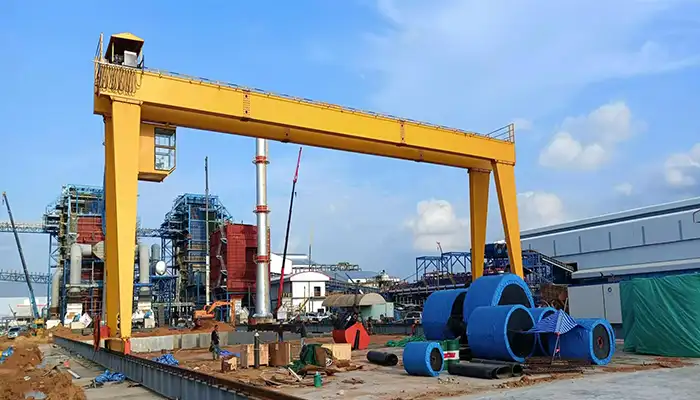
Double girder gantry cranes are the heavy lifters of material handling. They are built for large loads, long spans, and demanding environments. If your operation involves steel yards, ports, or large fabrication plants, this type of crane is usually the right choice. While the initial investment is higher than single girder or portable cranes, the durability and capacity make it cost-effective over time.
Typical Specs Buyers Choose
Double girder gantry cranes generally fall within these ranges:
These cranes often require more engineering attention due to their weight, size, and heavy-duty duty class.
| Capacity | Span (m) | Lifting Height (m) | Duty Class | Power Supply (V) | Lifting Speed (m/min) | Price (USD) | Action |
|---|---|---|---|---|---|---|---|
| 1 ton | 7.5–31.5 | 6–10 | A3 | 220–480/3/50 | 6–8 | $4,000–$60,000 | Inquiry Message Us |
| 2 ton | 7.5–31.5 | 6–12 | A3/A4 | 220–480/3/50 | 5–8 | $4,500–$62,000 | Inquiry Message Us |
| 3 ton | 7.5–31.5 | 6–15 | A4 | 220–480/3/50 | 5–10 | $5,000–$66,000 | Inquiry Message Us |
| 5 ton | 7.5–31.5 | 6–18 | A4 | 220–480/3/50 | 4–10 | $5,800–$72,000 | Inquiry Message Us |
| 10 ton | 7.5–31.5 | 6–25 | A4 | 220–480/3/50 | 3–8 | $6,500–$79,000 | Inquiry Message Us |
| 16 ton | 7.5–31.5 | 6–28 | A4 | 220–480/3/50 | 3–8 | $7,800–$86,000 | Inquiry Message Us |
| 20 ton | 7.5–31.5 | 6–30 | A4/A5 | 220–480/3/50 | 3–7 | $8,600–$95,000 | Inquiry Message Us |
| 25 ton | 7.5–31.5 | 6–30 | A5 | 220–480/3/50 | 3–7 | $9,800–$110,000 | Inquiry Message Us |
Note: Prices are indicative and may change with market conditions. For an accurate, tailored quotation for your site or workshop, send an inquiry now.
Pricing varies widely depending on capacity, span, height, and any special features. For example, a 20-ton double girder for a standard 15m span will be significantly less expensive than a 100-ton crane with a 30m span and A5 duty.
Used For
Double girder gantry cranes are commonly employed in industries where large, heavy, or continuous lifting is required:
They are especially suitable for outdoor operations or areas where the crane must work long hours under heavy load.
Buyer Tips
When buyers compare gantry crane prices, it's easy to assume that capacity is the only factor that matters. But in real projects, the cost is shaped by several technical details—each one influencing the steel structure, the hoist design, and even the installation work. Understanding these factors helps buyers avoid wrong assumptions and get a quotation that actually fits their site conditions.
Below are the core elements that directly impact gantry crane pricing, explained in practical buyer-friendly terms.
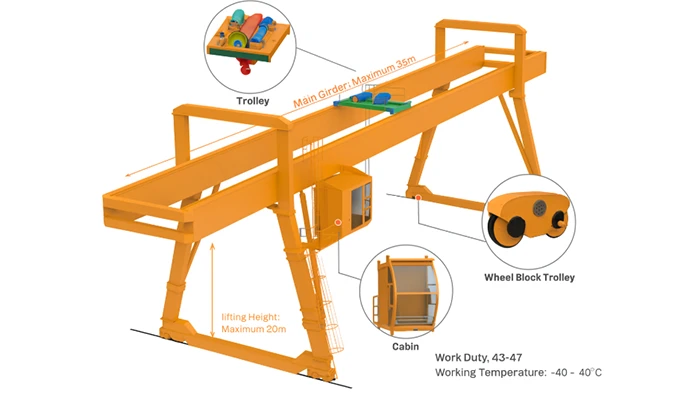
The lifting capacity is usually the first thing buyers look at, and it does set the overall design direction. However, the price difference between capacities is not linear. A 10-ton crane is not simply "twice the price of a 5-ton crane." Once the crane moves into a heavier category, the structure, hoist, and motors all change significantly.
Common Capacity Ranges
How higher capacity increases cost
In short: capacity determines the size and strength of every key component, so it carries a major share of the total price.
The span is the distance between the two legs of the gantry crane. Many buyers overlook how much the span affects cost, but it plays a major role because the girder must remain stable over its full width.
How span affects price
Buyer example
A 10-ton crane with 12m span may be priced in a normal range, but increasing the span to 28m can add 15–30% to the cost, even though capacity stays the same. The steel consumption and welding complexity drive the price up.
Lifting height refers to how high the hook needs to raise the load. It may look simple, but it changes the leg height, the rigidity of the structure, and the driving mechanism.
How lifting height affects design
Buyer example
A 10-ton gantry crane with 6m lifting height is far cheaper than one with 12m lifting height. The higher model requires taller legs, a wider base, and stronger wind-resistant features, especially if used outdoors.
Many buyers don't pay much attention to the power supply at first, but it directly affects the motors, electrical panels, and even the final price of a gantry crane. Manufacturers must match the crane's motors to the exact voltage and frequency used on-site. If the power supply information is missing, the quotation may not be accurate.
Common power supply options
When non-standard voltages increase cost
These non-standard setups often mean:
Because of these changes, special voltages can raise the electrical cost by 5–15%.
Buyer tip
Always confirm power supply early. A small mismatch can delay production, or worse, damage the equipment.
The environment where the gantry crane will operate has a direct impact on its design and price. A crane used indoors does not face the same challenges as one installed in an open yard or a coastal facility.
Indoor vs. outdoor usage
Special environments that affect cost
Why environment affects price
Environmental conditions directly influence:
Rails seem like a small detail, but they play a major role in the overall budget—especially for medium to large outdoor gantry cranes. Some buyers need only the crane, while others need the entire runway system.
What buyers may need
How rail requirements affect price
If the buyer needs a complete rail system, it can add 10%–20% to the total project cost. The cost varies based on:
Buyer tip
If you already have rails installed, share the rail model and the condition (photos help a lot). This can save unnecessary costs.
Many buyers focus on tonnage, span, and lifting height, but the duty class is just as important. Duty class determines how strong the crane must be, how long it will last, and how much it can safely handle in a typical workday. If the duty level is too low for your operation, the crane will wear out quickly, causing unexpected downtime and costly repairs.
Common duty classifications
How duty class affects pricing
Higher duty levels require:
Buyer tip
If your site runs 10–12 hours per day, or if the crane works continuously without long breaks, you should consider at least A4, and in many outdoor cases, A5. Choosing the right duty class early helps avoid overloading, overheating, and unnecessary maintenance.
Not all gantry cranes are built the same. Many buyers need extra features to fit specific workflows, safety needs, or site conditions. These added functions improve performance, but they can also influence the final cost.
Typical special requirements
Why these features affect price
Each special requirement means custom engineering, specific electrical parts, and sometimes additional safety certification. The earlier these needs are discussed, the faster the supplier can prepare a correct quotation. If you need any special function, mention it during the first inquiry. It avoids misunderstandings, price differences, and design changes later in the process.
Getting a precise quotation for a heavy-duty gantry crane requires complete technical details. Many buyers ask for a "quick price," but without the right information, suppliers can only give a rough estimate—or worse, a quote that doesn't match your actual job site.
Below is a practical checklist for buyers, written in plain language, covering crane parameters, working conditions, and attachments. Filling this out thoroughly ensures an accurate, reliable quotation the first time.
Provide the core specifications of your crane:
Electromagnets – Include:
Any of the following affect the final price:
Make sure to list these at the start to avoid re-pricing later.
Providing complete information allows suppliers to:
A clear specification also speeds up engineering time and ensures you get a final quotation quickly
Use this checklist to provide all the details needed for an accurate heavy-duty gantry crane quotation.
1. Crane Type (Choose One)
Note: Selecting the right crane type affects cost, structure, and hoist selection.
2. Lifting Capacity
Example: 5t steel coils, 10t concrete slabs.
3. Span & Width
Wider spans require heavier beams and reinforced structure.
4. Lifting Height / Total Height
Taller heights require stronger legs and stability considerations.
5. Traveling Requirements
Load-carrying travel requires stronger structure and higher motor ratings.
6. Power Supply
Non-standard voltages may increase cost and delivery time.
7. Working Environment
Environment affects paint, corrosion protection, and electrical design.
8. Working Duty & Daily Hours
Higher duty classes and longer operating hours require reinforced components.
9. Hoist / Lifting Device
For grabs and electromagnets, include material dimensions, quantity per lift, and temperature.
10. Speed & Control
Higher speed and advanced controls increase price and safety requirements.
11. Rails & Installation Materials
Rails and installation materials can add 10–20% to total cost.
12. Special Features & Add-Ons
List all special features to avoid re-pricing and ensure safety.
13. Additional Notes or Drawings
Providing drawings speeds up engineering time and ensures accurate pricing.
Fill out this checklist and send it to your supplier to receive a tailored heavy-duty gantry crane quotation with detailed specifications, layout, delivery time, and warranty within 24 hours.
Choosing the right gantry crane isn't just about tonnage. Matching the crane to your operation, environment, and budget ensures safety, efficiency, and cost-effectiveness. Below is a practical guide to help buyers make informed decisions.
Not all cranes are built the same. Select a crane that fits the workload rather than just the maximum weight.
Buyer tip: Matching the duty class to daily operation hours prevents overuse, excessive maintenance, and safety issues.
Your environment has a direct impact on crane longevity and design.
Indoor: Less concern about weather, but consider dust, heat, or chemical exposure.
Outdoor: Wind load, rain, and UV exposure are critical. Use:
Buyer tip: Outdoor cranes may need a higher duty class and stronger structure to withstand weather and continuous use.
The hoist and trolley type determine how smoothly your crane operates and how versatile it is.
Buyer tip: Select hoist type and trolley configuration based on lifting speed, load frequency, and precision needs.
Crane cost is more than just the equipment price. Consider the following to optimize your investment:
Buyer tip: Balancing upfront cost with durability, energy use, and ease of maintenance will save money in the long run.
Getting a precise gantry crane quote is only possible when you provide detailed information about your application. This section explains exactly what suppliers need and what you can expect in return. Filling out the form correctly not only speeds up the process but also ensures you get a crane designed for your specific needs.
When requesting a quote, make sure to include:
Providing these details upfront allows the supplier to give a tailored solution rather than a generic price estimate.
Once the information is submitted, you can expect a comprehensive package including:
This approach helps buyers compare options, plan budgets, and make confident decisions.
It's tempting to choose the lowest quoted price, especially when budgets are tight. But when it comes to gantry cranes, the cheapest option can lead to higher long-term costs, maintenance headaches, and safety risks. A well-chosen crane balances price with quality, reliability, and suitability for your operation.
Before making a decision, carefully review:
Select a crane that fits your actual work conditions, including load, environment, operation frequency, and long-term plans. The goal is to invest in a solution that performs safely, efficiently, and reliably—not just the cheapest option on paper.
Everything buyers need to know about hot-sale gantry crane prices, from capacity and design choices to real cost drivers.
Need Latest Crane Price? Please leave us the required Crane's Capacity, Lifting Height, Span, Travelling Length & Voltage for Quick Quotation. Yuantai Crane www.bettercrane.com