Complete Guide: Overhead Cranes in Australian Industries
Introduction
Overhead cranes are no longer just an option in heavy industries — they are a necessity. Across Australia, they play a central role in lifting, moving, and positioning loads that are simply too large or heavy for forklifts and manual handling.
From the iron ore mines of Western Australia to the manufacturing hubs of Victoria, cranes are behind the scenes every day, keeping operations moving safely and efficiently. In shipyards along the Queensland coast, they position heavy steel sections with millimetre accuracy, while in logistics warehouses around Sydney and Melbourne, smaller cranes help shift pallets and machinery without wasting valuable time.
Why Overhead Cranes Matter
- Safety: Reduce the risks of workplace injuries from manual lifting.
- Efficiency: Speed up material handling and production processes.
- Capacity: Handle loads that range from a few tons in workshops to hundreds of tons in mining and energy sectors.
What This Guide Covers
In this guide, you'll find a breakdown of:
- Where overhead cranes are used in Australia – with typical locations by industry.
- What types of overhead cranes are common – single girder, double girder, gantry, and more.
- Typical lifting capacities – from light-duty units to heavy industrial cranes.
- Key considerations for buyers – including cost, compliance with Australian Standards, and maintenance planning.
Overhead Cranes for Sale in Australia – Serving Diverse Industrial Sectors
Overhead cranes are a vital part of Australia's industrial landscape, providing efficient lifting and material handling solutions across sectors such as manufacturing, mining, steel fabrication, construction, logistics, and warehousing. Buyers in Australia often look for cranes that are reliable, cost-effective, and tailored to their specific operational needs—whether it's a workshop crane for light-duty applications or a heavy-duty double girder bridge crane for steel mills and mining operations.
With Australia's growing demand for automation, safety, and productivity, suppliers now offer a wide range of overhead cranes for sale, including single girder cranes, double girder cranes, gantry cranes, and jib cranes, each designed to fit different facility sizes, lifting capacities, and working conditions. Choosing the right crane means considering not just the tonnage and span, but also long-term maintenance, energy efficiency, and compliance with Australian standards.
Mining
Mining is one of the backbone industries of Australia, especially in Western Australia, Queensland, and the Northern Territory. The Pilbara and Kalgoorlie regions are well-known for iron ore, while the Bowen Basin in Queensland produces vast amounts of coal. These operations require lifting equipment that can handle extremely heavy loads and operate safely in tough environments. Overhead cranes in mining aren't just about moving materials; they are essential for maintaining equipment, supporting production lines, and ensuring safety.
- Western Australia: Pilbara, Kalgoorlie, Newman
- Queensland: Bowen Basin, Mackay region
- Northern Territory: Tennant Creek, Darwin mining areas
- Double girder overhead cranes – ideal for heavy lifting and long spans
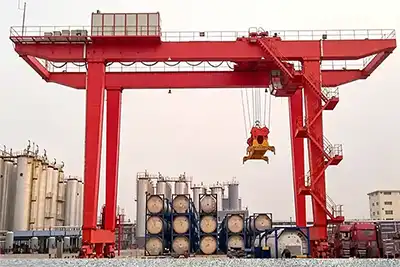
- Gantry cranes – useful for outdoor stockyards and assembly areas
- Explosion-proof cranes – necessary for coal mines and other hazardous environments
- 20–200 tons, with some custom solutions exceeding 300 tons for major equipment handling
- Lifting and maintaining large mining trucks, crushers, and drilling rigs
- Moving ore, concentrates, and processing machinery safely
- Supporting repair and maintenance in dusty or hazardous environments
- Durability: Cranes must withstand dust, heat, and abrasive materials
- Safety: Explosion-proof models are essential in coal and gas mining
- Long service life: Heavy-duty designs reduce downtime and maintenance costs
- Custom requirements: Some sites need extended spans or high-lifting capacities for oversized equipment
Manufacturing Sector
Manufacturing is a vital part of Australia's economy, with hubs in Victoria, New South Wales, and South Australia. Cities like Melbourne, Geelong, Sydney, Newcastle, and Adelaide host a wide variety of factories, from heavy machinery plants to food processing facilities. In these settings, overhead cranes are essential for moving materials efficiently while keeping workers safe. Even in compact workshops, cranes help reduce manual lifting, speed up production lines, and prevent damage to costly materials. The right crane can make a noticeable difference in output and safety, especially in industries where precision and hygiene matter.
- Victoria: Melbourne, Geelong
- New South Wales: Sydney, Newcastle
- South Australia: Adelaide
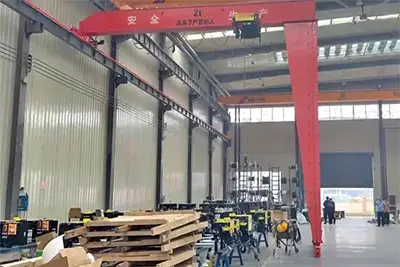
- Single girder overhead cranes – suitable for light to medium loads
- Double girder cranes – for heavier materials and longer spans
- Jib cranes – ideal for localized lifting and assembly tasks
- Workstation cranes – perfect for production lines or assembly stations
- 1–20 tons for most operations
- Up to 50 tons in heavy machinery or automotive plants
- Moving steel coils, sheets, and other raw materials
- Lifting molds in automotive, plastics, or metal casting plants
- Handling food or pharmaceutical materials in hygienic environments
- Assisting in machinery maintenance and assembly tasks
- Space efficiency: Cranes designed for workshops with limited headroom
- Precision control: Anti-sway and fine-positioning features improve safety and reduce material damage
- Hygienic design: For food, medical, and pharmaceutical production areas
- Flexibility: Cranes that can adapt to multiple production lines or areas
Construction
Construction projects across Australia—from high-rise buildings in Sydney and Melbourne to bridges and infrastructure in Brisbane and Perth—require heavy lifting solutions that are both strong and reliable. Overhead cranes in construction sites make it possible to move large and heavy components safely, improving productivity and reducing manual labor risks. Whether it's a precast concrete yard or a steel fabrication workshop, the right crane ensures materials are positioned accurately and work keeps moving without delays. For temporary or mobile sites, flexible solutions are especially valuable.
- Sydney, New South Wales
- Melbourne, Victoria
- Brisbane, Queensland
- Perth, Western Australia
- Other major infrastructure and industrial hubs nationwide
- Double girder overhead cranes – for lifting heavier concrete and steel components
- Gantry cranes – ideal for outdoor and semi-permanent lifting
- Semi-gantry cranes – useful when one side can run on existing rails or walls, saving space
- 5–50 tons, depending on the type of material being lifted (precast slabs, steel beams, molds, etc.)
- Handling precast concrete slabs, beams, and panels
- Moving steel girders, rebar, and other structural elements
- Lifting molds and materials in prefabrication yards
- Assisting in assembly and positioning of large construction components
- Durability: Cranes must withstand outdoor conditions, including wind, rain, and dust
- Versatility: Ability to lift long or irregularly shaped loads safely
- Portability: Mobile or semi-permanent gantry cranes for temporary construction sites
- Safety: Compliant with Australian standards for outdoor lifting and heavy loads
Logistics & Warehousing
In Australia's logistics and warehousing sector, efficiency is everything. Major distribution hubs in Sydney, Melbourne, and Brisbane rely on overhead cranes to handle goods quickly, safely, and accurately. From ports to large warehouse complexes, cranes help move heavy items that forklifts cannot manage efficiently. Even in tight warehouse aisles, overhead cranes can significantly speed up material handling, reduce the risk of product damage, and improve workflow. They are particularly valuable for businesses handling high volumes of pallets, machinery, or bulk items.
- Sydney, New South Wales – Port Botany and surrounding logistics hubs
- Melbourne, Victoria – Port of Melbourne and nearby distribution centers
- Brisbane, Queensland – Port of Brisbane and major warehouse complexes
- Single girder overhead cranes – efficient for light to medium loads in indoor facilities
- Gantry cranes – used in larger yards or semi-outdoor loading areas
- Light-duty bridge cranes – ideal for narrow aisles or low headroom warehouses
- 1–10 tons, suitable for pallets, crates, machinery, and other medium-weight items
- Loading and unloading pallets, crates, and industrial machinery
- Organizing stock and inventory in warehouses
- Moving heavy goods efficiently in logistics centers or shipping yards
- Supporting automated material handling systems
- Space efficiency: Cranes designed to operate in narrow aisles and low-ceiling environments
- System integration: Ability to work alongside conveyors or automated storage systems
- Cycle time: Fast and smooth crane operations to increase throughput
- Safety: Minimized risk of damage to products and personnel during loading/unloading
Ports and Shipping
Australia's ports are critical hubs for trade and shipping, handling everything from containers to bulk commodities like coal, grain, and minerals. Major ports—such as Melbourne, Brisbane, Fremantle, and Newcastle—require robust lifting solutions that can operate reliably in challenging marine environments. Overhead cranes in ports help move massive containers and ship components efficiently, keeping import and export operations on schedule.
Because port operations often run around the clock, cranes must be reliable, weather-resistant, and capable of handling heavy loads repeatedly without downtime. Selecting the right crane type can improve operational speed and reduce maintenance costs.
- Port of Melbourne, Victoria
- Port of Brisbane, Queensland
- Port of Fremantle, Western Australia
- Port of Newcastle, New South Wales
- Other regional shipping and industrial ports
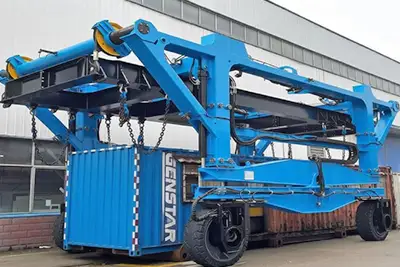
- Goliath cranes – large, free-standing cranes for container yards and heavy cargo
- Gantry cranes – flexible for loading and unloading in open areas or docks
- Shipyard cranes – designed for shipbuilding, repair, and heavy maintenance tasks
- Container cranes – specialized for lifting containers on and off vessels
- 40–200 tons, depending on the type of cargo and operational requirements
- Loading and unloading containers from ships efficiently
- Lifting ship components for repair, assembly, or maintenance
- Handling bulk cargo such as grain, coal, or minerals
- Supporting port logistics and storage operations
- Weather-resistant design: Cranes must endure salt spray, wind, rain, and UV exposure
- Large span coverage: Container yards require cranes with wide operating ranges
- Continuous duty cycle: Equipment should operate reliably for extended hours without failure
- Safety and precision: Accurate positioning of heavy containers minimizes accidents and damage
Energy and Utilities
Australia's energy sector spans traditional power generation, LNG plants, hydroelectric projects, and renewable energy installations. Overhead cranes are critical for handling the heavy and often delicate equipment used in these facilities. From the turbines in the Snowy Mountains hydro project to LNG processing units in Gladstone, the right crane ensures installation and maintenance tasks are safe, precise, and efficient.
In energy and utilities, downtime is costly. Cranes must lift heavy loads accurately while minimizing the risk of damaging expensive machinery. Long-term reliability and robust design are essential, especially in hazardous environments like oil and gas plants.
- Hunter Valley, New South Wales – coal and gas power generation plants
- Gladstone, Queensland – LNG processing facilities
- Snowy Mountains, New South Wales/Victoria – hydroelectric projects
- Pilbara, Western Australia – renewable energy and mining-related infrastructure
- Double girder overhead cranes – for lifting turbines, generators, and transformers
- Gantry cranes – for large outdoor lifting of heavy pipes and structural components
- Specialized turbine cranes – designed for precise handling of sensitive rotating machinery
- 30–300 tons, depending on the type of equipment and facility requirements
- Installing and maintaining turbines, generators, and transformers
- Moving large pipes, boilers, and heavy power plant machinery
- Supporting renewable energy projects, including wind and solar infrastructure
- Assisting in maintenance, repairs, and replacement of critical equipment
- Precision lifting: Avoid damage to critical machinery during installation or maintenance
- Explosion-proof options: Needed for oil, gas, and LNG operations
- Durability and reliability: Cranes must perform under continuous heavy-duty cycles
- Safety compliance: Meet Australian standards for lifting, electrical safety, and hazardous environments
Aerospace and Defense
Overhead cranes are critical in Australia's aerospace and defense industry, where precision, safety, and reliability are paramount. From aircraft assembly in Melbourne to defense equipment maintenance in Adelaide, cranes handle delicate and high-value components that require careful positioning.
Even small misalignment or vibration can cause damage or operational issues, so cranes must provide smooth, controlled motion. This makes features like anti-sway systems and fine-positioning controls essential.
- Melbourne, Victoria – aircraft manufacturing and maintenance hubs
- Adelaide, South Australia – defense equipment assembly and testing
- Brisbane, Queensland – aerospace parts manufacturing and support
- Newcastle, New South Wales – defense workshops and industrial assembly
- Single girder cranes – light to medium loads, suitable for workshops and assembly areas
- Workstation cranes – compact, precise lifting in production lines or maintenance bays
- Precision overhead cranes – for highly sensitive components requiring fine positioning
- 1–20 tons, covering everything from engines to fuselage sections and precision defense parts
- Lifting and positioning aircraft engines, fuselage sections, and large assemblies
- Moving sensitive defense equipment with care to prevent damage
- Supporting precision assembly and manufacturing processes for aerospace components
- Assisting in maintenance, testing, and refurbishment of high-value equipment
- Precision control: Anti-sway and fine-positioning features prevent errors and damage
- Vibration-free operation: Smooth lifting protects delicate parts and ensures assembly accuracy
- Clean environments: Designs may need to meet cleanroom or low-dust requirements
- Safety compliance: Cranes must follow strict aerospace and defense safety standards
Overview: Buying Cranes from China for Australia
Purchasing overhead cranes from China offers Australian buyers significant cost savings, access to a wide range of crane types, and advanced features like precision control, anti-sway systems, and explosion-proof options. With flexible shipping options, modular designs for easy installation, and reliable spare parts and remote support, Chinese suppliers provide a practical, efficient solution for workshops, ports, mining, manufacturing, and logistics. Compliant with Australian and international standards, these cranes combine affordability, quality, and operational efficiency for long-term value.
- Cost Savings: 10–30% lower prices compared to local or European suppliers.
- Wide Selection: Single/double girder, gantry, jib, and specialized cranes for all industries.
- Advanced Features: Anti-sway, precision control, VFD motors, and explosion-proof options.
- Flexible Shipping: Sea (FCL/LCL) and air freight, modular designs reduce volume and costs.
- Spare Parts & Support: Packages and remote technical assistance for maintenance and downtime reduction.
- Faster Production: Shorter lead times with high-capacity factories and efficient customization.
- Quality Compliance: Conforms to Australian Standards (AS 1418, AS 2550) and international certifications (CE, ISO).
- Custom Solutions: Tailored designs for mining, ports, logistics, energy, and manufacturing applications.
- Scalable for Projects: Allows multiple cranes or heavy-duty solutions without high local costs.
Cost Considerations
Buying an overhead crane is more than just picking a price off a catalog. For Australian businesses, it's important to consider the full picture: purchase price, import costs, maintenance, and the long-term value of reliable operation. A crane is a long-term investment, and smart planning up front can save money and headaches down the line.
- 1–5 tons: AUD 8,000 – 25,000
- 10 tons: AUD 25,000 – 50,000
- 20 tons: AUD 50,000 – 80,000
- 50 tons and above: AUD 80,000 – 200,000+ (heavily depends on customization and duty class)
- Configuration: Single girder cranes are generally less expensive than double girder cranes. Outdoor cranes need extra weather protection.
- Customization: Lifting height, span, anti-sway technology, and explosion-proof features all add to the cost.
- Duty class: Light-duty workshop cranes are cheaper than heavy-duty models designed for continuous operation in harsh environments.
- Prices can be 10–30% lower compared to Australian or European suppliers due to economies of scale.
- A wide range of standard crane models are available, covering most industrial needs.
- Customization is possible without the steep cost increases often seen locally.
- Fast production times and flexible delivery options help reduce lead times.
Import Costs
If you're considering importing an overhead crane from China to Australia, it's important to plan for costs beyond the crane's sticker price. Shipping, duties, taxes, and insurance all add up, and understanding them up front helps avoid surprises.
- Sea freight (FCL – Full Container Load): Cost-effective for larger cranes. Transit time is 3–5 weeks from China to major Australian ports.
- Sea freight (LCL – Less than Container Load): Suitable for smaller orders or partial shipments. Slightly higher cost per cubic meter, but flexible for small businesses.
- Air freight: Fastest option, usually 5–10 days, but expensive. Ideal for small hoists, spare parts, or urgent delivery.
- Import Duty: Most cranes face a 5% duty, but under trade agreements such as the China–Australia Free Trade Agreement (ChAFTA), many cranes qualify for reduced or zero duty with proper documentation.
- GST: A 10% Goods and Services Tax applies to the total CIF value plus duty.
To estimate the full cost of importing a crane, use this formula:
Landed Cost = Goods Value + Freight + Insurance + Import Duty + GST
- Competitive shipping costs: Sea routes between China and Australia are well-established, keeping costs reasonable.
- Duty savings: ChAFTA reduces or eliminates duty for qualifying cranes, which can save thousands of dollars.
- Flexible options: Suppliers often allow partial shipments or modular packing to reduce freight costs.
- Access to spare parts: Many Chinese manufacturers include spare parts packages or have fast shipping options for maintenance needs.
Maintenance and Lifecycle Costs
Buying a crane is just the first step. The real value comes from how well it performs over the years and how easy it is to maintain. Careful planning can save on repairs, downtime, and energy costs.- Routine Inspections: Australian Standards (AS 2550) require annual or biannual checks, including structural inspections, load tests, and electrical system checks.
- Replacement Parts: Wire ropes, hooks, brakes, motors, and electrical components need replacement over time. Having spares on hand reduces downtime.
- Training and Safety Compliance: Operators and maintenance staff need proper certification to ensure safe operation and meet insurance requirements.
- Energy Efficiency: Cranes with modern motors and variable frequency drives (VFDs) consume less power, lowering operating costs.
- Durable Design: Heavy-duty materials, corrosion-resistant coatings, and robust components reduce repair frequency.
- Preventive Maintenance: Regular checks and proactive replacement of worn parts extend service life and prevent unexpected breakdowns.
- Spare Parts and Support: Many Chinese manufacturers provide spare parts packages along with operation and maintenance training.
- Remote Technical Assistance: Quick support via phone or video call can solve minor problems without waiting for a local technician.
- Lower Upfront Cost: Cost savings on the initial purchase allow faster ROI, especially useful for small and mid-sized businesses.
Delivery and Installation: China to Australia
Importing an overhead crane from China to Australia can be smooth and cost-effective if you understand the process. Here's a clear step-by-step breakdown:
- Share your site requirements: lifting height, span, capacity, duty class, and any special features.
- Supplier sends detailed drawings and technical specifications.
- Review and approve designs to avoid delays during production.
Tip: Early approval helps prevent costly modifications later.
- Production time varies: 2–6 weeks depending on crane type and customization.
- Chinese factories handle single girder, double girder, gantry, and specialized cranes efficiently.
- Quality checks are performed during production to ensure compliance with international and Australian standards.
Tip: Ask for progress updates and photos during manufacturing to track your order.
- Each crane is tested for load capacity, movement, and safety functions before shipping.
- Ensures that your crane arrives fully functional and minimizes installation issues.
Sea freight: Most common, cost-effective for large cranes.
- FCL (Full Container Load) for bigger cranes
- LCL (Less than Container Load) for smaller shipments
Air freight: Faster but more expensive; suitable for hoists or spare parts.
Tip: Modular or knock-down cranes reduce shipping volume and costs.
Required documents:
- Commercial invoice
- Packing list
- Bill of lading or airway bill
- Certificate of origin (for duty reduction under ChAFTA)
Suppliers can coordinate with freight forwarders or customs brokers to streamline clearance.
Tip: Check if your crane qualifies for zero or reduced duty under ChAFTA to save costs.
- Plan unloading area, crane path, and storage space ahead of time.
- Ensure your site is ready to receive the crane safely.
- Self-installation: Use supplier-provided manuals, drawings, and remote guidance.
- On-site support: Some suppliers can send engineers to Australia for supervision or hands-on assembly.
- After installation, perform final testing and commissioning to ensure safe operation.
Tip: Proper installation and training reduce future maintenance issues and downtime.
Delivery Timeframes: China to Australia
When importing a crane from China, it's important to plan for both manufacturing and shipping times. Lead times can vary depending on crane type, customization, and shipping method. Understanding the timeline helps avoid project delays and ensures your team is ready for installation as soon as the crane arrives.
Manufacturing Time: Most standard single girder cranes can be manufactured within 2–4 weeks. For double girder or heavily customized cranes, manufacturing usually takes 4–8 weeks. Custom options like extended span, anti-sway systems, or explosion-proof features can extend production slightly.
- Standard single girder cranes: 2–4 weeks
- Double girder or customized cranes: 4–8 weeks
Shipping Time: After manufacturing, the crane must be transported from China to your site in Australia. Sea freight is the most cost-effective option for large cranes, while air freight is faster but much more expensive.
- Sea freight: 3–5 weeks from Chinese ports to Australian ports (Melbourne, Brisbane, Sydney, Fremantle)
- Air freight: 5–10 days, usually for small hoists or spare parts
Overall Timeline: From order confirmation to site delivery, the full process typically takes 6–12 weeks depending on crane type, complexity, and shipping choice. Using modular or knock-down cranes can reduce shipping volume and speed up delivery.
Installation Options
Installing an overhead crane correctly is critical for safety, compliance, and long-term reliability. Choosing the right method depends on your site, in-house expertise, and whether you want a fully managed solution.
For companies with engineers or technical staff on site, self-installation can save costs. Suppliers provide detailed manuals, drawings, and remote guidance to ensure proper assembly and commissioning.
- Suitable for in-house technical teams
- Includes supplier-provided manuals, drawings, and remote support
- Cost-effective but requires technical knowledge
If you prefer professional help, local contractors experienced with Australian Standards (AS 1418 & AS 2550) can handle installation. This reduces risks and ensures the crane is set up safely and efficiently.
- Ensures compliance with Australian safety and engineering standards
- Common choice for medium to large projects
- Reduces risk of assembly errors
Some Chinese suppliers coordinate with Australian service partners to provide a full turnkey solution. This includes delivery, installation, testing, and operator training, giving you a crane that's ready to use with minimal effort.
- Complete delivery and installation package
- Includes testing and operator training
- Ensures the crane is fully operational on commissioning
Before installation, it's important to conduct a site-specific safety assessment and ensure operators are certified. The crane should meet the required load capacity and duty class for your operations.
Many Chinese suppliers offer on-site engineers or remote support for installation, making the process smoother. Modular crane designs simplify assembly and reduce freight costs. Additionally, spare parts and technical support are often readily available, while the upfront purchase price remains competitive.
Ready to Find the Perfect Crane for Your Operations?
Don't wait—ensure safety, efficiency, and long-term value for your business. Contact us today for a tailored solution, detailed quotation, and expert guidance.
Send Us an Inquiry Now
We'll work with you to select the right crane type, capacity, and features for your Australian facility. Fast, reliable, and fully supported from design to installation.