

Yuantai Crane for Better Solutions:
Energy-Saving | Space-Saving | Cost-Efficient | CE/ISO/EX
Explore 1-ton gantry cranes for workshops and job sites. Portable, adjustable, manual or electric hoists. Request a quote or download specs today.
1 Ton Gantry Crane – Buy Portable & Adjustable Lifting Cranes
| Product Type: | 1 Ton Gantry Crane |
|---|---|
| Lifting Capacity: | 1 ton |
| Span: | As your request |
| Lifting Height: | As your request |
| Working Class: | A3-A5 |
| Ambient Temperature: | -20~40℃ |
| Crane Price Rangs | More Inquiry Form |
| $8,000 – $ 2,000+ | |
| [email protected] 008615038346929 | |
Overview
Explore 1-ton gantry cranes for workshops and job sites. Portable, adjustable, manual or electric hoists. Request a quote or download specs today.
Hot Sale 1 ton gantry crane, portable gantry crane 3 D presentation video
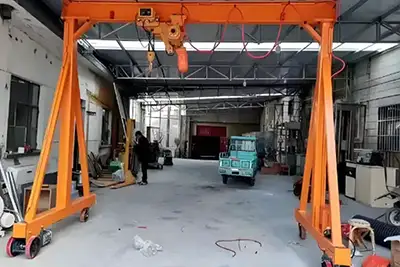
A 1-ton gantry crane is a light-duty lifting solution designed for workshops, maintenance teams, and facilities that need reliable lifting without installing a permanent overhead system. It typically comes with a simple A-frame structure, wheels for movement, and the option to use either a manual or electric hoist. Many buyers choose this crane because it's easy to assemble, easy to move around, and doesn't require structural work on the building. In short, it solves lifting problems quickly without a big investment or a long installation process.
The crane is often used for lifting motors, molds, pumps, tools, and small machinery. Because it's adjustable in height and span (depending on the model), buyers can adapt it to tight spaces or different workstations. Some models even fold or come with lightweight aluminum frames, allowing one or two workers to move or transport them as needed.
Below are the practical reasons most buyers look at a 1-ton gantry crane:
Why Buyers Choose a 1 Ton Gantry Crane
Many customers come with similar needs, and a 1-ton gantry crane fits those needs well. Here are the main motivations:
- Need affordable lifting equipment: Buyers want a lifting tool that doesn't cost as much as an overhead crane or forklift. A 1-ton gantry crane offers a lower price point while still handling daily lifting tasks safely.
- Need mobility and flexibility: Some jobs require handling loads in multiple areas—between machines, bays, or even between buildings. A gantry crane with wheels allows quick repositioning without complicated setup.
- Lack of overhead crane structure: Not all workshops have beams or the budget to install an overhead system. A mobile gantry crane avoids ceiling work, reinforcement, and long installation schedules.
- Short-term or long-term lifting tasks: Whether the crane is needed for a few months or for everyday use, the 1-ton model works well. It can be used for a temporary project, or it can stay in place as part of regular operations.
- Limited space or low building height: Many small workshops have low ceilings or limited floor space. Adjustable height models let buyers fine-tune the crane to fit the environment without interfering with lights, ducting, or other equipment.
A 1-ton gantry crane is built for people who need practical lifting support without the complexity of installing a full overhead system. It fits into many types of workplaces where loads are not extremely heavy but still too much for manual handling. Buyers often look at this crane when they want something simple, reliable, and easy to move from one task to another. Whether it's daily use in a workshop or occasional lifting on a project site, this crane covers a wide range of real-world situations.
Below are the groups who usually benefit the most from a 1-ton gantry crane:
Industries and Users That Commonly Choose a 1 Ton Gantry Crane
- Workshops needing light lifting: Small fabrication shops, repair rooms, and assembly lines often use this crane to lift parts between workstations or onto machines.
- Machinery repair and maintenance teams: Service teams rely on a compact gantry crane to pull motors, pumps, gearboxes, and other components during routine maintenance.
- Small manufacturing plants: Production lines that handle molds, tools, fixtures, or small assemblies use the crane to improve workflow without heavy investment.
- HVAC and installation contractors: These teams lift compressors, units, and ducting where trucks or forklifts cannot reach, especially indoors.
- Automotive shops: Mechanics use the crane for engines, transmissions, and equipment handling where stability and precise lifting are required.
- Maintenance departments: Facility departments need a portable lifting solution for everyday repairs, replacements, and internal logistics.
- Buyers needing fast delivery or easy installation: Companies on tight schedules choose the 1-ton gantry crane because it can be shipped quickly, assembled easily, and used immediately.
Practical Benefits for Buyers
Choosing a 1-ton gantry crane comes with several advantages that matter in day-to-day operations:
- No building reinforcement required: The crane stands on its own frame, meaning no ceiling beams, no installation permits, and no structural upgrades.
- Minimal installation cost: Most models only require simple bolting and leveling on a flat floor. No heavy tools or complicated setup.
- One person can assemble in under X minutes (varies by model): Lightweight and modular designs allow quick assembly, often by one or two workers without special skills.
- Ideal for remote job sites or rental use: Portable models can be transported easily, making them suitable for temporary projects, field service work, or rental businesses.
A 1-ton gantry crane is often the answer for workshops and maintenance teams that deal with frequent lifting tasks but don’t have the setup—and sometimes the budget—for a fixed overhead crane. Many facilities face a mix of tight spaces, limited ceiling height, and varying work areas that make permanent lifting equipment hard to install. This type of gantry crane solves those issues by offering a simple, mobile, and reliable lifting option that fits almost anywhere.
In many workplaces, lifting heavy parts by hand is still common, even though it slows down work and increases the risk of injuries. Forklifts can help with horizontal moving, but they don’t lift straight up and aren’t ideal for precise placement. A 1-ton gantry crane bridges that gap. It provides controlled vertical lifting without requiring structural changes or expensive equipment. Once assembled, it can be pushed around the shop floor, making it useful for both daily operations and occasional lifting tasks.
Common Problems a 1 Ton Gantry Crane Helps Solve
Many of the challenges below show up in conversations with buyers. A 1-ton gantry crane handles these issues directly:
- Eliminates manual lifting risks: Workers no longer need to lift motors, pumps, molds, or parts by hand, reducing strain injuries and keeping operations safer.
- Replaces forklifts for vertical handling: Forklifts can’t lift straight up or place loads precisely. A gantry crane provides the vertical reach and control needed for equipment positioning.
- Provides lifting where overhead beams don’t exist: Some buildings simply aren’t built to support ceiling-mounted cranes. A floor-standing gantry solves the problem with no structural changes.
- Improves productivity without major structural work: No reinforcement, no welding, and minimal downtime. The crane starts working as soon as it is set up.
- Offers a movable lifting solution within a facility: When lifting needs change from one workstation to another, the crane can be rolled to the new location in minutes.
Pain Points Buyers Often Mention
Before making a purchase, many buyers describe practical frustrations they deal with. These short statements capture the most common ones:
- “Our workshop has no overhead crane.”
- “We need mobility between different work areas.”
- “We need an affordable solution under tight budget.”
- “We change workstations frequently.”
These are exactly the kinds of situations where a 1-ton gantry crane becomes a straightforward, affordable, and flexible solution.
Key Features & Benefits
A 1-ton gantry crane may look simple at first glance, but its design is packed with practical features that make everyday lifting easier and safer. Buyers often choose this type of crane because it fits smoothly into existing workflows without requiring big changes to the workspace. Whether it’s used beside a machine tool, in a repair bay, or on a small production line, the crane adapts well to different lifting tasks. Below is a closer look at the features that matter most from a buyer’s point of view.
Practical Features
Buyers usually want equipment that’s easy to use, flexible enough for different jobs, and strong enough to handle real workshop conditions. These features give the 1-ton gantry crane the versatility needed for daily operations:
- Capacity 1 ton (safe, reliable for most workshop loads): Ideal for motors, pumps, molds, tools, and small machinery.
- Portable or stationary options: Choose a fixed setup for a dedicated area, or a mobile version when work shifts from one station to another.
- Adjustable height to fit different machines: Changing the height helps the crane fit under lights, ducts, or low ceilings while still giving enough lifting room.
- Optional motorized or manual travel: Manual travel works well for short moves. Motorized travel helps when loads need to move longer distances or when floor space is tight.
- Compatible with any hoist type: Electric chain hoists, manual hoists, or wire rope hoists can all be used, depending on what the job requires.
- Strong wheels for smooth movement: Durable casters make it possible to roll the crane between machines or across workshop floors without effort.
Benefits Buyers Care About
Beyond the mechanical features, buyers want equipment that helps them work more efficiently without adding extra costs. These are the benefits that stand out in day-to-day use:
- Fast installation – no special foundation: Most models can be assembled with basic tools and put into service quickly.
- Cuts labor cost and lifting time: The crane handles loads that would normally require two or three workers, speeding up tasks and reducing downtime.
- Safer than manual lifting: Helps avoid back injuries and reduces the need for risky lifting methods.
- Works indoors and outdoors: Steel and aluminum options allow use in workshop floors, loading areas, and outdoor maintenance zones.
- Easy to move between work areas: One piece of equipment can support multiple stations, saving space and equipment cost.
- Long service life with low maintenance: The structure is simple, durable, and easy to maintain, making it a long-term tool rather than a short-term fix.
How to Choose the Right 1 Ton Gantry Crane (Buyer Guide)
Choosing the right 1-ton gantry crane comes down to understanding how it will be used day to day. Most buyers want something practical, easy to maintain, and suitable for their workspace. The selection process becomes much simpler when broken into a few clear steps. Below is a buyer-friendly guide that walks through each decision with plain, practical explanations and options you can compare quickly.
The structure determines how the crane behaves in your workspace. Some buyers need mobility, while others need height adjustment or corrosion resistance. Thinking about how often and where the crane will be used helps narrow this down fast.
- Portable manual gantry: A straightforward option with low cost and simple assembly. Good for shops that move equipment occasionally and don't need powered movement.
- Adjustable-height gantry: Useful when working in tight areas or when lifting pallets, molds, or machines of different sizes. The ability to raise or lower the beam gives more flexibility.
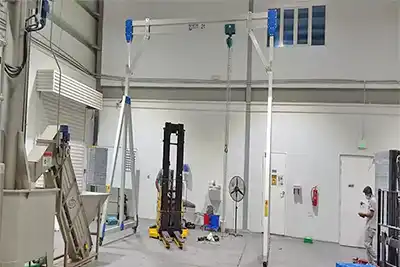
- Aluminum gantry: Much lighter than steel and easy for one or two people to move. Also a good pick for outdoor or marine environments because of its corrosion resistance.
- Motorized gantry: Designed for repetitive movement or longer travel distances. This option can reduce operator fatigue and speed up workflow.
The hoist determines how the crane lifts, how fast it works, and how much effort is required. Different applications call for different hoist types.
- Electric chain hoist: A dependable choice for daily lifting. It's faster, more efficient, and reduces manual effort.
- Manual chain hoist: The lowest-cost option and works well for occasional lifting or when electricity is not available.
- Wire rope hoist: Provides higher lifting speed and quieter operation. Useful for more frequent or precise lifting tasks.
Mobility affects how the crane moves within the workspace. Choosing the right setup helps avoid bottlenecks and keeps workflow smooth.
- Fixed: Best for a dedicated lifting area where the crane stays in one place.
- Mobile with wheels: Allows the crane to move between workstations. Good for workshops that rearrange layouts from time to time.
- Motorized wheels: Helpful in larger facilities or when loads need to travel farther distances with minimal manual pushing.
Once the basic structure and hoist are chosen, custom features can fine-tune the crane to match your working environment or safety needs.
- Adjustable span: Useful when space is limited or when the crane must fit between specific machines.
- VFD control for smooth motion: Helps with controlled lifting, especially for delicate parts or repeat tasks.
- Anti-corrosion paint: Adds durability for outdoor use, coastal areas, or humid workshops.
- Limit switches for safety: Prevents over-travel and protects both the equipment and the load.
- Weather-proof sun/rain canopy: A practical add-on for outdoor work or job sites exposed to direct weather.
Technical Specifications
When buyers choose a 1-ton gantry crane, the first questions are usually: “Will it fit my space?” and “Can it safely handle my loads?” Clear specs and simple comparisons make these decisions easier. Here’s a practical guide written for real-world use.
Standard Specification List
These are the key specs to check before buying. They tell you how the crane will perform in your workshop or job site:
- Capacity: Lifts up to 1 ton. Ideal for motors, pumps, molds, small machines, and workshop parts.
- Span range: Distance between the crane’s legs. Wider spans give more workspace, narrower spans fit tight areas.
- Lifting height: Maximum hook height from the floor. Make sure it clears ceiling lights, pipes, or ducting.
- Overall height: Total frame height. Important if your workshop has low ceilings or obstacles.
- Wheel type: Options include rubber, polyurethane, or steel. Affects smooth movement, floor protection, and load distribution.
- Power supply: Needed for electric hoists or motorized travel. Standard voltages are usually 220V or 380V. Manual hoists don’t need power.
- Hoist compatibility: Works with electric chain hoists, manual chain blocks, or wire rope hoists depending on your needs.
Buyer-Friendly Comparison
- Steel: Strong, durable, and lower cost. Best for frequent lifting in workshops.
- Aluminum: Lightweight, easy to move, and corrosion-resistant. Ideal for outdoor or mobile use.
- Manual hoist: Affordable, simple, works well for occasional lifts.
- Electric hoist: Faster, requires less effort, perfect for daily or repeated lifting.
- Portable: Can be moved easily between work areas. Great for flexible layouts.
- Fixed: Stable and reliable for repeated lifts in a single location.
- Aluminum frames and electric hoists are slightly more expensive.
- Steel manual setups are the most budget-friendly option.
- Standard steel gantries usually ship quickly.
- Aluminum or motorized models may take longer due to custom parts or configurations.
Applications (Real Buyer Scenarios)
A 1-ton gantry crane is not just a piece of equipment—it’s a practical tool that solves everyday lifting challenges in many industries. Buyers often want to see how it’s actually used before making a decision. Below are the most common scenarios where a 1-ton gantry crane proves its value.
Common Applications
- Moving heavy parts between machines: Easily transfers motors, molds, or machinery components from one station to another without extra labor.
- Lifting motors, pumps, molds: Provides safe vertical lifting for items that are too heavy or awkward to move by hand.
- Loading/unloading small trucks: Ideal for workshops or job sites where a forklift is not practical or space is limited.
- Workshop assembly: Helps assemble machines or components by holding parts in place while technicians work.
- Maintenance in tight areas: Works in spaces with low ceilings or limited floor area where overhead cranes cannot reach.
- Temporary job-site lifting: Portable models can be set up quickly at short-term or remote locations, making them perfect for construction sites or rental use.
All About 1 Ton Gantry Crane Pricing
Understanding the cost of a 1-ton gantry crane helps buyers plan their budgets and avoid surprises. Prices can vary depending on the features, materials, and options chosen. Here's a practical guide to what affects cost, typical ranges, and what you actually get when you make a purchase.
The total cost depends on several factors. Knowing these helps you select the right crane for your needs without overspending:
- Size (height/span): Larger spans or higher lifting heights require more materials, which increases cost.
- Manual or electric movement: Motorized travel or electric hoists cost more than manual systems but save labor time.
- Type of hoist selected: Electric chain hoists, manual chain hoists, or wire rope hoists all come at different price points.
- Material (steel vs. aluminum): Aluminum is lightweight and corrosion-resistant, but usually more expensive than steel.
- Custom paint or special requirements: Anti-corrosion coating, limit switches, or outdoor weather protection can add to the cost.
While exact prices vary by supplier and region, buyers can use these ranges as a general reference:
- Entry-level portable gantry: Affordable and simple, suitable for small workshops or occasional lifting.
- Adjustable aluminum gantry: Lightweight, corrosion-resistant, and flexible in height and span.
- Motorized gantry crane: Includes electric travel or hoist, ideal for repetitive lifting tasks.
(Exact pricing depends on custom specifications, options, and shipping.)
Most 1-ton gantry cranes come as a complete package, ready for installation and use:
- Main structure: A-frame or adjustable frame, fully assembled or modular.
- Wheels: Rubber, polyurethane, or steel depending on mobility requirements.
- Hoist option: Manual or electric, chosen based on lifting needs.
- Control system (if motorized): For electric travel or hoist operation.
- Export-standard packaging: Ensures safe delivery for domestic or international shipments.
Buyer FAQ on 1 Ton Gantry Crane
Buying a 1-ton gantry crane comes with practical questions. Here are the answers buyers usually need before making a decision.
Measure the space where the crane will operate. Span should fit between your workstations or machines, and height must clear ceilings, pipes, or other overhead obstacles. Adjustable models give more flexibility if your needs change.
Most portable or aluminum models can be assembled by one or two people. Assembly usually requires basic tools, and some modular cranes can be ready in under an hour.
Yes, but material matters. Aluminum cranes resist corrosion and are suitable for outdoor or coastal environments. Steel models can also work outdoors if treated with anti-rust coatings.
Standard steel gantries are typically shipped quickly. Custom aluminum or motorized models may take longer due to specialized parts or configuration. Always check with the supplier for exact lead times.
Many suppliers provide guidance or detailed instructions. Some also offer on-site assembly support depending on the location and project size.
- Manual hoist: Budget-friendly and good for occasional lifting.
- Electric chain hoist: Faster, easier for frequent lifting tasks.
- Wire rope hoist: Quieter, high-speed operation, ideal for repeated or delicate lifting.
Warranty varies by manufacturer. Typically, 1-ton gantry cranes come with a limited warranty covering structural components and hoist performance. Always confirm terms and duration with the supplier.
Related Products Recommended for Buyers
If a 1-ton gantry crane doesn’t fully match your lifting needs, there are several other options buyers often consider. These products cover lighter or heavier capacities, portable solutions, and different materials to fit a variety of workspaces and tasks.
- 500 kg Gantry Crane: Ideal for very light loads. Perfect for small workshops, maintenance tasks, or areas where a 1-ton crane is more than necessary.
- 2 Ton Gantry Crane: For buyers handling heavier machinery or components. Provides extra capacity without needing a full overhead crane system.
- Aluminum Gantry Crane Series: Lightweight and corrosion-resistant. Great for mobile use, outdoor projects, or environments where steel might rust.
- Portable A-Frame Cranes: Compact and easy to move. Excellent for temporary job sites or tasks that require frequent relocation.
- Electric Chain Hoists: Can be paired with any gantry crane for faster, safer lifting. Reduces operator effort and speeds up repetitive lifting tasks.
Product Detail
Support
1 Ton Gantry Crane – Buy Portable & Adjustable Lifting Cranes
Explore 1-ton gantry cranes for workshops and job sites. Portable, adjustable, manual or electric hoists. Request a quote or download specs today. Read More
3 Ton Gantry Crane for Sale – Compact & Customizable
Buy a 3 ton gantry crane from Yuantai Crane. Compact, flexible, and customizable for workshops, maintenance yards, and small fabrication plants. Read More
2 Ton Gantry Cranes: Buyer’s Guide for Workshops & Factories
Learn to choose the right 2-ton gantry crane for your workshop—compare aluminum vs steel, hoists, mobility, safety, and cost. Get your 2 ton gantry crane! Read More
50 Ton Gantry Crane for Sale
50 ton gantry crane for sale. 50 ton double girder gantry crane for wide industrial sector. Reliable crane supplier from China, Custom gantry crane design. Read More
40 Ton Gantry Crane for Sale, Chinese 40 Ton Gantry Crane Maker & Supplier
40 ton gantry crane for sale. Double girder gantry crane 40 ton for indoor /outdoor use with A frame / U frame gantry, rubber tire / rail travelling for sale. Read More
25 Ton Gantry Crane for Sale, Custom Gantry Crane for Sale
25 ton gantry crane for sale. Custom gantry crane with tailored gantry crane specifications for your particular needs. Check 25 ton gantry crane designs now. Read More
20 Ton Gantry Crane for Sale, Good Price Gantry Cranes
20 ton gantry crane for sale, types of gantry cranes in single girder or double girder, full gantry or semi gantry crane designs to meet your needs. Check now. Read More
15 Ton Gantry Crane For Sale, Good Price Custom Gantry Crane 15 Ton
15 ton gantry crane for sale. Types of gantry crane designs & configurations for your selection, cusotmized 15 ton gantry crane specifications for your applications. Read More
12 Ton Gantry Crane for Sale, Indoor & Outdoor Gantry Crane
Indoor gantry & outdoor gantry crane 12 ton for sale. Types of gantry crane designs & configurations are available to custom your indoor & outdoor cranes. Read More
Cantilever Gantry Crane10 Ton for Sale, Outdoor Use Gantry Crane
10 ton gantry crane for sale, cantilever gantry cranes for outdoor use 10 ton for sale. Types of cantilever gantry cranes 10 ton for selection. Check now. Read More
6 Ton Gantry Crane for Sale, Various Types & Designs, Economical Gantry Crane
6 ton gantry crane for sale good price, single girder gantry crane, economical electric hoist gantry, customized for your application. Check now. Read More
5 Ton Gantry Crane- Single Girder Gantry Crane Design 5 Ton
Gantry Crane for sale 5 Ton, single beam girder, suspension hoist, remote control & pendant control gantry crane 5 ton for sale. Read More
Portable A Frame Crane 0.5 Ton, 1 Ton, 2 Ton, 3 Ton, 5 Ton
A frame crane for sale. 2 ton small gantry crane with roller travelling & rail travelling, customized gantry crane are available. Design your a frame gantry crane now! Read More
12-Ton Portable Gantry Crane Case Study – UAE Buyer Benefits
Check a UAE case study of a 12-ton rubber-tyred portable gantry crane, detailing practical features, real benefits, and key insights for buyers. Read More
25 Ton Single Girder Gantry Crane Case Study – Morocco
Check the successful delivery of 2 MH series 25-ton gantry cranes to Morocco, highlighting fabrication, assembly, and client satisfaction. Read More
20 Ton Single Girder Gantry Crane for Sale America, Good Price
20-ton single girder gantry crane with single-speed hoist, ideal for outdoor heavy lifting, 10m span, 460V power. Get your customized 20 ton gantry crane! Read More
Case Study: 32-Ton European Style Semi-Gantry Crane in Portugal
Case Study: High-Capacity 32-Ton European Style Semi-Gantry Crane for Sale, Perfect for Outdoor Operations in Portugal. Get your semi gantry crane design ! Read More
Smart 10 Ton Gantry Crane for Salt Chemical Plant Affordable Price
Smart gantry crane for sale. A tailored automatic gantry crane improving efficiency, reducing labor needs & optimizing energy use for salt chemical plant. Read More
Case Study: 20 Ton Gantry Crane for Industrial Use in USA
20-ton gantry crane enhances efficiency, reliability, and material handling for various industries in America. Get your design! Read More