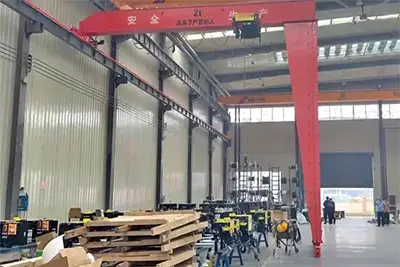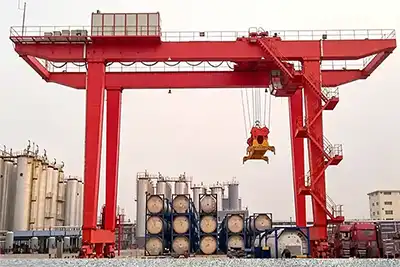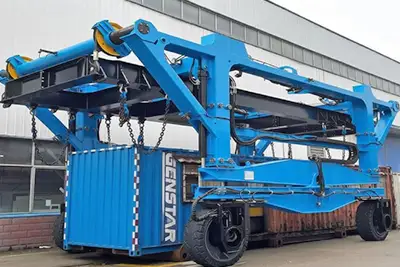
32 Ton Indoor Gantry Crane at Truck Plant, Gantry Crane for Sale
Installed for heavy chassis and cabin handling—offering precise, flexible lifting without needing overhead runway structures.
Case Study 4: 32-Ton Double Girder Indoor Gantry Crane at Truck Plant – Niepołomice, Lesser Poland
Introduction
The client's manufacturing plant in Niepołomice, Lesser Poland, plays a key role in the industrial sector. . It’s where heavy-duty trucks are built—big machines meant to haul serious loads across long distances. This facility isn’t a small workshop; it’s a large, organized space designed for high-volume, large-scale assembly.
At the heart of that assembly process is one thing that’s often overlooked but absolutely essential: how heavy parts are lifted, moved, and set down—safely, accurately, and repeatedly.
This case study takes a closer look at how the plant decided to install a 32-ton double girder indoor gantry crane. Not just for lifting power, but because of how well it fits the layout of the building and the type of work being done.
Why this crane and why here?
- The plant needed to lift large, uneven loads—like truck chassis, axles, and complete cabins.
- There was no overhead crane runway in place, and adding one would have meant major construction and delays.
- The assembly halls needed a lifting solution that wouldn’t get in the way of existing lighting, ventilation, or sprinklers.
In truck manufacturing, especially at this scale, having a reliable overhead lifting system isn’t optional. It’s just part of what makes the workflow possible.
Why overhead lifting matters in automotive assembly:
- Truck parts are heavy and awkward—you can’t just move them with a forklift.
- Precision matters—components need to line up just right before bolting or welding.
- The work never stops—so the crane needs to be strong, durable, and easy to control.
That’s why the team at Niepołomice chose the double girder indoor gantry crane—and that’s what this case study is all about.
Project Background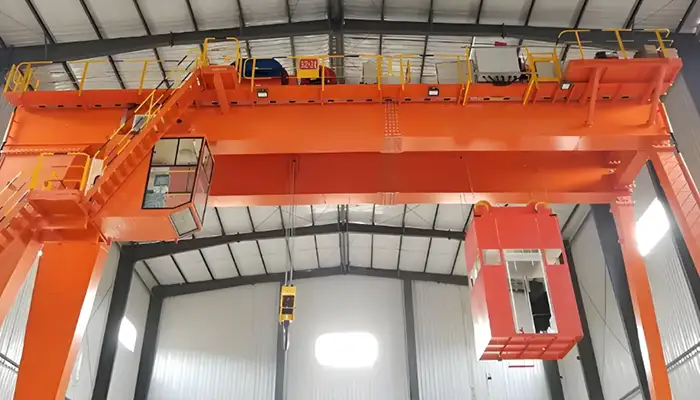
Location: Niepołomice, Lesser Poland
The project takes place at the truck production facility in Niepołomice, a town located about 25 kilometers east of Kraków, in southern Poland. It’s a growing industrial area with strong logistical links to the rest of Europe. The plant is one of the most modern, and it handles critical phases of the company’s heavy truck assembly operations.
This isn’t a pilot facility or test line—it’s a full-scale production plant assembling thousands of heavy-duty trucks each year.
Industry: Heavy-Duty Truck Manufacturing
The plant produces large commercial vehicles, including long-haul trucks, construction models, and specialty-purpose vehicles. These machines aren’t small—frames can exceed 10 meters in length, cabins are large and fragile, and many components weigh well over 10 tons.
The material handling demands here are specific and constant. Production can’t pause because a part wasn’t moved into place in time. Everything—from chassis frames to axles and cabins—has to move smoothly, safely, and in rhythm with the assembly line.
Facility Overview
The plant consists of multiple indoor bays, each tailored for a part of the truck assembly process. These include:
- Frame welding and axle mounting zones
- Cabin preparation and body mounting areas
- Final assembly and inspection lines
Each bay is wide and tall, but not all of them were originally built with cranes in mind. Some sections don’t have overhead runways, especially in areas that were later converted or repurposed. The space is optimized for production—not for hanging steel structures from the ceiling.
Initial Challenge: Why a New Crane Was Needed
As truck models grew larger and heavier, and assembly lines became more complex, the plant faced a few clear problems.
No Overhead Crane Runway Built In
- Some bays lacked ceiling-mounted crane runways altogether.
- Adding steel columns and overhead beams would’ve meant tearing into the existing structure.
- Construction would disrupt production—a major issue in a plant that runs tight schedules.
Handling Oversized, Heavy Components
- Chassis frames can be long, flexible, and unevenly balanced—difficult to lift with forklifts.
- Cabins and axles need vertical lifting and precise placement during assembly.
- These components are too large or heavy for manual rigs or small hoists.
Need for Flexibility Without Compromising Lifting Power
- The lifting system had to work within the existing space—not demand changes to the building.
- It needed enough strength to lift up to 32 tons safely.
- At the same time, it had to be mobile enough to serve multiple assembly points and easy to maintain over years of daily use.
Crane Solution Overview
When the production team at the Truck & Bus plant faced the challenge of lifting large and heavy parts in a space without overhead support, they chose a double girder indoor gantry crane. Not just for its load capacity, but because of its flexibility, durability, and ability to work seamlessly inside a high-traffic assembly hall.
This crane was custom-designed to handle the plant’s specific layout and operational needs—lifting large truck components with precision and doing so safely, every single day.
Crane Type: Double Girder Indoor Gantry Crane
The chosen solution is a double girder gantry crane, designed specifically for indoor use. Both ends of the crane travel along floor-level rails embedded in the concrete on either side of the assembly bay.
Compared to a single girder design, the double girder configuration provides better load control and increased clearance, allowing the hook to reach higher lift points while remaining stable under full load.
Key Technical Specifications
Here’s an overview of the crane’s main performance figures:
- Rated Capacity: 32 tons
Capable of lifting truck chassis, axles, and cabins—even in combinations when necessary. - Span: 18 meters (adjustable based on actual bay width)
Wide enough to straddle full-size truck frames and multiple workstations. - Lifting Height: 8 meters (customizable to fit under roof beams while clearing tall assemblies)
Designed to lift cabins and other bulky components high enough for overhead mounting.
Design Characteristics and Equipment
This crane is built with both strength and indoor compatibility in mind. It’s powerful enough for industrial loads but refined enough to work in a clean, high-traffic production space without disrupting other systems.
Structural and Mechanical Design:
- Double girder frame
Two girders allow the hoist trolley to ride between them, offering better load stability and higher hook travel than single girder types. - Floor-mounted rails
Rails are embedded directly into the workshop floor on both sides, allowing the crane to move down the entire length of the bay without any ceiling support. - Reduced wheel loads
The crane structure was optimized to distribute its own weight evenly, helping prevent floor damage and reducing stress on the slab.
Hoist and Control System:
- Heavy-duty electric wire rope hoist
Capable of handling full 32-ton loads smoothly, with built-in overload protection. - Variable frequency drives (VFDs)
These allow for adjustable lifting and travel speeds, which is critical when handling sensitive or uneven loads that require careful positioning. - Pendant or remote control options
Operators can work from a safe distance, maintaining visibility without putting themselves in a hazardous zone.
Indoor-Friendly Features
Installing heavy equipment in an indoor environment means you can’t just focus on lifting capacity—you also have to consider how the crane interacts with the rest of the space. This model includes:
- Noise-reduction gearboxes and motors
Keeps sound levels low, especially important in echo-prone halls or when multiple shifts are running. - Smooth acceleration and braking
Helps avoid jerking movements that could damage parts or startle nearby workers. - Compact end carriages
Minimized overall footprint so the crane doesn’t eat up too much space near walls or access paths.
This double girder indoor gantry crane checks all the right boxes: it’s strong, steady, space-efficient, and production-ready. In the next section, we’ll look at how it fits into actual daily use inside the truck assembly plant.
Application in Production
The 32-ton double girder indoor gantry crane plays a daily, hands-on role in the truck assembly process. It’s not just a tool in the background—it’s part of the rhythm of production. From handling massive chassis frames to assisting in delicate cabin mounting, the crane’s flexibility and lifting power make it a key player on the floor.
Truck Chassis and Axle Handling
Some of the heaviest parts of a truck are the chassis frame and axles, especially when combined or partially assembled. Moving them requires more than just raw power—it takes precision and smooth control.
- Lifting full-size truck chassis
These frames can weigh up to 32 tons on their own, especially when components like crossmembers and suspension brackets are pre-mounted. - Accurate axle positioning
During frame assembly, the crane lowers axles into exact positions for bolting and welding. There’s no room for misalignment here—everything must line up perfectly. - Multiple lifts per shift
This isn’t an occasional use case. The crane may lift several frames a day, so consistent performance and reliability are essential.
Cabin Lifting and Mounting
Mounting the cabin is one of the final steps in truck assembly—and it’s also one of the most sensitive. Cabins are large but fragile in places, with painted surfaces, windows, and pre-installed electronics that need protection.
- Lifting fully assembled cabins
The crane handles the full cabin unit, already fitted with doors, dash, and wiring harnesses. These are top-heavy and require a careful lift. - Vertical alignment with chassis
The crane offers controlled up-and-down movement to bring the cabin into perfect position over the chassis frame. This avoids bumps, scratches, and fitment issues. - Safety for both the product and the crew
Operators use remote or pendant controls to keep a safe distance while still having visual control over alignment and placement.
Handling a Range of Load Types
Not every lift is the same. Some loads are long and flexible, like a bare chassis. Others are short and dense, like a gearbox pallet or cabin structure.
- Even load distribution across double girders
The twin-girder design allows the crane to handle bulky and concentrated loads with stability. - Support for varied lifting attachments
Depending on the part being lifted, different spreader beams, slings, or hooks can be used—making the system adaptable to a range of tasks. - Maintains workflow pace
The crane helps avoid production slowdowns by ensuring that even the largest or trickiest components get where they need to go on time.
Why Use an Indoor Gantry Crane Instead of an Indoor Overhead (Bridge) Crane
Choosing between an indoor gantry crane and an overhead bridge crane isn’t just about lifting capacity. It often comes down to how the crane fits into the building—and the budget. Click to learn more on types of indoor crane system. 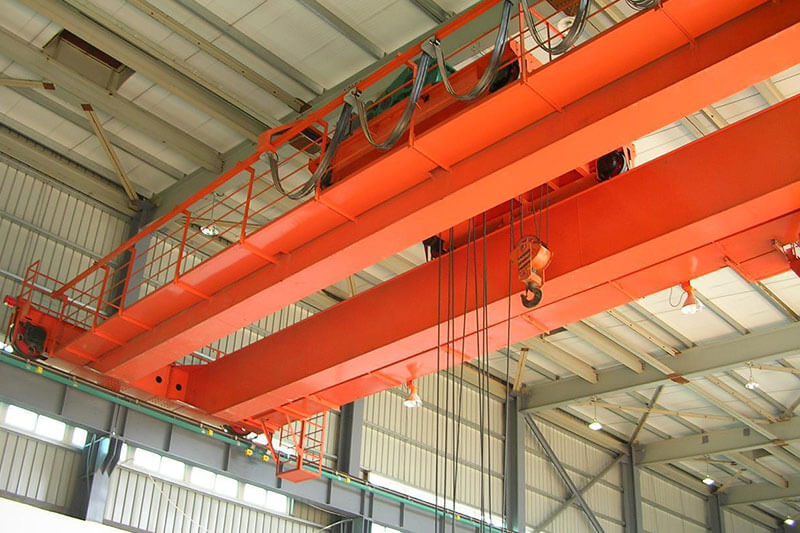
indoor overhead crane system
Structural Flexibility
Let’s start with the building itself. Not all industrial spaces are built with overhead crane runways in mind. Adding them later? That’s a different story—it can be expensive, time-consuming, and messy.
- No need for roof-runway support beams
Overhead cranes require strong steel supports attached to the building’s frame. If those aren’t already in place, it means adding columns or reinforcing the roof. - Ideal for retrofit projects or mixed-use spaces
Gantry cranes ride on rails at ground level, so they don’t rely on the structure above. That’s a big plus in areas where structural loads need to be kept low or where ceiling systems can’t support crane loads. - Less disruption to existing systems
With gantry cranes, there’s no need to disturb fire sprinklers, ductwork, or lighting systems hanging from the ceiling.
Installation Efficiency
Time is money in any manufacturing operation, and crane installation can be a major source of downtime if not done efficiently.
- Faster installation process
Gantry cranes are quicker to install because there’s no need to build or attach an overhead runway. Once the floor rails are laid, the crane can be placed and tested within days—not weeks. - No building modification needed
That means no welding or structural work up high, which also improves safety and cuts labor costs. - Can be installed in stages
If production lines are expanding gradually, you can install floor rails one bay at a time and move the crane as needed.
Adaptability
One of the biggest advantages of a gantry crane is its ability to move—or be modified—without a complete rebuild.
- Modular setup
Gantry cranes can often be extended, shortened, or repositioned as production needs change. - Works across different bays
If you lay out floor rails in multiple areas, the same gantry crane can be relocated or replicated, offering more flexibility than a permanently fixed bridge crane. - Future-proofing
As truck models evolve or new stations are added, the gantry system can adapt without forcing changes to the building layout.
Space Optimization
In a facility where space is always in demand, especially overhead, gantry cranes offer a way to keep the ceiling clear.
- Open ceiling for essential systems
Overhead space remains available for ventilation ducts, lighting fixtures, cameras, and emergency systems. - Better air circulation and lighting
No overhead runways mean nothing blocks light or airflow—both of which improve working conditions and visibility. - Easier to plan future upgrades
If the company ever wants to install solar panels, overhead HVAC, or robotic systems, there’s room to do it without interference from crane structures.
Lower Overall Construction Costs
This part’s simple—less steel, less labor, less reinforcement.
- No runway = lower material and fabrication costs
You’re not paying for structural steel to carry the crane—just the crane itself and the rails. - Ideal for tall, open buildings
Especially in facilities with high ceilings but no existing crane infrastructure, the gantry crane makes use of vertical space without requiring expensive steel work. - Well-suited for repurposed or non-standard buildings
Facilities that weren’t originally designed for overhead cranes can still get high-capacity lifting with floor-mounted gantries.
Technical and Operational Highlights
This 32-ton indoor double girder gantry crane isn’t just built to lift—it’s built to keep up with the demands of modern truck production. From the steel structure to the control system, each part of the crane was designed for reliability, safety, and ease of use in a busy manufacturing environment. Below are the key technical and operational features that support its daily performance at the Truck plant.
Robust Double Girder Design
When you're handling heavy, oversized truck parts, the structure of the crane needs to do more than just hold up—it has to remain stable, day in and day out. That’s where the double girder frame shines.
- Stronger load distribution
With the hoist running between two girders, the load is better spread out, reducing stress on individual components. - Higher lifting precision
The twin-girder design gives the crane a more stable trolley platform, which results in smoother hook movements, even with uneven loads. - Built for high-frequency operation
The structure is more durable under repeated lifting cycles, which makes it ideal for production lines that run multiple shifts or operate year-round.
Precision Control System
Handling a 32-ton load inside a workshop takes more than just power—it takes finesse. This crane is equipped with a control system designed for accurate, responsive operation.
- Variable Frequency Drive (VFD)
Both the hoist and travel mechanisms are fitted with VFDs. These ensure gradual starts and stops, reducing swing and making fine positioning easier. - Smooth acceleration and deceleration
This matters especially when aligning parts like truck cabins, where small errors can cause damage or slow down the assembly process. - Remote and pendant operation
Operators can choose between handheld pendant controls or wireless remotes, allowing them to stand at a safe distance with a clear view of the lift.
Safety Features
Safety isn’t optional in heavy equipment environments—it’s a requirement. This gantry crane includes multiple safety systems that protect both the equipment and the people using it.
- Overload protection
The crane monitors lifting load in real time and prevents hoisting beyond the rated 32-ton capacity. - End-stop buffers and limit switches
Prevent the trolley and crane from over-traveling, which can lead to mechanical damage or derailment. - Anti-collision system
Especially useful in workshops with multiple cranes or nearby vehicles—helps avoid accidental contact. - Emergency stop system and alarms
Audible and visual alarms alert nearby personnel, while large emergency stop buttons allow for immediate shutoff in case of malfunction or hazard.
Maintenance Accessibility
Any crane that’s part of daily production needs to be easy to maintain. Downtime costs money, so the system was designed with serviceability in mind.
- Ground-level access
Many components, including electrical panels and motors, are reachable from floor level or with minimal scaffolding, reducing the need for special equipment. - Modular components
The hoist, motor, and control systems are all built with modular parts, which simplifies diagnostics and speeds up replacement if something goes wrong. - Scheduled maintenance support
The control system can be configured to prompt for service checks based on run time or load frequency, helping to catch small issues before they become bigger problems.
Production Impact and Benefits
Adding the 32-ton double girder indoor gantry crane to the Truck & Bus plant wasn’t just about lifting capacity—it was about improving how work gets done. The crane helped reshape workflow across multiple assembly bays by making material handling faster, safer, and more efficient. Here's a breakdown of how it impacts production on the ground.
Increased Throughput
Speed matters on a production line. If moving large components takes too long, it slows everything else down. The gantry crane helps keep operations on pace.
- Reduces handling time
Large assemblies like truck frames and cabins can be picked, moved, and set down with one crane pass—no need for multiple lifts or vehicle coordination. - Supports continuous flow
Operators no longer have to wait for forklift availability or other lifting gear. That alone cuts idle time between assembly stages. - Keeps up with multi-shift operations
With reliable performance and minimal downtime, the crane supports high-volume truck output without becoming a bottleneck.
Improved Safety
Working with parts that weigh 10, 20, or even 30+ tons requires more than muscle—it demands safe and stable lifting. The gantry crane helps reduce risks across the floor.
- Minimizes forklift use for oversized parts
Forklifts have their place, but they’re not ideal for lifting long or top-heavy components. The gantry crane offers a safer alternative. - Less manual rigging and lifting
Fewer workers need to be directly involved in the lift. This lowers the chance of injury from dropped parts or unstable movements. - Clear operator control
With remote or pendant operation, workers can stay out of the danger zone while maintaining full control of the lift.
Higher Precision
Truck assembly isn’t just heavy work—it’s also detailed. Components like axles, chassis, and cabins need to be aligned within tight tolerances, and the crane supports that kind of precision.
- Helps with critical alignment tasks
Whether it's seating a cabin on a frame or placing an axle under a chassis, the crane offers smooth, controlled motion for millimeter-level adjustments. - Stable lifting, even with odd-shaped loads
The double girder design spreads the weight and reduces sway, giving operators the fine control they need for sensitive placements. - Avoids rework due to misalignment
Fewer errors in assembly reduce the need for re-lifting, re-positioning, or starting over—which saves time and prevents part damage.
Space Utilization
One of the lesser-discussed advantages of an indoor gantry crane is how it respects both ceiling and floor space—something overhead cranes can't always offer.
- Keeps the ceiling clear
With no need for overhead runways, the ceiling space remains available for lighting, HVAC systems, and overhead cable trays or piping. - Leaves the floor usable between the rails
The rails are flush with the floor and don’t block walkways or storage areas. This allows foot traffic, pallet jacks, and carts to move freely between bays. - Supports future layout changes
Since the crane is not tied to the roof, it's easier to modify, relocate, or duplicate the lifting setup as production needs grow.
Conclusion
At the Truck & Bus manufacturing facility in Niepołomice, the 32-ton double girder indoor gantry crane has proven to be much more than just lifting equipment. It’s become an essential part of the production process—especially in the chassis and cabin assembly bays where space, precision, and reliability matter every single day.
- A tailored solution for a demanding operation
With truck frames, axles, and cabins weighing up to 32 tons, the crane’s double girder structure provides the strength and stability needed for daily, high-frequency use. It handles large components with the smoothness and accuracy required to avoid production delays or rework. - Why gantry, not bridge?
Choosing an indoor gantry crane over a traditional overhead (bridge) crane wasn’t just a technical preference—it was a smart, cost-conscious decision. The plant didn’t have an existing overhead runway structure. Building one would’ve meant major reinforcements, more steel, and longer lead times. With the gantry system, installation was faster, less invasive, and more flexible for future adjustments. - Saves space, time, and resources
The gantry crane allowed the ceiling area to remain free for ventilation, lighting, and utilities. Floor rails were installed with minimal disruption, and the entire system supports efficient workflow without boxing in the production space. - Scalable for future needs
As the plant evolves or production volumes grow, the gantry system can be extended or duplicated across other bays—without re-engineering the building.
Final thought:
For manufacturers like that deal with heavy parts in large indoor bays—especially where structural overhead support is missing—double girder indoor gantry cranes offer a practical, long-term solution. They balance lifting power with installation ease, operational flexibility, and future scalability. It’s a tool that does the heavy lifting—literally and strategically.