5 Ton Jib Crane for Plastic CNC Factory, Jib Crane for Sale Egypt
5 ton jib cranes improve lifting efficiency & safety near CNC machines in Egypt's plastic factories, boosting productivity & workflow. Jib crane for sale!
Introduction
Plastic CNC manufacturing has been growing steadily in Egypt, especially in Cairo, where many factories focus on producing precise plastic parts for various industries. These factories use CNC machines to cut, shape, and finish plastic components with high accuracy. The work is detailed, and the production lines are often compact, making space a real challenge.
One of the biggest headaches in these factories is moving heavy molds and materials right next to the CNC machines. These items are often bulky and can weigh up to several tons. Yet, the floor space around the machines is usually tight, with limited room for forklifts or overhead cranes to operate efficiently. This localized lifting near CNC stations is tricky but crucial to keep production flowing smoothly.
This is where 5-ton jib cranes come into play. They offer a simple and effective solution tailored for these busy plastic CNC workshops. Designed to be installed close to the CNC machines, these cranes help operators lift and move heavy items without wasting time or risking injury. Their compact design allows them to work well even in small, crowded spaces.
Key points about localized lifting challenges:
- Limited floor space near CNC stations makes using forklifts or big cranes difficult.
- Heavy plastic molds and components need careful handling close to the machines.
- Manual lifting is unsafe and inefficient, increasing downtime.
- Quick, precise movement of heavy loads directly at the CNC station is essential.
Why 5-ton jib cranes fit the bill:
- Provide lifting capacity suitable for most plastic molds and parts.
- Compact, easy to install without major structural changes.
- Can rotate to cover a working area right next to CNC machines.
- Reduce dependence on larger cranes for small, frequent lifting tasks.
Overall, installing 5-ton jib cranes in Cairo’s plastic CNC factories solves a very practical problem: how to lift and move heavy items safely and quickly in tight spaces. It’s a straightforward fix that helps keep production moving without hassle.
Industry Background: Plastic CNC Factories in Cairo
Plastic CNC factories in Cairo usually have a compact, well-organized layout designed to maximize productivity within limited space. These plants often feature several CNC machines arranged in rows or small clusters, with material storage and assembly areas nearby. Because land and factory space in the city can be costly, these workshops focus on efficient use of every square meter.
Materials handled in these factories vary but generally include plastic sheets, heavy molds used for shaping, and finished plastic parts ready for assembly or shipment. The molds themselves can be quite heavy—sometimes weighing several tons—since they are made from dense materials like aluminum or steel to withstand repeated use.
CNC machines are at the heart of the production process. They handle the cutting, shaping, and finishing of plastic components with precision. The machines work on raw plastic sheets or blocks, using computer-controlled tools to carve out detailed shapes according to exact specifications. After cutting, parts often require finishing touches such as smoothing edges or drilling holes, all performed by the CNC setup.
This combination of materials and machinery means that handling and moving heavy molds and parts near these machines is a daily necessity. Efficient material flow and lifting solutions directly affect how smoothly the whole production line operates.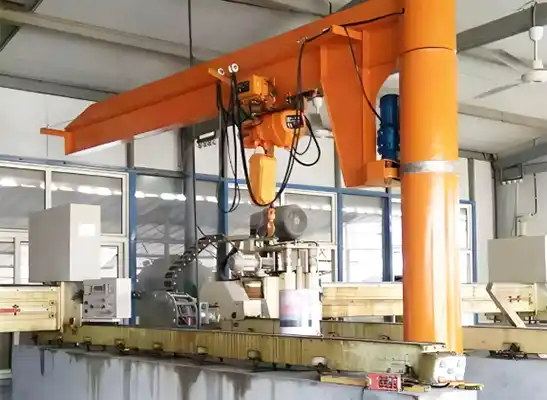
Floor mounted jib crane 5 ton project for your reference, customized jib crane for your needs -Yuantai Cranes
Typical layout features:
- CNC machines arranged for easy access and minimal material travel.
- Nearby storage for plastic sheets and molds.
- Dedicated assembly or inspection stations.
- Narrow aisles and limited open floor space.
Common materials processed:
- Large plastic sheets and blocks.
- Heavy molds (metal) for shaping plastic.
- Finished plastic components and subassemblies.
Role of CNC machines:
- Computer-controlled cutting and shaping.
- High-precision finishing and drilling.
- Handling complex shapes and detailed designs.
- Improving product consistency and reducing manual labor.
In sum, Cairo’s plastic CNC factories operate in tight spaces with heavy and delicate materials. This makes smart lifting and handling equipment not just helpful but essential to keep production efficient and safe.
Lifting Challenges Before Jib Crane Implementation
Plastic CNC factories in Cairo faced several practical lifting issues before jib cranes came into the picture. Here’s what they struggled with:
Cramped Workshop Space
- Narrow aisles and limited floor area made it tough for forklifts and big overhead cranes to get close to the CNC machines.
- Operators often had to move heavy loads longer distances or find awkward routes, causing delays.
Slow and Inefficient Movements
- Overhead cranes had to be repositioned multiple times just to reach a single CNC station.
- Forklifts also took extra time maneuvering around tight spaces, which slowed down lifting tasks.
Safety and Handling Problems
- Workers sometimes lifted heavy molds manually or used improvised tools, increasing injury risks.
- Poor handling led to damage of molds and parts, which resulted in more downtime and repair costs.
Overall, these challenges created a situation where accessing and lifting heavy loads near CNC machines was slow, unsafe, and inefficient. The limited space prevented large equipment from working effectively, manual handling put workers at risk, and the constant repositioning of cranes and forklifts wasted valuable production time. It became clear that factories needed a compact, flexible lifting solution that could operate safely and efficiently right next to the CNC stations without causing disruption.
Why 5 Ton Jib Cranes Were Chosen
The decision to use 5-ton jib cranes in Cairo’s plastic CNC factories was based on several practical factors.
Load Characteristics and Weight Capacity
Most of the molds and plastic parts handled near the CNC machines weigh between 3 to 5 tons. Choosing a crane with a 5-ton capacity provided enough strength to safely lift these loads without overspending on equipment that was too large or too small.
Flexibility and Reach
Jib cranes can rotate within a fixed radius, usually between 180° to 270°. This swinging arm allows operators to lift and move heavy items precisely where needed, directly over CNC machines or workbenches. The flexibility to swing loads around in tight spaces made jib cranes perfect for the cramped workshop environments.
Ease of Installation
Another important reason was the straightforward installation process. Jib cranes can be mounted on floor pillars or walls without requiring major structural changes to the building. This meant factories could add lifting capacity quickly and with minimal downtime, avoiding costly renovations or crane runway construction.
In summary, the 5-ton jib crane matched the weight demands of typical CNC molds, offered practical and precise movement in tight spaces, and could be installed easily on existing shop floors. This combination made it the ideal lifting solution for local, heavy handling needs right next to the CNC machines.
Case Study: Jib Crane Integration in a Cairo CNC Workshop
Project Overview
This project took place in a plastic CNC factory located in Cairo’s industrial district, specializing in producing precision plastic parts for automotive and electronics sectors. The factory was facing frequent delays in moving heavy molds around CNC machines, which impacted overall productivity.
To address this, the plant installed three 5-ton jib cranes at key CNC stations. Two of these cranes were pillar-mounted to allow full 270° rotation, covering multiple machines, while one was wall-mounted with a 180° swing, designed for a more confined area.
Technical Specifications
- Lifting capacity: 5 tons, perfectly suited for the weight of the plastic molds and tooling used in the plant.
- Slewing angle: Two cranes with 270° rotation and one with 180°, providing flexible coverage depending on location.
- Arm length and height: Boom lengths ranged from 5 to 7 meters, with enough clearance under the boom to handle molds and containers safely.
- Mounting type: Combination of pillar-mounted cranes for wide reach and wall-mounted cranes for space-saving installations.
Workflow Improvements
The introduction of these jib cranes brought notable improvements to daily operations:
- Mold setup times were cut by approximately 40%, since operators could lift and position molds directly at the CNC machines without waiting for forklift support.
- Operators gained greater independence, handling heavy parts themselves with precise control right at the workstations.
- CNC machines saw increased uptime with fewer interruptions caused by delays in material handling, leading to smoother production flow and less idle equipment time.
Overall, the jib cranes streamlined lifting tasks, improved safety, and boosted productivity significantly in the Cairo factory.
Operational Benefits Realized
Installing 5-ton jib cranes in Cairo’s plastic CNC factories brought clear, practical improvements to everyday work.
Safer and Easier for Workers
Before, workers had to lift heavy molds manually or use equipment that wasn’t designed for the job. This caused injuries and made lifting harder. With jib cranes right next to the CNC machines, heavy parts can now be lifted safely and smoothly. This reduces strain on workers and lowers the chance of accidents.
Less Need to Use Big Cranes for Small Lifts
Large overhead cranes used to handle all lifting tasks, even small ones near the machines. This wasn’t efficient because those cranes cover big areas and need repositioning. Now, jib cranes do the small, frequent lifts right where they are needed. This frees up the big cranes to do heavier or longer moves, making the whole factory run better.
Faster Production with Fewer Delays
Since operators don’t have to wait for forklifts or big cranes to be ready, molds and materials get to the CNC machines faster. This means less downtime and more parts made in the same amount of time. The workflow is smoother, and the factory uses its resources better.
In simple terms, jib cranes made lifting safer and easier, cut down delays, and helped the factory produce more with less hassle.
Lessons Learned and Best Practices
Plan Early for Crane Installation
One important lesson is to include jib cranes in the factory layout from the very beginning. When cranes are planned early, it’s easier to find the right spots for them and avoid costly changes later. Early integration means the cranes fit perfectly into the workflow, making lifting tasks smooth from day one.
Train Operators Properly
Another key point is to train CNC operators on how to safely and effectively use the jib cranes. Even though jib cranes are simple to operate, proper training helps prevent accidents and ensures that lifting is done right the first time. Skilled operators can handle loads confidently, which keeps production moving without interruptions.
Keep Up with Regular Maintenance
Regular maintenance is also crucial. Checking and servicing the crane’s slewing (rotating) mechanism and hoisting parts keeps everything running smoothly. Simple maintenance prevents breakdowns, extends the crane’s life, and avoids unexpected downtime that can hurt production.
In summary, success with jib cranes comes down to planning ahead, training people well, and keeping the equipment in good shape. These best practices make sure the cranes work safely and efficiently for the long term.
Scalability for Other Factories in Egypt
The positive results from using 5-ton jib cranes in Cairo’s plastic CNC factories can be applied to other cities with similar industries. Places like Alexandria, 10th of Ramadan City, and Sadat City have plastic factories facing the same space and lifting challenges.
- Smaller jib cranes (1 to 3 tons) are also an option for lighter lifting tasks or support jobs.
- Combining different sizes of jib cranes helps create a flexible and efficient workflow.
- Local suppliers provide fast service and spare parts, reducing downtime and keeping cranes working smoothly.
Having reliable support nearby is important for quick maintenance and repairs, which helps factories stay productive.
Conclusion
To sum it up:
- 5-ton jib cranes make lifting heavy molds near CNC machines safer and faster.
- They reduce delays and help factories produce more in less time.
- Other plastic factories in Egypt can benefit by adding similar cranes.
- Good lifting equipment leads to smoother production and less hassle overall.
In short, choosing the right lifting tools is a simple way to improve daily operations and keep things running efficiently.