50 Ton RTG Crane for Precast Bridge Beam Handling Project
Project Overview
A construction company in Indonesia needed a reliable lifting solution for handling precast bridge beams in a large casting yard. The project was related to highway and elevated bridge construction, where heavy concrete girders had to be moved safely between production, storage, and loading areas.
At first, the customer used mobile cranes for beam handling. But as production increased, several problems started to appear. Crane movement inside the yard became slow. Beam transfer efficiency dropped. Operating costs also became higher.
The customer wanted a lifting system that could:
- Handle heavy concrete beams safely
- Work continuously in outdoor conditions
- Improve beam handling efficiency
- Reduce unnecessary crane movement inside the yard
- Support future expansion of the precast yard
After reviewing the lifting requirements and site conditions, a 50 ton RTG crane was selected for the project.
The RTG crane was mainly used for:
- Lifting precast bridge girders
- Moving beams between production and storage areas
- Loading beams onto transport trailers
- Supporting daily beam handling operations
The crane needed to operate outdoors for long working hours in humid and rainy conditions common in Indonesia.
In recent years, Indonesia has invested heavily in infrastructure projects such as:
- Highways
- Elevated roads
- Rail transit systems
- Large bridge construction projects
Because of this, many precast concrete plants have increased production capacity. Larger beam yards are now producing heavier and longer bridge girders than before.
This has created growing demand for heavy-duty lifting equipment, especially RTG cranes and gantry cranes used in precast yards.
For many contractors, lifting efficiency directly affects project progress. If beam handling becomes slow, storage areas become crowded and transportation schedules may be delayed.
Today, crane buyers pay attention not only to lifting capacity, but also to:
- Traveling flexibility
- Outdoor durability
- Safety performance
- Maintenance convenience
- Operating cost
- Stable load handling
As beam production increases, many companies are replacing temporary lifting methods with dedicated RTG crane systems.
Precast bridge beams are large and heavy. Some concrete girders are very long and require stable lifting during movement.
In this project, the customer needed a crane that could handle repeated heavy lifting every day without constant repositioning.
Using mobile cranes created several practical problems:
- Limited lifting coverage
- Frequent crane relocation
- Traffic congestion inside the yard
- Higher fuel consumption
- Reduced efficiency during rainy weather
- More dependency on experienced operators
Another challenge was beam stability. Long concrete girders can swing during traveling if crane movement is not smooth enough.
The customer therefore needed lifting equipment with:
- Stable heavy-load traveling
- Smooth starting and braking
- Large working coverage
- Reliable outdoor operation
- Continuous heavy-duty performance
The customer also wanted more flexibility for future yard expansion. Since the beam storage layout could change later, fixed rail systems were less suitable for the project.
After comparing different lifting solutions, the customer selected a 50 ton rubber tyred gantry crane because it matched the actual working conditions of the precast yard better.
One important advantage was flexible movement. The RTG crane could travel freely inside the yard without rail installation. This reduced foundation work and made future layout changes easier.
Compared with mobile cranes, the RTG crane also provided:
- Better lifting stability
- Larger working coverage
- More efficient beam handling
- Lower long-term operating cost
- Easier movement between beam storage areas
The crane was designed with:
- 50 ton lifting capacity
- Heavy-duty steel structure
- Rubber tyre traveling system
- Variable frequency control
- Overload protection
- Emergency stop system
For long concrete beam handling, stable travel performance was very important. The RTG crane helped reduce beam swing during lifting and traveling, which improved safety and positioning accuracy.
Maintenance was another reason the customer selected this solution. The RTG crane structure allows easier inspection and maintenance of:
- Wheels
- Traveling mechanisms
- Wire ropes
- Hoisting system
- Electrical components
For the customer, this project was not simply about buying a crane. The goal was to improve overall beam yard efficiency and support long-term infrastructure construction work.
Customer Industry and Application
The customer is involved in bridge construction and infrastructure development in Indonesia, mainly supporting highway projects, elevated road systems, and urban transportation construction.
In Indonesia, infrastructure projects are moving fast. Many contractors are under pressure to complete projects on schedule while keeping lifting operations safe and practical. For companies handling precast concrete beams every day, reliable equipment is very important. As many local project managers would say, “Yang penting kerja lancar dan aman” — the important thing is smooth and safe operation.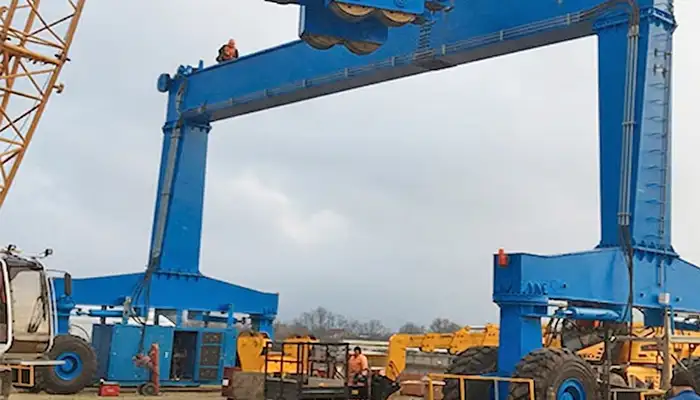
50 ton rtg crane with t frame for sale
The customer operates a large precast yard producing concrete bridge girders for public infrastructure projects. These projects require stable lifting equipment that can support long working hours and continuous beam handling.
Their daily operations included:
- Precast bridge beam production
- Beam storage yard management
- Beam loading for site transportation
- Material transfer inside the casting yard
For many Indonesian contractors, practical performance matters more than complicated systems. The customer wanted equipment that was:
- Reliable during daily operation
- Easy for operators to use
- Suitable for outdoor tropical conditions
- Simple to maintain
- Stable for long concrete beam handling
In Indonesia, project delays can quickly affect transportation schedules and site installation work. Because of this, lifting equipment is often viewed as part of the overall project flow, not just a machine for lifting materials.
The customer is involved in bridge construction and infrastructure development in Indonesia, mainly supporting highway projects, elevated road systems, and urban transportation construction.
In Indonesia, infrastructure projects are moving fast. Many contractors are under pressure to complete projects on schedule while keeping lifting operations safe and practical. For companies handling precast concrete beams every day, reliable equipment is very important. As many local project managers would say, “Yang penting kerja lancar dan aman” — the important thing is smooth and safe operation.
The customer operates a large precast yard producing concrete bridge girders for public infrastructure projects. These projects require stable lifting equipment that can support long working hours and continuous beam handling.
Their daily operations included:
- Precast bridge beam production
- Beam storage yard management
- Beam loading for site transportation
- Material transfer inside the casting yard
For many Indonesian contractors, practical performance matters more than complicated systems. The customer wanted equipment that was:
- Reliable during daily operation
- Easy for operators to use
- Suitable for outdoor tropical conditions
- Simple to maintain
- Stable for long concrete beam handling
In Indonesia, project delays can quickly affect transportation schedules and site installation work. Because of this, lifting equipment is often viewed as part of the overall project flow, not just a machine for lifting materials.
The 50 ton RTG crane was installed in a large precast concrete beam yard and used for daily bridge girder handling operations.
The crane worked across several areas of the yard, helping move beams safely and efficiently between production, storage, and loading zones.
Precast Concrete Beam Handling
After the concrete beams completed curing, the RTG crane lifted them from the casting area and transferred them to storage locations inside the yard.
The bridge girders were long and heavy, so stable crane movement was very important. Sudden travel or uneven lifting could create beam sway during transportation.
The RTG crane handled:
- Precast box girders
- Segment bridge beams
- Long concrete bridge sections
For the customer, smooth beam movement was a key requirement because damaged concrete beams can create costly delays and rework. In practical yard operation, operators prefer equipment that feels stable and predictable during lifting.
As one local supervisor explained during the project discussion, “Kalau angkat beam panjang, yang penting jangan goyang terlalu banyak.”
When lifting long beams, the important thing is keeping the load stable.
Beam Storage Yard Operations
The precast yard stored large numbers of concrete girders at the same time. As production increased, available space became tighter, and beam arrangement needed to be more organized.
The RTG crane helped improve yard operation by allowing flexible movement between storage rows without depending on rail tracks.
This gave the customer several practical advantages:
- Easier beam arrangement
- Better use of storage space
- Reduced traffic congestion inside the yard
- Faster access during loading operations
The rubber tyre traveling system was especially useful because the yard layout could change depending on project requirements.
For Indonesian construction companies, flexibility is often very important. Project conditions can change quickly, and buyers usually prefer equipment that can adapt without major additional construction work.
Loading and Transferring Bridge Girders
The RTG crane was also used for loading bridge girders onto transport trailers before delivery to construction sites.
This process required:
- Stable lifting
- Accurate positioning
- Smooth crane travel
- Good coordination with truck operators
Loading long concrete beams is not only about lifting capacity. Control and stability are equally important.
To improve handling performance, the crane used variable frequency drive control for smoother acceleration and braking. This helped reduce beam swing during travel and positioning.
The customer also reduced dependency on multiple mobile cranes during trailer loading operations, which helped lower operating costs and improve working efficiency.
For many Indonesian contractors, operational practicality is always part of the purchasing decision. They often ask simple but important questions such as:
- Can the crane work continuously during busy periods?
- Is maintenance manageable locally?
- Can operators learn the system easily?
- Will the crane still perform well during rainy conditions?
These practical concerns played an important role in selecting the RTG crane solution.
Before finalizing the crane design, the customer focused on several practical lifting requirements based on actual yard operation conditions.
Heavy Lifting Capacity
The crane needed enough capacity to safely handle large concrete bridge girders during daily operation.
The selected RTG crane was designed with:
- 50 ton lifting capacity
- Heavy-duty hoisting mechanism
- Stable steel structure
- Safety margin for future beam weight increases
The customer also considered future project expansion because beam sizes may increase in later infrastructure projects.
Outdoor Operation
The RTG crane worked completely outdoors under Indonesia's tropical climate.
The equipment needed to operate reliably under:
- High humidity
- Heavy rain
- Heat exposure
- Dust and muddy ground conditions
For this reason, the crane structure and electrical systems were designed for outdoor heavy-duty operation with protective measures for long-term use.
Many Indonesian buyers prefer equipment that is practical and durable rather than overly complex. As commonly said in business discussions, “Yang penting tahan kerja.”
The important thing is that the equipment can keep working reliably.
Frequent Travel and Positioning
The crane traveled continuously between:
- Casting zones
- Storage areas
- Trailer loading positions
Frequent movement required:
- Reliable rubber tyre traveling systems
- Smooth travel control
- Stable positioning performance
Because the beam yard layout could change over time, flexible crane movement became one of the major advantages of the RTG design.
Stable Beam Handling
Long concrete bridge girders can become unstable during movement if crane control is not smooth enough.
To improve lifting stability, the crane was designed with:
- Smooth lifting and lowering control
- Controlled acceleration and braking
- Reduced load sway during travel
- Stable heavy-load traveling performance
This was especially important during trailer loading operations where accurate positioning helps reduce loading time and improves safety.
Long Working Hours
The precast yard operated for long shifts, especially during busy infrastructure construction periods.
The crane therefore needed:
- Continuous heavy-duty performance
- Reliable operation during repetitive lifting cycles
- Easy maintenance access
- Reduced downtime during daily operation
For the customer, reliability was one of the biggest concerns. Delays in beam handling could affect transportation schedules and project progress at the installation site.
In many Indonesian construction projects, maintaining smooth daily operation is highly valued because project coordination often involves multiple contractors working together at the same time.
Material Handling Details
The main lifting task in this project involved handling large precast concrete bridge components inside the casting yard. These materials were used for highway bridges and elevated road construction projects in Indonesia.
Because the beams were heavy and oversized, the customer needed stable lifting equipment that could support daily handling work without slowing production.
The 50 ton RTG crane was mainly used for the following materials.
Precast box girders were one of the primary materials handled by the RTG crane.
These girders are commonly used in:
- Highway bridges
- Elevated road systems
- Long-span bridge structures
- Urban infrastructure projects
Compared with ordinary concrete beams, box girders are larger and heavier. Their long structure also creates additional lifting challenges during traveling and positioning.
The customer needed smooth crane movement to avoid excessive beam sway during transportation inside the yard.
For many Indonesian precast yards, box girder handling is part of daily production work. Operators prefer lifting systems that feel stable and easy to control, especially during busy schedules. As local supervisors often say, “Kerja cepat boleh, tapi handling harus tetap aman.”
Work can move fast, but handling must still stay safe.
The RTG crane also handled segment beams used for modular bridge construction.
These concrete segments are produced separately and later assembled at the installation site. Segment construction helps speed up bridge installation and reduce on-site construction time.
Handling segment beams requires:
- Accurate positioning
- Controlled lifting movement
- Careful storage arrangement
- Stable transportation inside the yard
Since segment beams are frequently moved between casting, storage, and loading areas, the crane needed reliable traveling performance throughout the working day.
In addition to standard girders, the crane was used for transferring other large concrete bridge sections within the precast yard.
These included:
- Long bridge beam sections
- Heavy concrete structural components
- Precast infrastructure elements
Some components had uneven weight distribution, which required careful lifting control during hoisting and traveling.
The customer wanted a crane system capable of handling different types of concrete structures without frequent equipment adjustments.
Before finalizing the RTG crane design, the customer provided detailed beam information to ensure the crane matched actual working conditions.
In precast yard projects, beam specifications directly affect:
- Crane capacity selection
- Span design
- Hoisting system configuration
- Traveling stability
- Safety margin planning
Typical Beam Dimensions
The bridge girders used in the project were long concrete structures designed for large transportation infrastructure projects.
Typical beam dimensions included:
- Beam length: approximately 20–35 meters
- Beam width: approximately 1.5–3 meters
- Beam height: approximately 2–4 meters
Because of their long shape, beam stability during lifting was a major concern.
Long beams can create additional load swing during acceleration, braking, or turning movements if crane travel control is not smooth enough.
Beam Weight Range
Most concrete bridge beams handled in the yard weighed between:
- 30 tons to 45 tons
Some heavier sections approached the upper working range of the lifting system.
To provide a safe operating margin, the customer selected a 50 ton RTG crane instead of choosing equipment too close to the actual beam weight.
This is a common approach in many Indonesian infrastructure projects. Buyers usually prefer some extra lifting capacity to support future production changes and avoid operating continuously near maximum load limits.
As some project managers explained during equipment discussions, “Lebih baik ada cadangan kapasitas.”
It is better to have some reserve capacity.
Handling Frequency
Beam handling operations were performed continuously throughout the day.
The crane handled:
- Beam transfer after concrete curing
- Storage arrangement work
- Trailer loading operations
- Internal transportation between working zones
During peak production periods, lifting frequency increased significantly.
Because of this, the customer needed a crane suitable for:
- Repetitive heavy lifting
- Long working hours
- Continuous outdoor operation
- Stable travel performance under daily workload conditions
For the buyer, reliability during high-frequency operation was more important than simply having high lifting speed.
Handling large precast bridge beams inside an active casting yard created several practical operational challenges.
The crane design needed to address these real working conditions to improve safety and daily efficiency.
Large Beam Size
The bridge girders were long and oversized, making them more difficult to handle compared with standard construction materials.
Large beams created challenges such as:
- Reduced maneuvering space
- Higher load swing risk
- More difficult positioning
- Increased travel stability requirements
The customer needed smooth crane control to reduce unnecessary beam movement during transportation.
For operators, stable handling becomes especially important when beams are moved near storage areas or transport vehicles.
Load Stability During Travel
One of the biggest concerns was maintaining beam stability while the crane traveled across the yard.
Long concrete girders can swing during:
- Sudden acceleration
- Fast braking
- Uneven travel movement
- Sharp positioning adjustments
To improve stability, the RTG crane was equipped with variable frequency drive control for smoother lifting and traveling performance.
This helped:
- Reduce beam sway
- Improve positioning accuracy
- Increase operational safety
- Reduce stress on the concrete structure
In practical yard operation, smoother crane movement also helps operators work with more confidence during repetitive lifting cycles.
Limited Yard Space
As beam production increased, available storage space inside the precast yard became more limited.
The customer needed equipment capable of moving efficiently between narrow storage rows and busy working zones.
The RTG crane helped improve yard organization by:
- Covering a larger working area
- Reducing dependence on multiple mobile cranes
- Improving beam storage arrangement
- Supporting flexible movement inside the yard
The rubber tyre design was especially useful because the crane could adapt to changing yard layouts without requiring rail modifications.
Rainy and Humid Environment
Indonesia's tropical climate created additional challenges for outdoor lifting equipment.
The crane needed to operate reliably under:
- Frequent rain
- High humidity
- Wet ground conditions
- Long sunlight exposure
- Dust and mud during yard operation
For this reason, the RTG crane was designed with:
- Weather-resistant electrical systems
- Protective steel structure coatings
- Outdoor-duty components
- Heavy-duty traveling systems
Many Indonesian buyers focus heavily on durability because outdoor equipment often works continuously in changing weather conditions.
In local construction projects, reliability during rainy periods is especially important because lifting delays can quickly affect transportation and installation schedules.
RTG Crane Solution Design
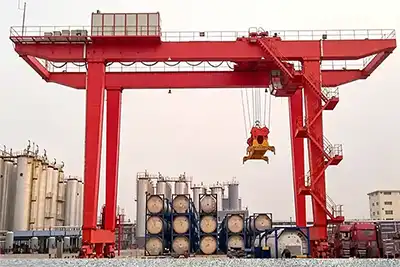
The customer selected a Rubber Tyred Gantry Crane (RTG) for the precast bridge beam handling project.
Compared with rail mounted gantry cranes or large mobile cranes, the RTG crane provided better flexibility for the actual working conditions inside the precast yard.
The crane was designed for:
- Outdoor heavy-duty lifting
- Long concrete beam handling
- Frequent traveling inside the yard
- Continuous daily operation
One of the biggest advantages of the RTG crane was flexible movement. Since the crane travels on rubber tyres, it can move freely between storage areas, casting zones, and trailer loading positions without depending on rail tracks.
For the customer, this was very practical because the beam yard layout could change during different project stages.
In many Indonesian construction projects, flexibility is highly valued. Site conditions can change quickly, and contractors usually prefer equipment that can adapt without requiring additional civil work.
As local project teams often say, “Yang penting fleksibel di lapangan.”
The important thing is flexibility on-site.
The RTG crane also helped reduce:
- Traffic congestion inside the yard
- Dependence on multiple mobile cranes
- Fuel consumption from repeated crane repositioning
- Delays during beam transfer operations
Another important reason for selecting the RTG crane was lifting stability. Long bridge girders require smoother movement during traveling and positioning, especially during trailer loading work.
The RTG structure provided:
- Better load balance
- Stable heavy-load travel
- Large working coverage
- Safer beam handling performance
For the customer, the RTG crane was not simply lifting equipment. It became part of improving overall yard efficiency and supporting long-term infrastructure production work.
The customer selected a Rubber Tyred Gantry Crane (RTG) for the precast bridge beam handling project.
Compared with rail mounted gantry cranes or large mobile cranes, the RTG crane provided better flexibility for the actual working conditions inside the precast yard.
The crane was designed for:
- Outdoor heavy-duty lifting
- Long concrete beam handling
- Frequent traveling inside the yard
- Continuous daily operation
One of the biggest advantages of the RTG crane was flexible movement. Since the crane travels on rubber tyres, it can move freely between storage areas, casting zones, and trailer loading positions without depending on rail tracks.
For the customer, this was very practical because the beam yard layout could change during different project stages.
In many Indonesian construction projects, flexibility is highly valued. Site conditions can change quickly, and contractors usually prefer equipment that can adapt without requiring additional civil work.
As local project teams often say, “Yang penting fleksibel di lapangan.”
The important thing is flexibility on-site.
The RTG crane also helped reduce:
- Traffic congestion inside the yard
- Dependence on multiple mobile cranes
- Fuel consumption from repeated crane repositioning
- Delays during beam transfer operations
Another important reason for selecting the RTG crane was lifting stability. Long bridge girders require smoother movement during traveling and positioning, especially during trailer loading work.
The RTG structure provided:
- Better load balance
- Stable heavy-load travel
- Large working coverage
- Safer beam handling performance
For the customer, the RTG crane was not simply lifting equipment. It became part of improving overall yard efficiency and supporting long-term infrastructure production work.
The 50 ton RTG crane was designed according to the actual beam handling requirements of the precast yard.
The specifications focused on practical operation, lifting safety, and stable outdoor performance.
Capacity: 50 Ton
The crane was designed with a 50 ton lifting capacity to safely handle precast concrete bridge girders and segment beams.
The selected capacity provided:
- Safe handling for daily beam operations
- Reserve lifting margin for future projects
- Stable performance during repetitive lifting cycles
The customer did not want the crane operating continuously near maximum load limits. A proper safety margin was considered important for long-term reliability.
This is common in many Indonesian infrastructure projects where buyers prefer equipment with practical operating reserve capacity.
Span
The crane span was designed according to the beam storage layout and transportation lanes inside the yard.
The selected span allowed the crane to:
- Cover multiple beam storage rows
- Move efficiently across the working area
- Support trailer loading operations
- Improve overall yard coverage
A suitable span also helped reduce unnecessary crane movement during daily operation.
For precast yards, good span design affects:
- Storage arrangement efficiency
- Material flow inside the yard
- Trailer access space
- Future yard expansion flexibility
Lifting Height
The lifting height was selected based on:
- Beam stacking requirements
- Trailer loading height
- Safe traveling clearance
- Future operational flexibility
The crane needed enough lifting height to safely move beams above storage areas and transport vehicles without affecting stability.
For long concrete girders, smooth lifting movement was more important than excessive lifting speed.
Traveling Speed
The RTG crane was designed with controlled traveling speed to balance:
- Operational efficiency
- Load stability
- Positioning accuracy
- Safe movement inside the yard
In bridge beam handling projects, faster speed is not always better. Sudden acceleration or braking can increase beam sway during transportation.
The selected travel system focused more on:
- Smooth movement
- Stable beam handling
- Controlled acceleration and deceleration
- Safer operation in busy yard conditions
This helped operators maintain better control during repetitive lifting work.
Working Duty
The crane was designed for heavy-duty working conditions with frequent lifting cycles throughout the day.
The operating duty considered:
- Continuous outdoor operation
- Repetitive beam handling
- Long working shifts
- High daily lifting frequency
The customer needed equipment capable of supporting demanding production schedules without excessive downtime.
For many Indonesian contractors, reliability during peak construction periods is a major concern because delays can quickly affect project timelines.
Control Method
The RTG crane was equipped with multiple control methods to improve operational flexibility.
The system included:
- Wireless remote control
- Cabin control operation
This allowed operators to choose the most practical operating method based on actual working conditions.
Wireless remote control helped improve visibility during:
- Beam positioning
- Trailer loading
- Storage arrangement work
Cabin operation provided stable control during continuous lifting operations and long working shifts.
The customer also preferred control systems that operators could learn quickly without complicated operation procedures.
As commonly discussed on local construction sites, “Operator harus nyaman pakai sistemnya.”
The operator must feel comfortable using the system.
The RTG crane was equipped with a practical and reliable power and control system designed for continuous outdoor beam handling operation.
The customer focused on stability, ease of operation, and maintenance convenience rather than overly complicated automation systems.
Variable Frequency Drive (VFD)
The crane used a Variable Frequency Drive (VFD) control system for lifting and traveling motions.
This helped provide:
- Smooth acceleration
- Stable braking
- Reduced beam sway
- Better positioning accuracy
- Lower mechanical stress during operation
For long bridge girders, smooth movement is very important. Sudden travel movement can affect beam stability and increase handling risk.
The VFD system also helped reduce shock loads on:
- Hoisting mechanisms
- Traveling systems
- Structural components
- Wire ropes
This supports longer equipment service life during high-frequency operation.
Wireless Remote Control
Wireless remote control allowed operators to work from positions with better visibility during beam handling.
This was especially useful during:
- Beam alignment
- Storage positioning
- Trailer loading operations
- Tight working area movement
Operators could observe beam clearance more clearly while controlling crane movement.
For busy precast yards, better visibility often improves both safety and operational efficiency.
Cabin Operation
The crane was also equipped with cabin control for long working shifts and continuous operation.
The cabin provided:
- Stable operating conditions
- Better visibility across the yard
- Comfortable control during repetitive lifting work
- Centralized monitoring of crane movement
For large precast yards, cabin operation remains important because operators may handle lifting tasks continuously for many hours each day.
Safety Monitoring System
Safety was one of the key concerns in the project because the crane handled heavy concrete bridge girders every day.
The RTG crane was equipped with multiple safety protection systems, including:
- Overload protection
- Emergency stop system
- Travel limit switches
- Fault warning systems
- Safety monitoring alarms
These systems helped reduce operational risks during:
- Heavy lifting
- Beam traveling
- Trailer loading
- Continuous outdoor operation
For the customer, practical safety systems were very important because lifting interruptions or accidents could directly affect project schedules and site coordination.
In many Indonesian construction projects, maintaining smooth and safe daily operation is considered just as important as lifting performance itself.
Key Features of the 50 Ton RTG Crane
One of the most practical advantages of this 50 ton RTG crane is its rubber tyre traveling system. In a precast beam yard, layout conditions are not always fixed. Storage areas, casting zones, and loading positions can change depending on production progress.
The RTG crane does not need rail installation, so the customer can use it directly on prepared ground. This makes site planning much simpler and faster.
In daily operation, this flexibility brings clear benefits:
- No rail foundation work is required, which saves time during installation
- Crane can move freely across different working zones
- Easier adjustment when beam storage layout changes
- Better use of limited yard space
- More practical for multi-phase construction projects
For many Indonesian contractors, this kind of flexibility is very important. As they often say on site, “lapangan bisa berubah, alatnya harus ikut fleksibel.” The working area can change, so the equipment must be flexible too.
This feature is especially useful in precast yards where production areas expand step by step.
The RTG crane structure is built for continuous outdoor heavy lifting work. In precast beam handling, the crane must operate every day under high load conditions without losing stability.
To meet this requirement, the crane uses a reinforced steel structure designed for:
- Long-term outdoor operation
- Frequent lifting cycles
- Heavy precast concrete beam handling
- Stable performance under full load conditions
The structural design focuses on real working conditions in the yard, not just theoretical capacity. Beam handling is repetitive and continuous, so durability becomes a key factor.
Main structural advantages include:
- Strong girder design for long beam support
- Stable frame structure for load balance
- Reinforced connection points for lifting stress
- Suitable for tropical outdoor environments
For Indonesian project environments, equipment reliability is very important because downtime can directly affect production flow. Contractors usually prefer a crane that can “keep running without too much trouble,” especially during peak project periods.
Handling precast bridge beams is not only about lifting capacity. Accurate positioning is equally important, especially when placing beams into storage racks or loading them onto trailers.
The 50 ton RTG crane is designed to provide smooth and controlled movement during operation.
This helps improve:
- Beam alignment during lifting
- Positioning accuracy in storage areas
- Safety during trailer loading
- Overall handling efficiency in the yard
The crane reduces beam swing during travel, which is very important when handling long concrete girders. Even small movement can affect placement accuracy if control is not stable.
In practical operation, this means:
- Operators can position beams more easily
- Less correction work is needed after placement
- Reduced risk of contact with nearby stored beams
- Faster loading and unloading process
For busy precast yards, this stability helps maintain smooth workflow without unnecessary delays.
Safety is always a key concern in precast beam handling, especially when working with heavy concrete girders every day. The RTG crane is equipped with multiple safety protection systems to support stable and controlled operation.
The main safety systems include:
- Overload protection
Prevents lifting beyond rated capacity and helps protect both crane structure and lifting components. - Emergency stop system
Allows operators to stop all crane movements immediately in case of abnormal operation. - Travel limit switches
Controls crane movement range to prevent over-travel in working areas. - Anti-collision protection
Helps reduce the risk of contact between crane and surrounding structures or equipment inside the yard.
These safety systems are designed for practical use in real working environments, where multiple lifting operations happen at the same time.
For Indonesian construction sites, safety is closely connected with smooth production. If equipment is safe and stable, workers can focus better on daily tasks without unnecessary interruptions.
As often mentioned by site supervisors, “kalau alat aman, kerja juga jadi lebih tenang.” When equipment is safe, work becomes more stable and controlled.
Overall, the safety design of the RTG crane supports not only equipment protection, but also daily operational confidence in the precast yard.
Why This RTG Crane Was Suitable for the Buyer
In Indonesia, many infrastructure projects are built in stages, and precast yards often start small but expand quickly as project demand increases. The customer's yard was no different. At the beginning, the layout was simple, but as production of bridge beams increased, more storage space and handling routes were needed.
The 50 ton RTG crane fits this type of working environment very well.
It can cover a wide working area and move between different zones of the yard without being restricted by rails. This is important in real construction conditions, where beam storage areas are often adjusted based on project progress.
In daily operation, the crane supports:
- Large-scale beam storage arrangements
- Multiple lifting points across the yard
- Continuous beam transfer between production and storage
- Flexible handling during peak production periods
For Indonesian contractors, practicality is always important. Many project managers prefer equipment that can “follow the work,” instead of forcing the yard to follow the machine layout.
One of the key reasons the RTG crane was selected is its lower civil construction requirement compared with rail mounted gantry cranes.
In many Indonesian precast projects, civil work cost and construction time are carefully controlled. Rail-based systems require:
- Long runway beam installation
- Precise ground leveling
- Fixed foundation preparation
- Additional civil engineering work
This increases both cost and installation time.
The RTG crane, on the other hand, operates directly on reinforced ground without rail tracks. This gives the customer a more practical solution:
- Reduced civil construction cost
- Faster installation and commissioning
- Less dependence on complex foundation work
- Easier adaptation to existing yard conditions
For many contractors in Indonesia, this is an important decision factor. Projects often need to start quickly, and heavy civil works can slow down early operations. A more flexible system helps keep the schedule on track.
As many site engineers say in practice, “yang penting bisa jalan dulu, nanti kita sesuaikan di lapangan.”
The important thing is to start working, then adjust on site if needed.
In infrastructure projects, especially in Indonesia, project sites are not always permanent. Some precast yards are temporary and may move or expand depending on project phases.
The RTG crane provides a practical advantage in this situation.
Because it is not fixed to rails, the crane can be:
- Repositioned within the yard layout
- Used in new storage zones when the yard expands
- Relocated to another project site if needed
This flexibility is very useful for contractors handling multiple projects across different regions.
In real operations, project conditions often change. Storage demand may increase, or beam production areas may shift. A fixed rail system limits this flexibility, while RTG allows the yard to adapt more easily.
For Indonesian construction companies, this adaptability supports long-term equipment value. The crane is not tied to one rigid layout, which makes it more suitable for dynamic project environments.
Precast bridge beam handling is a continuous process. It involves lifting, moving, storing, and loading heavy concrete girders every day. Any delay in this process can affect transport schedules and installation work on-site.
The 50 ton RTG crane improves efficiency in several practical ways:
- Reduces waiting time between lifting operations
- Allows faster movement between storage and loading areas
- Improves coordination during trailer loading
- Supports continuous operation during peak production
In Indonesian precast yards, efficiency is not only about speed. It is also about smooth workflow between different teams — production, storage, and transportation.
The RTG crane helps connect these stages more smoothly. Operators can move beams directly within the yard without relying on multiple equipment transfers.
This reduces unnecessary handling steps and keeps the workflow more organized. For busy projects, this is very important because bridge construction schedules are often tight.
In many Indonesian construction sites, labor availability and coordination can affect daily productivity. Heavy lifting operations like precast beam handling usually require multiple workers and equipment coordination when using traditional methods.
With the RTG crane system, much of this work becomes centralized and controlled from the crane operation system.
This helps reduce labor dependency in several ways:
- Fewer manual guiding workers needed during lifting
- Reduced need for multiple mobile cranes
- More controlled and centralized operation
- Lower risk of communication errors during lifting tasks
At the same time, it improves safety because fewer people are required to work close to heavy suspended loads.
For many contractors, this is a practical benefit. Labor cost is not the only concern — consistency and safety are equally important. A stable crane system reduces reliance on large manpower coordination, especially during busy production periods.
In Indonesia, where construction projects often run under tight schedules and mixed working teams, having a more controlled lifting system helps reduce operational stress.
As many project supervisors would say, “kalau alatnya sudah bisa handle, kerja jadi lebih ringan.”
When the equipment can handle the work properly, the job becomes easier for everyone.
Installation and Testing Process
The installation of the 50 ton RTG crane in Indonesia was carried out step by step at the precast beam yard. Before assembly began, the site was checked to confirm ground condition, working space, and equipment access.
In many Indonesian construction sites, preparation is very important because yard conditions can be quite dynamic. Rain, soil condition, and limited space all need to be considered before heavy equipment installation.
The assembly process included:
- Positioning of main girder sections
- Installation of rubber tyre traveling system
- Hoisting system assembly
- Connection of mechanical components
- Basic alignment of crane structure
The team followed a clear sequence to ensure stable installation. Large components were lifted carefully using auxiliary cranes. During this stage, communication between installation workers was very important to avoid unnecessary delays.
As local site teams often say, “pelan tapi pasti, yang penting aman.”
Slow but steady, safety comes first.
After mechanical assembly was completed, a full structural inspection was carried out to confirm the crane's integrity before operation.
This step is important for heavy-duty RTG cranes because they handle long and heavy precast beams daily.
Inspection work included:
- Checking steel structure connections
- Verifying welding quality and bolt tightening
- Inspecting main girder alignment
- Confirming wheel and traveling system installation
- Reviewing load-bearing points
Special attention was given to alignment because uneven structure can affect beam stability during travel.
The inspection process ensured that the crane was ready for safe operation under full working load conditions in the precast yard.
Once structural inspection was completed, the electrical system was tested to confirm stable operation of all control and power components.
The RTG crane uses a control system designed for outdoor industrial environments, so reliability is very important.
Testing included:
- Power supply connection check
- Control panel function testing
- Motor rotation verification
- Limit switch response testing
- Safety circuit inspection
The variable frequency drive (VFD) system was also tested to confirm smooth acceleration and braking performance.
In Indonesian project environments, stable electrical performance is critical because power fluctuation and weather conditions can affect equipment reliability. Therefore, all systems were checked carefully before load testing.
Load testing was carried out to confirm the crane's actual lifting performance under working conditions.
For a 50 ton RTG crane used in precast beam handling, load testing is one of the most important steps before handover.
The test process included:
- No-load running test
- Partial load test
- Full load test up to rated capacity
- Hoisting and lowering operation test
- Traveling with load test
During full load testing, the crane lifted heavy precast beams equivalent to the rated working load. The purpose was to check stability, lifting smoothness, and structural safety.
The testing also helped verify:
- Load balance during lifting
- Stability during crane travel
- Response of safety systems
- Performance of hoisting mechanism
This step ensured the crane could safely handle daily beam operations inside the precast yard without risk.
After load testing, full operational testing was carried out to simulate real working conditions inside the precast yard.
This is important because real operation is different from testing in controlled conditions. The crane needed to prove it could handle continuous daily work.
Operational testing included:
- Beam lifting from casting area
- Transfer to storage zones
- Storage positioning accuracy test
- Trailer loading simulation
- Continuous operation cycles
During this stage, operators checked how smoothly the crane responded during repetitive work.
Key focus areas were:
- Beam swing control during travel
- Positioning accuracy in storage areas
- Ease of operation for crane drivers
- Coordination between lifting and yard workflow
In Indonesian projects, practical usability is very important. Equipment must not only pass technical tests but also feel comfortable for operators during daily work.
As site supervisors often mention, “kalau sudah enak dipakai, kerja juga jadi lancar.”
When it is easy to use, work becomes smoother.
After successful testing, the RTG crane was officially ready for full operation in the precast beam yard.
Problems Solved for the Customer (FAQ Style)
A: Yes, a 50 ton RTG crane is suitable for lifting precast bridge girders used in highway bridge construction and precast concrete beam yards.
- The crane is selected based on typical precast box girder handling weight range around 30–45 tons, leaving a safe working margin for daily operations in a bridge casting yard
- In real precast yard lifting work, especially for long concrete girders, the stable hoisting system and controlled travel movement help reduce beam swing during transfer between casting area, storage yard, and loading zone
- This makes it practical for contractors handling bridge construction projects where consistent beam handling is required every day
A: An RTG crane is preferred when the precast yard needs flexible movement and lower civil construction cost compared with fixed rail gantry systems.
- Unlike rail mounted gantry cranes that require long runway beam foundation and fixed installation, the RTG crane can operate directly on reinforced ground, which reduces infrastructure work in precast yard setup
- For bridge construction companies managing changing beam storage layouts, the rubber tyred traveling system allows easier relocation inside the yard without redesigning the whole lifting line
- This is especially useful in infrastructure projects where precast beam production areas expand gradually during highway or elevated bridge construction phases
A: The RTG crane improves beam handling efficiency by reducing waiting time between lifting, storage, and loading operations in precast bridge projects.
- In daily precast yard operations, the crane allows direct transfer of segment beams and precast girders from casting area to storage yard and truck loading zones without multiple handling steps
- This reduces downtime during beam stacking and improves coordination between production teams and transportation schedules in infrastructure projects
- For busy construction sites in Indonesia, where precast beam demand is high, smoother yard logistics help maintain continuous workflow without delaying bridge installation progress
A: Lifting safety is ensured through controlled crane operation systems combined with overload protection and stable load handling design for heavy precast beams.
- The crane uses overload protection and travel limit systems to prevent unsafe lifting conditions during bridge girder handling in precast yards
- Variable frequency control helps achieve smooth acceleration and braking, which reduces sudden movement when handling long concrete beams in outdoor construction environments
- Before operation, full load testing and performance checks are carried out to ensure safe lifting during repeated daily use in precast beam storage and loading operations
A: Yes, the RTG crane is designed for continuous outdoor operation in humid, rainy, and high-temperature precast yard environments.
- The crane structure and electrical systems are designed for long-term exposure in tropical construction sites where humidity and rainfall are common during bridge construction projects
- Anti-corrosion treatment and protected electrical components help maintain stable operation in outdoor precast beam yards with changing weather conditions
- This makes it suitable for infrastructure contractors handling highway and elevated road projects where equipment must work reliably in real field conditions without frequent downtime
Final Results and Customer Benefits
After the 50 ton RTG crane was put into daily operation, the precast beam handling process became much more organized inside the yard. Beam movement from casting area to storage and loading zones is now smoother and more direct.
In practical precast yard operation, this means:
- Faster transfer of precast box girders and segment beams
- Less waiting time between lifting cycles
- More stable flow between production and storage areas
- Better coordination between crane operator and yard team
For infrastructure projects in Indonesia, especially highway and elevated bridge construction, this kind of improvement helps keep the beam production line moving without interruption. As site teams often say, “kalau alur lancar, pekerjaan juga ikut cepat.” When the workflow is smooth, everything moves faster.
One of the key benefits observed was the reduction of downtime during beam handling operations. Before using the RTG crane, mobile crane repositioning and coordination often caused delays in the precast yard.
With the RTG system:
- Fewer interruptions during beam lifting cycles
- Less equipment relocation inside the yard
- More continuous operation during peak production periods
- Lower dependency on multiple lifting machines
This is especially important in real construction projects where precast beam demand can increase suddenly. In Indonesian infrastructure projects, time control is critical because delays in beam supply can affect installation schedules at the bridge site.
The RTG crane helped maintain more stable daily operations, even during busy production periods.
In precast bridge construction, beam production and site installation must stay synchronized. If beam delivery is delayed, the entire construction timeline can be affected.
With the RTG crane in operation, the customer achieved better control over:
- Beam production flow inside the casting yard
- Storage management of finished girders
- Loading schedule for transport trucks
- Coordination with on-site installation teams
The more stable lifting process made it easier to plan daily output and delivery schedules. This is especially useful in Indonesia's highway and elevated road projects, where multiple contractors work in parallel.
From a practical point of view, the crane became part of the project timing system, not just a lifting machine.
Safety improved significantly after switching to the RTG crane system. Handling large precast concrete beams always involves risk, especially during lifting and traveling inside a busy yard.
The crane helped improve safety through:
- More controlled beam movement during lifting
- Reduced load swing during travel
- Built-in overload protection system
- Emergency stop and limit switch functions
- Better visibility during beam positioning
In real precast yard conditions, stable and predictable crane behavior is very important. When operators can trust the machine, the working environment becomes more controlled.
Many site supervisors in Indonesia often emphasize this point simply: “kalau alatnya stabil, kerja jadi lebih aman.” When the equipment is stable, work becomes safer.
The successful operation of the 50 ton RTG crane supports ongoing and future infrastructure development projects in Indonesia.
The crane is now used as a key equipment in:
- Highway bridge construction projects
- Elevated road infrastructure development
- Large-scale precast beam production yards
- Urban transportation expansion projects
With increasing demand for precast concrete structures, especially bridge girders and segment beams, reliable lifting equipment plays an important role in maintaining construction speed and quality.
The RTG crane provides a practical solution for contractors who need:
- Continuous beam handling capacity
- Flexible yard operation
- Stable outdoor performance
- Long-term project support
For the customer, this equipment is not only for one project. It becomes part of long-term infrastructure capability, supporting future bridge construction work across different regions in Indonesia.
Lessons Learned and Buyer Recommendations
In precast bridge projects, one of the most important steps is confirming the real beam data before selecting the crane. Many Indonesian contractors already understand this from experience—if the beam details are not clear at the beginning, the equipment selection may need adjustment later.
For RTG crane planning, it is important to check:
- Actual precast box girder and segment beam weight range
- Beam length and lifting center position
- Whether beam design may change in future project phases
- Frequency of daily lifting cycles in the yard
In real operation, beam weight is not always exactly the same. Small differences in design or production can affect lifting stability. That is why experienced site teams often say, “data awal harus jelas, supaya tidak revisi di lapangan.” Clear initial data helps avoid changes during execution.
In Indonesia's infrastructure industry, precast yards often grow together with project progress. What starts as a small production area can quickly expand when demand increases.
So when selecting an RTG crane, buyers should think beyond current conditions and consider:
- Possible expansion of beam storage areas
- Additional casting lines in future phases
- New loading zones for transport trucks
- Increased production volume during peak project periods
A flexible crane layout helps avoid future rework. RTG cranes are often chosen because they can adapt to changing yard layouts without rail restrictions.
This is especially useful for contractors handling multiple highway or elevated bridge projects where site conditions evolve over time.
Ground condition is one of the most practical but sometimes overlooked factors in RTG crane projects.
Since the crane travels on rubber tyres, the yard surface must be able to support:
- Heavy wheel loads during full capacity lifting
- Repeated travel cycles across different zones
- Stable movement without uneven settlement
- Safe operation during rainy conditions
In Indonesian project sites, soil conditions can vary, especially in coastal or newly developed areas. Proper ground preparation helps ensure long-term crane stability.
Many site engineers emphasize this simply, “tanahnya harus siap dulu sebelum alat berat jalan.” The ground must be ready before heavy equipment operates.
Safety is a key concern in precast beam handling, especially when dealing with long and heavy concrete girders in busy yards.
For RTG crane selection, buyers should ensure the system includes:
- Overload protection for heavy lifting control
- Emergency stop for quick response during abnormal operation
- Travel limit switches for safe working range
- Anti-collision functions in crowded yard environments
In real operation, safety systems are not only for protection—they also help operators work with more confidence during daily lifting tasks.
For Indonesian contractors, safe operation also supports smooth coordination between different teams working in the same yard, such as casting, storage, and transport crews.
Another important lesson from precast yard projects is planning maintenance access in advance, not after installation.
RTG cranes operate in continuous outdoor conditions, so regular inspection is needed for:
- Traveling wheels and drive system
- Hoisting mechanism and wire ropes
- Electrical control system
- Structural connection points
If maintenance access is not planned properly, simple inspection work can become difficult later, especially in busy storage yards.
Good planning helps ensure:
- Easier daily inspection
- Faster troubleshooting when needed
- Reduced downtime during maintenance work
- Longer equipment service life
In many Indonesian projects, practical maintenance planning is highly valued. As field teams often say, “yang penting gampang dirawat, supaya tidak sering berhenti kerja.” Easy maintenance helps keep operations running smoothly.
Conclusion
Summary of the RTG Crane Project Success
The 50 ton RTG crane project for the precast beam yard in Indonesia was successfully delivered and put into stable operation. The crane now supports daily handling of precast box girders, segment beams, and other concrete bridge components used in highway and elevated road construction.
In real working conditions, the equipment has helped the customer achieve:
- Smoother beam transfer between casting, storage, and loading areas
- More stable handling of long and heavy concrete girders
- Better coordination inside the precast yard during busy production periods
- Reduced delays in material movement and transport scheduling
For the project team, the most practical result is simple: beam handling becomes more controlled and predictable, even during high workload days.
Importance of Selecting the Right Gantry Crane for Precast Beam Handling
In bridge construction projects, especially precast yard operations, the crane is not just lifting equipment. It directly affects how fast beams can be produced, stored, and delivered to the construction site.
Choosing the right RTG or gantry crane means considering more than just lifting capacity. In practice, it is about matching the crane with real site conditions.
Key points from this project include:
- Beam size and weight must match crane capacity with safe margin
- Yard layout and future expansion should be considered early
- Outdoor working conditions in Indonesia require durable equipment design
- Stable movement is critical for long concrete beam handling
- Safety systems must support continuous daily operation
A well-selected crane helps keep the whole precast operation stable, especially when project deadlines are tight and coordination between teams is continuous.
Practical Recommendations for Crane Buyers in Bridge Construction and Infrastructure Industries
For contractors and project owners in Indonesia’s infrastructure sector, several practical points can help in selecting the right crane system:
- Clearly define actual beam data before finalizing crane specification
- Consider how the precast yard may expand in future project phases
- Pay attention to ground strength and site preparation for heavy RTG operation
- Choose a crane system that operators can use easily in daily work
- Ensure safety systems are suitable for long-hour outdoor operation
- Plan maintenance access during early design stage, not after installation
In many real projects, the most successful crane solutions are not the most complex ones, but the ones that fit daily field conditions well.
As many site teams often say in practice, “yang penting cocok dengan kerja di lapangan.” The most important thing is that the equipment matches real working conditions on site.
This RTG crane project shows how a practical and well-matched lifting solution can support smooth precast beam handling and help infrastructure projects move forward with better coordination and stability.