32 Ton Gantry Crane – Smooth VFD Control for Uzbekistan
Experience precise lifting and traveling with VFD-controlled 32 ton gantry crane. Designed for Uzbekistan’s cold climate with safe, efficient, and reliable operation.
Client Background
The client is a professional sourcing company based in Uzbekistan that connects local industrial plants with dependable equipment manufacturers in China. Their focus is on helping clients secure customized material handling solutions suited to the country's demanding outdoor environments, where seasonal temperatures can swing from extreme cold to intense summer heat.
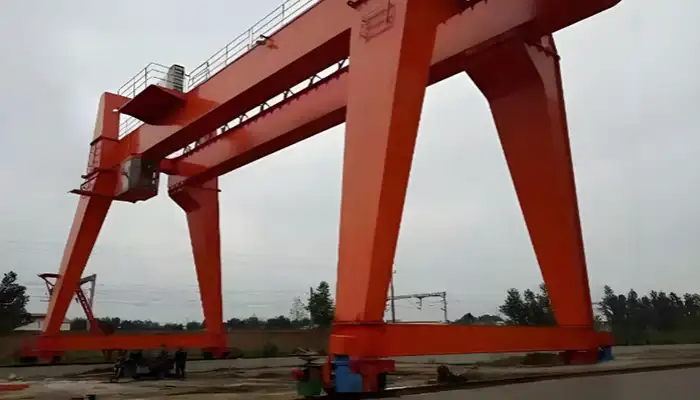
On March 8th, 2025, the company's management team visited the crane manufacturing facility to inspect the production quality of a 32-ton double girder gantry crane designed specifically for use in Uzbekistan's industrial zones.
- Purpose of visit: To confirm the manufacturer's technical capability and verify compliance with the project's customized design requirements.
- Key focus areas: Welding quality, structural accuracy, assembly progress, and control system integration.
- Inspection method: On-site review of manufacturing processes and participation in a full-load lifting test.
Inspection Activities
During the visit, the inspection team followed a detailed checklist covering both mechanical and electrical systems. They observed the main girder fabrication process, checked weld seams using ultrasonic testing reports, and reviewed the crane's overall assembly precision. Special attention was given to the performance of the winch system and the travel mechanisms under different speeds during the full-load trial run.
- Reviewed raw material certificates and welding inspection reports.
- Checked the fitting tolerance of the trolley and long-travel mechanisms.
- Witnessed the 32-ton rated load test to confirm lifting stability and brake performance.
Result and Client Feedback
By the end of the inspection, the client expressed satisfaction with the overall production capability, quality control system, and testing standards of the factory. They found the crane's structure, speed regulation, and welding quality consistent with the required specifications for Uzbekistan's outdoor industrial use. To support internal review and presentation to their end users, the client requested additional product videos, technical drawings, and catalogues for further evaluation and project discussion.
- Factory met the performance expectations for a 32-ton gantry crane.
- All inspection and test records were documented for client reference.
- The cooperation laid the foundation for upcoming sourcing projects in Uzbekistan's heavy industrial sector.
32 Ton Gantry Crane Technical Specifications
Before diving into the details, it's important to understand that this 32 ton gantry crane was designed specifically for outdoor industrial use in Uzbekistan, where extreme cold and heavy-duty operation are common. Every specification is selected to ensure reliable performance, smooth operation, and safety in harsh conditions.
| Parameter | Specification |
|---|---|
| Model | MG Type Double Girder Gantry Crane |
| Rated Capacity | 32 tons |
| Span Length | 32 meters |
| Cantilever | 12.5m + 12.5m |
| Lifting Height | 10 meters |
| Lifting Mechanism | 32t Winch |
| Lifting Speed | 0.95–9.5 m/min (VFD control) |
| Cross Traveling Speed | 3.7–37 m/min (VFD control) |
| Crane Traveling Speed | 3.2–32 m/min (VFD control) |
| Control Mode | Wireless Remote Control |
| Duty Group | A5 |
| Working Voltage | 380V, 50Hz, 3Ph |
These technical specifications provide a complete snapshot of the crane's capabilities. They guide buyers and engineers in understanding how the crane handles heavy loads, operates in extreme temperatures, and moves efficiently across long spans. By reviewing each parameter, stakeholders can ensure the crane fits the specific needs of their Uzbekistan-based industrial environment before installation and operation.
Structural Design
The structural design of the 32 ton gantry crane is critical for safe and efficient operation, especially in outdoor industrial environments like those in Uzbekistan. Every component, from the main girders to the support legs and winch system, is engineered to handle heavy loads while remaining stable in extreme cold and windy conditions.
- Main Girders: Box-type double girder construction provides high rigidity and low deflection, ensuring smooth lifting and long-span stability under full 32-ton loads.
- Support Legs: A-type steel legs are designed for enhanced lateral stability. All welds undergo non-destructive testing (NDT) to guarantee strength and durability, even in sub-zero temperatures.
- Winch System: The crane uses a compact 32-ton winch assembly. Variable frequency drive (VFD) control allows precise lifting speed adjustments, smooth operation, and reduced mechanical wear over time.
Overall, the combination of sturdy main girders, stable support legs, and a controlled winch system ensures that the crane can perform reliably in Uzbekistan's challenging outdoor industrial conditions. This design also allows for long-term durability, minimal maintenance, and safe handling of heavy materials, which are critical considerations for buyers and engineers planning industrial operations in cold climates.
Electrical and Control System
The electrical and control system of a 32 ton gantry crane is designed to ensure safe, efficient, and precise operation in challenging environments, such as the outdoor industrial zones of Uzbekistan. The system focuses on reliability in extreme temperatures, ease of use, and accurate control of lifting and traveling motions.
- Control Mode: Wireless remote operation allows the operator to control the crane safely from a distance, reducing risks when working in cold or hazardous outdoor conditions. It also improves flexibility in positioning the crane and managing loads.
- Variable Frequency Drives (VFD): VFD technology is applied to all three motion mechanisms—lifting, cross traveling, and long traveling. This provides soft start and stop functions, precise speed control, and reduces wear on motors and mechanical components, even in low-temperature environments.
- Safety Functions: Multiple safety features are integrated, including overload protection, travel limit switches, emergency stop buttons, and anti-collision systems. These measures ensure secure operation and minimize the risk of accidents during daily use.
In combination, the control mode, VFD technology, and safety systems make the crane highly reliable and user-friendly. Operators can handle heavy loads smoothly and safely, even in sub-zero temperatures or outdoor conditions common in Uzbekistan's industrial settings. This electrical design also reduces long-term maintenance and ensures consistent performance throughout the crane's service life.
Cold-Resistant Configuration for Uzbekistan's Climate
Operating a 32 ton gantry crane in Uzbekistan presents unique challenges, especially during the winter months when temperatures can drop significantly. To ensure reliable performance and safety, the crane has been specially configured to handle extreme cold and outdoor conditions, minimizing risks associated with frozen components, brittle metal, and moisture condensation.
Operating Environment: The crane is designed for regions where winter temperatures can reach –40°C, particularly in northern and high-altitude industrial zones.
Material Selection:The main structure is constructed from Q355E cold-resistant steel, known for maintaining toughness and preventing cracks under extremely low temperatures.
Low-Temperature Adaptations:
- Heating belts are installed on all motors to prevent freezing and ensure smooth startup in sub-zero conditions.
- Electric control boxes include internal heaters to maintain stable performance and prevent condensation-related faults.
- Cold-resistant lubricants are applied throughout mechanical systems to maintain smooth operation even in harsh winter weather.
These measures ensure the crane operates reliably throughout Uzbekistan's coldest months, protecting both equipment and operators. By combining cold-resistant steel, heating systems, and specialized lubricants, the crane delivers consistent performance and long-term durability, even in outdoor industrial settings exposed to extreme temperatures.
Client Feedback and Cooperation Outlook
After completing the factory visit and reviewing all production and testing processes, the client expressed high confidence in the crane's quality and the factory's capability. The visit highlighted the manufacturer's attention to detail and responsiveness to customer requirements.
- The visiting team confirmed that the 32 ton double girder gantry crane met both technical and environmental requirements for Uzbekistan's harsh winter climate.
- The client appreciated the thorough documentation, low-temperature adaptations, and overall production standards.
- This cooperation strengthened mutual trust and laid the groundwork for future industrial equipment sourcing projects in Uzbekistan.
Positive feedback from such professional clients demonstrates the importance of transparent processes, practical design adjustments for local conditions, and proactive communication throughout the project lifecycle.
Key Takeaways for 32 Ton Gantry Crane Buyers
Purchasing a crane for industrial use in cold climates requires careful consideration. Buyers should not only focus on lifting capacity and speed but also on materials, safety features, and environmental adaptations.
- Confirm environmental and temperature conditions before selecting materials and electrical systems.
- Use Q355E or equivalent cold-resistant steel for cranes operating in temperatures below –20°C.
- Equip motors and electrical systems with heating protection to ensure reliable operation in winter conditions.
- Always request factory test reports, inspection videos, and load test records to verify product quality and compliance with project requirements.
Following these practical guidelines helps buyers ensure that their 32 ton gantry crane will perform reliably, safely, and efficiently in Uzbekistan's demanding industrial environments.