Optimizing Gantry Crane Configurations for Efficient Precast Production
Yuantai Solution
Overview of Precast Concrete Production
Precast concrete manufacturing is a streamlined process that involves casting concrete elements in a controlled environment and then transporting them to construction sites. This method provides consistency in quality and helps speed up construction timelines. However, behind every successful precast concrete operation is a well-oiled system of heavy machinery, and at the heart of that system is the gantry crane.
In these plants, gantry cranes are responsible for lifting and positioning heavy concrete components, molds, steel rebar, and tools. The configuration of these cranes has a direct impact on the productivity and safety of the entire facility. When properly configured, cranes can make operations more efficient and prevent costly delays.
Significance of Gantry Crane Configurations
Choosing the right crane configuration is vital. A poorly designed crane system can lead to inefficiencies, delays, and safety risks. On the other hand, the right configuration can optimize workflows, reduce handling time, and ensure that heavy materials are moved with precision and safety. In this article, we'll dive into how you can optimize gantry crane setups for maximum efficiency in a precast concrete plant.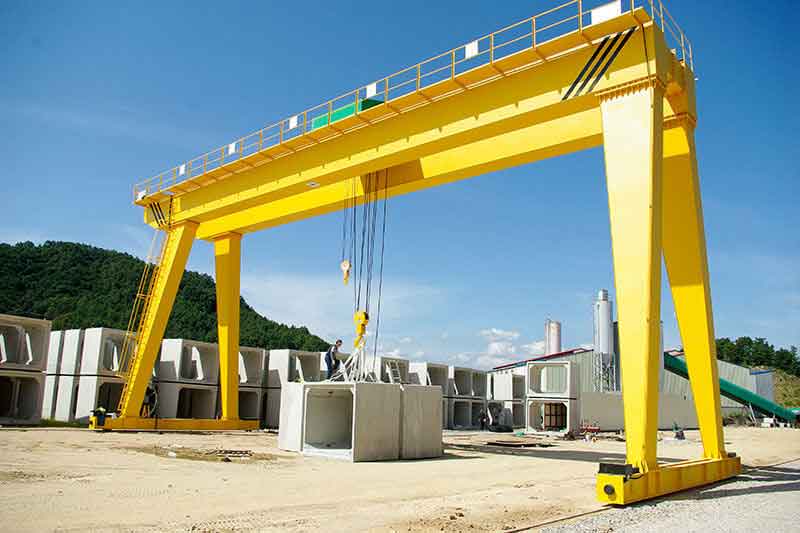
Double girder gantry crane for precast concrete plant
Crane Type |
Gantry Crane for Precast Concrete Plant |
Structure |
Single or Dual Hoist; Horizontal or Vertical Layout |
Capacity |
10 ton (rebar area) / 30 ton (production area) / 75 ton+ (storage area) |
Span |
Customized to plant layout |
Lifting Height |
Customized to station and mold height |
Working Duty |
A5–A7 |
Hoisting |
Single or Dual Hoist, Wire Rope or Chain Hoist |
Lifting Attachments |
Slings, Spreader Beams, Lifting Clamps |
Control |
Pendant, Remote or Cabin Control |
Safety |
Overload Protection, Load Sensors, Anti-Sway, Emergency Stop |
Mobility |
Rail Mounted or Rubber Tyred |
Environment |
Indoor / Outdoor Precast Plants |
Power Supply |
380V/50Hz or 440V/60Hz, 3Ph |
Typical Loads |
Rebar Cages, Molds, Steel Reinforcement, Concrete Elements, Box Girders |
Main Uses |
Rebar Handling, Mold Positioning, Concrete Pouring, Storage and Shipment |
Customization |
Capacity, Span, Hoist Configuration, Layout, Attachments |
Compliance |
CE / ISO |
Tell us your plant area, load type, weight, span and lifting height. We will configure the right gantry crane for your precast plant. Get a Precast Plant Gantry Crane Solution
Different Are\as of a Precast Concrete Plant
Rebar Processing Plant
In a precast concrete plant, the rebar processing plant is where raw steel rebar is cut, bent, and shaped for use in concrete elements. The gantry crane in this area serves a crucial role in handling raw materials and moving completed rebar cages.
- Primary Function: Move raw rebar and fabricated rebar cages to different workstations.
- Crane Requirements: A moderate-capacity crane, usually with a single hoist, is enough to handle rebar lifting needs. This crane must be quick and precise, as rebar processing is typically a fast-paced operation.
- Typical Tasks: Lifting and placing rebar into molds, handling bent steel cages, and assisting in material prep.
Production Area
The production area is the heart of the plant, where precast components like beams, box girders, and slabs are cast. Here, the crane configuration must be more robust to handle large molds, heavy steel cages, and concrete pouring operations.
- Primary Function: Assist in lifting and positioning heavy molds, placing steel reinforcements into molds, and moving completed concrete elements.
- Crane Requirements: In this area, dual hoist cranes are essential. Dual hoist systems allow two hoists to work simultaneously on a single crane, providing the lifting capacity and flexibility needed for large, heavy tasks.
- Typical Tasks: Lifting steel reinforcement, positioning molds, pouring concrete, and managing smaller tools and equipment.
Storage Area
The storage area is where finished precast elements are stored before they are shipped out. The gantry crane in this area needs to be capable of handling extremely heavy loads, such as large box girders and concrete slabs.
- Primary Function: Moving finished precast concrete elements and organizing them in storage.
- Crane Requirements: Heavy-duty cranes with dual hoists and high lifting capacities are required here. Cranes capable of lifting 75 tons or more are common.
- Typical Tasks: Lifting and transporting massive precast components to storage racks, and ensuring that all items are safely positioned for easy access.
Key Factors in Optimizing Gantry Crane Configurations
Load Capacity and Lifting Needs
One of the first factors in optimizing your crane system is determining the load capacity and lifting needs for each area of your plant. This involves assessing the types of materials you handle and the maximum weight your cranes will need to lift.
- Rebar Processing: Lifting lighter, smaller loads, such as rebar and steel cages, requires a crane with lower capacity (e.g., 10 tons).
- Production Area: Larger items like molds and steel cages require more capacity, often around 30 tons or higher.
- Storage Area: The heaviest loads are typically found in the storage area, where cranes should be able to lift 75 tons or more, depending on the size of the precast elements.
Hoist Configuration: Single vs. Dual Hoists
Choosing between single hoist and dual hoist systems depends on the type of tasks your crane needs to perform. A single hoist crane is suitable for lighter tasks, but for handling larger, more complex loads, a dual hoist configuration is the best choice.
- Single Hoist Cranes: These cranes typically work well in the rebar processing area where lighter materials are handled.
- Dual Hoist Cranes: These cranes are ideal for heavy-duty lifting tasks in the production and storage areas. Dual hoists provide better load distribution and stability, reducing the risk of accidents and crane overload.
Horizontal vs. Vertical Layouts
Another key factor in optimizing crane configurations is the layout of the plant. The plant layout directly impacts how cranes are configured to move materials efficiently.
- Horizontal Layouts: If your production areas are spread out horizontally, you may need a crane with dual hoists working in tandem. This setup is perfect for plants that need to move large quantities of materials over long distances.
- Vertical Layouts: For more compact, vertical layouts, multiple cranes might be needed. These cranes will often work in tandem to lift heavier loads and avoid overloading a single unit.
Specific Gantry Crane Configurations for Different Areas
Rebar Processing Plant Crane Configuration
In the rebar processing plant, the crane’s role is relatively simple but vital: it moves rebar from one station to the next.
- Recommended Configuration: A single hoist crane with moderate lifting capacity (around 10 tons).
- Key Features: Speed and maneuverability are critical. The crane needs to quickly position the rebar for cutting, bending, and welding processes.
- Example Tasks: Lifting raw rebar, placing completed cages into position, and assisting with smaller tools and equipment.
Production Area Crane Configuration
In the production area, the crane needs to handle more complex tasks, including lifting heavy molds and positioning large concrete components.
- Recommended Configuration: A dual hoist crane with a higher capacity (e.g., 30 tons or more).
- Key Features: The dual hoist system allows for synchronized lifting of large molds, steel reinforcement, and concrete. The dual hoists distribute the load evenly, ensuring safer and faster operations.
- Example Tasks: Lifting steel cages, positioning molds, and pouring concrete into forms.
Storage Area Crane Configuration
The storage area requires a heavy-duty crane that can safely handle large, bulky precast elements like beams and box girders.
- Recommended Configuration: A dual hoist crane with high lifting capacity (75 tons or more).
- Key Features: These cranes must be able to lift massive loads safely and with precision, ensuring that large precast elements are stored properly and can be retrieved when needed.
- Example Tasks: Lifting large box girders, moving heavy slabs to storage, and organizing components for shipment.
Best Practices for Gantry Crane Installation and Operation
Installation Considerations
Installing gantry cranes requires careful planning. Cranes must be aligned properly to ensure smooth operation.
- Proper Alignment: Ensure cranes are aligned with the layout of the plant and the paths they will follow. Misalignment can lead to uneven load distribution and unnecessary wear and tear.
- Stability: The foundation of the crane and the plant’s layout must be solid to support heavy lifting.
Routine Maintenance and Inspection
To ensure your crane operates safely and efficiently, regular maintenance and inspections are essential.
- Inspect Hoists and Ropes: Check for wear and tear, and replace components as necessary.
- Control Systems: Ensure that all crane control systems are functioning properly, especially the safety features such as load sensors and emergency brakes.
- Preventative Maintenance: A proactive maintenance schedule helps identify potential issues before they lead to expensive repairs or downtime.
Safety Protocols in Gantry Crane Operations
Safety is paramount when operating gantry cranes, especially when lifting heavy precast elements.
- Load Sensors: Install load sensors to prevent overloading the crane and ensure safe lifting limits are adhered to.
- Operator Training: Train crane operators thoroughly on load limits, proper techniques, and safety procedures.
- Spotters: Having a spotter during heavy lifts ensures additional safety, especially in confined or busy spaces.
Case Studies of Optimized Gantry Crane Configurations
Examples
Several precast concrete plants have successfully optimized their gantry crane configurations to improve production efficiency.
- One plant adjusted its production area layout to incorporate dual hoists on a horizontal crane, allowing it to lift larger molds and steel cages faster.
- Another plant installed a crane with a 75-ton dual hoist system in its storage area, improving the efficiency of handling large precast box girders.
Lessons Learned
From these case studies, one clear lesson stands out: optimizing crane configurations is not a one-size-fits-all solution. Each plant needs a customized configuration based on its layout, production needs, and materials.
Conclusion
Optimizing gantry crane configurations is essential for improving the efficiency and safety of precast concrete production. By selecting the right crane system for each
plant area, from rebar processing to storage, and by ensuring proper maintenance, you can achieve better productivity and reduce downtime. Whether you're dealing with heavy molds, steel rebar, or massive concrete elements, the right gantry crane configuration makes all the difference.