Explosion Proof Cranes 1 to 30 Ton for Safe Tank Handling
Yuantai Solution
Explosion proof cranes designed to prevent sparks and explosions, ensuring safety and compliance in hazardous tank fabrication zones.
Introduction
Tank fabrication is a critical part of many industries. These include oil and gas, chemicals, and fuel storage. Tanks are made to store and handle liquids and gases safely. Building these tanks requires heavy lifting and precise handling of large steel parts.
Many of these tanks are used to hold flammable or hazardous materials. Because of this, the areas where tanks are made or assembled can be dangerous. These places are called hazardous zones. In these zones, explosive gases, vapors, or dust may be present in the air.
The risk in hazardous zones is serious. Even a small spark can cause a fire or explosion. This makes working safely in these areas very important.
That’s where explosion-proof cranes come in. These cranes are designed to operate safely in hazardous zones. They have special features that prevent sparks and flames. This protects workers, equipment, and the entire facility.
Using explosion-proof cranes helps companies follow strict safety rules and industry standards. It also reduces downtime and the risk of costly accidents.
In short, explosion-proof cranes are not just helpful—they are essential for safe and efficient tank fabrication in hazardous environments.
Hazardous Zones in Tank Fabrication and Handling
When we talk about hazardous zones, we mean areas where explosive atmospheres might exist. These zones are classified based on how often and how long dangerous gases, vapors, or dust are present.
Zone 1 is an area where explosive gases or vapors are likely to be present during normal operations. For example, near tanks where flammable liquids are stored or handled. The risk is higher here because these substances may escape or leak regularly.
Zone 2 is a safer area compared to Zone 1. Explosive gases or vapors are not likely to be present during normal work but could appear for a short time if there is a fault or accident.
In North America, similar classifications are called Class I Division 1 (like Zone 1) and Class I Division 2 (like Zone 2). These terms come from different safety codes but mean roughly the same thing.
Common Sources of Ignition in Tank Fabrication and Handling
During tank fabrication, several activities can create sparks or heat that might ignite flammable substances:
- Welding and cutting: These processes produce sparks and high heat.
- Grinding and sanding: Metal dust and sparks are generated.
- Use of electric tools and cranes: Electrical equipment can produce sparks if not properly sealed.
- Flammable gases and vapors: Leaks or spills of fuel, solvents, or chemicals in the area.
- Accumulated dust: Fine dust from metal or chemicals can ignite if exposed to a spark.
Because of these ignition sources, it is vital to use equipment, like cranes, designed to prevent sparks and contain any heat or flames.
Regulatory Standards for Hazardous Zones
To keep workers and facilities safe, various standards regulate equipment used in hazardous zones:
- ATEX (Europe): This certification ensures that equipment meets strict explosion-proof requirements.
- IECEx (International): A global standard for electrical equipment in explosive atmospheres.
- NEC/CEC (North America): The National and Canadian Electrical Codes classify hazardous areas and set rules for equipment.
These standards guide the design, testing, and installation of explosion-proof cranes and other equipment. Compliance helps avoid accidents and ensures legal and insurance requirements are met.
Role of Explosion Proof Cranes in Hazardous Environments
Standard cranes are not built for hazardous zones. They often have open motors, exposed wiring, and parts that can create sparks. In an explosive atmosphere, even a small spark can cause a fire or explosion. This puts people and property at great risk.
For example, a normal electric motor might generate heat or a spark during operation. If flammable gases or dust are present, this could ignite. Standard cranes also might not have sealed controls, which allows explosive materials to enter electrical parts.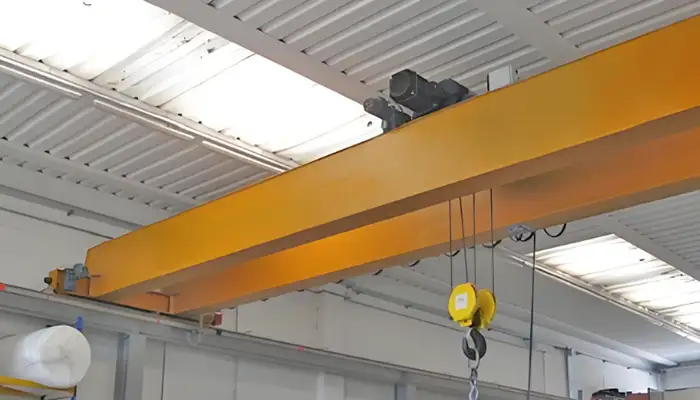
Explosion proof overhead crane with European style
Key Safety Functions of Explosion-Proof Cranes
Explosion-proof cranes are designed to eliminate these dangers. Here’s how they work:
- Sealed electrical components prevent gases and dust from entering the motor or control boxes.
- Flameproof enclosures contain any sparks or flames inside the equipment, stopping them from reaching the outside air.
- Spark-resistant materials are used on brakes, wheels, and hooks to reduce ignition risks.
- Temperature controls prevent the crane’s parts from overheating.
- Grounding and bonding systems ensure static electricity does not build up.
These features help the crane operate safely, even in the most volatile environments.
Benefits of Using Certified Explosion-Proof Equipment
Choosing certified explosion-proof cranes for tank fabrication brings many advantages:
- Improved safety for workers and the facility by minimizing fire and explosion risks.
- Regulatory compliance, meeting strict industry and legal standards.
- Reliable operation in harsh environments, reducing downtime.
- Longer equipment life because the crane is built to withstand tough conditions.
- Peace of mind knowing the lifting equipment won’t cause accidents.
Using explosion-proof cranes is not just about safety—it also supports smooth and efficient tank fabrication.
Key Features of Explosion Proof Cranes for Tank Fabrication and Handling
Explosion-proof cranes have special features that make them safe and reliable in hazardous zones. These features prevent sparks, flames, and heat from causing accidents during tank fabrication.
Flameproof Motors and Control Panels
The motors and control panels of explosion-proof cranes are built to contain any sparks or flames inside. They use strong, sealed metal housings designed to withstand and contain explosions without letting the flame escape. This means that if something inside the motor sparks or ignites, it cannot ignite the surrounding atmosphere.
These motors also operate smoothly and efficiently, avoiding overheating. Control panels are sealed and designed to prevent gas or dust from entering sensitive electrical parts.
Spark-Resistant Components (Brakes, Wheels, Hooks)
Certain parts of a crane naturally produce friction and could create sparks if made from the wrong materials. Explosion-proof cranes use spark-resistant materials on brakes, wheels, and hooks. For example, the wheels may be coated or made from special alloys that don’t spark when they rub against rails.
The hooks are also designed to avoid any metal-on-metal contact that could create sparks. This reduces ignition risk, especially when moving heavy tank parts.
Enclosed Wiring and Sealed Electrical Enclosures
In hazardous environments, wiring must be well protected. Explosion-proof cranes have enclosed wiring systems inside sealed conduits or flexible metal hoses. This prevents flammable gases or dust from entering the cables and causing shorts or sparks.
All electrical enclosures, such as junction boxes and control cabinets, are sealed to keep out dust and gas. They are often filled with inert gas or pressurized to further prevent explosive atmospheres from entering.
Anti-Static Coatings and Grounding Systems
Static electricity is a hidden danger. Even a small static discharge can ignite flammable gases. Explosion-proof cranes use anti-static coatings on metal surfaces to reduce static build-up.
In addition, cranes are equipped with grounding and bonding systems. These provide a safe path for any static electricity to flow to the ground, preventing dangerous sparks.
Temperature Control Mechanisms
Overheating parts can be a fire risk in hazardous zones. Explosion-proof cranes have built-in temperature monitoring and control systems.
These mechanisms can include temperature sensors on motors and brakes. If the temperature rises too high, the system can shut down the crane or trigger alarms to prevent accidents.
Together, these features make explosion-proof cranes safe and reliable for lifting and moving tanks in dangerous environments. They protect workers, equipment, and the facility from the risk of fire or explosion.
Typical Explosion-Proof Cranes for Tank Handling
Explosion-Proof Overhead Bridge Cranes
- Description: These cranes consist of one or two parallel girders supported on end trucks that run on elevated runway beams.
- Use: Ideal for indoor tank fabrication workshops or assembly halls where heavy tank components need precise and safe lifting.
- Features: Certified explosion-proof motors and electrical systems, flameproof enclosures, spark-resistant components, and suitable for Zone 1 and Zone 2 environments.
- Capacity: Typically range from a few tons up to 30 tons or more, depending on tank size.
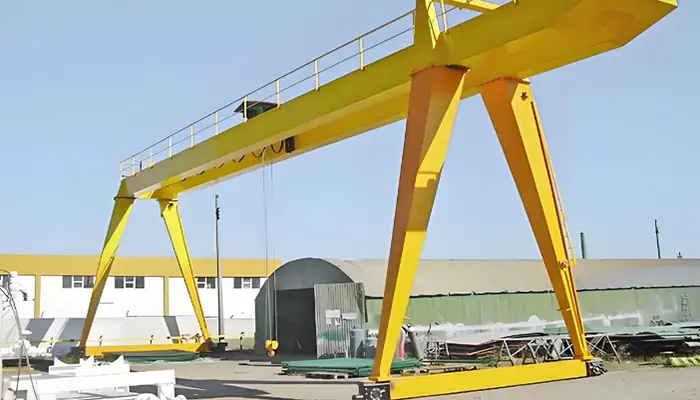
Explosion-Proof Gantry Cranes
- Description: These cranes have a bridge supported by legs that run on ground-level rails. Suitable for outdoor or semi-outdoor tank fabrication yards.
- Use: Handling large tank sections outdoors or in open assembly areas with hazardous atmospheres.
- Features: Robust flameproof design to withstand weather and explosive environments, often with anti-corrosion coatings.
- Capacity: Can range from small (5 tons) up to very heavy loads (100+ tons).
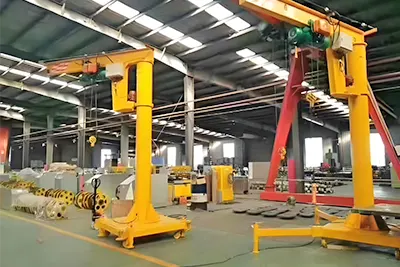
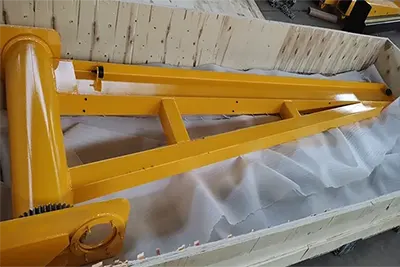
Explosion-Proof Jib Cranes
- Description: Mounted on a pillar or wall, jib cranes have a horizontal boom that supports the hoist and trolley.
- Use: For localized lifting tasks such as positioning tank components or tools inside hazardous fabrication zones.
- Features: Explosion-proof hoists and motors, suitable for smaller lifting tasks with frequent positioning needs.
- Capacity: Usually ranges from 0.5 tons to 10 tons.
Explosion-Proof Electric Hoists
- Description: Hoists can be part of overhead cranes or standalone lifting devices. They have explosion-proof motors and control systems.
- Use: Versatile for tank fabrication, repair, or maintenance tasks in hazardous areas where mobile lifting is required.
- Features: Flameproof electrical components, sealed wiring, and compliance with hazardous zone certifications.
- Capacity: Typically from 0.5 tons to 30 tons or more.
The choice of explosion-proof crane depends on the size and weight of the tanks or components, the working environment (indoor vs. outdoor), and the hazardous zone classification. Overhead bridge cranes and gantry cranes are the most common for large-scale tank fabrication, while jib cranes and electric hoists serve more localized or smaller lifting needs.
If you want, I can help you with detailed specifications or supplier recommendations for these types of explosion-proof cranes.
Application
Explosion-proof cranes are essential in various stages of tank fabrication where hazardous conditions exist:
- Indoor Fabrication Workshops
These workshops are often classified as hazardous zones (Zone 1 or 2). Explosion-proof overhead cranes lift and transport heavy steel parts safely, minimizing ignition risks during cutting, welding, and assembly. - Outdoor Assembly Yards in Petrochemical Plants
Large tank sections are assembled outdoors where flammable vapors may be present. Explosion-proof gantry cranes provide safe, reliable handling of these components, even in harsh weather and corrosive environments. - Paint Booths and Welding Stations
Painting and welding involve sparks, heat, and flammable chemicals. Explosion-proof jib cranes and electric hoists are used here to position tank shells and heads precisely while preventing ignition hazards. - Lifting Finished Tanks or Components in Volatile Areas
Moving or loading completed tanks in volatile environments demands strict safety. Explosion-proof cranes ensure secure lifting without sparks or heat that could cause accidents.
In all these settings, explosion-proof cranes help protect people, equipment, and facilities while ensuring smooth tank fabrication processes.
Factors to Consider When Selecting an Explosion Proof Crane
Selecting the right explosion-proof crane for tank fabrication requires careful thought. Here are the key factors to keep in mind:
Classification of Hazardous Area
- Identify the hazardous zone where the crane will operate (Zone 1, Zone 2, Class I Div 1, etc.).
- The crane’s explosion-proof rating must match or exceed this classification to ensure safety.
Lifting Capacity and Duty Cycle
- Determine the maximum weight the crane must lift, including tank parts and accessories.
- Consider the duty cycle—how often and how long the crane will operate daily. This affects the crane’s design and motor specifications.
Span, Height, and Workspace Layout
- Measure the crane’s required span (distance between runway beams) and lifting height.
- Understand the workspace layout, including obstacles and workflow, to choose a crane that fits and improves efficiency.
Power Supply and Control System Integration
- Check the available power supply type and voltage at the site.
- Ensure the explosion-proof crane’s control system integrates smoothly with existing systems, such as remote controls or automation.
Maintenance Accessibility in Hazardous Conditions
- Evaluate how easy it will be to access crane components for inspection and maintenance without compromising safety.
- Choose cranes designed with features that simplify servicing in hazardous zones.
Keeping these factors in mind helps select an explosion-proof crane that’s safe, efficient, and reliable for tank fabrication in hazardous environments.
Conclusion: Get Explosion Proof Crane Price
Explosion-proof cranes are vital for safe tank fabrication in hazardous zones. They help control risks by preventing sparks, flames, and overheating during heavy lifting. This makes a big difference in protecting workers, equipment, and facilities.
Safety and compliance go hand in hand. Using explosion-proof cranes means meeting strict regulations and industry standards. It also ensures reliable performance even in tough environments, reducing downtime and keeping your projects on track.
If you’re ready to enhance safety and efficiency in your tank fabrication process, the next step is to get a tailored explosion-proof crane solution. Consult with certified crane suppliers who understand hazardous zone requirements. They can provide expert advice and competitive pricing that fits your needs.
Don’t wait—contact a trusted supplier today to get the right explosion-proof crane at the right price. Your safety and success depend on it.