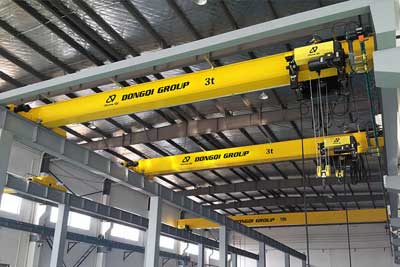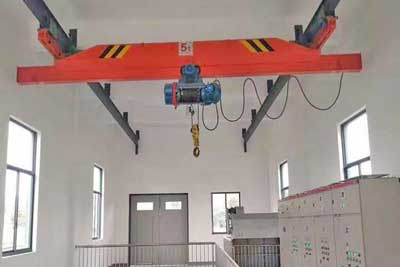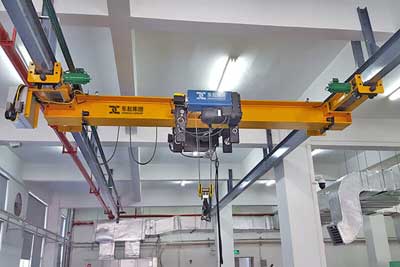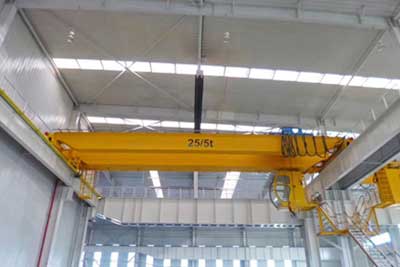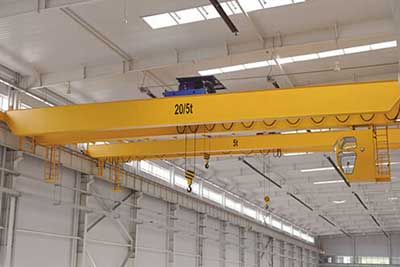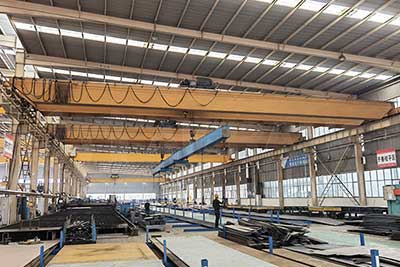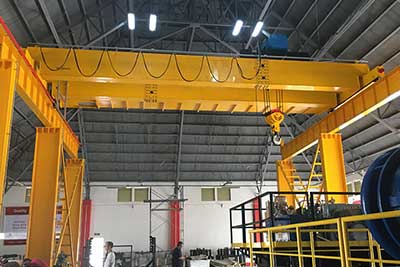
Overhead Crane Specifications & Capacity 0.5 Ton -320 Ton
Custom Crane with Tailored Overhead Crane Specifications
Just For Your Applications
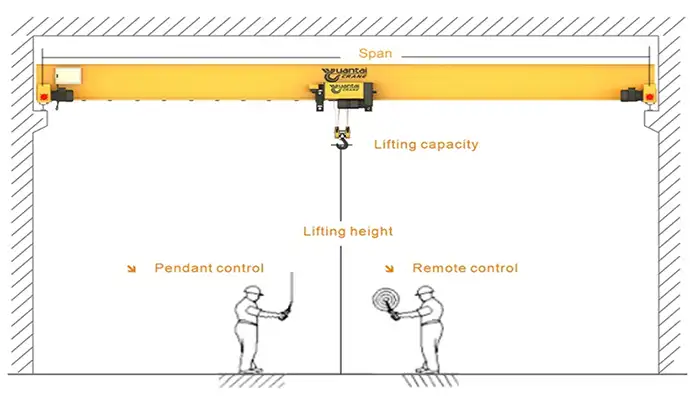
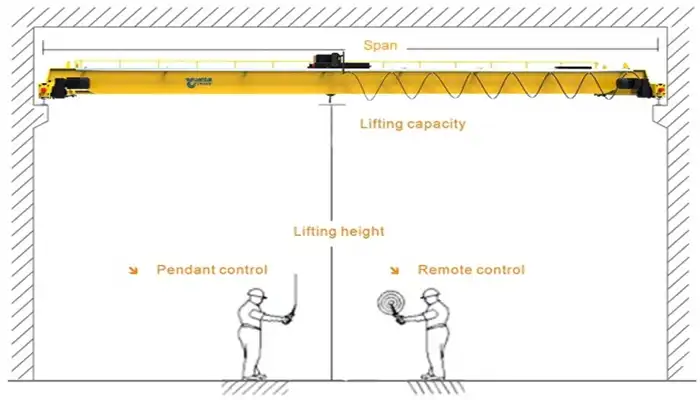
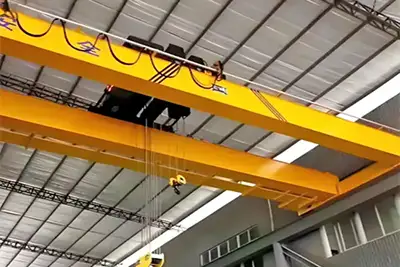
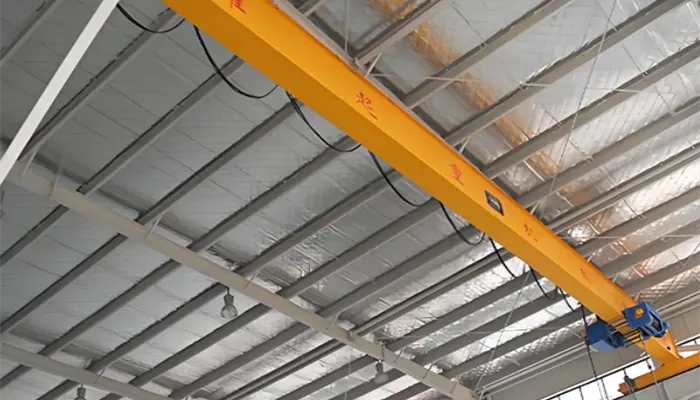
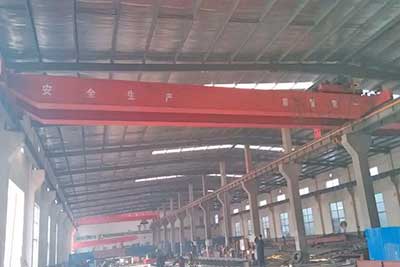
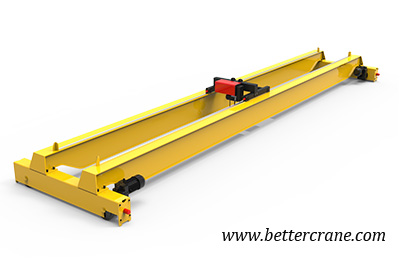
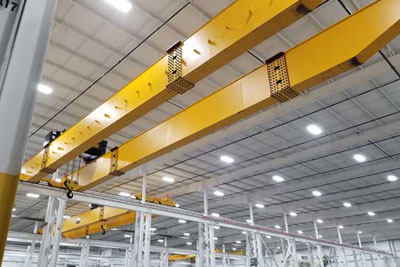
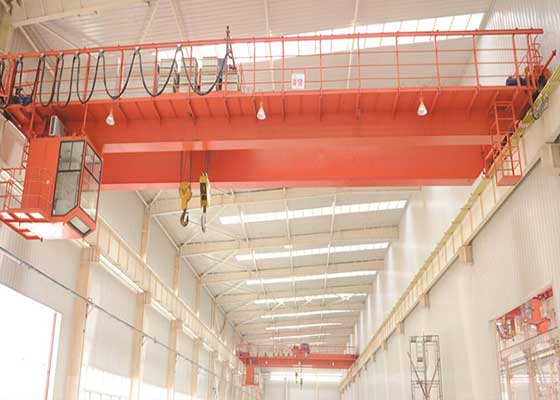
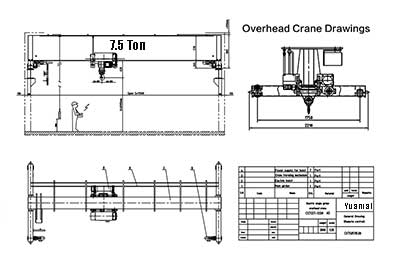
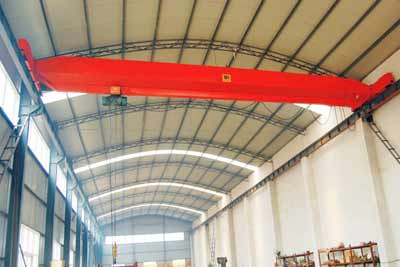
What's the main specifications of overhead cranes? Overhead crane specifications can provide information about crane capacity and dimensions and lifting applications. An industrial overhead crane is a permanent material handling system that is built into a manufacturing space or warehouse and is made up of a bridge beam, runways, a trolley traveling lifting mechanism, an electric mechanism, and other crane parts. We adhere strictly to national standards and have standard engineering specifications. If you need an overhead crane with tailored specifications, our company can provide you with clear, concise, and accurate crane system information for procurement.
文本
文本
| Parameter | Typical Range | Notes / Considerations |
|---|---|---|
| Capacity | 1 – 25 ton | Most common: 3–10 ton for standard workshops |
| Span | 7.5 – 31.5 m | Depends on building width; confirm runway beam layout |
| Lifting Height | 6 – 30 m | Consider building headroom and low-headroom hoists if needed |
| Duty Classification | A3 – A4 | Light to medium duty; occasional to moderate lifting frequency |
| Hoist Type | Electric wire rope / chain hoist | Single girder hoist travels below the main beam |
| Travel Speed | 20 – 40 m/min (crane), 5 – 20 m/min (hoist) | Speeds vary depending on capacity and operational needs |
| Control Type | Pendant / Wireless Remote | Choose based on operator visibility and safety |
| Typical Applications | Workshops, light fabrication, warehouses, assembly lines | Ideal for moderate loads and lower lifting frequency |
| Parameter | Typical Range | Notes / Considerations |
|---|---|---|
| Capacity | 5 – 80 ton | Common industrial capacities: 20, 32, 50 ton |
| Span | 10.5 – 31.5 m | Longer spans possible due to stronger bridge structure |
| Lifting Height | 6 – 18 m | Depends on building headroom; trolley travels on top of girders |
| Duty Classification | A5 – A7 | Medium to heavy duty; supports frequent and continuous operation |
| Hoist Type | Electric wire rope / European type hoist | Trolley travels on rails mounted on top of double girders |
| Travel Speed | 20 – 60 m/min (crane), 5 – 30 m/min (hoist) | Multi-speed options available for heavy industrial use |
| Control Type | Pendant / Wireless / Cabin | Cabin often used for large-scale plants or long spans |
| Typical Applications | Steel mills, heavy fabrication, foundries, large equipment plants | Core production equipment for high-volume lifting |
When requesting a quotation for an overhead crane, suppliers need detailed project information. Providing complete details ensures accurate pricing and avoids missing components or incorrect specifications.
Main crane specifications needs to be confirmed before crane buying
When selecting an overhead crane, capacity alone isn’t enough. Buyers also need to consider the typical crane configuration (single or double girder), hoist type, span, duty classification, and the type of materials being handled. The table below summarizes the most common industrial crane capacities along with practical applications and recommended configurations.
| Capacity | Typical Configuration | Hoist / Span / Duty | Typical Applications | Notes |
|---|---|---|---|---|
| 1 Ton | Single girder | Wire rope or chain hoist, 5–10 m, A3 | Small machinery, maintenance, tools, motors/pumps | Simple, compact, easy to operate |
| 2 Ton | Single girder | Wire rope hoist, 5–12 m, A3–A4 | Small molds/dies, packaged materials, light fabrication, warehouse pallets | Extra capacity adds safety margin |
| 3 Ton | Single girder | Wire rope hoist, 7–15 m, A4 | Machinery assembly, pump/gearbox manufacturing, metal fabrication, repair | Balances lifting and cost |
| 5 Ton | Single / Double girder | Wire rope hoist, 10–18 m, A4–A5 | Steel fabrication, mechanical equipment, mold/die handling, production line | Versatile for general manufacturing |
| 10 Ton | Double girder | Wire rope hoist, 12–20 m, A5 | Heavy machinery, steel structures, medium steel plates, maintenance | Often primary lifting equipment |
| 15 Ton | Double girder | Wire rope hoist, 15–25 m, A5 | Steel plates/beams, heavy equipment, precast concrete, medium steel mills | Provides extra safety margin |
| 20 Ton | Double girder | Wire rope hoist, 18–30 m, A5–A6 | Steel coils, large equipment, foundry, heavy fabrication | Double girder ensures strength |
| 30 Ton | Double girder | Wire rope hoist, 20–35 m, A5–A6 | Steel mill handling, heavy components, large casting, equipment installation | Frequent lifting cycles |
| 50 Ton | Double girder | Heavy-duty wire rope hoist, 25–40 m, A6 | Steel slabs/billets, shipyard lifting, turbines/generators, foundry ladles | Advanced hoist & safety controls |
| 100 Ton | Double girder | Custom wire rope hoist, 30+ m, A7 | Steel mills, power plants, shipbuilding, heavy machinery | Requires reinforced bridges & custom hoists |
Practical Tip: Choose a crane with 20–30% higher capacity than typical loads, including attachments, to ensure safety, reliability, and future expansion.
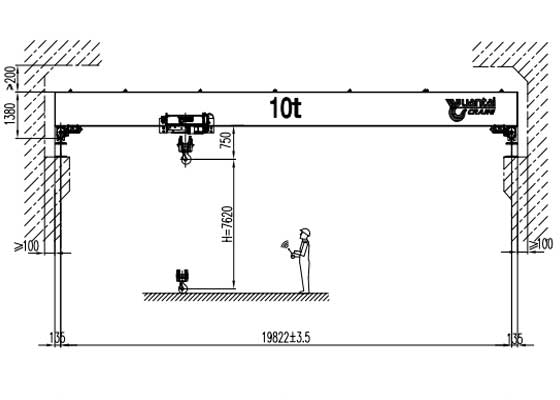
Signel girder overhead crane 10 ton specifications, main types of cranes designs, drawings & projects for your reference to get your customized 10 ton crane. Check now.
Inquiry Online Leave a Message5 ton overhead crane for sale, Economical single girder design & Cost-effective demag-type double girder crane.Check 5 ton overhead crane specs now.
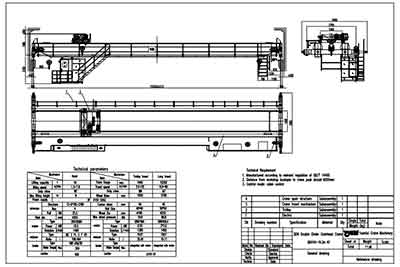
Inquiry Online Leave a MessageDouble girder overhead cranes 10 ton for sales, various double girder bridge cranes with electric hoist trolley& open winch trolley, customized for your use.
Inquiry Online Leave a Message50 ton overhead crane for sale. Learn to specify, compare suppliers, finalize your 50 ton overhead crane purchase confidently & efficiently. Yuantai Crane
Inquiry Online Leave a Message1-ton overhead cranes for sale, customizable to fit your operation's unique needs, enhancing efficiency and safety
Inquiry Online Leave a Message5 Ton Double Girder Overhead Cranes Customized Design Options for Tailoring Precision in Material Handling in Various Industrial Sectors. Get your design!
Inquiry Online Leave a Message60 ton overhead crane for sale. General double girder crane & processed overhead crane for unique purpose,eg. explosion proof, automated crane for sale.
Inquiry Online Leave a MessageOverhead crane 40 ton for sale. Double girder overhead crane, with hoist trolley & open winch for heavy duty load handling. Check 40 ton overhead crane specs.
Inquiry Online Leave a Message30 ton overhead crane, top running double girder overhead crane design, custom featured bridge crane for sale, cost-effective crane price. Get your design!
Inquiry Online Leave a Message25 ton overhead crane for sale. Double beam bridge crane, with tailored specifications for your use. Contact us to get your custom overhead crane 25 ton.
Inquiry Online Leave a Message20 ton overhead crane for sale, double girder top running bridge crane 20 ton with tailored specifications, hoisting system & crane control for your use.
Inquiry Online Leave a Message15 ton overhead crane for sale, good price, Customized 15 ton overhead cranes can be designed with single girder or double girder design for your applications.
Inquiry Online Leave a Message7.5 ton bridge crane for sale, types of overhead cranes designs & configurations for selection. 71/2 ton overhead crane for sale, get your crane design now.
Inquiry Online Leave a MessageWhat are specifications for a crane? What's the specification of your overhead crane? 0.25 ton -500 ton overhead cranes are available for you. Contact us to learn more.
When buyers evaluate an overhead crane, the first step is understanding the basic technical parameters. These specifications determine how the crane will perform in daily operations. On paper, they may look like simple numbers. In real factories and warehouses, however, each parameter affects safety, lifting efficiency, and long-term maintenance.
In most projects, engineers focus on several core specifications: lifting capacity, span, lifting height, duty classification, operating speed, power supply, and control method. Together, these values define the crane's working ability and how well it fits the building and workflow.
Below is a practical explanation of the most important overhead crane specifications buyers should know.
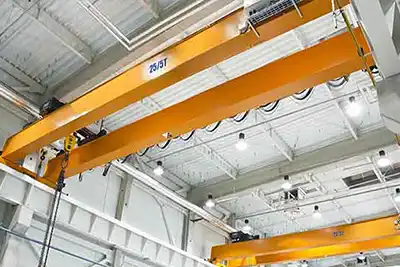
Lifting capacity (also called rated load or rated capacity) refers to the maximum weight the crane is designed to lift safely under normal operating conditions. For example, a 10-ton overhead crane can safely lift loads up to 10 tons, including the hook block and lifting attachments.
The rated load normally includes:
Typical capacity ranges:
Safety factors are built in to account for dynamic loads, motor torque, braking, and structural strength. A practical rule: choose a crane rated 20–30% above typical load.
The crane span is the horizontal distance between the centers of the runway rails. Span determines how wide the crane bridge must be to cover the work area.
Key factors affecting span:
Typical ranges:
Longer spans usually require double girder designs for stability.
Lifting height is the vertical distance the hook can travel from floor to the highest point. Factors affecting height include stored material height, equipment size, vehicle clearance, building roof, and hoist type.
Typical ranges:6 – 30 m. Most general cranes operate within 6–18 m.
Clear definition of lifting height early ensures the crane reaches all working areas.
Duty classification reflects how often and how hard a crane works. Selecting the right group reduces wear and maintenance costs.
Cranes have three main speeds:
Speeds affect handling efficiency and positioning accuracy.
Cranes must match local electrical systems. Typical industrial voltages: 220V, 380V, 415V, 440V, 480V. Frequency: 50 Hz or 60 Hz.
Check plant voltage, frequency, and available power. Mismatched specs may need transformers or adjustments.
Common control methods:
When buyers start comparing crane models, one of the first questions is simple: what specifications are typical for each crane type?
In most industrial projects, overhead cranes fall into two main categories — single girder overhead cranes and double girder overhead cranes. Each design serves different lifting demands, working conditions, and facility layouts.
The ranges below reflect what many factories, warehouses, and industrial plants commonly install. Actual crane specifications can vary depending on span requirements, lifting frequency, and building height.
LD Economical Single Girder Overhead Crane
HD European Single Girder Overhead Crane
LX Underhung Single Girder Overhead Crane
NLX Underhung Single Girder Overhead Crane
QD Double Girder Overhead Crane
QDX Double Girder Overhead Crane
NLH European style Overhead Crane
LH Double Girder Overhead Crane
Selecting the right overhead crane specifications is not just about capacity or span. Several practical factors influence how a crane should be designed and configured.
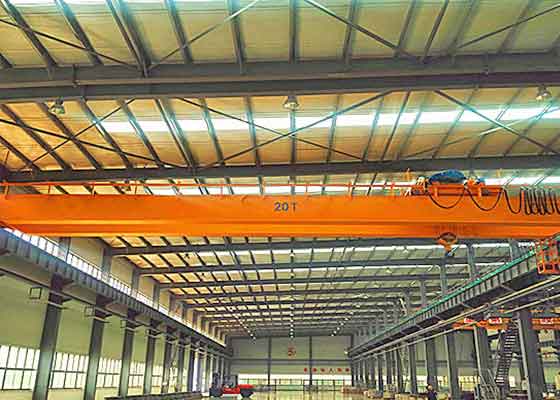
Experienced buyers usually look beyond the basic parameters and consider how the crane will operate inside their facility. Things like building structure, working environment, material type, and production frequency all affect the final crane specification.
The structure of the building often determines what type of crane can be installed and what specifications are possible.
Manufacturers often review building drawings or structural layouts before finalizing specifications.
The crane's operating environment affects material selection, electrical components, and protective features.
Ignoring environmental conditions can cause premature wear, frequent maintenance, or electrical failures.
The type of material being lifted directly affects crane configuration and lifting equipment.
Material size, shape, and handling influence:
Suppliers usually request material dimensions, weight, and lifting method before recommending specifications.
The frequency of crane operation affects duty classification and component selection.
Insufficient duty classification can lead to rapid wear, frequent breakdowns, and higher maintenance costs.
Practical Tip: Before requesting a quote, provide building layout, lifting capacity, height, material type, daily frequency, and installation environment to ensure accurate specifications.
Choosing the correct overhead crane specifications is not just about picking a tonnage from a catalog. A clear selection process helps avoid buying a crane that is too small for the job or paying for features and capacity that will never be used.
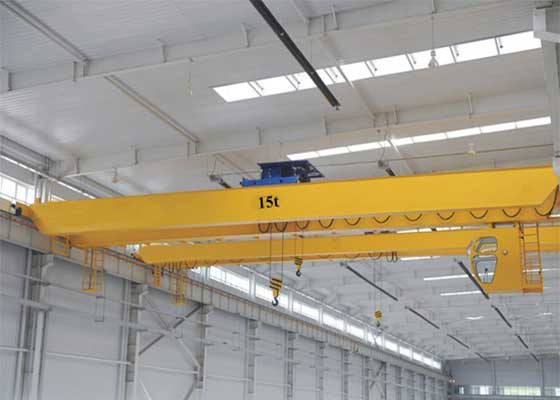
Determine the maximum load the crane will lift. Include:
Examples:
Include a safety margin to avoid operating continuously at max load.
Crane span is the distance between runway rails.
Typical spans:
Wider facilities may use multiple cranes or bays.
Lifting height (hook height) is the vertical distance from floor to the highest safe hook position.
Examples:
Low-headroom hoists may be necessary when ceiling space is limited.
Duty classification defines how often the crane is used and how heavy the loads are:
Correct duty classification prevents premature wear and unexpected downtime.
Operating environment may require special features:
Possible adaptations:
Cranes must match the local electrical system. Typical industrial power supplies:
Confirm:
This avoids major electrical modifications during installation.
Practical Tip: Provide lifting capacity, building width, lifting height, material type, operating frequency, installation environment, and power supply to get accurate manufacturer recommendations.
Answers to common buyer questions about overhead crane specifications. Practical tips for planning and ordering a crane.
The lifting capacity is usually the key specification, as it affects hoist, bridge, and runway design.
Other key specs:
Selecting capacity first simplifies choosing other specifications.
Span depends on building layout:
Proper span ensures safe travel across the workspace without workflow restrictions.
Consider the following when selecting capacity:
It's advisable to choose a slightly higher capacity than the maximum load for safety and reduced wear.
Duty class defines operational intensity:
Correct classification ensures longer crane life and safer operation.
Yes. Most cranes can be customized to match facility and operational needs:
Providing detailed info to the supplier ensures the crane fits your workflow and environment.
Need Latest Crane Price? Please leave us the required Crane's Capacity, Lifting Height, Span, Travelling Length & Voltage for Quick Quotation. Yuantai Crane www.bettercrane.com