

Yuantai Crane for Better Solutions:
Energy-Saving | Space-Saving | Cost-Efficient | CE/ISO/EX
50 ton overhead crane for sale. Learn to specify, compare suppliers, finalize your 50 ton overhead crane purchase confidently & efficiently. Yuantai Crane
50 Ton Overhead Crane for Sale: Specify, Compare, Close the Deal
| Product Type: | Overhead Crane |
|---|---|
| Lifting Capacity: | 50 ton |
| Span: | 10.5~31.5m |
| Lifting Height: | As your request |
| Working Class: | A5, A6 |
| Ambient Temperature: | -20-+40 ℃ |
| Crane Price Rangs | More Inquiry Form |
| $60,000 – $150,000 | |
| [email protected] 008615038346929 | |
50 Ton Overhead Crane for Sale: How to Specify, Compare, and Close the Deal
A 50 ton overhead crane is a key piece of equipment in industries like steelmaking, shipbuilding, and heavy manufacturing. It’s built to lift and move extremely heavy loads safely and efficiently.
However, choosing the right crane isn’t straightforward. You need to clearly understand your requirements and compare different suppliers before making a purchase. Otherwise, you risk getting a crane that doesn’t quite fit your needs or budget.
This article will guide you through the important steps: how to specify your crane’s features, explore the types available, evaluate suppliers, and finalize your purchase. It’s designed to make the process easier and help you get the best crane for your operation.
50 Ton Overhead Crane Basics
What Is a 50 Ton Overhead Crane?
A 50 ton overhead crane is a heavy-duty lifting machine designed to handle loads up to 50 tons safely and reliably. Most models feature a double girder, top-running design, which means the crane runs on rails fixed above the workspace, supported by two main beams (girders). This setup provides excellent stability and strength—essential for handling such heavy weights.
There are several common types of 50 ton cranes you’ll find on the market, each suited to different applications:
- QD Series: A popular standard model with an open winch trolley, known for durability and cost-effectiveness.
- LH Series: Uses a hoist trolley and is slightly lighter, ideal for general industrial use with moderate duty cycles.
- QDX Series: European-style crane featuring compact design, lighter dead weight, and smooth double-speed lifting.
- NLH Series: Another European-style model with a hoist trolley, praised for its elegant structure and precision control.
These cranes are widely used across heavy industries such as:
- Steel manufacturing and rolling mills
- Shipbuilding yards and heavy machinery plants
- Foundries and metallurgical workshops
- Power generation plants and infrastructure projects
In all these settings, a 50 ton overhead crane is a crucial tool to move large, heavy items efficiently and safely.

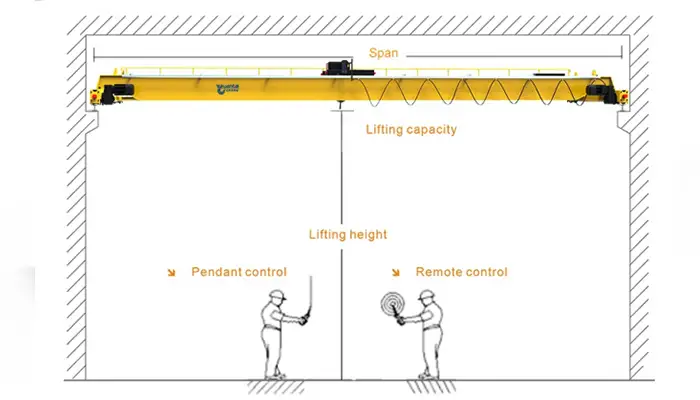
Standard Specs to Know
When specifying a 50 ton overhead crane, there are several key specifications you should be familiar with. These help ensure the crane fits your exact lifting needs and works well in your facility.
- Capacity: The main hook is rated for a full 50 tons, which is the crane's maximum lifting load. Often, there's also an auxiliary hook with a smaller capacity—commonly around 10 tons—to handle lighter or more precise lifts.
- Span: This refers to the distance between the crane's runway rails. For 50 ton cranes, spans usually range from 10.5 meters up to 31.5 meters, depending on the size of your workshop or warehouse.
- Lifting Height: The vertical distance the hook can move varies, typically between 6 and 30 meters. This depends on your ceiling height and the nature of your lifting tasks.
- Working Class (Duty Rating): Cranes are rated from A3 to A7, indicating how often and how intensively the crane will be used. A3 is for light, occasional use, while A7 covers very heavy, continuous operation. Choose the duty class that matches your workload to ensure durability and safety.
Control Options: Different control systems are available based on your operational needs:
- Pendant control for straightforward, on-the-spot operation
- Wireless remote control for flexible movement
- Cabin control for precision and comfort on larger cranes
- Automation-ready setups for integrating intelligent control systems and increasing efficiency
Knowing these specs upfront will help you communicate your requirements clearly to suppliers and make a confident purchasing decision.
Comparing 50 Ton Overhead Crane Types
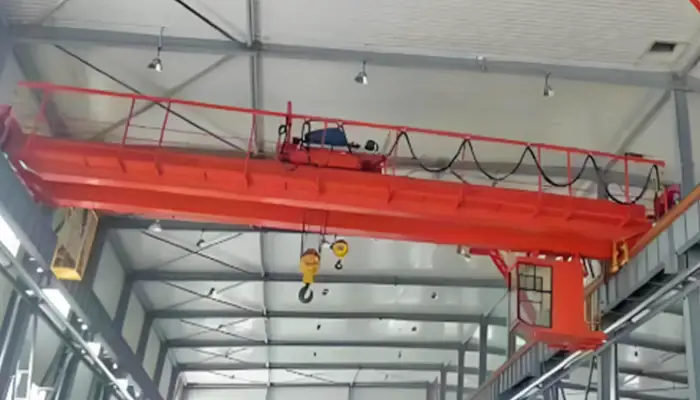
QD Series Overhead Crane for Sale with (Standard Open Winch Crane)
The QD series is a tried-and-true workhorse. Known for its affordability and rugged build, this crane features a large, heavy-duty structure designed to handle tough lifting jobs in general industrial settings. It's reliable and straightforward, making it a popular choice when budget and durability are key concerns.
- Heavy, sturdy frame
- Open winch trolley design
- Ideal for demanding lifting tasks in factories and warehouses
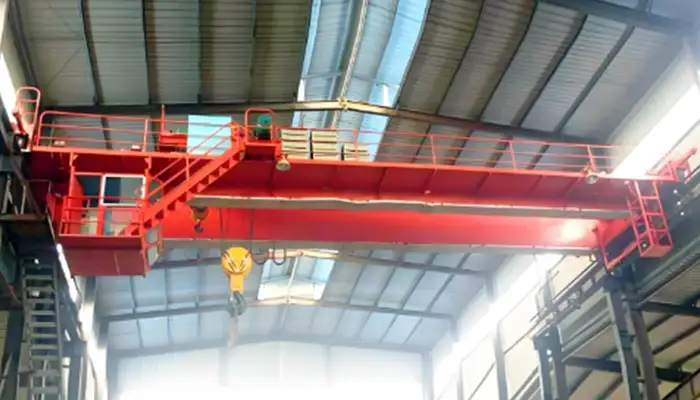
LH Series 50 Ton Overhead Crane for Sale with (Hoist Trolley Design)
The LH series offers a more compact and cost-effective solution. It uses a hoist trolley instead of an open winch, making it lighter and better suited for facilities where space is limited. While it handles slightly lighter duty classes, it still covers a wide range of industrial lifting needs efficiently.
- Hoist trolley setup for compact design
- Lower dead weight compared to QD
- Perfect for workshops or plants with space constraints
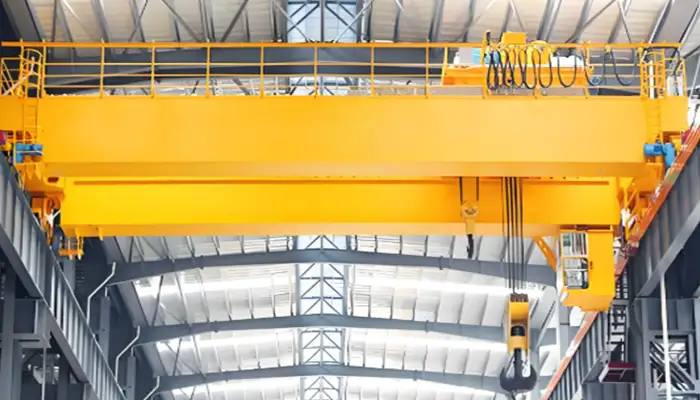
QDX Series 50 Ton Overhead Crane for Sale (European Style with Open Winch)
For those looking for a modern, advanced crane, the QDX series fits the bill. It features a European-style design that's more compact and has a lighter dead weight. It also offers double speed lifting and frequency conversion, providing smooth, precise operation and better energy efficiency.
- Sleek, compact structure
- Double speed lifting for flexibility
- Energy-efficient frequency conversion
- Suitable for plants demanding stable, smooth crane operation
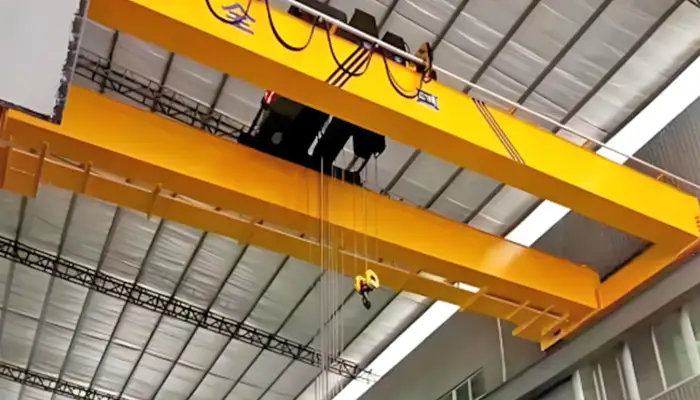
NLH Series 50 Ton Overhead Crane for Sale (European Style with Hoist Trolley)
The NLH series blends elegance and efficiency. With a double girder, hoist trolley setup, it's often chosen for modern workshops that require automation-ready cranes. Its A5 duty rating means it's built for fairly heavy, consistent use, with smooth handling and precise control.
- European-style compact design
- Hoist trolley for precise lifting
- Well-suited for automated or smart factories
- Smooth operation with high accuracy
How to Specify a 50 Ton Overhead Crane for Your Needs
Define Your Application
Before you start looking at cranes, take a close look at how you'll actually use it. Knowing the details helps ensure you get a crane built for your specific tasks, not just a generic model.
- Type of Materials: Are you handling steel coils, heavy molds, billets, or machinery parts? Different loads require different lifting accessories and crane features.
- Lifting Frequency and Working Hours: How often will the crane run each day? A crane used continuously for long shifts needs a higher duty rating than one used sporadically.
- Environment: Will the crane work indoors in a clean workshop or outdoors exposed to weather? Consider temperature extremes, humidity, dust, or corrosive chemicals that may affect crane materials and maintenance.
Your workshop or plant layout directly affects what crane design will fit and operate safely.
- Runway Beams or Supports: What kind of runway system is already in place? Or will you need new beam installations? The runway's strength and dimensions determine the crane's span and support requirements.
- Hook Approach and Headroom: Measure the space between the hook and any obstacles like ceiling beams or cranes in adjacent bays. Limited headroom might call for low-headroom crane designs.
- Electrical Supply and Controls: Check your facility's power availability and voltage. Also, consider where operators will control the crane — pendant, remote, or cabin — and ensure the control station fits your workflow.
- Open Winch vs. Hoist Trolley: Open winch trolleys offer heavy-duty capacity and easy maintenance, while hoist trolleys are compact and better for lighter, precise lifting.
- Attachments: Do you need dual hooks for handling multiple loads? Or specialized tools like grab buckets for bulk materials or magnets for handling steel plates?
- Advanced Controls: Anti-sway technology helps keep loads stable during lifting and movement. Inverter controls allow variable speed for smoother operation. Positioning systems provide accurate load placement, which is important for assembly or loading tasks.
Getting these details right from the start ensures you specify a crane that fits your job perfectly and avoids costly modifications later.
Key Cost Factors to Consider When Buying a 50-Ton Overhead Crane
Budgeting for a 50-ton overhead crane involves more than just the base price. Several elements influence the total investment. Understanding these factors will help you make informed decisions and avoid unexpected expenses.
The starting price of a crane is influenced by its design, size, and manufacturing complexity.
- Standard models: Series like QD or LH are generally more cost-effective due to their simple, proven structures and widely available components.
- European-style cranes: Models such as QDX or NLH have advanced features, lightweight construction, energy-efficient motors, and smoother operation, which increases the price compared to standard models.
- Custom cranes: Any special requirements—including explosion-proof coatings, automation systems, or specialized lifting attachments—require additional engineering and materials, raising the overall cost.
If you're importing a crane, the CIF (Cost, Insurance, and Freight) price includes shipping, insurance, and delivery to your port. This can vary significantly depending on:
- Distance from the supplier to your port.
- Shipping method (containerized, RoRo, or bulk transport).
- Port handling fees, customs clearance, and local logistics charges.
Understanding CIF pricing helps prevent unexpected import costs and ensures your budget is realistic.
Once the crane reaches your facility, several onsite costs come into play:
- Labor for assembling crane components and mounting the hoist/trolley.
- Installation or adjustment of runway beams, if not already present.
- Electrical connections and safety system setup.
- Initial testing, load trials, and fine-tuning to ensure safe, smooth operation.
Proper installation is critical to maximize performance and extend the crane's lifespan.
The type of control system and optional features directly impact the price:
- Basic pendant control is the most economical option.
- Wireless remote controls and operator cabins provide convenience and higher precision but cost more.
- Full automation systems, positioning devices, and anti-sway technology add to the investment.
- Special safety features, including explosion-proof components, increase manufacturing complexity and cost.
Long-term costs are as important as initial expenses. Consider:
- Warranty coverage duration and scope.
- Availability of spare parts and replacement components.
- Maintenance support and optional service contracts.
- Training for operators and maintenance personnel to reduce downtime and prolong crane life.
Reliable after-sales service protects your investment and ensures continuous, safe operation.
How to Compare Crane Suppliers
Choosing the right supplier is just as important as selecting the crane. Here are key points to evaluate when comparing different vendors:
- Certifications: Check if the supplier holds relevant certificates like ISO quality management, CE safety compliance, or explosion-proof certifications if required by your industry. These prove the product meets international standards.
- Technical Documentation: Ask for detailed drawings, project references, and load test reports. These documents show the supplier’s experience and the quality of their cranes.
- Communication and Customization: Pay attention to how quickly and clearly the supplier responds to inquiries. A supplier who understands your requirements and offers tailored solutions will save you headaches later.
- Factory Visits: If possible, visit the factory or request a video tour. Seeing the production line and quality controls firsthand can give you confidence in the supplier’s capabilities.
- After-Sales Support: Confirm that the supplier can provide spare parts, technical support, and local maintenance services. Good after-sales service is critical to keep your crane in good working condition over its lifespan.
Steps to Close the Deal Smoothly
Follow these essential steps to ensure a smooth procurement process when buying an overhead crane. Each section expands to show what buyers need to confirm before finalizing an order.
Before committing, make sure you obtain a detailed quotation that clearly covers all critical specifications.
- Specify maximum load weight and material type.
- Include span and lifting height requirements for accurate design.
- State the required duty class (work frequency and intensity).
- Select your preferred control mode: pendant, remote, cabin, or automation-ready.
- Clarify environmental conditions such as outdoor use, humidity, heat, or explosion-proof requirements.
Reviewing the contract thoroughly protects you from unexpected delays, costs, or misunderstandings.
- Payment terms: payment schedule and accepted payment methods.
- Delivery lead time: manufacturing and shipping duration.
- Warranty coverage: scope and duration of warranty service.
- Responsibility division: foundation work, installation labor, and final commissioning.
Before confirming the order, verify all important details to ensure accuracy and avoid future revisions.
- Review and approve all manufacturing drawings.
- Confirm control systems and any special functions or protections.
- Finalize shipping arrangements, including delivery schedule and destination details.
50ton/25 ton overhead crane project vidoe for your reference. Tailored 50 overhead crane solution are available.
Inquiry Online Leave a Message
Inquiry Online Leave a Message
Frequently Asked Questions About 50-Ton Overhead Cranes
Below are answers to the most common concerns from buyers considering a 50-ton overhead crane, covering capacity, design, pricing, installation, and maintenance.
Consider your maximum load weight, lifting frequency, and any attachments such as grabs, magnets, or lifting beams that add extra mass. Many buyers choose a 50-ton crane if their current heaviest load is near 40–45 tons, or to accommodate potential future expansion in 2–5 years.
Choices include standard double-girder, European-style design, or hoist-trolley cranes. Consider your priorities:
- Affordability and strong lifting power: standard open-winch model
- Precision, smooth movement, low noise, energy efficiency: European-style
- Limited headroom: low-clearance hoist-trolley design
- Span between runways
- Lifting height
- Working environment (indoor/outdoor, dust, heat)
- Duty cycle
- Power supply
- Installation conditions
Providing these details upfront speeds up accurate quotations.
- A5 duty for general industrial lifting
- A6 duty for continuous, demanding operations
Higher duty classes provide better reliability, especially in steel, heavy fabrication, and mining applications.
Costs vary depending on:
- Standard vs. European-style model
- Span and lifting height
- Optional features such as automation, anti-sway, or special trolleys
- Installation complexity
Suppliers usually provide customized quotations rather than fixed prices.
- Overload protection
- Emergency stop and limit switches
- Soft start / variable-frequency control
- Anti-sway technology
- Dual brakes on the hoist
- Cabin control or wireless remote
- Pendant control — simple and cost-effective
- Wireless remote — flexible for operators
- Operator cabin — ideal for frequent and large-scale lifting tasks
- 35–60 days for standard configurations
- Longer for customized cranes, special trolleys, or automation packages
Shipping duration depends on your destination country.
- Properly rated runway beams
- Reinforced columns
- Accurate runway alignment
- Adequate headroom and space for end trucks
- Hoist brake checks
- Wire rope inspection
- Lubrication of moving parts
- Motor temperature monitoring
- Electrical panel cleaning and tightening
- Handling lighter loads
- Lifting tools or fixtures
- Separate lifting tasks not requiring the full 50 tons
Top-running cranes are preferred for 50-ton applications due to higher stability and capacity. Under-running is not suitable for heavy loads unless building structures are extremely reinforced.
- Lifting capacity (50 tons)
- Span and lifting height
- Indoor/outdoor installation
- Crane working conditions
- Load characteristics
- Power supply
- Special requirements (hook approaches, attachments, cabin type)
- Heat-resistant components
- Dust-proof and anti-corrosion protection
- Heavy-duty hoists
- Automated load handling
- Special hooks, magnets, grabs, or rotators
Send Your Inquiry
Buying a 50 ton overhead crane is a significant investment that requires careful planning. Properly specifying your crane, understanding the different types available, and thoroughly comparing suppliers will save you time and money in the long run.
Don’t rush the process—take the time to clarify your needs, ask questions, and review all options before making a decision. Doing your homework upfront leads to smoother purchasing and better crane performance on the job.
Product Detail
Support

30 Ton Overhead Crane Price: Designs,Smart Budgeting & Buyer Tip
30 ton overhead crane for sale, good price. Check design options, budgeting strategies & essential buyer tips to get the best 30 ton overhead crane price. Read More
15 Ton Overhead Crane Price: Factory vs. Local Fabrication
Compare costs and benefits of factory-built cranes versus locally fabricated structures to find the best 15 ton crane solution. Read More
20 Ton Overhead Crane Price, Customized 1& 2 Girder EOT Cranes
Explore price ranges and options for 20 ton overhead cranes, including custom single and double girder EOT models.Get your 20 ton overhead crane price! Read More
10 Ton Overhead Crane Price: Practical Guide for Industrial Buyers
Get latest 10 ton overhead crane for sale price! Check crane design choices & practical tips for industr gantry crane buyerto get good price gantry crane! Read More
5 Ton Overhead Crane Price — Real Insights for New Buyers
Check 5-ton overhead crane costs, key options & how features, duty class & industry use affect final price. Get latest 5 ton overhead crane for sale price! Read More
2 Ton Overhead Crane Price: Ideal for Startup Workshops
Affordable solution with flexible options for small workshops needing efficient, budget-friendly overhead crane systems. Get 2 ton overhead crane price ! Read More
10 Ton Single Girder Overhead Crane Specifications
Signel girder overhead crane 10 ton specifications, main types of cranes designs, drawings & projects for your reference to get your customized 10 ton crane. Check now. Read More
5 Ton Overhead Crane
5 ton overhead crane for sale, Economical single girder design & Cost-effective demag-type double girder crane.Check 5 ton overhead crane specs now. Read More
10 Ton Double Girder Bridge Crane
Double girder overhead cranes 10 ton for sales, various double girder bridge cranes with electric hoist trolley& open winch trolley, customized for your use. Read More
50 Ton Overhead Crane for Sale: Specify, Compare, Close the Deal
50 ton overhead crane for sale. Learn to specify, compare suppliers, finalize your 50 ton overhead crane purchase confidently & efficiently. Yuantai Crane Read More
1-Ton Overhead Crane for Sale, Custom 1-Ton Overhead Cranes for Every Operation
1-ton overhead cranes for sale, customizable to fit your operation's unique needs, enhancing efficiency and safety Read More
5 Ton Double Girder Overhead Cranes Customized Design Options
5 Ton Double Girder Overhead Cranes Customized Design Options for Tailoring Precision in Material Handling in Various Industrial Sectors. Get your design! Read More
60 Ton Overhead Crane
60 ton overhead crane for sale. General double girder crane & processed overhead crane for unique purpose,eg. explosion proof, automated crane for sale. Read More
40 Ton Overhead Crane & Bridge Crane
Overhead crane 40 ton for sale. Double girder overhead crane, with hoist trolley & open winch for heavy duty load handling. Check 40 ton overhead crane specs. Read More
30 Ton Overhead Crane
30 ton overhead crane, top running double girder overhead crane design, custom featured bridge crane for sale, cost-effective crane price. Get your design! Read More
25 Ton Overhead Crane
25 ton overhead crane for sale. Double beam bridge crane, with tailored specifications for your use. Contact us to get your custom overhead crane 25 ton. Read More
20 Ton Bridge Crane & Overhead Crane
20 ton overhead crane for sale, double girder top running bridge crane 20 ton with tailored specifications, hoisting system & crane control for your use. Read More
15 Ton Overhead Crane
15 ton overhead crane for sale, good price, Customized 15 ton overhead cranes can be designed with single girder or double girder design for your applications. Read More
7.5 Ton Bridge Crane
7.5 ton bridge crane for sale, types of overhead cranes designs & configurations for selection. 71/2 ton overhead crane for sale, get your crane design now. Read More
25 Ton Overhead Crane for Poland | Installation Feedback & Specs
25 ton European style double girder overhead crane installed in Poland. See specs, installation process, and customer feedback. - Yuatnai Bettercrane.com Read More
5 Ton Electric Hoist Overhead Crane for Sale Bahrain - Yuantai
High-quality 5 ton overhead crane in Bahrain with European hoist, compact design, smooth operation, safety features, and long-lasting durability. -Yuantai Read More
10 Ton Overhead Crane for Sale UK – Underhung Bridge Crane 10 Ton
Explore how Yuantai Crane’s 10-ton underhung bridge crane improved efficiency, safety, and cost-effectiveness for a UK workshop installation. Read More
150 Ton Double Girder Overhead Crane for Paraguay Affordable Price
Reliable 150 ton double girder overhead crane for sale, designed for heavy lifting in Paraguay’s industrial sectors Get your 150 ton overhead crane price! Read More
Case: 40 Ton Explosion-Proof Overhead Crane for Sale – Germany
Explore how a 40 ton explosion-proof crane meets German safety standard with reliable design & precision weld inspection. Get custom 40 ton overhead crane! Read More
15/5 Ton Overhead Crane Kit & Gantry Crane Kit for Sale Pakistan
15/5 ton overhead and gantry cranes with dual hooks, customizable spans, & lifting heights, available in Pakistan. Get your cost-effective crane kit! Read More