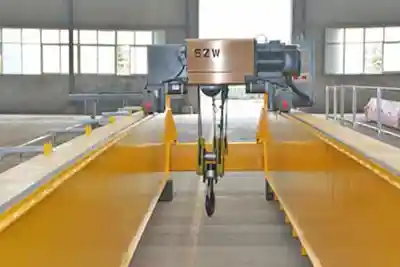
40 Ton Overhead Crane Structure Design Guide - Yuantai BetterCrane
Introduction: What Buyers Need to Know About a 40 Ton Overhead Crane Project
A 40 ton overhead crane is not just one machine. It is a full lifting system that depends on both the crane and the building structure it runs on. In many real projects, the crane itself is well made, but problems appear during installation because the structure was not planned correctly.
When buyers start a project like this, they often search things like:
- “40 ton overhead crane support structure requirements”
- “what steel structure is needed for 40 ton bridge crane”
- “40 ton overhead crane runway beam design”
These are all good questions. They show that buyers are already thinking about the system, not just the crane. But in practice, the answers are not simple if crane and structure are not considered together.
The main issue in many projects is not crane quality. It is the mismatch between the crane and the building structure. For example, the runway beam may be too weak, the column spacing may not fit the crane span, or the load is not properly calculated. These problems can cause delays, extra cost, or even redesign.
From our experience working with industrial buyers, the safest way is to plan the crane and structure at the same time. Key details like wheel load, span, lifting height, and working duty must be confirmed early. If these are missing, the structure design is often just an estimate.
This guide will help you understand the 40 ton overhead crane support structure in a simple and practical way. It is based on real project experience, not only theory.
We will go through:
- What most buyers misunderstand about support structures
- Common mistakes in real crane projects
- What actually decides the structure design
- A simple 40 ton project example
- A checklist to help you confirm your design before ordering
If you are still in the planning stage, this can help you avoid rework later. It also makes communication with your crane supplier and steel structure team much clearer and easier.
What Is a 40 Ton Overhead Crane Support Structure?
A 40 ton overhead crane support structure is the steel framework that carries the crane and allows it to run safely inside a workshop or factory. It is not part of the crane itself, but it is what makes the whole system work in real operation. Without a proper structure, even a good quality crane cannot run safely or stay stable during lifting.
In simple terms, the crane moves on rails, and those rails must be fixed on a strong steel structure. This structure takes the full load when the crane lifts heavy materials, sometimes up to 40 tons, plus the impact load during starting, stopping, and traveling. After that, the load is transferred into the building columns and finally down to the foundation.
The support structure is not just a fixed steel frame. It is part of a moving system that carries dynamic loads every time the crane runs.
- The crane wheels move along the runway beam
- The beam spreads the load across the structure
- The load is transferred into columns and then the foundation
In daily use, the structure must handle both static weight and movement forces. This is why small design mistakes can cause long-term problems.
A 40 ton overhead crane system is not a single piece of equipment. It is a group of connected structural parts working together. Each part has its own role, and all of them must match the crane design.
The crane runs on a runway beam installed along the workshop. This beam carries the wheel load when the crane moves and lifts heavy materials. In real projects, this is one of the most important parts because it directly affects safety and smooth operation.
- Must match crane wheel load and span
- Must be level and properly aligned
- Directly affects crane running stability
If the beam is not correct, the crane may vibrate or run unevenly.
The runway beam is supported by vertical steel columns or the main building frame. These supports carry all crane loads and transfer them down to the foundation.
In some workshops, the crane is designed together with the building. In others, it is added later, which means the existing structure must be checked carefully before installation.
Crane rails are installed on top of the runway beam. This part looks simple, but installation quality is very important.
- Rail straightness affects crane movement
- Incorrect spacing causes wheel wear
- Loose fixing can lead to vibration during operation
Good rail installation helps reduce maintenance cost over time.
For 40 ton double girder cranes, the girder system plays a key role in load balance. It helps distribute lifting force evenly across both sides of the structure.
If not matched properly with the building layout, one side may carry more load than the other, which is not ideal for long-term use.
Finally, all crane loads are transferred into the main workshop structure. This means the building is not only a shelter, but also part of the crane system.
- It supports vertical and horizontal loads
- It must match crane design from the beginning
- It affects long-term safety and stability
When buyers search for "40 ton overhead crane support structure design," "runway beam size for 40 ton overhead crane," or "steel structure for heavy duty overhead crane," they are usually working on real projects, not just learning theory.
Some buyers are planning a new workshop. In this case, the crane must be included in the steel structure design from the beginning. Everything must be calculated together, including crane load, span, and working conditions.
Other buyers already have a workshop and want to install a 40 ton bridge crane. Their main question is whether the existing structure can support it safely.
They usually need to check:
- Runway beam strength
- Column load capacity
- Overall building stability
Key Technical Parameters That Affect 40 Ton Overhead Crane Structure Design
For a 40 ton overhead crane, the support structure cannot be designed by only looking at the lifting capacity. In real projects, several technical factors work together and decide how strong the runway beams, columns, and building structure need to be. If these are not considered properly, problems often appear during installation or later operation.
To make it easier to understand, we can break it down into three key parts.
For a 40 ton overhead crane, the most common and practical choice is a double girder overhead crane. This is not just a design preference, but a structural requirement in most industrial applications.
Why double girder is used
A double girder crane carries the hoist and trolley between two main beams. This design spreads the load more evenly and reduces stress on a single beam. It also gives better stability when lifting heavy loads like 40 tons.
In real factories such as steel plants or heavy fabrication workshops, this type is widely used because the crane often works under frequent and heavy-duty conditions.
Why single girder is not suitable
At 40 ton capacity, a single girder crane becomes impractical. The beam would need to be extremely large to carry the load, and deflection control becomes a serious issue.
- Too much bending under heavy load
- Limited stability during operation
- Higher safety risk in long-term use
In simple terms, single girder cranes are generally used for lighter capacities, not for 40 ton applications.
One of the most misunderstood points in crane projects is wheel load. Many buyers think a 40 ton crane means the structure carries 40 tons directly, but that is not correct.
What wheel load really means
The crane load is transferred through the wheels onto the runway beam. This load changes depending on where the trolley is positioned and how the crane is operating.
So instead of a fixed 40 ton load, the structure experiences changing wheel forces during operation.
Why wheel load is critical
Wheel load is the real value used for structural design. It directly affects:
- Size of runway beam
- Strength of supporting columns
- Foundation design requirements
If wheel load is not correctly calculated, the structure may look fine in drawings but cause problems in real use, such as uneven rail wear or beam deformation.
Crane span is another key factor that has a direct impact on structure design and cost. It refers to the distance between the two runway beams.
In many real projects, buyers search for questions like "40 ton overhead crane 50 ft span design" or "how span affects crane structure cost." The reason is simple: span changes everything in structural design.
What happens when span increases
When the span becomes larger, the runway beams must carry higher bending forces. This means the structure needs to be stronger to stay stable and safe during operation.
- Longer span increases bending stress
- Larger steel sections are required
- Column and beam sizes increase
- Total steel cost goes up
Practical planning point
In real design work, span should not be chosen randomly. It must match:
- Workshop width
- Working area requirement
- Crane movement space
If the span is too large, cost increases without benefit. If it is too small, working efficiency is reduced. The correct balance is important for both performance and budget control.
For a 40 ton overhead crane, lifting height is not just a working requirement. It directly affects the building design and the overall steel structure layout.
In most industrial projects, the typical lifting height is around 15 to 30 ft, but it can also be customized based on the workshop and production needs. Some steel plants may require higher lifting space, while general fabrication workshops may stay within a lower range to control cost.
How lifting height affects the building structure
When the lifting height increases, the whole building design must also change. It is not only about the crane itself.
- The total building height must be increased to allow safe hook travel
- The column height becomes higher, which increases structural load
- The crane runway position must be adjusted accordingly
Practical point in real projects
Many buyers only focus on "40 ton capacity," but in actual design work, lifting height often controls the building size more than the crane itself. If this is not planned early, it may cause redesign of the steel structure later.
In simple terms, lifting height decides how tall your building needs to be, not just how high the hook can go.
Duty Class and Working Frequency (How Often the Crane Will Be Used)
Another key factor in 40 ton overhead crane structure design is duty class, or how frequently the crane will be used in daily operation. This is often linked with search terms like "heavy duty overhead crane for steel plant" or "40 ton overhead crane for continuous operation."
In real applications, not all 40 ton cranes work in the same way. Some are used occasionally, while others run almost all day in production lines.
The working condition has a direct impact on both crane design and support structure requirements.
- Light duty operation
Used in maintenance workshops or occasional lifting. The structure load cycles are lower, and wear is relatively slow. - Heavy duty operation
Common in steel plants, warehouses, or production lines with frequent lifting. The structure must handle repeated loading cycles and continuous stress.
The more frequent the crane operation, the more important fatigue strength becomes in the structure design. Even if the load is still 40 ton, repeated cycles can affect beam performance over time.
- Higher working frequency requires stronger structural design
- Fatigue resistance becomes more important than static strength
- Rail and beam alignment must stay stable for long-term use
In real projects, a 40 ton crane used in a steel mill is very different from one used in a general workshop. That is why duty class must always be confirmed before finalizing the structure design.
Simply put, it is not only about how heavy you lift, but also how often you lift.
Common Mistakes in 40 Ton Overhead Crane Support Structure Design
In real 40 ton overhead crane projects, most problems do not come from the crane itself. They come from how the support structure is planned. Small misunderstandings during early design can easily lead to extra cost, redesign work, or installation delays. Below are the most common mistakes seen in actual projects.
One of the most common issues is choosing the crane first without checking the building structure.
Many buyers focus on crane capacity, span, and price at the beginning. Only later, when installation starts, they find out the building cannot actually support the crane system.
What usually happens in real projects
- Crane is ordered based on production needs
- Structural engineer checks the building later
- Runway beam or column strength is not enough
- Reinforcement or redesign is required
The real result
This process often leads to avoidable problems:
- Extra steel cost
- Project delay
- Changes in installation plan
In practice, crane and structure should always be designed together, not separately.
Many buyers search for "how to design runway beam for 40 ton overhead crane," but the misunderstanding usually comes from assuming beam size is only related to lifting capacity.
This is not correct in real engineering design.
What is often misunderstood
- Assuming 40 ton capacity means a fixed beam size
- Ignoring how load is distributed through wheels
- Ignoring span and support conditions
What actually controls runway beam design
In real projects, runway beam design depends on several combined factors:
- Wheel load from crane movement
- Crane span and beam length
- Dynamic forces during operation
A beam that looks suitable on paper may still fail in real operation if these factors are not included.
Another common mistake is only considering static load and ignoring real working forces during crane operation.
A 40 ton crane does not operate in a fixed condition. Every movement creates additional force on the structure.
Real forces that must be considered
- Starting and braking forces when the crane moves
- Load swing during lifting and traveling
- Sudden impact when lowering heavy materials
Why this matters
These forces may not look large at first, but over time they affect:
- Beam fatigue
- Rail alignment stability
- Long-term structural safety
If not considered, the structure may work fine at the beginning but develop issues after continuous operation.
While under-design is risky, overdesign is also a common problem in 40 ton crane projects.
Some engineers choose very large beams and columns "just to be safe," without checking actual load calculation.
What this leads to
- Oversized steel sections
- Higher material cost
- Unnecessary fabrication work
Real impact on project cost
In many cases, overdesign increases total steel cost by 20–40%. For large workshops, this becomes a significant budget issue without improving real safety proportionally.
Practical point
A well-designed 40 ton crane structure should be balanced. It must be strong enough for safe operation, but not oversized beyond actual requirement. Proper calculation is always more reliable than simple estimation.
40 Ton Overhead Crane Structure Design Example
In real projects, it is often easier to understand crane structure design through a practical example. A 40 ton overhead crane does not follow a fixed structure size. Instead, the final design depends on how the crane is used, the workshop layout, and the actual load conditions. Below is a typical case based on real industrial applications.
Let's take a common 40 ton overhead crane project used in a steel workshop or heavy fabrication plant.
In this example, the basic working conditions are:
- 40 ton overhead crane for industrial material handling
- Span of around 50 ft (approximately 15 m)
- Lifting height of about 15 ft, suitable for standard workshop operation
- Power supply of 240/480V, commonly used in industrial facilities
These parameters are very typical for medium to heavy industrial environments. They are often seen in steel processing plants, equipment assembly workshops, and material storage areas.
At this stage, the crane looks simple on paper. However, the real structure design becomes more important once load distribution and building conditions are considered.
For this type of 40 ton application, the most suitable solution is a double girder overhead crane.
A double girder design is commonly used in heavy-duty industrial environments because it provides better structural stability and more balanced load distribution. The hoist system runs between the two main girders, which helps reduce stress concentration on a single beam.
In practical use, this configuration is widely applied in steel workshops and fabrication plants where lifting is frequent and loads are heavy.
Key configuration points in this case:
- Double girder overhead crane structure
- Designed for heavy-duty industrial operation
- Optimized wheel load distribution across the runway system
This type of configuration helps ensure stable operation during repeated lifting cycles. It also reduces uneven stress on the runway beam system, which is important for long-term use.
Once the crane configuration is defined, the next step is to coordinate it with the building structure. This is where many real project issues happen if not properly planned.
- Runway beam design based on wheel load: The runway beam should not be designed based only on the 40 ton lifting capacity. Instead, it must be calculated based on wheel load, which changes during crane movement and load positioning. This is the real basis for beam sizing and structural safety.
- Column spacing aligned with crane span: The distance between supporting columns must match the crane span. In this example, the 50 ft span directly influences the layout of the building structure. If the spacing is not coordinated, installation problems or structural adjustments may be required later.
- Structural reinforcement based on duty class: If the crane is used frequently, such as in steel production or continuous operation environments, the structure must consider fatigue loading. This may require additional reinforcement in beam connections and support points.
- Allowance for future capacity upgrade: In many industrial projects, buyers prefer to leave some margin for future expansion. This may include stronger runway beams or slightly higher structural capacity to support possible upgrades or changes in production needs.
In practical engineering work, the best results always come when crane design and structure design are planned together from the beginning. This avoids mismatch, reduces cost changes later, and helps ensure stable long-term operation.
40 Ton Overhead Crane Runway Beam and Steel Structure Requirements
For a 40 ton overhead crane, the runway beam and steel structure are not just supporting parts. They are the real foundation of safe crane operation. In many projects, the crane itself is correctly selected, but problems appear because the steel structure is not designed to match the working load conditions. That is why understanding runway beam and structure requirements is very important before final design or installation.
When buyers search for terms like "runway beam for 40 ton overhead crane" or "steel beam size for bridge crane support," the real concern is usually how strong the beam must be to safely carry the crane during operation.
In practice, the runway beam is not designed based only on the 40 ton lifting capacity. It must handle multiple types of forces during crane movement and lifting cycles.
Main loads acting on runway beam
The beam must be able to resist several types of forces at the same time:
- Vertical load from crane weight and lifted material
- Lateral load caused by crane movement and rail contact
- Dynamic impact during starting, stopping, and load handling
These forces do not stay constant. They change depending on crane position and working condition. This is why runway beam design requires proper load calculation instead of simple estimation.
A common mistake is to assume beam size is only related to lifting capacity. In real engineering, wheel load distribution and span length are just as important as the rated load.
The steel structure of a crane workshop plays a direct role in supporting the runway beam and transferring all crane loads to the foundation. For a 40 ton overhead crane, this structure must be designed with enough strength and stability for long-term operation.
- Column load distribution : The vertical columns carry the full crane load from the runway beam. In a 40 ton system, load distribution must be carefully balanced to avoid uneven stress. If one side carries more load than the other, it may lead to deformation or alignment issues over time.
- Bracing system stability : Bracing is used to improve overall structural stability. It helps resist lateral forces caused by crane movement and prevents building sway during operation. For heavy-duty cranes, proper bracing design is important to maintain long-term safety.
- Connection design (bolted or welded): Connections between beams, columns, and bracing elements can be either bolted or welded depending on fabrication method and site conditions. In most industrial projects, bolted connections are preferred for easier installation and maintenance, while welded connections may be used for higher rigidity in certain sections.
A 40 ton overhead crane structure cannot be designed in isolation. It must be integrated with the building foundation system to ensure safe load transfer.
Existing building vs new construction:
In new construction projects, the crane system can be included in the building design from the beginning. This allows better control of column layout, beam sizing, and load distribution.
In existing workshops, the situation is more complex. The structure must be checked carefully to confirm whether it can handle additional crane loads without major modification.
Load transfer from crane to foundation
All forces generated by the crane eventually pass through the structure and reach the foundation. This includes both static load and dynamic load during operation. If any part of this load path is weak or not properly designed, it may affect the overall stability of the system.
A well-designed 40 ton crane structure ensures that loads are transferred smoothly and evenly into the ground, reducing stress concentration and improving long-term performance.
Buyer Checklist Before Ordering a 40 Ton Overhead Crane
Before ordering a 40 ton overhead crane, many buyers focus only on capacity, span, and price. But in real projects, this is not enough. The final success of the crane system depends on how well the working conditions and structure are understood before purchase. A simple checklist can help avoid design mistakes, installation issues, and extra cost later.
The first step is to clearly understand what the crane will actually be used for. A 40 ton capacity sounds simple, but real working conditions can be very different from one project to another.
Start with the basic question: what materials are being lifted? Steel coils, billets, machinery parts, or fabricated structures all behave differently in terms of handling and load stability.
Next, consider whether 40 ton is a constant requirement or only needed occasionally. In some workshops, full load lifting happens rarely, while in others, it is part of daily production.
- Type of material being lifted affects crane selection and hook design
- Constant heavy lifting requires stronger duty classification
- Occasional use may allow more flexible structural design
The working environment has a direct impact on both crane design and support structure requirements. It is important to confirm this early.
Indoor cranes are usually installed in controlled environments such as workshops or fabrication plants. Outdoor cranes, on the other hand, need additional protection against wind, rain, and temperature changes.
Working frequency is also an important factor. A crane used occasionally in maintenance work is very different from a crane running all day in a production line.
- Indoor or outdoor installation affects structural protection and design
- Light duty operation reduces structural stress requirements
- Medium to heavy duty operation requires stronger design and higher fatigue resistance
One of the most important points in a 40 ton crane project is the existing building condition. Many problems happen because this is not checked carefully at the beginning.
If the project is a new building, the crane system can be designed together with the steel structure from the start. This allows better coordination between runway beam, column layout, and crane span.
If the crane is being installed in an existing workshop, the structure must be checked carefully. Headroom, column spacing, and beam strength all need to be verified before final confirmation.
- New building allows full integration of crane and structure design
- Existing buildings require structural verification before installation
- Available headroom affects crane type and lifting height
- Span limitations may influence crane configuration and layout
After confirming the technical and structural conditions, the next step is choosing the right procurement approach. This decision affects cost, installation time, and long-term performance.
Some buyers choose a complete 40 ton overhead crane system, where the crane is fully designed and manufactured as a single solution. This is suitable for projects where simplicity and reliability are important.
Others prefer a crane kit for local fabrication. In this case, main components are supplied, and the steel structure is made locally. This is often used when buyers have their own fabrication capability.
A third option is a full turnkey solution, where both crane and structure design are provided together. This approach helps ensure better coordination between crane loads and building design.
- Complete crane system for ready-to-install projects
- Crane kit for local manufacturing flexibility
- Turnkey crane + structure solution for full project coordination
Each option has its own advantages. The right choice depends on the buyer's technical capability, project timeline, and local construction conditions.
Integrated Design Approach for 40 Ton Overhead Crane Projects
In many 40 ton overhead crane projects, the biggest challenges do not come from the crane itself. They come from the way the crane and building structure are designed separately. When these two parts are not coordinated early, problems often appear during fabrication or installation. A more practical method is to treat the crane and structure as one system from the beginning.
In the traditional method, the crane supplier and the steel structure designer work separately. The crane is selected first, and the building structure is designed later based on general assumptions.
This often leads to mismatched technical data. For example, the crane supplier may provide wheel load values based on one condition, while the structural designer uses different assumptions. Even small differences in load data can affect beam sizing and column design.
During installation, these differences become more visible. The crane may not align properly with the runway beams, or reinforcement work may be needed on site. In some cases, adjustments are required after fabrication, which increases cost and delays the project.
- Crane and structure designed separately without coordination
- Different load assumptions between suppliers
- Installation issues caused by mismatched dimensions or load data
In an integrated approach, the crane and structure are designed together from the early stage of the project. Instead of treating them as two separate systems, both are planned as one coordinated structure.
One key step is sharing wheel load data at the beginning of the design process. This allows the structural engineer to design runway beams and columns based on real crane conditions, not estimated values.
This method also helps optimize material usage. Since both systems are considered together, steel sections can be properly sized without overdesign or unnecessary safety margins that increase cost.
- Crane and structure designed as a single system
- Wheel load and working conditions shared early in design stage
- Better coordination between crane layout and building structure
- More accurate steel sizing and reduced material waste
For buyers, the integrated design approach is more practical and easier to manage in real projects. It reduces uncertainty and helps avoid rework during construction.
One of the main advantages is lower total project cost. Since the structure is designed based on real crane data, there is less overdesign and fewer unnecessary steel components.
It also reduces installation time. When crane and structure match properly, on-site adjustments are minimized, and installation can proceed more smoothly.
In addition, engineering risk is reduced because load assumptions are consistent from the beginning. This improves long-term safety and reduces unexpected maintenance issues.
- Lower total project cost through optimized design
- Faster installation with fewer on-site adjustments
- Reduced engineering risk from consistent load data
- Improved long-term operational safety and stability
In practical terms, this approach helps ensure that the 40 ton overhead crane system works as a complete and well-matched solution, not just as separate components assembled on site.
How We Support 40 Ton Overhead Crane Projects
In many 40 ton overhead crane projects, the main problem is not choosing the crane. The real difficulty comes when the crane needs to fit with the building structure. If this is not planned well, it can cause extra cost, design changes, or installation delays. Our support is focused on helping buyers avoid these problems from the beginning.
We provide crane solutions for real industrial use, especially for heavy-duty working conditions like steel workshops and fabrication plants.
We supply complete 40 ton overhead crane systems. These cranes are designed for stable operation in daily industrial work, not only for basic lifting needs.
We also supply bridge cranes from 1 ton to 320 ton. This helps cover different project sizes, from small workshops to large factories.
For buyers who want to build the steel structure locally, we also offer crane kits. These kits include main crane parts, while the workshop structure can be made by local fabricators.
- Complete 40 ton overhead crane systems
- Bridge cranes from 1–320 ton
- Crane kits for local fabrication
Good planning at the beginning can save a lot of problems later during installation.
We help calculate crane load based on real working conditions. This includes wheel load, which is very important for runway beam design.
We also recommend runway beam size based on crane span, load, and working duty. This helps avoid both overdesign and weak structure design.
We also help check how the crane fits with the building layout. This includes column spacing, beam position, and overall workshop structure.
- Crane load and wheel load calculation
- Runway beam recommendation based on real conditions
- Structure and crane layout coordination
For buyers, the most important value is avoiding mistakes in early planning.
We give practical advice based on real projects, not only theory. This helps buyers understand what really matters for their specific application.
We also help reduce total project cost. When crane and structure are designed together, it is easier to avoid extra steel and unnecessary work.
For international projects, we also support communication between buyers, engineers, and contractors. This helps keep everything clear and simple.
- Clear and practical engineering advice
- Lower project cost through better design planning
- Easier coordination for international projects
In simple words, we help you plan a safe and workable 40 ton overhead crane system without confusion or unnecessary redesign.
Final Advice for 40 Ton Overhead Crane Buyers
When planning a 40 ton overhead crane project, many buyers naturally focus on the crane first. Capacity, price, delivery time. These are usually the first questions. But in real industrial projects, this is not enough to guarantee a smooth installation or safe long-term use.
A 40 ton crane is always part of a larger system. The crane and the building structure must work together. If they are treated separately, problems often appear later on site.
One common mistake in many projects is buying the crane first and thinking about the structure later. In practice, this often leads to mismatch.
For example, the crane may be selected correctly, but the runway beam or column strength does not match the real wheel load. Or the building layout does not fit the crane span. These issues are not easy to fix after construction starts.
A better approach is simple. Think of the crane and structure as one system, not two separate parts.
- Crane selection should consider building conditions
- Structure design should consider real crane loads
- Both must be planned before final purchase decision
Load type
Different materials create different handling conditions. Steel coils, heavy machinery, or fabricated parts all behave differently during lifting and movement. This affects how the crane and structure should be designed.
Duty class
How often the crane will be used is just as important as the lifting capacity. A crane used occasionally in maintenance work is very different from a crane running all day in production.
- Light use requires simpler structure design
- Heavy continuous use requires stronger fatigue resistance
- Working frequency directly affects long-term safety
Structural conditions
The building condition must be checked early. Whether it is a new workshop or an existing factory makes a big difference in design.
- New buildings allow full coordination of crane and structure
- Existing buildings require careful checking of columns and runway beams
- Available space and height will affect crane design
In real projects, the lowest price crane is not always the best choice. A low initial cost can lead to higher structural changes or installation problems later.
The most cost-effective solution is not the cheapest crane. It is the system where the crane and structure match correctly from the beginning. This reduces redesign work, avoids unnecessary steel cost, and helps ensure stable operation over time.
In simple terms, a well-matched system always performs better and costs less in the long run than a poorly coordinated one.
Get a Proper 40 Ton Overhead Crane Solution
If you are planning a 40 ton overhead crane project, the most important step is to start with the right basic data. Many project issues happen because key information is not confirmed early, especially related to structure and load conditions. Once these are clear, the rest of the design becomes much easier and more accurate.
What You Should Send Us
To give you a practical and workable solution, we only need a few basic project details. These help us understand your real working condition, not just the rated capacity.
- Required capacity (40 ton or customized requirement)
- Span of the crane
- Lifting height
- Application details (what you are lifting and how it will be used)
Even simple information is enough at the beginning. We can refine the details step by step based on your project.
What You Will Get From Us
Once we understand your project condition, we will support you with practical engineering guidance based on real industrial experience.
We will help you confirm the correct crane type for your application. For most 40 ton projects, this usually means checking whether a double girder design is needed and how it fits your workshop.
We will also estimate the wheel load impact. This is very important because it directly affects runway beam and column design, and many structural problems come from incorrect load assumptions.
Based on your project, we will suggest a suitable runway beam direction. This helps your structural engineer or local contractor design a safer and more balanced system.
Finally, we provide a practical and cost-effective solution. The goal is not only to supply a crane, but to help you build a system that works well in real operation, without unnecessary redesign or extra steel cost.