Water Treatment Plants Crane Solutions 1–5 Ton Guide - Yuantai
Water Treatment Plants: Multiple Crane Systems Solutions (1–5 Ton) and Cost-Effective Buying Strategies
Introduction: Why Water Treatment Plants Need More Than One Crane System
Water treatment plants are not one single open space. They are made up of several separate buildings and working areas. Each area has its own equipment and its own maintenance tasks. Because of this, lifting work is spread across the plant, not concentrated in one place.
In early planning, some buyers may think one overhead crane can cover the whole plant. It sounds simple. One crane, one system, lower cost. But in actual plant layouts, this idea does not work well.
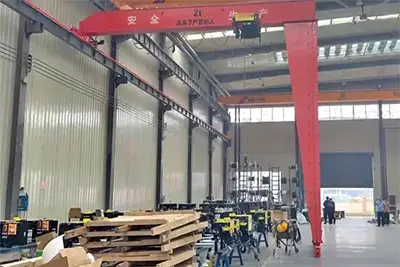
Euroepan style low headroom overhead crane single girder 1 -20 ton, hot sale 1 ton to 5 ton overhead crane for maintenance operation in water treatment plant
The main reason is very clear. The plant is divided into different functional zones, and these zones are physically separated. One crane cannot move across all of them.
Typical zones include:
- Pump station buildings for pumps, motors, and valves
- Chemical dosing rooms for small tanks and dosing equipment
- Filter areas with wide structures and long maintenance paths
- Sludge handling areas with heavy and dirty working conditions
Each zone has different lifting needs. Not only in weight, but also in how often the lifting is needed and how the work is done.
For example, pump stations need regular lifting for motor repair and replacement. Chemical rooms deal with smaller equipment but in a corrosive environment. Sludge areas handle heavier parts and more difficult working conditions.
So the difference is not only “how many tons,” but also “where” and “how often.”
Because of this, one crane system cannot practically serve the whole plant. The buildings are separated, and each area must be served directly.
In actual plant layouts, the common solution is to use multiple small lifting systems instead of one large crane. Usually, this includes 1–5 ton overhead cranes, monorail systems, or electric hoists placed in different zones.
This approach is more practical. Each crane is located close to the equipment it serves. Maintenance becomes easier, faster, and safer, without long-distance handling.
In simple terms, the plant is divided into sections, and the lifting system follows the same structure. That is the basic idea behind crane planning in water treatment plants.
Multi-Zone Structure of Water Treatment Plants
Water treatment plants are designed as a set of separate working zones, not one continuous working hall. Each zone has its own function, equipment, and maintenance routine. Because of this, lifting requirements are also divided by area.
In actual plant layout, this separation is very clear. You can see different buildings or isolated structures, each handling a specific process. This is the basic reason why crane planning cannot follow a single-system approach.
Water treatment plants are split into multiple process units, and each one operates independently.
- Pump stations are usually in separate reinforced buildings
- Chemical dosing rooms are small enclosed areas with specific safety requirements
- Sludge zones are often located away from main buildings due to odor and handling conditions
- Filter units may be spread across large open structures or basin halls
There is also physical distance between these zones. It is not just one floor or one workshop. The equipment is spread across different locations, sometimes with open space, pipelines, or water channels in between.
Another important point is maintenance timing. Each system has its own schedule. Pumps may need service at one time, chemical systems at another, and sludge equipment at a different time. They do not follow one combined maintenance plan.
Because of this, each area must be considered separately when planning lifting equipment.
This multi-zone structure directly affects how cranes are designed and installed.
- Each zone needs its own lifting coverage close to the equipment
- Structural separation between buildings prevents sharing one runway beam system
- One crane cannot physically travel between isolated buildings or units
- Maintenance safety requires lifting points to be located within each working area
In practice, this means crane systems are installed per zone, not per plant. A pump station may have its own overhead crane, while a chemical room may use a monorail or small hoist system. Filter and sludge areas follow their own lifting setup based on layout and access needs.
This approach is not about adding more equipment. It is about matching the crane system to the way the plant is actually built and maintained.
Typical 1–5 Ton Crane Systems Used in Water Treatment Plants
In water treatment plants, most lifting tasks are not heavy-duty industrial lifting. Instead, they fall in the small to medium range, usually between 1 ton and 5 tons. The key is not only lifting capacity, but also matching the crane type with the working condition of each zone.
Different areas of the plant require different lifting solutions. Below is how cranes are typically arranged in actual plant layouts.
Pump stations are one of the most common lifting zones in the plant. Equipment like pumps, motors, and valves needs regular inspection and replacement, so lifting access must be reliable.
Typical crane types used:
- Overhead bridge cranes or compact EOT cranes
- Usually designed around 5 ton capacity for standard pump stations
- In some larger installations, 10 ton may be used depending on pump size
Main usage:
- Lifting and removing water pumps
- Motor maintenance and replacement
- Valve and pipeline component handling
This is usually a high-frequency maintenance area. So the crane must be stable, easy to operate, and always ready for use. Downtime here often affects the whole plant operation.
Chemical dosing areas handle smaller but more sensitive equipment. The loads are not heavy, but the working environment requires careful design.
Typical crane types:
- Monorail cranes
- Small electric hoists
- Capacity usually between 1 ton and 3 ton
Main usage:
- Lifting chemical dosing pumps
- Handling mixers and small tanks
- Maintenance of dosing equipment
A key point here is corrosion protection. These areas often contain chemical vapors, so standard equipment may not last long without proper surface treatment or material selection.
Filter zones are usually wider spaces with long working spans. Maintenance work often requires movement along the basin or filtration equipment line.
Typical crane types:
- Long-span overhead cranes
- Traveling hoist systems
- Capacity usually 2 ton to 5 ton
Main usage:
- Replacing filter media components
- Maintenance of filter mechanisms
- General equipment servicing across basin areas
The crane needs smooth and stable travel. Positioning accuracy is important, especially when working above open basins or narrow maintenance paths.
Sludge areas are among the harshest working environments in a water treatment plant. Equipment is exposed to moisture, dirt, and sometimes corrosive conditions.
Typical crane types:
- Heavy-duty electric hoists
- Compact overhead lifting systems
- Capacity usually 2 ton to 5 ton
Main usage:
- Lifting sludge pumps
- Maintenance of scrapers and dewatering equipment
- Handling components in wet environments
In many cases, additional protection is required, such as corrosion-resistant coating or sealed electrical components. In some installations, explosion-proof design may also be considered depending on plant conditions.
Overall, the 1–5 ton range covers most lifting needs in water treatment plants. The real design focus is not just capacity, but choosing the right crane type for each working environment.
Why a Single Crane System Is Not a Cost-Saving Solution
In water treatment plant design, it is quite common to think that using one larger crane will reduce investment cost. On paper, it may look simpler. One system instead of several, fewer installations, and lower initial spending. But in actual engineering and operation, this approach often leads to higher long-term cost and more limitations.
A single crane system cannot realistically serve all areas of a water treatment plant because the buildings are physically separated. This is the first and most basic limitation.
- One crane cannot move between independent structures
- To extend coverage, long-span or connecting structures would be required
- These long spans increase steel structure cost and foundation requirements
In many cases, trying to force one system into multiple zones actually makes the design more expensive, not less.
There is also another point that is often ignored. Even if installation cost seems lower at the beginning, the system becomes less efficient in daily use. Operators may need more time to move loads, wait for access, or adjust working sequence. Over time, this operational delay becomes a hidden cost.
Water treatment plants are not static environments. Equipment is maintained regularly, and different zones follow different maintenance schedules.
- Pumps, motors, and valves are serviced in pump stations
- Chemical equipment requires frequent inspection in dosing rooms
- Sludge systems need periodic cleaning and part replacement
These areas are not close to each other. If only one crane is available, maintenance becomes dependent on its location and availability.
This creates practical issues:
- One crane serving multiple zones leads to waiting time between tasks
- Any breakdown of the crane affects the whole plant maintenance process
- In some cases, manual lifting or temporary equipment is still required
So instead of simplifying maintenance, a single system often makes it less flexible.
In actual engineering practice, crane design must follow safety and EPC requirements. These standards usually do not support shared lifting systems across separated process zones.
- Each zone must have safe and direct lifting access
- Chemical and sludge areas require controlled handling conditions
- Equipment movement paths must be clear and predictable
When one crane is forced to serve multiple zones, safety risks increase. Operators may need to move equipment through unsuitable paths or rely on indirect handling methods.
Because of this, EPC engineers usually prefer zone-based crane design. It reduces risk, improves control, and ensures each area can be maintained safely without affecting other systems.
Engineering Logic Behind Multiple Crane Systems
The reason water treatment plants use multiple crane systems is not just about convenience or cost. It comes from basic engineering logic based on how the plant is designed, built, and maintained.
In actual plant layout, each zone is treated as a separate working unit. This directly shapes how lifting systems are planned and installed.
Every section of a water treatment plant works on its own schedule and its own equipment group.
- Pump stations handle pumps, motors, and valves
- Chemical areas manage dosing equipment and small tanks
- Filter zones deal with media systems and mechanical components
- Sludge areas focus on heavy, dirty, and high-maintenance equipment
Because these systems do not operate together at the same time, each one needs its own lifting access. Maintenance teams usually work inside one zone without affecting others.
Not all equipment is lifted with the same frequency or under the same conditions.
- Some equipment is lifted often (like pump motors)
- Some is lifted occasionally (like filter components)
- Some works in harsh conditions (like sludge equipment)
So the crane type and capacity must match the real working pattern, not just a general plant requirement. This is why 1–5 ton systems are widely used—they are flexible and suitable for most maintenance tasks in these zones.
One key point in engineering design is structure. Water treatment plants are not built on one continuous steel frame.
- Buildings are separated by distance or concrete structures
- Foundations are independent
- Expansion joints prevent continuous rail installation
Because of this, one crane cannot physically serve multiple buildings. Each structure needs its own crane beam system, designed within its own load limits.
Using multiple crane systems also improves overall reliability.
- If one crane is under maintenance, other zones are still operational
- Each area can be serviced without waiting for a shared system
- Maintenance work becomes faster and more direct
- Risk is reduced because lifting is localized
In practice, this distributed setup makes the whole plant easier to manage over time. It avoids single-point failure and keeps maintenance flow stable across different zones.
In short, multiple crane systems are not an added complexity. They are a direct result of how water treatment plants are structured and how maintenance is actually carried out in real operation.
Cost-Effective Buying Strategies for 1–5 Ton Crane Systems
In water treatment plants, cost control is not only about choosing a cheaper crane. It is more about selecting the right system for each zone. If the design is not well matched, the plant may end up spending more during operation and maintenance. So the buying strategy should focus on practicality, not just initial price.
One common mistake is trying to use a full overhead crane everywhere. In many areas, this is not necessary.
- Use monorail systems where full bridge cranes are not required
- Select compact hoists for small and simple maintenance tasks
- Avoid designing one large system for all zones
Over-design often increases steel structure cost, installation work, and long-term maintenance. A modular approach is more flexible and easier to adjust during operation.
Not every zone needs the same level of crane coverage. The frequency of maintenance should guide the crane selection.
- High-frequency zones (like pump stations) → overhead cranes
- Medium or low-frequency zones → monorail systems or electric hoists
This simple matching helps avoid unnecessary investment. If a zone is rarely serviced, there is no need to install a heavy-duty system there.
Using different crane models for every zone can create confusion and higher maintenance cost.
- Use the same hoist model where possible
- Keep spare parts consistent across systems
- Train maintenance staff on one or two standard setups
This approach makes daily operation easier. Spare parts are easier to store, and repair work becomes faster because technicians are already familiar with the equipment.
Not all areas in a water treatment plant have the same environmental conditions. Some zones are dry, while others are highly corrosive.
- Chemical dosing areas need stronger anti-corrosion protection
- Sludge and wet zones also require enhanced coating or sealing
- Pump stations and dry mechanical rooms can use standard protection
Applying high-level protection everywhere increases cost without real benefit. It is better to apply protection based on actual exposure conditions.
Water treatment plants often expand or upgrade over time. Crane systems should be planned with this in mind.
- Reserve space for future runway beams in key buildings
- Leave installation allowance for additional lifting points
- Avoid blocking structural areas that may be needed later
If expansion is considered early, future modifications will be easier and less expensive. Otherwise, redesigning crane systems later can be difficult and costly.
In summary, cost-effective crane planning is not about reducing equipment. It is about selecting the right type, in the right place, with the right specification. This approach keeps both investment and long-term operation under control.
Typical Customer Questions
When buyers first look at crane planning for water treatment plants, the same few questions often come up. These questions are practical, and they usually come from cost control thinking or early-stage layout uncertainty. Below are the most common ones, with clear answers based on actual engineering practice.
No, it cannot in normal plant layouts.
The main reason is structural separation. Water treatment plants are built in different blocks, and these blocks are not connected by a continuous crane runway. Even if the distance is not very large, the buildings still stand on independent structures.
Operational conditions also matter. Each building has its own equipment and maintenance schedule. A single crane cannot realistically serve all zones without major limitations in access and efficiency.
Because they match how the plant actually works.
- Each crane stays close to the equipment it serves
- Maintenance work can be done directly in each zone
- No waiting time for a shared lifting system
- Less interruption when one crane is under service
In practice, this means smoother daily operation. Workers do not need to move equipment long distances or wait for a central crane to become available. Each zone works independently, which fits the plant structure better.
The key is not to reduce crane quantity blindly. The real method is to design correctly from the beginning.
- Focus on proper zoning instead of one oversized system
- Select crane types based on real usage in each area
- Use monorails or hoists where full overhead cranes are not needed
- Avoid over-specifying capacity beyond actual lifting requirements
Many cost problems come from trying to simplify the system too much. In reality, using the right system in each zone often results in a more balanced total investment and fewer issues during operation.
Key Benefits of Multi-Crane System Design
Using multiple crane systems in a water treatment plant is not about adding more equipment. It is about matching the lifting system to how the plant actually works in daily operation. When each zone has its own proper lifting setup, the overall performance of the plant becomes more stable and easier to manage.
Each crane is placed close to the equipment it serves. This makes maintenance work more direct and less time-consuming.
- No need to move equipment across long distances
- Maintenance teams can work inside one zone without interruption
- Lifting is available exactly where it is needed
In practice, this improves the speed of repair and routine servicing. Work becomes more organized and predictable.
When lifting systems are distributed across different zones, maintenance does not depend on one single crane.
- One zone can be serviced while others continue operating
- No waiting for a shared crane system
- Fewer interruptions during repair work
This helps keep the plant running more consistently, especially during urgent maintenance tasks.
Different zones have different working conditions, especially chemical and sludge areas. Localized crane systems help reduce unnecessary movement of loads.
- Shorter lifting distance
- More controlled handling inside each zone
- Reduced risk when moving equipment across plant areas
Safety improves because lifting is done within the correct working environment, not transferred between distant locations.
Although multiple cranes may seem like a higher initial investment, they often reduce long-term costs.
- Less manual handling required
- Fewer delays during maintenance
- Reduced wear from overusing a single system
- Easier spare parts management when systems are standardized
Over time, the plant operates more smoothly, which helps control hidden operational expenses.
EPC design requirements usually focus on safety, accessibility, and maintainability. Multi-crane systems fit these requirements more naturally.
- Each zone has dedicated lifting access
- Maintenance paths are clear and well-defined
- Design follows functional separation of plant systems
In actual engineering practice, this approach is more commonly accepted because it aligns with how water treatment plants are structured and maintained.
Conclusion: Smart Crane Planning Is About Zoning, Not Size
Water treatment plants are not designed as one continuous working space. They are built in separate zones, and each zone has its own equipment, working condition, and maintenance routine. Because of this, lifting systems also need to follow the same structure.
In actual engineering practice, this means the plant depends on distributed lifting systems rather than one centralized crane. Each area is supported by its own crane or hoist, placed where the work actually happens.
- Pump stations, chemical rooms, filter areas, and sludge zones all need independent lifting support
- Most lifting tasks fall within the 1–5 ton range
- Each system is designed based on real maintenance needs, not general plant size
Cost control in these projects does not come from reducing the number of cranes without planning. It comes from proper zoning. When each area is correctly analyzed, the crane type and capacity become clear. Some zones need overhead cranes, others only need monorail or small hoists.
Trying to reduce crane quantity too much often creates the opposite result. It can lead to gaps in coverage, more manual handling, and higher maintenance effort later.
A better approach is simple and practical. Match each zone with the right lifting system. Keep the design clear. Avoid over-design, but also avoid under-planning.
In the end, good crane design is not about making the system smaller. It is about making it suitable for how the plant actually works. When zoning is done correctly, the system becomes more reliable, easier to maintain, and safer in long-term operation.