
Cost Analysis: Choosing Best Overhead Crane for CNC Facilities
Explore upfront costs, long-term savings & financing options to invest wisely in the right crane system for plastic CNC operations. Get the overhead crane!
Introduction
Why Cranes Matter in a Plastic CNC Facility
In a plastic CNC machining facility, cranes do more than just move heavy things. They’re part of the daily workflow—handling bulky plastic blocks, loading and unloading precision molds, and shifting completed components between stations. This type of movement happens every day, often in tight spaces with demanding timelines. A well-chosen crane reduces strain on staff and helps keep everything running on schedule.
Whether you're operating injection molding machines, CNC routers, or thermoforming equipment, chances are you need to lift, shift, or position something big and awkward—safely and repeatedly.
Cranes are used for:
- Loading large plastic sheets or blocks onto CNC machines
- Transferring heavy molds between workstations or storage racks
- Assisting with maintenance tasks by lifting machine components or covers
- Improving ergonomics by minimizing manual lifting tasks
Why You Should Analyze Costs Before Choosing a Crane
Buying a crane is not just about the price tag. It’s about how that investment supports your production process, and how long it takes to pay itself back through time saved, accidents avoided, and bottlenecks removed. Cost analysis helps you figure out if the crane you’re considering is actually the right one for the long haul—or if you’ll regret the choice in two years.
Some buyers go for the lowest-cost option upfront and end up spending more over time due to repairs, downtime, or the need for replacement. Others overinvest in features they never use. Striking the balance requires a clear-eyed look at cost versus return.
A solid cost analysis helps you:
- Avoid buying the wrong type or capacity of crane
- Match crane capabilities with production requirements
- Budget accurately for installation and future maintenance
- Understand the full picture—upfront costs vs. lifetime costs
Know Your Facility’s Needs
What Are You Lifting—And How Often?
Before you even start browsing crane models, take a hard look at what your team is moving around every day. In a plastic CNC facility, the lifting jobs might seem simple on the surface, but they vary more than you think. Some days you’re shifting a lightweight mold insert. Other days, it’s a 2-ton solid plastic block that needs careful alignment on the CNC bed.
The key is to match your crane system with your actual workflow—not just peak loads, but also frequency and precision.
Common lifting tasks include:
- Moving plastic blocks (sheets, billets, rods) into CNC machines
- Lifting and changing heavy molds on vertical or horizontal mold beds
- Transferring finished parts to trimming, inspection, or packaging zones
- Assisting in machine maintenance or die cleaning by lifting parts from awkward angles
If any of these tasks are being done with forklifts, pallet jacks, or pure muscle, there’s a strong case for a dedicated crane setup.

Think in Capacity, Space, and Usage Frequency
Not all cranes are built for the same kind of job. You need one that fits your weight requirements, your facility layout, and how often it will be used. A crane that’s too powerful wastes money and energy. One that’s underpowered becomes a daily bottleneck—or worse, a safety risk.
Here’s what to consider:
Load capacity:
- For CNC mold handling, common capacities range from 1 ton to 5 tons
- It’s best to add a 20–30% safety buffer above your heaviest regular lift
Working area:
- Measure both horizontal and vertical reach
- Consider any obstructions: ducting, lighting, or machine guards
Duty cycle:
- Is the crane working all day or just a few times per shift?
- Occasional use may justify a lighter-duty system, while continuous lifting demands higher-grade components
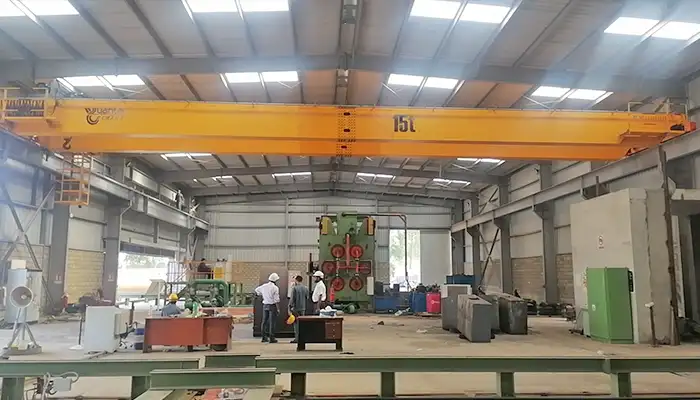
Do You Need Custom Features?
This is where a standard crane might fall short. Plastic CNC shops often deal with space limitations, temperature-sensitive materials, or detailed mold alignments. Off-the-shelf cranes may not handle these conditions well.
If your lifting involves more than just “up and down,” it’s worth considering custom features. Even small tweaks can make a big difference in efficiency and safety.
Useful customizations to think about:
- Low headroom design for shops with limited ceiling height
- Variable speed control for aligning molds precisely without jerks or swings
- Remote or pendant operation to give operators more flexibility and visibility
- Rotating hoists or articulating arms for fine positioning
- Anti-sway or soft start/stop systems for delicate handling
The more clearly you define your lifting tasks and space constraints, the better your crane supplier can recommend the right configuration—no overkill, no underperformance.
Upfront Costs: What to Expect
It’s Not Just the Crane Price—It’s the Whole Setup
When budgeting for a crane system, most people look at the crane unit itself and think that’s the bulk of the cost. But in reality, the total investment includes several other components—each playing a role in safety, performance, and integration into your plastic CNC workflow.
Let’s break down what you’ll likely spend money on, beyond just the crane beam and hoist.
There are several types of cranes you might consider depending on your layout, weight handling, and ceiling height. The crane type and hoist combination make up the core cost, but each variation has its own price range.
Crane type:
- Single girder overhead cranes: Cost-effective for lighter loads (1–10 tons), common in CNC mold handling
- Double girder overhead cranes: Higher capacity and span; often required for 10 tons or more or where auxiliary hoists are needed
- Gantry cranes: Great if your CNC facility is semi-outdoor or lacks suitable roof structure; avoids runway beam installation
- Jib cranes or workstation cranes: Ideal for localized tasks, like loading machines or tool setups
Hoists and lifting accessories:
- Wire rope hoists for heavier, higher-duty cycles
- Chain hoists for lighter, more precise lifting tasks
- Optional accessories: motorized trolleys, lifting beams, slings, vacuum lifters, or magnets (depending on your material)
Control systems:
- Manual pendant control is cheapest and most common in small shops
- Semi-automatic control helps with consistent lifting and positioning
- Fully automated control systems are rare in CNC plastic shops but may be used in high-volume production environments
- Add-ons include radio remote controls, anti-sway tech, soft start/stop systems
Even the most budget-friendly crane can get pricey during setup if your facility isn’t quite ready. Installation costs vary based on crane type and building conditions, but here’s what usually goes into it:
- Runway beam installation (for overhead cranes): can include bracket welding, concrete anchors, or structural upgrades
- Electrical cabling and power connection: a critical part often underestimated in both time and cost
- On-site commissioning: involves safety testing, alignment checks, and parameter configuration of the hoist and controls
It’s smart to get a quote that includes installation and commissioning upfront—especially if your team doesn’t have in-house capability.
Facility Preparation and Structural Modifications
Your building may need some adjustments before the crane even arrives. This depends on whether your structure was originally designed for crane loading.
Common prep and modification costs:
- Reinforcing columns or roof beams
- Adding runway beams or columns
- Adjusting lighting, sprinkler systems, or ventilation that interferes with crane movement
- Adding concrete footings (for floor-mounted gantry or jib cranes)
Skipping this step in planning can delay your entire project timeline—and inflate your budget with unexpected costs.
Once the crane is installed, someone has to operate it. You’ll need to factor in time and money for operator training and basic safety gear. This is often overlooked, but it's essential for both compliance and practical operation.
Items to consider:
- Operator training courses (can be done by suppliers or certified trainers)
- Load charts and signal training for floor operators
- PPE for operators: helmets, gloves, visibility vests
- Safety devices: limit switches, overload protection, audible alarms, emergency stop systems
Tip: When collecting quotes, always ask for an itemized breakdown—including installation, prep work, training, and documentation—so you’re not caught off guard when the final invoice lands.
Long-Term Cost Savings and ROI
Where the Real Value Starts Showing
While upfront costs grab most of the attention, it's the long-term returns that determine whether your crane investment was worth it. A well-matched crane system in a plastic CNC facility does more than just lift — it speeds up work, reduces errors, keeps workers safer, and costs less to run over time. That adds up.
Let's break down the main ways a crane pays you back over its lifetime.
Installing the right crane isn't just a convenience — it reshapes how work gets done. Time once spent moving heavy blocks by hand or waiting for forklifts becomes productive machine time. It also reduces the fatigue and slowdowns that come with manual lifting or awkward material handling.
Reduced handling time:
- Quickly transfers plastic sheets or molds between machines
- Speeds up machine setup and changeovers
- Eliminates double-handling or staging in multiple zones
Lower labor dependency:
- One trained operator can do the lifting that used to require two or more workers
- Frees up manpower for skilled machining tasks rather than material handling
- Reduces the need for additional equipment like pallet jacks or forklifts
This streamlined flow directly supports higher daily output and more consistent lead times, especially in mid- to high-volume production shops.
Let's be honest — heavy lifting comes with risk. Even in a clean CNC environment, mold changes and material loading can lead to sprains, back injuries, or dropped parts. A proper crane system reduces these risks, which means fewer incidents and smoother audits.
Fewer injuries and downtime:
- Reduces strain on workers and eliminates unsafe manual lifts
- Provides better control over awkward or oversized loads
- Minimizes equipment collisions or damage during lifting
Lower insurance premiums:
- A documented reduction in workplace incidents may qualify your facility for lower premiums or rebates
- OSHA-compliant lifting systems are easier to defend in safety inspections or claims
Safety might not show up as a line item on your ROI chart, but it protects your people, reputation, and bottom line.
Over the years, some crane systems hold up better than others. Choosing a crane with the right duty rating and solid components ensures lower maintenance costs and fewer surprises.
Service life comparison by crane type:
- Single girder cranes typically last 10–20 years with proper maintenance; suited for lighter, occasional lifting
- Double girder cranes offer 20+ years of life for heavy or frequent lifting tasks
- Gantry and jib cranes can last just as long, especially in dedicated zones with limited movement
Cost of spare parts and availability:
- Stick with well-known brands for hoists and controls to ensure easy access to spares
- Ask your supplier about part availability — some hoists may have proprietary components that are costly or slow to source
- Preventive maintenance plans can also reduce emergency repair costs
It's worth paying a bit more upfront for a durable system than spending years patching up a cheaper one.
Cranes aren't power hogs by nature, but they do draw energy—especially with high-duty cycles. More efficient motors, soft-start features, and variable-speed drives can all reduce energy use without sacrificing performance.
Energy-saving features to look for:
- Variable frequency drives (VFDs) for smoother, more efficient movement
- Regenerative braking (in high-end models) that recovers energy during deceleration
- Auto shut-off timers for idle equipment
Lower energy costs may not be huge per month, but across several years, they contribute to the overall ROI, especially in facilities running multiple shifts.
The right crane isn't just a tool—it's a quiet partner that saves you time, labor, risk, and money every day it runs. And over its lifespan, that adds up to a return worth much more than the original invoice.
ROI Calculation: How to Measure Crane Investment Value
Turning Crane Costs Into Measurable Returns
Buying a crane is a big decision—but understanding its return on investment (ROI) doesn’t have to be complicated. The trick is to look beyond just the upfront price and ask: How much time, labor, and cost will this save us over the years? Once you start attaching numbers to those savings, the picture gets much clearer.
The payback period tells you how long it takes for the crane to pay for itself through savings or increased productivity. It’s the most straightforward way to get a sense of whether an investment is worth it.
- Payback Period = Total Initial Investment / Annual Cost Savings
For example:
- If your crane system costs $50,000
- And you save $12,000 per year in labor, downtime, and setup time
- Then: $50,000 / $12,000 = about 4.2 years to break even
After that point, the system is effectively making you money.
If you're planning for long-term investment decisions—or if you're pitching this purchase to higher management—it's worth looking at more advanced ROI tools like Net Present Value (NPV) or Internal Rate of Return (IRR).
- NPV tells you the value of future savings in today’s dollars, accounting for inflation or financing rates
- IRR shows the annual rate of return you can expect from the investment over its lifetime
These tools require a bit more math (or spreadsheet work), but they give a clearer view when comparing several crane options or when factoring in financing costs.
Let’s say you’re deciding between:
Option A: Basic 2-ton single girder crane
- Cost: $28,000
- Saves ~$7,000/year in labor and handling time
- Simple on/off controls, slower speed, no automation
Option B: Advanced 2-ton crane with variable speed control, remote operation, and low-headroom hoist
- Cost: $40,000
- Saves ~$11,000/year due to faster setup, fewer alignment issues, and better operator efficiency
Now compare payback:
- Option A: $28,000 / $7,000 = ~4 years
- Option B: $40,000 / $11,000 = ~3.6 years
Despite the higher price tag, the advanced crane offers a better return and more productivity. Over 10 years, it could save you $110,000 vs. $70,000 from the basic model.
Another way to frame ROI is by throughput—how many molds, parts, or material blocks you can move in a day. Time is money, and even a few minutes saved per lift adds up over hundreds of cycles.
Ask yourself:
- How many mold changes are done per shift?
- How long does each change take now—and how much faster with a crane?
- What’s the labor cost per hour saved?
Even a 5-minute reduction per mold change across 10 changes per day = 50 minutes saved per day. Multiply that by labor rates and annual shifts, and the ROI can be easier to justify than you think.
Financing Options for Plastic CNC Facilities
Paying Upfront or Spreading Out the Cost? When it comes to getting a crane system for your plastic CNC facility, money matters—and sometimes paying everything at once isn't the best move. You have several financing options, each with its own benefits and drawbacks. Choosing the right one depends on your cash flow, growth plans, and how quickly you want to see results.
Buying the crane system outright means you pay the full cost up front. This is straightforward and simple.
Pros:
- No ongoing monthly payments
- Full ownership from day one
- No interest or financing fees
- Easier for accounting—you own the asset
Cons:
- High initial capital outlay—can strain cash flow
- Less flexibility if your budget tightens later
- May delay purchase or other investments if funds are limited
Direct purchase works best if your facility has healthy cash reserves and you want to avoid debt.
Leasing lets you use the crane by paying monthly fees, similar to renting. At the end of the lease, you may have options to buy or upgrade.
Pros:
- Lower upfront costs
- Preserves cash flow for other expenses
- Easier to upgrade or replace equipment
- Some leases include maintenance or service packages
Cons:
- Total cost over time may be higher than buying outright
- You may not own the crane at the end of the lease
- Contracts can have penalties for early termination
Leasing is great if you want to avoid big capital expenses and prefer predictable monthly budgets.
If you want to own the crane but don't have cash on hand, a bank loan is a classic route. Plus, some governments offer incentives or tax breaks for capital equipment purchases.
Bank loans:
- Typically offer fixed or variable interest rates
- Repayment terms vary—often 3 to 7 years
- Allows you to spread out payments but build equity
Government incentives and tax deductions:
- Some regions offer grants or low-interest loans for manufacturing upgrades
- Tax deductions on capital equipment depreciation can reduce your taxable income
- Worth consulting a tax professional or accountant
These options can lower your effective cost and make ownership more affordable over time.
Many crane suppliers offer their own financing plans, like phased payments tied to delivery milestones or extended payment terms.
Pros:
- Often easier to qualify than bank loans
- Payments linked to project progress, reducing upfront burden
- Sometimes includes bundled service or warranty packages
Cons:
- May carry higher interest or fees than traditional loans
- Financing tied to one vendor—less flexibility to shop around later
Vendor financing works well if you want to start quickly and don't want to deal with banks.
No one-size-fits-all here. Consider these questions:
- How much cash do you have available right now?
- Are you looking to conserve cash for other expenses?
- How important is owning the equipment versus using it?
- What financing terms are available in your region?
- Are there incentives that reduce costs if you buy or lease now?
Take the time to compare quotes not just on crane specs but on payment terms too. Sometimes a slightly higher price with better financing options means a smoother path to installation and ROI.
Pro tip: Talk openly with your crane supplier about financing—they often have flexible options or can recommend local lenders familiar with your industry.
Mistakes to Avoid in Crane Cost Planning
Don't Let These Common Pitfalls Drain Your Budget
When planning the cost for a crane system in your plastic CNC facility, it's easy to focus too much on the sticker price and miss the bigger picture. That kind of short-sightedness often leads to higher expenses, downtime, or safety problems down the line. Here are some costly mistakes to watch out for—and how to avoid them.
It's tempting to pick the lowest-priced crane and call it a day. But cheaper upfront often means more headaches later. A crane is a long-term investment, and the real cost includes maintenance, energy use, repairs, and potential downtime.
Why this matters:
- A lower-quality crane may break down more often, increasing repair costs
- Poor energy efficiency leads to higher electricity bills
- Inferior controls can slow work and increase labor costs
- Resale value might be minimal
What to do instead:
- Ask suppliers for total cost of ownership (TCO) estimates
- Factor in maintenance schedules and parts availability
- Consider energy-saving features, which pay off over years
- Look for warranties and service agreements that reduce risk
A crane isn't just a piece of equipment dropped into place. If your building isn't structurally ready, you'll face extra costs—and delays—for runway beams, column reinforcements, or electrical upgrades.
Why this happens:
- Buyers often overlook the building's capacity to support crane loads
- Existing beams may be undersized or improperly spaced
- Electrical infrastructure might not handle crane motors or control systems
How to avoid:
- Conduct a thorough structural assessment before ordering
- Include engineering services in your budget
- Factor in potential building modifications early in the planning phase
- Work closely with crane manufacturers who can recommend appropriate designs
Your facility's needs will likely grow or change. Buying a crane that barely meets today's demands might mean a costly replacement or retrofit soon after.
Common oversights:
- Selecting a crane with minimum required load capacity but no margin for heavier future parts
- Choosing controls without room for automation upgrades
- Neglecting to plan for additional lifting accessories or multiple hoists
What to consider:
- Build in a 20–30% load buffer for future heavier parts or tooling changes
- Opt for modular control systems that allow easy upgrades
- Discuss your growth plans with your supplier—many cranes can be designed to scale up
Maintenance isn't optional. It's part of keeping your crane safe, efficient, and compliant with regulations. Many buyers fail to budget for ongoing inspection, parts replacement, and occasional repairs.
Consequences of neglect:
- Unexpected breakdowns cause production delays
- Safety hazards increase without proper upkeep
- Repairs done too late cost more than regular service
Smart planning steps:
- Set aside an annual maintenance budget (often 3–5% of crane cost)
- Schedule preventive maintenance with qualified technicians
- Keep critical spare parts in stock or available quickly
- Train your operators to spot early signs of wear or trouble
Thinking beyond the purchase price means looking at your crane investment holistically. Proper planning avoids surprises and saves money, time, and frustration. Ask the right questions early, plan for growth, and don't skimp on support—you'll thank yourself later.
Conclusion
Finding the Right Balance Investing in a crane for your plastic CNC facility isn’t just about the initial price. It’s about weighing that upfront cost against the savings and efficiencies you’ll see over time. The right crane makes work safer, faster, and less costly in the long run.
Match Your Crane to Your Needs and Budget Every shop is unique. Choosing a crane that fits both your production demands and financial situation ensures you get maximum value without overspending or compromising on capability. Planning ahead helps avoid costly mistakes later.
Get Expert Help Navigating crane options and costs can be tricky. Partner with knowledgeable suppliers who can customize solutions based on your specific needs and help you calculate ROI. They’ll guide you through financing, installation, and support to ensure a smooth investment.
Next Steps Don’t wait. Contact crane experts today to discuss your facility’s needs and start planning a cost-effective, efficient crane system that works for you now—and in the future.