Crane Load Capacities for Combined Power & Desalination Operation
Understand safe crane load limits, key factors, practical tips for handling turbines, pumps & heavy equipment efficiently in plants.Get industrial crane!
Introduction
Why Cranes Are Important
In power and desalination plants, cranes aren’t just “nice-to-have” equipment—they’re essential. They lift heavy turbines, pumps, heat exchangers, and other bulky machinery that would be impossible to move by hand. A properly chosen crane keeps work moving smoothly, avoids delays, and, most importantly, keeps people safe.
- Safely moves heavy and awkward equipment
- Supports installation, maintenance, and repairs
- Reduces downtime and keeps operations on schedule
Why Understanding Load Capacity Matters
A crane’s load capacity is more than just a number on a spec sheet. It tells you how much weight the crane can lift safely. Push it too far, and you risk damage to equipment, costly repairs, or even serious accidents. Knowing the limits helps you plan lifts confidently.
- Ensures every lift is safe and stable
- Prevents damage to cranes and machinery
- Helps plan efficient operations without surprises
What This Guide Covers
This guide is meant to give practical, hands-on advice for anyone working with cranes in combined power and desalination operations. You’ll learn how to choose the right crane, calculate safe lifting limits, and coordinate crane use with everyday plant tasks.
Here’s what you can expect:
- Types of cranes used in power and desalination plants
- Key factors that affect load capacities, like weight, height, and site conditions
- How to calculate safe lifting limits in real-world situations
- Safety practices, inspections, and maintenance tips
- Practical advice on scheduling crane use with plant operations
Types of Cranes Used in Combined Power and Desalination Plants
Overhead (EOT) Cranes
Overhead cranes, also called Electric Overhead Traveling (EOT) cranes, are the backbone of most power plants. They run on rails along the building’s ceiling, making them ideal for moving heavy equipment across long distances inside the plant.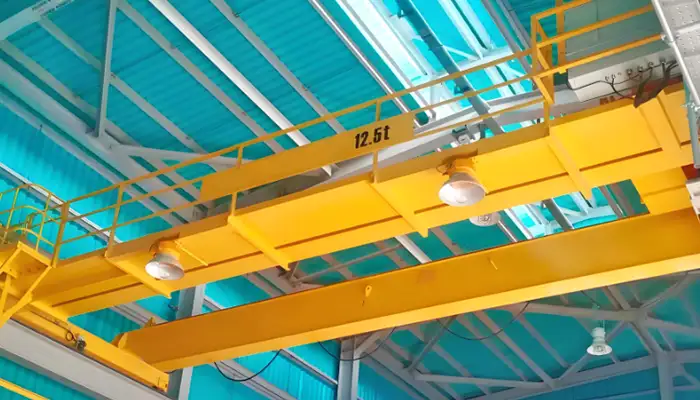
overhead cranes with low headroom hoist and double girder design for 3 ton to 80 ton low handling
Typical applications:
- Lifting and positioning turbines during installation or maintenance
- Handling boilers or large pressure vessels
- Replacing pumps or other heavy rotating equipment
- Moving spare parts and maintenance tools across workshops
Practical points:
- EOT cranes are best for repetitive lifts within a fixed path.
- They require a robust building structure to support the rail system.
- Maintenance access and overhead clearance are key factors when selecting capacity.
Gantry Cranes
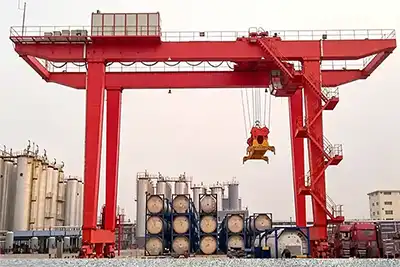
Gantry cranes are similar to overhead cranes but supported by legs that run on the floor or a separate track. They are widely used in desalination plants and outdoor areas where heavy equipment needs to be moved across open spaces.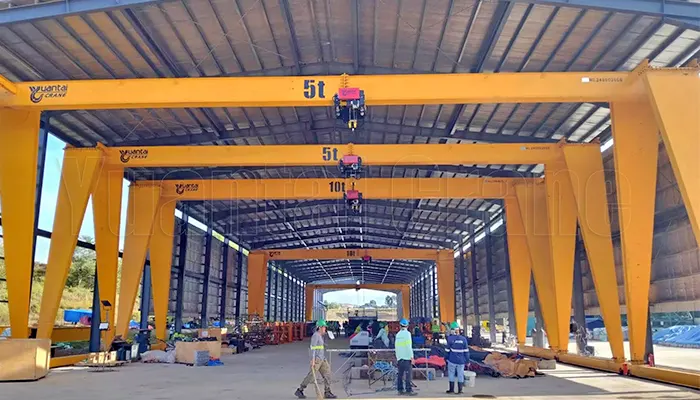
single girder gantry crane 1 ton to 20 ton, customized for your industrial material handling
Applications in desalination plants:
- Transporting large tanks, vessels, or skid-mounted pumps
- Handling bulk materials, like salt or chemicals, in storage areas
- Supporting modular assembly of plant components before installation
Practical points:
- Gantry cranes offer flexibility for outdoor and semi-permanent installations.
- They are easier to relocate than overhead cranes.
- Proper ground preparation is essential to ensure stability and safe lifting.
Mobile Gantry Cranes and Hoists
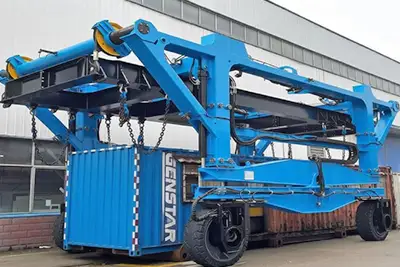
Mobile gantry cranes and hoists provide flexible lifting solutions for both indoor and outdoor operations. They are often smaller, lighter, and easier to move, making them ideal for maintenance, short-term projects, or confined areas.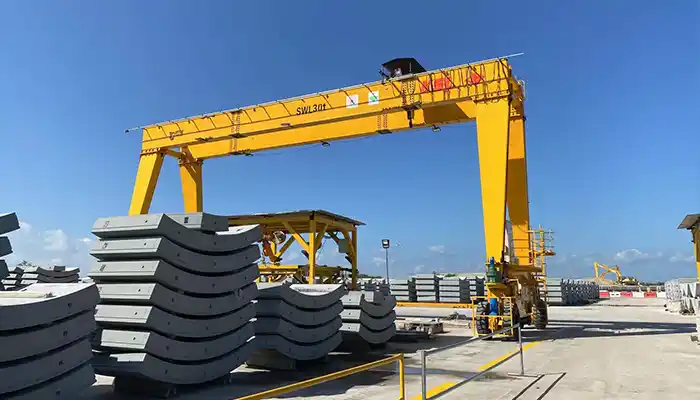
Typical uses:
- Temporary lifts during installation or repair work
- Moving equipment between workshops or storage yards
- Accessing tight areas where fixed cranes can’t reach
Practical points:
- Mobile solutions are less dependent on permanent infrastructure.
- Capacity is usually lower than fixed EOT or large gantry cranes.
- They are ideal for plants with multiple small lifting points or frequent layout changes.

Comparing Crane Types
When choosing a crane, consider load capacity, reach, and mobility:
| Feature | EOT Cranes | Gantry Cranes | Mobile Gantry / Hoists |
|---|---|---|---|
| Load Capacity | High (up to hundreds of tons) | Medium to high | Low to medium |
| Reach / Span | Fixed along rails, long span possible | Flexible along tracks | Short to medium, flexible |
| Mobility | Limited to building rails | Limited to track layout | High; easy to reposition |
| Best For | Indoor, repetitive lifts | Outdoor or semi-permanent installations | Temporary or maintenance tasks |
Key Factors Influencing Crane Load Capacities
The first thing to check is how heavy and large the equipment is. In power and desalination plants, cranes lift everything from small pumps to massive turbines. Knowing the exact weight and size is critical. It keeps the crane safe and prevents costly damage.
Practical tips:
- Always include the weight of rigging, slings, or attachments.
- Large or irregular-shaped items may need special lifting beams or spreaders.
- Measure dimensions to ensure the crane can move the load without hitting obstacles.
How high the load needs to go and how far it has to travel affects how much weight a crane can safely handle. Lifting near the maximum height or across a long span can reduce capacity.
Practical tips:
- Measure from the floor to the highest point the hook needs to reach.
- Check the span—the distance between crane supports or rails. Longer spans may require stronger cranes.
- Look for overhead obstacles like pipes, walkways, or ceilings.
How often the crane will be used matters just as much as the weight. A crane lifting heavy equipment a few times a week has different requirements than one running multiple lifts every hour.
Practical tips:
- Estimate the number of lifts per day or per week.
- For frequent use, select a crane with a higher duty rating.
- Plan ahead for future operations to avoid wearing out the crane too quickly.
Where the crane operates can affect its performance. Temperature, humidity, wind, and corrosive environments (like saltwater in desalination plants) all play a role.
Practical tips:
- Outdoor cranes need protection from wind, rain, and sun.
- In corrosive areas, choose coated or stainless-steel components.
- Extreme heat or cold can affect wire ropes, hydraulics, and electronics.
- Indoor spaces may have height or space limits—make sure the crane fits comfortably.
- Weight & Size: Total load including rigging
- Height & Span: Required lift height and travel distance
- Frequency: Number of lifts and duty rating
- Environment: Indoor/outdoor, corrosive conditions, temperature
Keeping these factors in mind ensures cranes operate safely, last longer, and handle every lift efficiently.
Load Capacity Calculations
Every crane comes with a rated capacity, which is the maximum weight it can lift safely under normal operating conditions. This is not the same as the absolute maximum the crane might theoretically handle. Exceeding the rated capacity, even briefly, can be dangerous and damage the crane.
Practical points:
- Always plan lifts based on the rated capacity, not the maximum.
- The rated capacity already accounts for normal operational stresses and safety margins.
- Check manufacturer documentation for charts that show capacity changes with lift height or radius.
Cranes are designed with built-in safety factors, but real-world conditions often require further adjustments. Derating means reducing the crane's allowable capacity to account for unusual situations, such as extended span, high lifts, or frequent cycles.
Practical points:
- Derate when lifting near the crane's limits in height or span.
- Factor in the weight of hooks, slings, and rigging attachments.
- Use conservative values in critical lifts—better safe than sorry.
Crane loads are rarely static. Movement, sudden starts or stops, and unevenly distributed weight all put extra stress on the crane. These dynamic effects reduce the safe load capacity.
Practical points:
- Avoid sudden acceleration or deceleration when lifting heavy loads.
- Center the load properly to prevent swinging or imbalance.
- For long or irregular equipment, consider spreader bars or multiple lifting points.
Let's say you need to lift a turbine weighing 12 tons, plus rigging that adds 1 ton. You also need to lift it 10 meters across a span of 15 meters, and the lift will be frequent.
Step 1: Base load
- Equipment weight: 12 tons
- Rigging weight: 1 ton
- Total static load: 13 tons
Step 2: Apply safety factor
- Standard factor: 1.25
- Adjusted load: 13 × 1.25 = 16.25 tons
Step 3: Consider dynamic effects
- Add 10–15% for swinging, acceleration, or uneven weight
- Final required crane capacity: ~18–19 tons
This ensures the crane can handle the lift safely under real operating conditions.
- Always use the rated load as the starting point.
- Include rigging and attachments in total weight.
- Apply safety factors and derate if necessary.
- Consider dynamic effects like swinging or sudden stops.
- When in doubt, choose a slightly higher capacity crane than the minimum required.
Safety and Compliance Considerations
Cranes in power and desalination plants must follow strict regulatory standards to ensure safe operation. These standards cover design, installation, operation, and maintenance. Following them not only protects personnel but also reduces downtime and liability.
Practical points:
- Follow international standards such as ISO 4301, ASME B30 series, or OSHA regulations depending on your location.
- Adhere to local rules for industrial lifting equipment—permits, certifications, and inspections may be required.
- Ensure cranes meet plant-specific requirements for load limits, environmental conditions, and safety devices.
Even the best crane is unsafe in untrained hands. Operators must have proper training to handle the equipment, understand limits, and respond to emergencies.
Practical points:
- Operators should complete formal training and certification relevant to the crane type.
- Include hands-on experience with both normal operations and emergency procedures.
- Ongoing refresher courses help operators stay updated on regulations and safety practices.
- Train operators to identify signs of mechanical problems before they become serious.
Regular checks and maintenance are critical to keep cranes safe and operational. This includes load testing, mechanical inspections, and preventive maintenance to catch problems early.
Practical points:
- Perform annual load testing or more frequently for heavily used cranes.
- Inspect structural components, wire ropes, hooks, brakes, and control systems regularly.
- Follow a preventive maintenance schedule recommended by the manufacturer.
- Document all inspections and maintenance activities for compliance and safety audits.
Even with careful planning, emergencies can happen. Being prepared with clear procedures ensures safety and reduces downtime.
Practical points:
- Establish overload response plans, including stopping operations and safely lowering loads.
- Equip cranes with safety devices such as overload sensors, limit switches, and emergency brakes.
- Train staff on emergency shutdown procedures and evacuation plans.
- Conduct drills periodically to ensure everyone knows their roles in an incident.
- ✅ Follow local and international crane safety standards
- ✅ Ensure operators are trained and certified
- ✅ Maintain regular inspections and preventive maintenance
- ✅ Have emergency plans for overload or mechanical failure
- ✅ Keep clear records of inspections, maintenance, and training
By focusing on compliance and safety, plants can minimize risks, extend crane life, and maintain smooth operations without unexpected disruptions.
Integration with Plant Operations
Cranes need to fit seamlessly into daily plant operations. Poor coordination can lead to delays, conflicts with other work, or unsafe lifting conditions.
Practical points:
- Plan lifts during scheduled maintenance windows whenever possible.
- Coordinate with multiple teams (mechanical, electrical, and operations) to avoid conflicts.
- Use lift planning meetings or software to track crane availability and prevent overlap.
Lifting turbines, pumps, or heat exchangers requires careful planning because of their size, weight, and sensitivity. Special rigging may be needed, and the load must remain balanced throughout the lift.
Practical points:
- Always check the manufacturer's lifting instructions.
- Use spreader bars, multiple slings, or custom rigging for large or irregular equipment.
- Ensure the crane and lifting team can handle the load safely from start to finish.
Efficient crane use can save time and reduce production interruptions. Planning ahead is key.
Practical points:
- Preassemble equipment or components near the lift area to reduce handling time.
- Assign trained personnel for setup, signaling, and guiding the load.
- Schedule lifts in batches when possible to maximize crane use.
- Keep spare parts and rigging tools on hand for quick changes.
Automation and remote control are increasingly used in sensitive or high-risk areas. These systems can improve precision, reduce human error, and allow operations where space or safety limits manual work.
Practical points:
- Automated cranes can handle repetitive lifts with consistent speed and accuracy.
- Remote operation is useful in areas with high heat, chemicals, or confined spaces.
- Combine sensors, cameras, and alarms to monitor loads and prevent collisions.
Case Studies and Practical Applications
Example 1: Overhead Crane Lifting a Turbine Rotor
In a combined cycle power plant, a 15-ton turbine rotor needed relocation for maintenance. Using a ceiling-mounted EOT crane:
- Lift planning included weight verification, rigging setup, and safety checks.
- The lift was scheduled during low-activity hours to reduce interference.
- Operators used slow, controlled motion to prevent swinging and stress on the crane.
- Result: Safe relocation with minimal downtime and no equipment damage.
Example 2: Gantry Crane Handling Large Desalination Plant Vessels
A gantry crane was used to move large desalination vessels across the yard to a foundation. Key steps included:
- Checking the ground and rail for stability.
- Using spreader beams to distribute load evenly.
- Coordinating multiple operators for precise placement.
- Result: Efficient vessel placement without disrupting other yard activities.
Lessons Learned and Best Practices
- Always plan lifts in detail, considering weight, rigging, and path.
- Coordinate with plant operations to reduce downtime.
- Use the right crane type for the job—overhead, gantry, or mobile.
- Apply safety factors and anticipate dynamic effects.
- Document procedures and lessons to improve future operations.
Conclusion
Understanding crane load capacities is crucial for safe and efficient operations in power and desalination plants. Several key factors influence how a crane performs: the weight and size of the equipment, lift height and span, frequency of use, and environmental conditions. Neglecting any of these can lead to equipment damage, costly downtime, or even accidents.
Proper planning and careful crane selection make a real difference. Choosing the right crane for the specific load and operation ensures smooth lifts, minimizes risk, and extends the life of both the crane and the equipment being handled.
For complex lifts—like turbines, heat exchangers, or large desalination vessels—it’s always wise to consult crane specialists or engineers. Their expertise helps in selecting the right equipment, planning safe lifts, and implementing best practices that protect both people and assets.
Key Takeaways:
- Evaluate all factors affecting crane capacity before lifting.
- Select cranes that match operational needs and safety requirements.
- Plan lifts carefully, especially for heavy or irregular loads.
- Seek expert guidance for complex or high-risk operations.