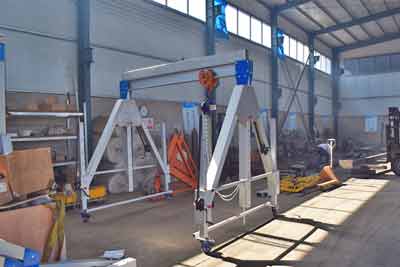
Lightweight Double-Girder Aluminum Gantry Crane 3 Ton for Ships
High-capacity, lightweight aluminum gantry crane for shipboard use. Adjustable, durable, and easy to install for marine lifting and maintenance operations.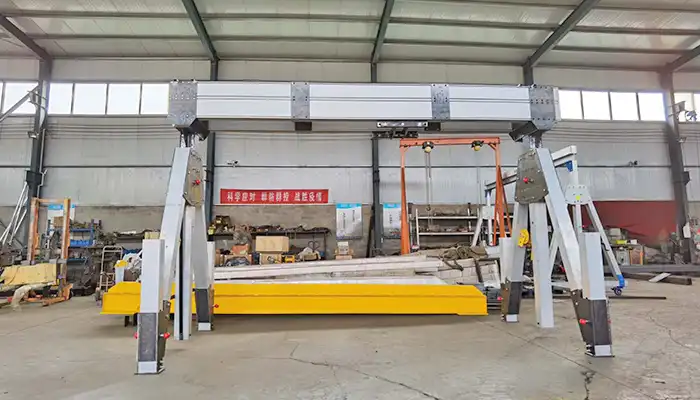
Introduction: A Smarter Lifting Solution for Marine Environments
Shipboard lifting is never easy—tight spaces, uneven decks, and strict weight limits make every task a bit tricky. This is why more marine engineers and vessel operators are moving toward lightweight aluminum gantry cranes. They're easier to bring onboard, easier to move around, and far more practical when crews must assemble equipment by hand.
Aluminum gantry cranes is a type of portable gantry cranes , which fit well into the daily reality of ship work. Parts stay light enough for two people to carry, yet the crane still delivers steady lifting power.
- Manual assembly without external lifting tools
- Lower overall deck loading
- Quick movement between different vessel areas
- Naturally corrosion-resistant for salty, humid conditions
They simply remove a lot of the frustration that comes with handling heavier steel cranes at sea.
Most ships don't have the space or structure to deal with bulky lifting equipment. Deck height varies, access points are narrow, and many vessels limit the weight of every single component used onboard.
- Steel beams are often too heavy for manual handling
- Single parts may exceed the vessel's weight limit
- Stability drops on uneven or sloped decks
- Tight compartments make assembly difficult
The lifting capacity isn't the problem—moving and installing the crane is.
A double-girder aluminum setup offers the needed strength without loading the ship with unnecessary weight. Each piece stays under 50 kg, but the dual-rail girder still supports heavy lifts such as engines and pumps.
- Two aluminum girders provide stronger load support
- Combined Epose rails improve bending resistance
- Adjustable columns keep the crane level on uneven decks
- Strong enough for frequent service work, light enough for ship movement
This design gives marine crews a lifting tool that's both powerful and manageable—exactly what shipboard environments require.
What Marine Buyers Need: Core Design Requirements
Marine lifting equipment must fit into a very specific working environment. Space is tight, floor levels are uneven, and every extra kilogram added to the deck needs to be justified. Because of this, ship operators look for cranes that stay light, strong, and easy to handle without bringing additional lifting tools onboard.
Strict Weight Limits on Ships
On most vessels, any lifting equipment that cannot be carried or assembled by hand becomes a problem. Crews often work in narrow compartments, engine rooms, or areas where forklifts and deck cranes cannot enter.
That’s why buyers place strict limits on the weight of each component.
- Maximum single-part weight: under 50 kg so that two crew members can lift and position parts safely.
- Traditional steel I-beams easily exceed this weight, making them unsuitable for shipboard use.
- Aluminum alloy paired with reinforced Epose rails offers enough structural strength while keeping all components light and manageable.
This combination supports safe handling, reduces strain on the deck structure, and keeps installation simple even in tight spaces.
High Capacity in a Lightweight System
Even though weight limits are strict, ships still require cranes that can handle heavy components—engines, pumps, valves, generators, and more. A 3-ton lifting requirement is very common for routine onboard maintenance.
- Target lifting capacity: 3 tons, which is beyond what a single aluminum rail can handle.
- Standard Epose rails alone cannot support this load, especially under dynamic conditions on a moving vessel.
- The solution is to combine two Epose rails per girder, creating a reinforced double-track beam. This method increases bending strength without adding unnecessary mass.
By doubling the rails, buyers get a lighter crane that still meets the lifting demands of marine engineering tasks. It’s an efficient way to balance safe handling weight with real-world load capacity.
Our Engineering Solution Built for Marine Conditions
Ship environments are demanding. Deck levels shift, space is limited, and moisture is always present. With these conditions in mind, the gantry crane is designed to stay light, stable, and easy to use even in the tightest areas of a vessel.
The double-girder setup focuses on lifting strength without adding unnecessary weight. It's built for crews who need reliable 3-ton performance but still require a crane they can move and assemble by hand.
This design works especially well on ships where heavy structures are not allowed due to stability and load-control requirements.
- Safely supports 3,000 kg while staying lightweight enough for manual installation
- Each girder is made from paired Epose rails, boosting bending resistance without increasing part weight
- Ideal for vessels with strict load controls, limited access, or small working areas
The structure provides the strength needed for marine maintenance tasks while keeping the equipment practical for shipboard use.
Decks are rarely perfectly flat. Some areas slope slightly, and engine rooms often have uneven flooring. This is where the two-stage adjustable system becomes very useful.
Each support column can be adjusted on its own, allowing the crane to stay stable and level even when the deck isn't.
- Four independent adjustable support columns
- Keeps the crane steady on uneven or sloped ship decks
- Works in multiple onboard locations, reducing the need for separate lifting tools
Marine buyers often prefer one crane that can adapt to different compartments. This height-adjustable system makes that possible.
Moving the load needs to feel smooth and controlled, especially when space is tight. Instead of adding separate rails on the beam, the cross girder includes a built-in trolley track.
This reduces installation time and keeps the crane simple and clean.
- Integrated sliding track inside the beam for consistent trolley travel
- No extra rail installation or alignment required
- Faster setup, fewer spare parts, and easier long-term maintenance
For crews working in confined spaces or during time-sensitive repairs, this design keeps lifting operations quick and trouble-free.
Key Advantages Buyers Care About
This gantry crane is built around the real needs of marine crews—easy handling, stable lifting, and dependable performance in harsh sea conditions. Below are the advantages that matter most to ship operators and marine engineers.
A major concern on ships is the ability to move and assemble equipment without extra lifting tools. Each component of this crane stays within a manageable weight, making onboard installation straightforward.
- All parts weigh 50 kg or less, allowing crews to lift and position components by hand
- No need for forklifts, deck cranes, or additional support equipment
- Lower manpower requirements and safer handling in narrow or restricted areas
This makes the crane practical for vessels where space is tight and assembly resources are limited.
Although the crane is lightweight, it still handles demanding tasks commonly found on ships. The dual-rail girder design provides the strength needed for heavy maintenance work.
- Dual Epose rails create a reinforced girder with strength comparable to steel
- Reliable for 3-ton lifting, suitable for engine parts, pumps, valves, and machinery components
- Balanced design: light enough to move around the vessel, strong enough for routine heavy service tasks
Marine teams can rely on the crane for both daily use and critical repair operations.
Ship decks and engine rooms rarely have perfect layouts. There may be slopes, obstructions, or very narrow spaces. The crane's adjustable structure helps it adapt to these conditions.
- Flexible height settings to match different deck levels or ceiling heights
- Stable lifting performance even when the floor surface is uneven or slightly sloped
- Suitable for engine rooms, cargo holds, upper decks, and temporary maintenance zones
This adaptability helps reduce the need for multiple lifting tools onboard.
Equipment used at sea must withstand constant moisture, salt exposure, and temperature changes. Aluminum alloy offers a natural advantage in these conditions.
- Excellent resistance to saltwater, humidity, and corrosion
- Optional features such as anti-slip feet or lockable wheels for extra stability
- Built for long-term use in harsh marine environments with minimal maintenance
This ensures reliable performance throughout the vessel's life cycle, even in areas exposed to sea air or water spray.
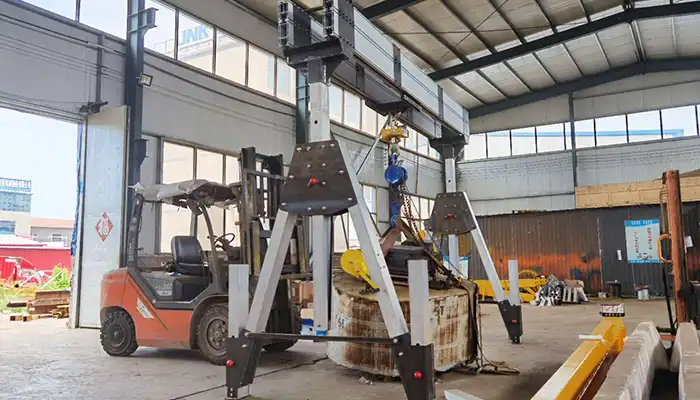
Preliminary Technical Specifications
This section gives marine buyers a clear overview of the main technical points. Each specification is chosen to match common shipboard lifting needs—lightweight handling, steady performance, and simple assembly in confined areas.
Core Parameters
- Lifting Capacity: Designed to handle 3,000 kg, suitable for engine parts, pumps, hydraulic units, and other heavy components commonly serviced onboard.
- Girder Type: Double-girder structure made from paired Epose rails, providing higher bending strength without adding unnecessary weight.
- Maximum Single Component Weight: Each part stays at ≤ 50 kg, allowing crews to carry, position, and assemble the crane manually without external lifting tools.
- Material: Aluminum alloy, including optional marine-grade selections for improved corrosion resistance in saltwater environments.
- Height Adjustment: Two-stage adjustable system with four independently adjustable columns, ensuring stable setup even on uneven or sloped ship decks.
- Trolley System: An integrated trolley track is built into the cross beam, offering smooth manual movement with no extra rail installation required.
- Assembly Method: Quick pin-and-bolt connections that do not require welding, grinding, or heavy installation tools—ideal for temporary or multi-location use onboard.
Ideal Applications on Ships
This gantry crane is built to handle the day-to-day lifting tasks that marine crews face, especially in tight spaces and areas where heavier equipment cannot be brought in. Its lightweight structure and adjustable design make it useful across several parts of a vessel.
Where This Crane Works Best
- Engine and Gearbox Replacement Ideal for lifting or lowering engines, turbochargers, gearboxes, and other heavy mechanical components during scheduled maintenance or emergency repairs.
- Mechanical Maintenance and Spare Parts Handling Helps crews move pumps, valves, hydraulic parts, and other machinery safely within engine rooms or workshop areas.
- Lifting From Lower Decks or Confined Areas The compact frame fits easily into narrow passages, low-ceiling compartments, or tight corners where traditional cranes cannot operate.
- Temporary Lifting During Voyage Repairs Useful for unexpected breakdowns. The crane can be assembled quickly, used for the repair, and then moved or disassembled without disturbing other onboard operations.
- Multi-Zone Lifting Across Different Ship Sections Easy to relocate, making it suitable for work across upper decks, cargo holds, central workshops, and near-engine compartments.
Buyer Comparison: Why Choose This Model?
When selecting a gantry crane for shipboard use, buyers need to understand how this double-girder aluminum design compares with other common options. The goal is to combine lightweight handling with dependable lifting performance—something traditional alternatives often struggle to deliver.
Comparison Highlights
- Vs. Traditional Steel Gantry Cranes: This aluminum crane is 50–70% lighter, making it far easier to transport, assemble, and move around tight shipboard spaces. Steel cranes may offer strength, but their weight limits practical use on vessels.
- Vs. Single-Girder Aluminum Designs: The double-girder setup provides higher stability and increased load capacity, supporting up to 3 tons safely. Single-girder designs may be lighter but often sacrifice bending strength or limit lifting capacity.
- Vs. Standard Epose Rails: By combining two Epose rails per girder, the crane achieves reinforced structural strength that standard single-rail systems cannot match. This ensures reliability even under heavy, repetitive loads.
Practical Advantages for Buyers:
- Lower shipping and transportation costs due to reduced weight
- Faster installation with quick pin-and-bolt connections
- Reduced need for heavy assembly tools or additional lifting equipment
This combination of lightweight design, high stability, and simple installation makes the crane a practical choice for marine operators who need dependable lifting without the complications of heavier or weaker alternatives.
Buyer Checklist: What You Should Prepare for Quotation
Before requesting a quotation, it helps buyers provide specific details about their vessel and intended use. Clear information ensures the crane is designed to fit the ship's layout and operational needs.
Key Information to Prepare
- Available Deck Space and Height Limits Measure the area where the crane will be installed, including overhead clearance and walkway restrictions.
- Required Lifting Points Identify the locations and types of loads to be lifted, including maximum weight and size.
- Preferred Assembly Method Specify whether the crane should be manual assembly or semi-automatic, depending on crew availability and installation conditions.
- Surface Condition Indicate whether the deck is flat, uneven, or sloped, so adjustable columns can be properly designed.
- Usage Frequency and Mobility Requirements Clarify whether the crane will be used occasionally, daily, or for multiple zones across the ship.
- Environmental Factors Note exposure to salt spray, humidity, or corrosion, so material selection and protective features can be optimized.
Providing this information upfront helps suppliers deliver a crane that fits safely, performs reliably, and meets operational demands without surprises.
Conclusion: A High-Performance Gantry Crane Built for Marine Professionals
This double-girder aluminum gantry crane delivers the balance marine buyers need: lightweight design for easy handling, high lifting capacity for heavy components, and adaptability to shipboard conditions.
It addresses common challenges in marine lifting, such as limited deck space, uneven surfaces, and strict weight restrictions, making installation and operation straightforward.
- Lightweight and strong: easy to transport and install without heavy equipment
- Flexible and adjustable: works across multiple deck levels and confined spaces
- Durable and low-maintenance: built with marine-grade materials to withstand harsh sea environments
For ship owners, marine contractors, and offshore engineers, this crane is a practical, reliable, and cost-effective solution for everyday lifting needs onboard.