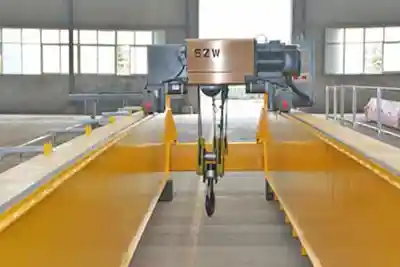
5 Ton Low Headroom Overhead Crane Solution for Low Workshops
5 Ton Low Headroom Overhead Crane Solution: How to Achieve Maximum Lifting Height in a 5.3 m Workshop
A Real Engineering Case Study for a German Paper Manufacturing Facility
Many factories face the same challenge when upgrading their material handling system:
The building already exists.The production line is running.But the workshop height is limited.
The question is not simply:"Can a 5 ton overhead crane lift the load?"
The real question is:"Can the crane provide enough lifting height without modifying the existing building?"
This case study shows how a 5 ton low headroom overhead crane was designed for a German paper manufacturing facility where maximum lifting height was required inside a low-ceiling workshop.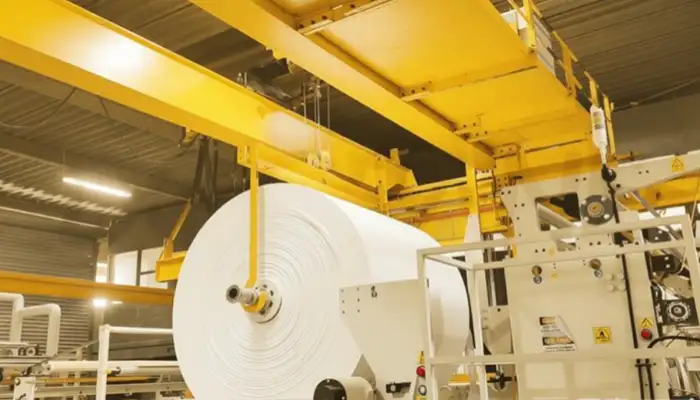
Project Background
For your better understanding, the main specificaitons of the low headroom crane project is listed for your reference only. Customized solutions and free concultation is provided from Yuantai Crane.
Customer Application
Industry: Paper Manufacturing
Location: Germany
Load Type: Paper Rolls
Crane Type: 5 Ton Double Girder Overhead Crane
Working Class: A5
The factory needed a new overhead crane for daily paper roll handling.
The challenge was common in many European industrial buildings:
- Existing workshop structure
- Limited roof height
- High lifting height requirement
- No economical way to rebuild the building
The customer needed a crane solution that could maximize available vertical space.
Workshop Conditions
| Item | Requirement |
|---|---|
| Crane Capacity | 5 Ton |
| Crane Type | Double Girder Overhead Crane |
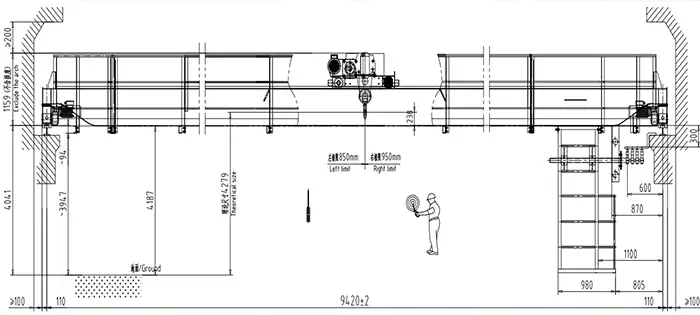
| Workshop Height | 5.3 m |
| Required Lifting Height | 4.279 m |
| Span | 9.42 m |
| Working Class | A5 |
| Application | Paper Roll Handling |
The available height was limited.A standard crane design would consume too much vertical space and reduce the available hook height.
Why This Challenge Is Common in European Factories
Many manufacturing plants in Europe operate in:
- Older industrial buildings
- Converted production halls
- Existing steel structures
- Limited expansion areas
For these factories, rebuilding the workshop roof is usually:
- Expensive
- Time-consuming
- Disruptive to production
A customized low headroom overhead crane is often a more practical solution.
Engineering Solution
Low Headroom Hoist Design
The hoist arrangement was optimized to allow the hook to travel higher between the main girders.
Compared with a traditional design:
- Less vertical space was wasted.
- Hook height increased.
- Existing workshop height was used more efficiently.
Result:
More lifting height without increasing building height.
Compact Double Girder Structure
A double girder crane was selected because the application required:
- Stable operation
- High positioning accuracy
- Reliable paper roll handling
The structure was optimized through:
- Reduced unnecessary height
- Compact trolley arrangement
- Efficient component layout
The goal was not to reduce strength, but to remove wasted space.
Optimized Runway Arrangement
The runway system was considered as part of the complete crane design.
The crane runway design reduces unnecessary vertical occupation:
- More space was available for lifting.
- The crane matched the existing building conditions.
- Installation requirements were simplified.
Why This Solution Works for Similar Factories
A low headroom overhead crane is not only designed for one specific project.
Many factories face the same situation:
- The building is already there.
- The production line cannot stop for major reconstruction.
- The available height is limited.
- But the demand for safer and more efficient lifting keeps increasing.
In these cases, the challenge is not simply choosing a crane with enough capacity.
The challenge is finding a crane that fits the building, matches the production process, and uses every available centimeter of space.
That is why this type of solution can also work well for many other industries.
Paper Mills
Common Challenges
Paper mills often handle large and heavy paper rolls every day.
The requirements are usually higher than simple lifting:
- Safe paper roll handling
- Smooth movement without sudden impact
- High lifting accuracy
- Reliable operation during continuous production
A small mistake during handling can damage the paper roll surface or affect production efficiency.
Especially in existing paper mills, many workshops were built years ago. The building height may be limited, but the production requirements have increased over time.
Suitable Solution
Low Headroom Overhead Crane
A low headroom design helps maximize the available lifting space.
Instead of changing the factory structure, the crane itself is optimized to fit the existing building.
Benefits:
- Higher hook position
- Better use of vertical space
- Easier installation in existing workshops
VFD Control System
For paper roll handling, smooth movement matters.
A traditional crane with sudden starting and stopping can create unnecessary impact.
With VFD control:
- Acceleration is smoother.
- Braking is more controlled.
- Load movement becomes more stable.
This helps protect sensitive materials and improves operator control.
Precise Positioning
Paper rolls often need to be placed accurately on:
- Production lines
- Storage areas
- Processing equipment
Better positioning control helps operators work faster and reduces handling mistakes.
Automotive Plants
Common Challenges
Automotive factories often have strict space limitations.
Many plants need lifting solutions for:
- Equipment installation
- Machine maintenance
- Production line adjustment
- Component handling
The problem is that expanding the building is usually not practical.
Production cannot simply stop because the workshop needs a crane upgrade.
Suitable Solution
Compact Crane Structure
A compact overhead crane design helps fit into existing production areas.
The crane structure, trolley arrangement, and electrical components are optimized to reduce unnecessary space occupation.
Benefits:
- Fits lower workshops
- Keeps existing production layout
- Improves lifting capability without major construction work
Maximum Use of Available Height
In automotive plants, every part of the workshop space matters.
A few hundred millimeters of extra lifting height can make a difference when handling:
- Production equipment
- Assembly tools
- Heavy components
A well-designed low headroom crane helps factories get more value from the building they already have.
Machinery Manufacturers
Common Challenges
Machinery manufacturers usually handle heavier and more complex loads.
Typical requirements include:
- Heavy component handling
- Machine assembly
- Equipment installation
- Existing workshop upgrades
Many factories need to improve lifting capacity but cannot rebuild the workshop.
Suitable Solution
Customized Overhead Crane Design
For machinery manufacturers, a standard crane may not always be the best answer.
The crane should be designed around:
- Load size
- Handling process
- Workshop conditions
- Required lifting height
A customized solution can combine:
- Compact structure
- Higher lifting height
- Suitable duty class
- Better operation control
The Common Lesson for All These Industries
Although paper mills, automotive plants, and machinery factories have different products, their crane challenges are often similar:
The building already exists, but the lifting requirements have changed.
Instead of modifying the entire factory, a better approach is often:
- Analyze the available space.
- Identify where height is being lost.
- Optimize the crane design.
- Match the crane with the actual production process.
That is where low headroom overhead cranes provide real value.
They are not just about lifting 5 tons.
They are about helping factories improve material handling without rebuilding the building they already depend on.
Buyer Checklist for Low Headroom Overhead Cranes
Prepare these details before requesting a quotation:
Workshop Information
✓ Building height
✓ Runway beam height
✓ Span
✓ Column distance
✓ Existing structure drawing
Crane Requirements
✓ Capacity
✓ Lifting height
✓ Working class
✓ Operation frequency
✓ Control method
Load Details
✓ Load dimensions
✓ Load weight
✓ Lifting points
✓ Handling accuracy requirements
5 Key Buyer Questions About a 5 Ton Low Headroom Overhead Crane
Answer:
Yes. A low headroom design can fit a 5 ton crane into a workshop with limited height while maintaining the required lifting performance.
Project Example:
- Application: Paper roll handling
- Crane Type: 5 Ton Double Girder Overhead Crane
- Workshop Height: 5.3 m
- Required Lifting Height: 4.279 m
- Span: 9.42 m
Solution:
- Compact crane structure
- Optimized hoist arrangement
- Improved trolley layout
The paper mill crane achieved the required lifting height without modifying the existing building.
Answer:
Because lifting capacity does not determine usable lifting height. The crane structure and installation design also affect hook height.
Common problems:
- Hoist positioned too low
- Large trolley structure
- Runway system taking vertical space
Optimize the hoist, trolley, girder, and runway design to reduce unnecessary height loss.
Answer:
By using available workshop space more efficiently.
Key design methods:
- Place the hoist higher between the main girders
- Reduce crane dead height
- Use a compact trolley design
- Optimize bridge structure
More hook height was achieved inside the same 5.3 m workshop.
Answer:
Because many factories face the same challenges: heavy loads, limited space, and the need for accurate handling.
Paper Mills
Need:
- Safe paper roll handling
- Smooth movement
- Accurate positioning
Solution:
- Low headroom crane
- VFD control
- Precise operation
Automotive & Machinery Plants
Need:
- Equipment installation
- Maintenance lifting
- Existing workshop upgrades
Solution:
- Compact crane structure
- Maximum use of available height
- Customized design
Answer:
Low headroom cranes must be designed based on actual site conditions.
Provide:
Workshop Data
- Building height
- Span
- Runway condition
- Existing structure drawings
Crane Requirements
- Capacity: 5 ton
- Lifting height: 4.279 m (project example)
- Working class
- Control method
Load Details
- Load weight
- Load dimensions
- Handling requirements
Final Conclusion
A low headroom overhead crane is not simply a smaller version of a standard crane.It is designed around the actual limitations of the building.
For factories operating in existing workshops, the right crane design can provide:
- Higher hook height
- Better space utilization
- Safer operation
- Improved production efficiency
The key question is not:"Can a 5 ton overhead crane lift the load?" The better question is:"Can the industrial crane achieve the lifting performance required within my existing workshop?"