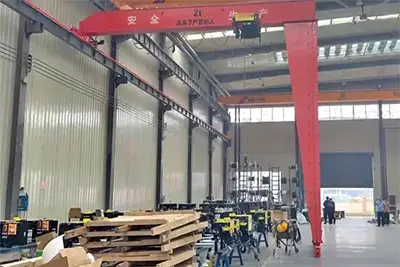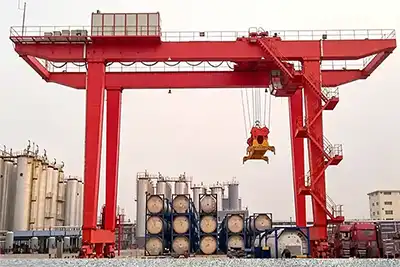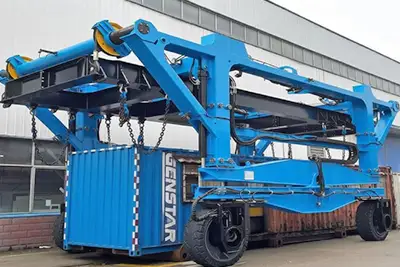
Low Headroom EOT Crane for Tight Workshops in Mecca, Saudi Arabia
Compact overhead crane designed to maximize lifting height & workspace in Mecca's older, space-constrained industrial workshops.Get low headroom eot crane!
Introduction
What Are Overhead Traveling (EOT) Cranes?
EOT cranes are lifting machines that move heavy loads across a factory or workshop by running along rails fixed above the workspace. They help shift materials efficiently without taking up floor space, making them a staple in many industrial settings.
Why Low Headroom EOT Cranes Matter
Many workshops, especially older ones, have limited ceiling height. A standard crane might not fit or could reduce the usable lifting height. Low headroom EOT cranes are designed to solve this problem by fitting into tighter spaces, maximizing the available height for lifting while keeping the crane itself compact.
Relevance to Mecca’s Industrial Sector
- Many workshops and factories in Mecca are housed in older buildings with space limits.
- Industries like steel fabrication, metalworking, and construction depend on cranes to move heavy materials.
- Low headroom cranes help these industries avoid costly renovations while improving efficiency.
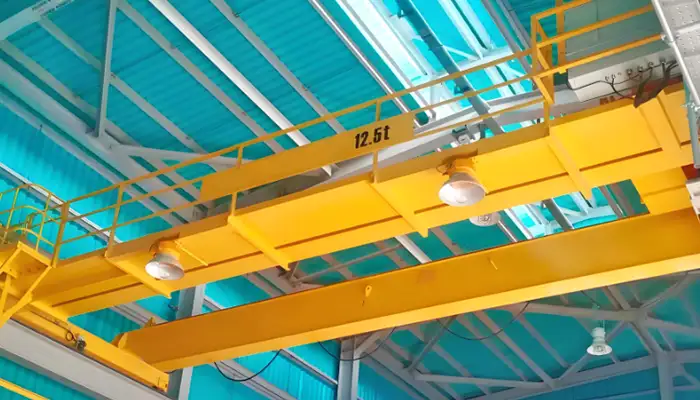
Low Headroom EOT Cranes
What Exactly Are Low Headroom EOT Cranes?
Low headroom EOT cranes are specially designed overhead cranes built to operate in environments where the vertical space is limited. The key goal is to reduce the “headroom” — the distance from the top of the hook at its highest point to the bottom of the crane’s runway beam. By minimizing this space, these cranes allow you to lift loads higher within a restricted ceiling height.
Key Characteristics:
- Compact trolley and hoist arrangement to save vertical space
- Slimmer bridge girder profiles to reduce overall crane height
- Specially designed wheel assemblies and motors placed to avoid adding height
- Optimized structural components to maintain strength while lowering profile
How Are Low Headroom Cranes Different from Standard EOT Cranes?
The main difference lies in how much vertical space each crane requires:
- Standard EOT Cranes: Designed for buildings with adequate ceiling height. They typically have a larger distance between the hook and the runway beam. The components like hoist and trolley are arranged without special restrictions on height.
- Low Headroom EOT Cranes: Engineered to fit in tight spaces by reducing the height of the hoist, trolley, and bridge girder. This design allows maximum hook height and better usage of available workspace.
In practice, a low headroom crane lets you lift heavier loads higher in the same building where a standard crane might not fit or would limit lifting height drastically.
Types of Low Headroom EOT Cranes
You’ll find mainly two types adapted to low headroom conditions:
single girder eot crane with low headroom design for sale Saudi Arabia
Single Girder Low Headroom Cranes
- Use one main bridge girder, making them lighter and easier to install
- Usually suited for lighter loads and shorter spans
- Simpler design often leads to lower costs and easier maintenance
- Good choice for smaller workshops with limited budgets
Double Girder Low Headroom Cranes
- Two main girders support the trolley and hoist, offering better load distribution
- Capable of handling heavier loads and longer spans
- Can incorporate a larger hook approach and greater lift height even in tight spaces
- More complex but ideal for workshops with heavier lifting needs
Choosing between single or double girder depends on your workshop’s lifting requirements, span, and budget. Both can be custom-designed to fit low headroom spaces effectively.
Challenges in Tight Workshops in Mecca
Typical Constraints in Older Workshops
Many industrial workshops in Mecca are housed in buildings constructed years ago, often with design standards that didn’t fully anticipate modern crane needs. These older buildings tend to have:
- Lower ceiling heights than newer factories
- Narrower building widths and limited floor space
- Aging structural components that restrict modifications
- Limited clearance between equipment, walls, and roof structures
Such constraints make it tricky to fit standard overhead cranes without major changes.
How Limited Ceiling Height Affects Crane Design
The available vertical space directly influences what kind of crane you can install. Low ceiling height means:
- Reduced “headroom” for the crane hook to lift loads to maximum height
- A need for cranes with a compact hoist and trolley system
- Possible reduction in lifting height, which can impact workflow and material handling efficiency
- Difficulty accommodating crane runway beams without interfering with existing structures like lighting, HVAC, or piping
If a crane’s design isn’t tailored for low ceilings, you might end up with less lifting height than needed or face costly building renovations.
Structural and Space Restrictions
Older workshops often present physical limitations that affect crane installation and operation, including:
- Runway beams must fit within the existing building frame, often requiring customized sizes
- Columns and supports may limit the crane’s travel span or reduce the usable floor area
- Walls, overhead piping, and electrical conduits can interfere with crane movement or require relocation
- Limited space around the crane runway for maintenance and inspection
These factors mean that off-the-shelf crane models rarely fit perfectly. Instead, you need a tailored solution that respects the building’s structure and maximizes workspace.
Space-Saving Design Features of Low Headroom EOT Cranes
Compact Trolley and Hoist Arrangements
One of the key ways low headroom cranes save space is by using a trolley and hoist setup that takes up less vertical room. Instead of the standard bulky hoist units, these cranes use slimline or specially arranged hoists mounted closer to the trolley frame. This reduces the overall crane height without compromising lifting power.
- Trolley frames are designed to be narrow and low-profile.
- Hoists are often mounted “inside” or flush with the trolley structure.
- This arrangement helps keep the hook as close to the runway beam as possible.
Use of Compact Motors and Travel Mechanisms
Traditional cranes use larger motors and mechanical travel systems that add to the height and bulk of the crane. Low headroom cranes swap these for smaller, more efficient motors and compact travel units designed to fit into tight spaces.
- Motors with high power density but smaller size reduce crane height.
- Direct-drive travel mechanisms replace bulky gearboxes, saving space.
- Compact brakes and control units are integrated without increasing the crane profile.
Specialized Wheel Designs for Reduced Runway Height Requirements
To minimize the space needed for the crane wheels and runway beams, low headroom cranes often use specially designed wheels:
- Flanged or tapered wheels that allow slimmer runway beams.
- Wheels made from high-strength materials that support heavy loads despite smaller size.
- These wheel designs lower the vertical space needed for the crane to run smoothly on the rails.
Benefits of Modular and Customized Designs
Low headroom cranes benefit greatly from modular design concepts. Components can be adapted or replaced easily based on specific workshop needs.
- Modular parts simplify installation in unusual building layouts.
- Customization allows exact fitting to existing structures, saving costly building changes.
- Modular cranes are easier to maintain and upgrade over time, extending service life.
Technical Tips for Optimizing Hook Height
Why Maximizing Hook Approach and Lift Height Matters
In tight workshops, every centimeter counts. Maximizing the hook’s approach (how close it can get to walls or beams) and lift height (how high it can raise the load) means you can use your space efficiently and reduce manual handling or secondary movements.
- Better hook approach allows handling loads close to walls or machines.
- Greater lift height ensures materials can be stacked or placed without obstruction.
Strategies to Reduce Headroom Requirements
Low Headroom Trolley Design
These trolleys are built with a slim frame and low-profile hoists to minimize vertical space. They often have the hoist motor and drums positioned cleverly to avoid adding height.
- Uses compact gearing and motor placement
- Sometimes incorporates side-mounted hoists to reduce height
Use of Flat Wire Rope Reeving Systems
Unlike traditional round wire ropes, flat wire ropes take up less space and allow more rope to be stored on the drum without increasing crane height. This helps keep the hook closer to the runway beam.
- Enables higher lift heights in limited space
- Reduces rope bending radius, improving rope life
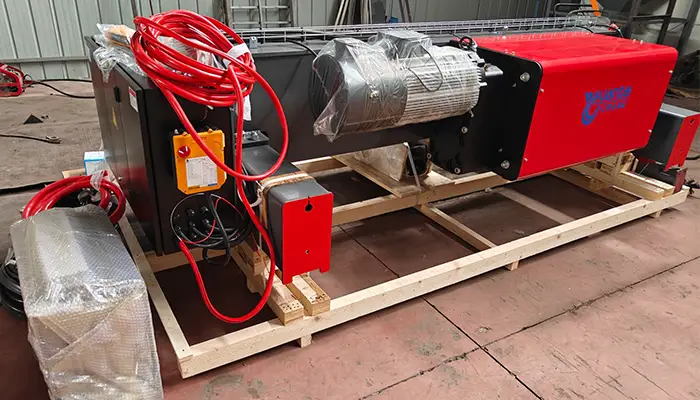
Compact Hoists and Trolley Arrangements
Combining compact hoists with efficient trolley designs helps reduce the crane’s total height. These hoists often use advanced materials and motor designs to pack power into a smaller form factor.
- Electric wire rope hoists or chain hoists with slim profiles
- Integrated control and safety devices without bulk
Integrating with Existing Building Structures and Runway Beams
When working in older buildings, it’s crucial to plan the crane installation so it fits around existing elements:
- Use customized runway beams designed for lower profiles or fitted within existing support structures.
- Plan crane runway beam placement to avoid piping, lighting, or ductwork interference.
- Work with structural engineers to ensure the building can support the crane loads without major reinforcement.
- Consider movable or retractable crane components if permanent installation space is limited.
Benefits for Workshops in Mecca
Increased Usable Workspace Under the Crane
Low headroom EOT cranes are designed to fit into tight vertical spaces, which means they take up less overhead room. This creates more usable space below the crane for workers, machines, and material storage. In workshops where every inch matters, this extra space can improve workflow and reduce clutter.
- More floor space is free for other equipment or movement.
- Easier to organize materials under the crane’s working area.
- Allows simultaneous operations without interference.
Enhanced Operational Efficiency in Constrained Areas
With a crane that fits perfectly in a tight workshop, loading and unloading become smoother and faster. Operators can move heavy items with minimal repositioning, saving time and reducing effort.
- Reduced need for manual handling or extra equipment.
- Faster cycle times for lifting and moving materials.
- Better crane positioning increases accuracy during lifts.
Improved Safety and Ergonomics
A crane designed for the specific limitations of a workshop reduces hazards caused by poor clearance or awkward load handling. Workers benefit from safer lifting heights and clear, unobstructed spaces.
- Lower risk of collisions with building structures or equipment.
- Clearer sight lines for crane operators.
- Easier access for maintenance and emergency stops.
Cost-Effectiveness Compared to Building Renovations
Instead of costly and time-consuming building modifications to fit a standard crane, low headroom cranes adapt to existing spaces. This means significant savings on construction, permits, and downtime.
- Avoid major structural work on ceilings or beams.
- Shorter installation time and reduced disruption.
- Long-term savings by optimizing crane design rather than the building.
Conclusion
Low headroom EOT cranes are ideal for Mecca workshops with limited ceiling space. They maximize lifting height and workspace without costly building changes. Compact, efficient, and customizable, these cranes improve safety and productivity in tight areas.
If your facility struggles with space or outdated infrastructure, a low headroom crane is a practical, cost-effective solution. Don’t compromise—choose a crane designed to fit your workshop’s needs.
Contact us today for expert advice and a tailored crane solution that fits your space and lifting requirements.