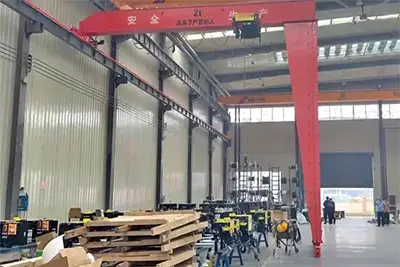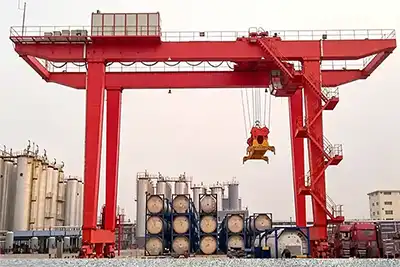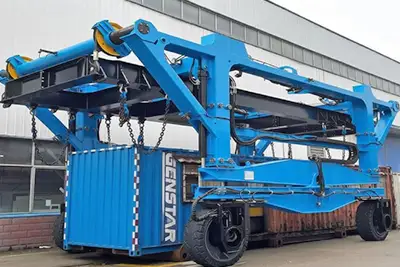
2–20 Ton Single Girder Gantry Cranes for Bamboo Handling
Bamboo — A Renewable Resource that Powers Many Industries in the Philippines
Bamboo plays a big role in the Philippines’ economy and rural life. It grows fast, is renewable, and provides both income and materials for local communities. You can see it everywhere — from furniture workshops in Pampanga to construction sites in Davao.
Common uses include:
- Furniture and home décor: bamboo chairs, tables, and wall panels are common in local markets and export industries.
- Housing and construction materials: treated bamboo poles are used for scaffolding, flooring, and even wall partitions.
- Handicrafts and export goods: baskets, lampshades, and woven bamboo trays supply both domestic and export demand.
- Bio-products and green energy: bamboo charcoal and pellets are slowly becoming a clean fuel alternative.
Bamboo’s versatility makes it a valuable natural resource — but handling it efficiently, especially in large quantities, is another story.
Handling Challenges in Bamboo Processing
Bamboo may look light, but once bundled, it becomes long, flexible, and bulky. A single bamboo bundle can stretch over 6 to 10 meters, making manual lifting both difficult and unsafe.
Some common handling issues include:
- Uneven weight distribution: bundles don’t always balance well, which can cause slippage if not properly supported.
- Irregular surface and diameter: freshly cut bamboo poles vary in thickness, making mechanical gripping tricky.
- Outdoor handling conditions: most bamboo yards are open areas, exposed to rain, dust, and heat, which adds wear to both workers and equipment.
Many small yards still rely on manual or forklift handling, which is slow and limits production output. This is where gantry cranes start to make real sense.
Why Single Girder Gantry Cranes (2–20 Ton) Are a Practical Solution
A single girder gantry crane fits perfectly into the bamboo industry setup. It doesn’t need a complex foundation or a workshop runway — just a pair of rails on the ground or concrete path.
For bamboo yards and factories in the Philippines, it offers several practical benefits:
- Wide working range: suitable for outdoor storage areas where trucks load and unload bamboo bundles.
- Lifting flexibility: from 2-ton small bundles to 20-ton heavy stacks, operators can handle different loads without changing equipment.
- Easy to install and move: it can be relocated or extended as the production yard grows.
- Low operating cost: maintenance is simple, and power consumption is much lower than large overhead cranes.
Many bamboo processors in Bulacan, Tarlac, and Mindanao already use single girder gantry cranes to streamline handling between drying, cutting, and sorting areas.
They save labor, reduce handling damage, and keep the operation running safely — even under hot or rainy conditions.
Working Conditions in Philippine Bamboo Yards
Open-Air or Semi-Covered Work Areas
Most bamboo yards in the Philippines are open-air or partly covered. You’ll often find them located beside cutting mills, along provincial highways, or close to riverbanks where bamboo is abundant. These yards are practical and cost-effective, but they expose equipment to sun, rain, and humidity all year round.
Because of this, cranes used in these areas must be weather-resistant. Protective covers for motors and hoists, corrosion-resistant paint, and sealed electrical systems are not optional — they’re essential. A regular indoor crane simply wouldn’t last long in these conditions.
Frequent Loading and Unloading Tasks
Daily work in a bamboo yard revolves around loading and unloading bamboo bundles from trucks, drying racks, or curing lines. The pace is steady but not continuous — the kind of low-to-medium frequency that suits a single girder gantry crane very well.
Common handling routines include:
- Unloading fresh bamboo poles delivered from nearby plantations
- Transferring bundles from soaking or curing tanks to drying areas
- Stacking and organizing bamboo according to size and treatment stage
- Loading finished bundles onto transport trucks for furniture factories or exporters
These repetitive yet varied lifting jobs require cranes that are flexible, reliable, and easy to control, especially for operators who work outdoors all day.
Short Travel Distances and Moderate Lifting Frequency
Bamboo yards don’t usually require long-distance transport. The crane’s travel path might only be 10 to 30 meters, just enough to move materials between storage zones or loading points.
This means the crane’s design can stay simple — single girder, light-duty class (A3–A4), and compact hoist systems are sufficient. Operators value smooth horizontal movement more than high lifting speed, because precise placement matters when stacking bamboo bundles that can easily roll or shift.
The Need for Durable, Low-Maintenance Cranes
In rural or semi-industrial areas, technical service access can be limited. That’s why bamboo yard owners prefer gantry cranes that are:
- Easy to maintain — with simple mechanical systems and standard parts
- Resistant to corrosion — paint and protective coatings are key
- Energy-efficient — to reduce running costs in off-grid or rural areas
- Stable under uneven ground conditions — using wide wheelbases and flexible leg designs
These conditions clearly point to single girder gantry cranes as the most practical and economical choice for bamboo handling in the Philippines — strong enough for outdoor work, but simple enough to maintain without heavy technical support.
Design Features of Single Girder Gantry Cranes (2–20 Ton)
The main girder is the backbone of the gantry crane, designed to stay strong while keeping the overall weight low. For bamboo bundle handling, this matters a lot — most yards don't have heavy foundations, so a compact and lightweight crane is easier to install and maintain.
Typical designs use box-type welded girders or rolled I-beams, depending on the lifting capacity and span. The structure is treated with anti-corrosion paint to handle outdoor conditions like sun exposure and rainwater.
Practical notes:
- Best suited for small to medium span workshops or storage yards (10–25 meters).
- Hot-dip galvanized bolts and end plates help resist rust.
- The top beam design allows smooth trolley movement, even when dust or bamboo debris builds up.
The hoist is where the lifting power comes from, and for bamboo yards, it needs to be both reliable and gentle. Most 2–10 ton cranes use electric chain hoists, while heavier capacities up to 20 tons use wire rope hoists.
Each yard's working rhythm affects the choice:
- Low to medium frequency operations: standard hoist with single speed.
- Continuous handling or heavy bundle work: variable-speed hoist for better control.
For longer bamboo bundles — often 6 to 10 meters — an optional double-hoist configuration is practical. Two synchronized hoists allow even weight distribution, reducing the risk of bending or dropping bundles during lifting.
Every gantry crane stands on two legs, and their design affects stability and motion. A rigid-flexible combination is commonly used:
- One rigid leg is firmly connected to the main girder, keeping alignment stable.
- One flexible leg is pinned at both ends, allowing small angular movement and avoiding rail binding during travel.
Depending on the yard layout, manufacturers offer two common styles:
- A-type frame: strong and symmetrical, ideal for outdoor bamboo storage areas.
- L-type frame: provides more side clearance for truck loading and unloading.
- Both options can be fitted with rubber bumpers or travel limiters for added safety.
In Philippine bamboo yards, cranes usually run along ground rails, laid directly on concrete paths. This setup gives stable movement even when the ground isn't perfectly level.
Key features include:
- Adjustable travel speed, often between 20–30 m/min, depending on load and yard size.
- Limit switches to prevent over-travel or collision.
- Optional rubber-tired portable design for sites without fixed rails.
This flexibility allows yard owners to expand or relocate the crane system as their production area grows.
Power stability is another key issue in tropical regions like the Philippines, where voltage fluctuations are common. Gantry cranes typically use either a cable reel or a festoon system to power the hoist and trolley.
Important design notes:
- Cable reel systems suit long travel distances and outdoor installations.
- Festoon systems are simpler and cost-effective for shorter spans.
- Electrical enclosures are IP55 or above, protecting against rain, humidity, and bamboo dust.
These features ensure the crane performs consistently under hot, humid, and sometimes unpredictable outdoor conditions — a must for bamboo processing plants that operate year-round.
Typical Configurations for Bamboo Bundle Handling
A. Standard 2–10 Ton Single Girder Gantry Cranes
For smaller bamboo yards and workshop use, the 2–10 ton single girder gantry crane is the most common setup. It’s compact, simple to install, and ideal for outdoor or semi-covered bamboo handling areas.
This design uses a single hoist and trolley, suitable for moderate-length bamboo bundles, usually up to 6 meters long. Operators can easily lift, rotate, and position bundles for cutting or drying with one control pendant or remote.
Typical setup details:
- Capacity: 2–10 tons, depending on bundle weight and lifting frequency
- Span: 10–20 meters, covering typical yard layouts
- Lifting height: 6–9 meters for truck or rack-level handling
- Control options: push-button pendant or wireless remote
- Protection features: rain cover, anti-rust painting, and overload limit switch
This setup fits well in bamboo furniture plants or treatment areas, where space is tight and lifting tasks are repetitive but not heavy.
Double-Hoist Single Girder Gantry Cranes (10–20 Ton Range)
For longer or heavier bamboo bundles, a single girder gantry crane with two hoists and trolleys offers a better lifting balance and safer operation. This setup keeps the system light and cost-efficient while improving control over uneven or flexible loads.
Each hoist moves independently or in synchronization — giving operators more flexibility when handling long bamboo poles, often 8 to 10 meters in length. It’s a practical solution for large bamboo treatment lines, biofuel plants, and export preparation yards where bamboo is bundled in volume.
Key configuration highlights:
- Two electric hoists mounted on the same girder, each with its own trolley
- Synchronized control system for even lifting of long bundles
- Adjustable spacing between hoists to match different bundle lengths
- Compact structure — still lighter than double girder designs, saving cost and installation time
- Smooth travel system for careful loading and unloading into drying pits, soaking tanks, or shipping containers
This configuration avoids the need for a bulky double girder crane but still handles long bamboo loads safely and efficiently. It’s a popular choice for industrial-scale bamboo yards that process or export in large quantities, especially where space or budget limits rule out heavier cranes.
In short, the single girder gantry crane with dual hoists offers the best mix of balance, control, and economy for bamboo bundle handling — making it a preferred choice for medium and large bamboo production facilities across the Philippines.
Key Advantages for Bamboo Handling
A single girder gantry crane with two hoists makes bamboo handling faster and smoother. Bamboo bundles can be lifted directly from trucks, rotated slightly in mid-air, and placed neatly on drying racks or into curing tanks. There's no need for forklifts to maneuver around tight spaces — the crane covers the full working area.
- Smooth movement between different work zones such as unloading, curing, and stacking.
- Precise lifting control with dual hoists, reducing damage to long or freshly cut bamboo.
- Continuous operation that keeps materials moving efficiently even with limited manpower.
Traditional bamboo handling depends on groups of workers lifting and positioning heavy bundles manually — a slow and physically demanding process. With a gantry crane, one trained operator can handle the same job in minutes.
- Cuts down the need for manual handling crews.
- Reduces fatigue and the risk of injury during loading and stacking.
- Allows bamboo yards to maintain output even with fewer workers on-site.
For many family-owned or cooperative-based bamboo plants in the Philippines, this is a major improvement in both productivity and safety.
Unlike overhead cranes, gantry cranes don't need runway beams or fixed building supports. They can be installed directly on concrete paths, making them ideal for open-air or semi-covered bamboo yards.
- Easy setup and relocation as the production area expands.
- Suitable for temporary yards, seasonal production, or rented land.
- Works well in uneven ground conditions with adjustable rail or wheel configurations.
This flexibility lets bamboo processors adapt quickly to changing operations without large construction costs.
Philippine weather can be harsh — high humidity, rain, and heat all take a toll on machinery. Fortunately, the single girder gantry crane is built for low maintenance and outdoor durability.
- Corrosion-resistant coatings protect the steel structure.
- Weatherproof enclosures keep the motors and controls safe.
- Simple mechanical design allows easy servicing with common tools.
Even in rural areas with limited technical support, the crane can run reliably for years with regular cleaning and basic inspections.
Not all bamboo bundles are the same — some are short and thick, others long and flexible. The crane's lifting gear can be customized to handle these differences safely.
- Double hoists for long bundles, allowing balanced lifting from two points.
- Spreader beam or slings for variable-length bamboo poles.
- Hooks, clamps, or ropes adapted to prevent slipping or crushing.
This level of customization ensures safe and stable lifting no matter what kind of bamboo is being processed — from raw culms to finished bundled products.
Technical Specifications (Typical Range)
When choosing a single girder gantry crane for bamboo bundle handling, it’s important to match the crane capacity and features with the size, weight, and length of the bamboo bundles in your yard. Here’s a practical guide for the 2–20 ton range commonly used in the Philippines.
| Capacity | Span (m) | Lifting Height (m) | Hoist Type | Duty Class | Power Supply |
|---|---|---|---|---|---|
| 2 ton | 8–12 | 6 | Electric chain hoist | A3 | 220/380V, 3Ph |
| 5 ton | 10–16 | 6–9 | Wire rope hoist | A3–A4 | 220/380V, 3Ph |
| 10 ton | 12–20 | 9–12 | Wire rope hoist | A4 | 380V, 3Ph |
| 20 ton | 15–25 | 10–15 | Double hoist or trolley | A4 | 380V, 3Ph |
Key Notes for Bamboo Handling:
Span: Determines how far the crane can travel across storage or drying areas. Longer spans are ideal for large yards, shorter spans for compact workshops.
Lifting height: Should allow smooth loading/unloading of trucks, racks, or curing tanks without touching the ground.
Hoist type:
- Electric chain hoists are great for lighter, frequent lifts.
- Wire rope hoists handle heavier loads and longer bamboo bundles efficiently.
- Double hoist setups are recommended for 20-ton or very long bundles to keep the load balanced.
Duty class: A3–A4 indicates moderate usage for bamboo yards, suitable for low to medium-frequency lifting tasks.
Power supply: 220/380V three-phase is common in most Philippine workshops and outdoor yards. Make sure the crane is compatible with local voltage stability and installation requirements.
This specification table helps bamboo yard owners and factory operators pick the right crane capacity and configuration, ensuring safe and efficient handling of bamboo bundles.
Safety and Environmental Protection
When handling bamboo bundles, safety isn't just about following regulations — it's about protecting both your workers and your materials. Single girder gantry cranes for outdoor bamboo yards face rain, humidity, dust, and uneven surfaces, so the right safety and protection features are essential.
Electric hoists, motors, and control boxes are sensitive to water and dust. Adding anti-rain covers or fully enclosed housings keeps them dry and functional, even during heavy tropical showers. This simple addition extends the crane's lifespan and prevents costly downtime.
- Covers over hoist motors and trolleys
- Sealed electrical panels to avoid short circuits
- Drainage openings to prevent water accumulation
Philippine bamboo yards are mostly outdoors, and steel rails or crane frames are constantly exposed to humidity and occasional rain. Using galvanized or coated rails protects against rust, reduces wear, and ensures smooth crane travel.
- Hot-dip galvanizing or powder coating for steel components
- Rust-resistant bolts and fasteners
- Regular inspection for paint damage or corrosion
Even skilled operators need mechanical safeguards. Limit switches prevent the crane from moving beyond its travel path, and overload protection stops lifting if the bundle exceeds the rated capacity.
- Prevents accidental collisions with racks, walls, or trucks
- Protects hoists from over-stressing and mechanical failure
- Reduces risk of bamboo damage or worker injury
Depending on yard size and workflow, operators may prefer wireless remote control or a small cabin to manage the crane. Remote operation increases safety by keeping operators away from moving loads, while cabin operation can be useful for long or repetitive lifting tasks.
- Wireless remote with emergency stop buttons
- Cabin with clear view of lifting area and hoists
- Optional integration with synchronized dual-hoist control
Application Scenarios in the Philippines
Single girder gantry cranes with dual hoists are highly practical for various bamboo-related operations across the Philippines. Their flexibility, lifting capacity, and durability make them suitable for both small workshops and large industrial yards.
Regions like Pampanga, Bulacan, and Nueva Ecija are known for extensive bamboo processing. Here, cranes are used to:
- Move freshly cut bamboo from trucks to curing pits or soaking tanks
- Transfer bundles to drying racks for natural or kiln drying
- Organize bamboo for sorting and grading by size and quality
The cranes allow faster handling while reducing the risk of damage to long and flexible bamboo poles.
Laminated bamboo production involves stacking and pressing multiple layers of bamboo, often requiring careful positioning. Single girder gantry cranes:
- Lift and transport heavy bamboo bundles to pressing machines
- Move raw materials between cutting, shaping, and assembly areas
- Reduce manual labor while keeping bundles aligned for consistent quality
These cranes improve workflow and make repeatable handling operations much safer and more efficient.
Producers of treated bamboo poles for housing, scaffolding, or flooring benefit from dual-hoist gantry cranes. Tasks include:
- Lifting long bamboo poles to drying racks or storage stacks
- Loading treated poles onto trucks for local distribution or construction sites
- Managing large batches of bundled poles with minimal labor
By using dual hoists, operators can lift evenly long bundles without bending or twisting the bamboo, protecting both material and workers.
In export-oriented bamboo businesses, especially near Batangas and Cebu ports, gantry cranes streamline logistics:
- Load bundled bamboo onto shipping containers or trucks efficiently
- Move standardized bundles for inspection and packaging
- Handle larger shipment volumes safely with minimal manpower
These cranes ensure timely, safe, and cost-effective operations, critical for businesses involved in domestic distribution and export.
Customization & Supplier Support
Every bamboo yard or factory has its own layout, production scale, and handling requirements. That's why single girder gantry cranes are designed to be flexible and customizable to meet specific needs.
- Span and lifting height can be tailored to match your yard or workshop dimensions.
- Adjustable span helps cover wider storage or drying areas without extra cranes.
- Height adjustments ensure smooth loading/unloading from trucks, racks, or curing tanks.
- Portable gantry cranes can be moved easily between different sections of the yard.
- Semi-gantry designs save space while still providing efficient lifting over trucks or workstations.
- These options are perfect for smaller yards or areas with uneven ground where permanent installations are impractical.
- Suppliers often provide on-site installation to ensure the crane is set up safely and correctly.
- Training is offered for operators to handle dual hoists, trolleys, and controls safely.
- Local service teams can assist with maintenance and spare parts, reducing downtime.
- Many cranes exported from China to the Philippines carry CE and ISO certifications.
- Certification ensures the crane meets international safety and quality standards.
- This gives yard owners peace of mind for both compliance and long-term reliability.
Conclusion
For bamboo bundle handling in the Philippines, single girder gantry cranes (2–20 tons) are a practical and cost-effective solution. They combine flexibility, durability, and safety to streamline operations in small workshops, mid-sized yards, and large industrial bamboo facilities.
Whether moving moderate-sized bundles in a community workshop or handling long, heavy bamboo poles in an export yard, the dual-hoist single girder design ensures efficient, precise, and safe material handling, making it a long-term investment for any bamboo-based operation.
If you like, I can now compile the full article from Sections I–X into a ready-to-publish SEO-optimized piece specifically for Philippine bamboo gantry crane buyers. This will include smooth transitions, keywords, and natural readability. Do you want me to do that?