10 Ton Bridge Crane Case & Selection Guide- BetterCrane.com
10 Ton Bridge Crane Project– Mechanical Manufacturing Workshop
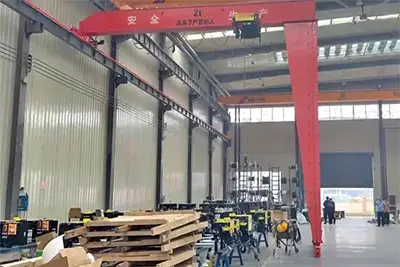
This project comes from a medium-sized mechanical manufacturing workshop. Not a small repair shop, and not a fully automated factory either. It is a practical production site where lifting work is part of daily operations.
When you walk inside, it is quite direct—you see machines running, steel parts moving, and overhead lifting happening throughout the day. Nothing exaggerated, just steady industrial work.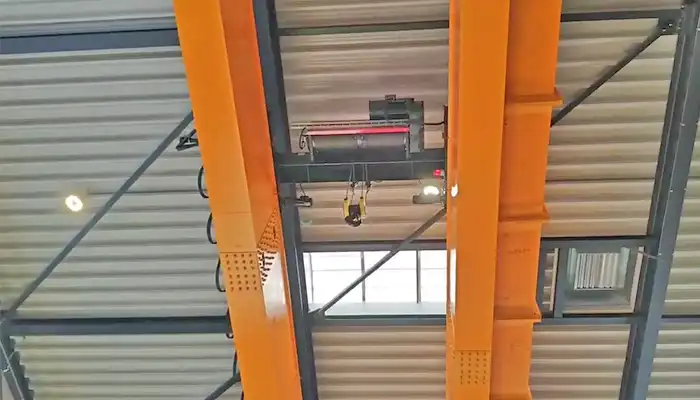
10 ton overhead crane double girder for sale , yuantai better crane - Advanced European style overhead cranes
The customer is engaged in heavy machinery manufacturing and metal fabrication work.
- Production of large mechanical components
- Fabrication of steel structures
- Assembly of heavy equipment housings
Most parts are not light or easy to handle manually. They require stable crane support during every production stage.
The plant is a medium-scale industrial workshop with stable production output.
- Multiple working zones under one crane coverage area
- Machining, welding, and assembly running in parallel
- Crane used in almost every shift for material handling
Simply put, if the crane is not running, the workshop feels it immediately in production flow.
The workshop mainly handles large and heavy industrial workpieces:
- Machine tool beds and structural base frames
- Welded steel frames and assemblies
- Gearbox and mechanical housings
- Final assembled equipment units
Some items are heavy, some are oversized, and some are just difficult to balance. They all require stable lifting rather than fast movement.
The workshop operates in a continuous batch production mode.
- Lifting operations occur multiple times every day
- Materials are moved between machining, welding, and assembly areas
- The crane is used as a routine production tool, not occasional equipment
- Work continues across shifts with steady workload
In this kind of environment, lifting is not a separate task—it is part of the production rhythm from start to finish.
Lifting Requirements Analysis
This is the point where the crane selection really becomes clear. Not from theory, but from what is actually lifted every day inside the workshop.
The workshop handles different types of heavy industrial components, and each one behaves differently during lifting.
- Machine tool beds — long and heavy, need balanced lifting points
- Steel structural frames — large welded parts with uneven weight distribution
- Cast iron housings — compact but very dense and heavy
- Heavy mechanical assemblies — combined parts with shifting center of gravity
These are not simple "hook and lift" items. Operators need steady control during every movement.
The load requirement changes depending on production stage, not fixed all the time.
- Typical working loads: 3–6 tons for routine handling
- Maximum lifting demand: up to 10 tons for large assemblies
- Occasional full-load cases: 10 tons, must be safely supported
So the crane is not selected only for average weight. It must handle the maximum load without hesitation.
This is where real operating experience matters more than specifications on paper.
- Stable lifting with minimal swing during movement
- Precise positioning for assembly work, not rough placement
- Multi-station coverage across different workshop zones
- Frequent daily operation, around 8–12 hours per day
In practice, operators expect smooth movement, easy control, and no unnecessary delay during handling.
The crane is used throughout the production cycle, not just in one stage.
- Repeated lifting tasks during machining and assembly
- Continuous material transfer between stations
- Daily use across multiple shifts
- No long idle periods during normal production
So the key requirement is simple: stable operation all day, without interruption or performance drop.
Working Environment Conditions
This part is often overlooked during early discussion, but in actual crane selection work, it directly affects structure choice, safety performance, and long-term service life.
The crane is installed inside a steel structure workshop with a standard industrial layout.
Inside the plant, the space is open, and the crane runway beams are clearly designed for overhead operation.
- Steel frame workshop structure for industrial production
- Designed to support overhead crane installation from the start
- Multiple working stations covered under one crane system
It looks simple on site, but it must support lifting work running all day without interruption.
The working span is around 20–25 meters, which is a typical medium-span workshop condition.
- One crane covers multiple production zones
- Material transfer is not limited to a single workstation
- Long travel movement requires stable running performance
In daily use, operators usually expect smooth movement across the full span without shaking or delay.
The required lifting height is about 8–10 meters, suitable for standard industrial workshop operations.
- Handling large machine components
- Positioning steel frames during assembly
- Stacking and internal material transfer
This height is not extreme, but it still requires stable vertical control when lifting heavy or uneven loads.
The operation environment is indoor industrial, with moderate production dust.
- Indoor installation, no exposure to weather conditions
- Light metal dust from machining and cutting processes
- Continuous production running during working hours
It is not a clean environment, but also not harsh. The main requirement is stable performance under continuous use.
- Standard industrial power supply: 380V / 50Hz
- Factory-level electrical system compatibility
- Supports variable frequency drive (VFD) control system
This setup allows smoother speed control, especially useful when operators need precise positioning during assembly work.
Practical Note
In this kind of environment, the key requirement is consistency rather than extreme conditions.
Same span, same height, same daily rhythm—so the crane must operate in a stable, predictable way during long working hours without unnecessary variation.
Crane Solution Design
At this stage, the selection is no longer theoretical. It turns into a clear configuration based on real lifting work inside the workshop and daily operating conditions.
Tailored 10 ton overhead crane double girder design with sound and light alarm, alarm testing
The final selection is a 10 Ton Double Girder Overhead Bridge Crane.
This type is chosen because the workshop requires stable and continuous lifting performance, especially under frequent 10-ton operations.
- Stable performance during repeated lifting cycles
- Reliable handling of full 10-ton loads without hesitation
- Smooth travel across multiple working zones in one workshop
In practical use, the focus is not only lifting capacity, but keeping production running without interruption.
The technical configuration is matched with workshop layout and working intensity.
- Rated capacity: 10 tons with safety working margin
- Span: around 22 meters, adjusted to plant layout
- Lifting height: about 9 meters for assembly and transfer work
- Working duty class: A5 for medium to high frequency operation
A5 duty level means the crane is designed for repeated daily use, not occasional lifting tasks.
The movement system is designed to feel stable and easy to control during real operation.
- Hoisting speed: 6–8 m/min for controlled lifting and accurate positioning
- Trolley travel: 40–60 m/min for smooth movement between stations
- Crane travel: 20–45 m/min with frequency control for stable running
Operators usually care more about "no swing and easy stopping" than high speed. This setup matches that working habit.
The structure is designed to keep stable performance during long-term repeated operation.
- Double girder box-type main beam for higher rigidity and lower deflection
- Electric hoist or open winch trolley depending on load requirement
- Variable Frequency Drive (VFD) for smooth start and stop control
- Heavy-duty wheel set and rail system for continuous industrial use
In daily operation, this configuration helps reduce shock during lifting and keeps the crane running steadily even under busy workshop conditions.
Advantages of the Solution
This 10 ton double girder crane is selected mainly for stable daily production, not occasional lifting. The benefits are practical and directly related to workshop operation.
- High structural rigidity, suitable for continuous 10 ton lifting without deformation concerns
- Stable movement with reduced load swing, easier for operators during positioning
- Designed for long working hours, supports 8–12 hour daily operation
- Better lifting accuracy for assembly work, especially when aligning large components
- More balanced load distribution compared to single girder design, improving safety and stability
- Longer service life under medium to high duty cycles, suitable for long-term industrial use
In real use, it feels more “steady and predictable,” especially when the workshop is running full capacity.
Problems Solved
A: A double girder overhead crane is preferred because it offers higher rigidity and more stable performance when handling full 10 ton loads in continuous workshop operation.
Explanation:
In real workshop discussions, a common question is whether a single girder crane can safely handle 10 tons. The real issue is not just lifting capacity, but long-term structural stability during repeated use. Double girder design helps reduce beam deflection and keeps better control when moving heavy machine parts or steel structures across wider spans.
A: Safety is ensured through structural reinforcement, overload protection systems, and smooth variable frequency drive control during lifting and traveling.
Explanation:
In daily industrial use, operators often ask what happens when lifting 10 tons frequently or how to avoid sudden impact during operation. The system is designed to control acceleration and deceleration smoothly, while also preventing overload conditions during heavy component handling such as machine beds or cast housings.
A: A5 duty class is selected because the crane needs to support frequent and repeated lifting operations under medium to high intensity production conditions.
Explanation:
When users search for suitable duty class for a 10 ton bridge crane in continuous production, the key factor is operating frequency rather than only load capacity. A5 is suitable for workshops where lifting, welding, and assembly operations run repeatedly across multiple shifts every day.
A: Yes, the variable frequency control system reduces load swing and allows smoother and more precise positioning during lifting operations.
Explanation:
In real workshop conditions, operators often face issues like load swing or difficulty aligning heavy parts during assembly. With controlled speed adjustment during start and stop, the crane allows more stable placement of components such as steel frames and machine bases.
A: Yes, the crane structure allows future upgrades in lifting capacity, hoisting configuration, or control system adjustments.
Explanation:
Many buyers consider long-term production growth, such as increasing workshop output or handling larger equipment in the future. This system is designed with flexibility so that upgrades can be made without replacing the entire crane, which is useful when production requirements gradually increase over time.
Key Buyer Insight Summary
The decision is not just about choosing a “10 ton bridge crane” capacity. In real workshop planning, buyers usually realize the key point only after comparing different options.
The real selection depends on practical working conditions, such as:
- Working frequency and duty class (how often the crane runs each day)
- Load stability requirements during lifting and positioning
- Production intensity across multiple shifts or continuous operation
- Workshop layout, span, and lifting height limitations
When these factors are considered together, the final solution is not just about lifting weight. It is about keeping the crane stable, predictable, and efficient during long-term industrial use in a real production environment.