How to Handle and Lift 12-Meter Steel Beams Safely & Efficiently
How to Handle and Lift 12-Meter Steel Beams Safely and Efficiently
Most Important Takeaway
Lifting 12-meter steel beams safely requires proper lifting point design, suitable crane selection, and the right rigging method—most accidents and deformation issues occur due to incorrect sling positioning and underestimating beam flexibility.
- 12-meter steel beams behave differently from short loads due to length, deflection, and swing risk
- Single-point lifting is unsafe for long steel beams
- Spreader beams or dual lifting points are essential
- Crane capacity must include beam weight + rigging weight + safety margin
- Tandem crane lifting is recommended for heavy or flexible beams
- Correct planning prevents beam bending, coating damage, and workplace accidents
Why 12-Meter Steel Beams Are Hard to Handle
Handling 12-meter steel beams is a common task in steel fabrication plants, warehouses, shipyards, and construction sites. At first glance, lifting a steel beam seems straightforward—crane picks it up, moves it, and sets it down. But in reality, these long beams present unique challenges.
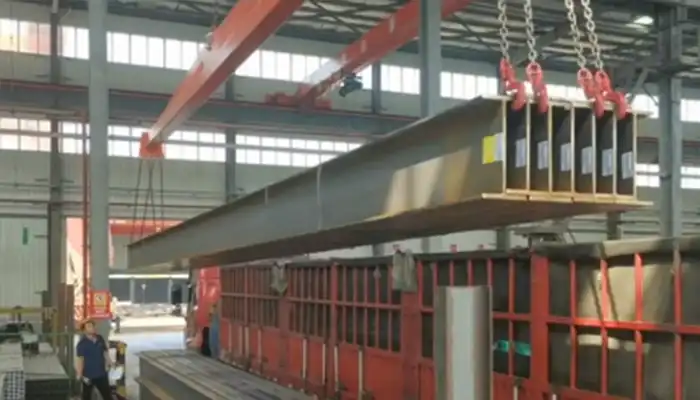
Length is the main factor. A 12-meter beam behaves differently from shorter sections. Even if the crane has enough lifting capacity, the beam can bend, swing, or twist if it is not lifted correctly. Improper handling can damage the beam, slow down operations, and even pose serious safety risks.
When 12-meter beams are lifted incorrectly, several problems commonly arise. These are practical, real-world issues that happen on job sites every day.
- Beam bending or permanent deformation due to uneven load distribution
- Uncontrolled swinging during hoisting, especially when starting, stopping, or turning
- High stress concentration at lifting points, which can damage the steel locally
- Safety risks to operators, riggers, and nearby equipment
Even a small bend in the middle can render a beam unusable for precise fabrication or assembly. That leads to rework, waste, and lost time—issues every project wants to avoid.
A 12-meter beam is long enough to act like a flexible structure rather than a rigid object. This flexibility changes how forces behave during lifting.
- The beam tends to sag in the middle if lifting points are too close to the ends
- Single-hook lifting increases bending stress and can permanently deform the beam
- Small crane movements can cause large swings at the beam ends
This is why lifting plans suitable for shorter beams often fail with long beams. The method must account for beam length, weight, and flexibility, not just total weight.
Understanding these challenges helps buyers, engineers, and site managers answer the key question: What lifting system is truly needed for 12-meter steel beams?
- Explains why spreader beams are often essential
- Shows when a single overhead crane may not be enough
- Highlights the importance of proper lifting point placement
Accounting for these factors early ensures lifting is safe, controlled, and predictable, which protects both personnel and materials.
Key Factors to Assess Before Lifting 12-Meter Steel Beams
Before lifting a 12-meter steel beam, careful planning is essential. Several factors affect how safely and efficiently the beam can be moved. Considering these factors early helps prevent accidents, beam deformation, and operational delays.
The first step is understanding the beam itself. Not all 12-meter beams are the same—weight, shape, and material all make a difference.
- Length: 12 meters
- Weight per beam: Varies depending on type (H-beam, I-beam, or box beam)
- Steel grade and cross-section size: Affects strength, rigidity, and lifting requirements
The surroundings of the lifting operation determine what kind of crane, rigging, and safety measures are required.
- Indoor workshop vs. outdoor yard: Indoor lifts may have limited headroom, while outdoor lifts may face wind or uneven ground
- Available crane span and hook height: Ensure the crane can reach both ends without overextending
- Floor and runway beam capacity: Check the load-bearing capacity of the floor or crane runway before lifting
How often the beams are lifted will influence the lifting method and equipment choice.
- Occasional lifting vs. continuous production: Frequent lifting may require more durable equipment and rigging
- Single beam handling vs. bundled beams: Bundled lifting increases weight and requires careful planning for load distribution
Recommended Lifting Methods for 12-Meter Steel Beams
Handling a 12-meter steel beam safely depends heavily on choosing the right lifting method. Its length and weight make it prone to bending, swinging, or stress at lifting points. Selecting the appropriate crane system and rigging solution ensures the beam remains straight, the lift is controlled, and the operation is safe.
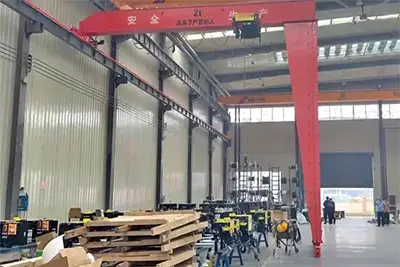
In indoor workshops, an overhead crane with a spreader beam is the most practical and widely used solution. The spreader beam keeps the beam straight and prevents inward forces from the slings that could damage the steel.
- Maintains beam straightness during lifting
- Reduces stress concentration at lifting points
- Prevents inward force from rigging slings
- Best suited for medium-weight beams in controlled indoor environments
This method is ideal for moving beams short distances, positioning them for assembly, or loading onto storage racks with minimal additional equipment.
For heavier or more flexible beams, a dual-crane (tandem) lifting setup is recommended. Two cranes lift the beam simultaneously, distributing the load evenly and reducing bending stress along the beam.
- Two cranes lift the beam at the same time
- Evenly distributes weight along the beam length
- Requires synchronized crane movement and clear operator communication
- Ideal for heavy beams and high-precision fabrication lines
Tandem lifting is especially useful in steel mills or fabrication lines where even minor sagging could affect beam usability.
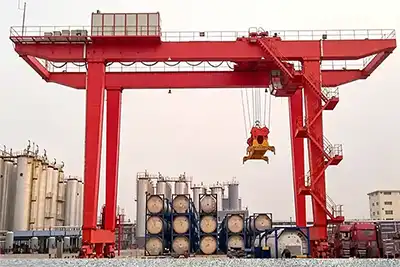
For outdoor yards or large loading areas, a gantry crane is often the most effective choice. These cranes can be rail-mounted or rubber-tyred, allowing safe handling of long beams over long spans.
- Suitable for open yards and large loading areas
- Can handle longer spans and heavier loads than single indoor cranes
- Available as rail-mounted or rubber-tyred configurations
Outdoor gantry cranes are used to move beams between storage areas, load onto trucks, or position materials for construction projects.
Proper Lifting Accessories and Rigging Solutions
Choosing the right lifting accessories and rigging solutions is critical when handling 12-meter steel beams. The correct equipment ensures the beam stays straight, minimizes stress, and protects both the steel and personnel during lifting operations.
Spreader beams are essential for lifting long beams. They help distribute the load evenly, maintain proper lifting geometry, and reduce bending stress on the beam.
- Reduces bending stress along the beam
- Maintains correct lifting geometry
- Essential for safe handling of long beams
Spreader beams are commonly used in indoor workshops and fabrication plants where medium to heavy beams are lifted repeatedly. They prevent inward forces from slings that could pinch or deform the beam.
Slings and shackles are the most basic rigging equipment but must be selected and used carefully. Both wire rope and synthetic slings can be used, depending on beam weight, coating sensitivity, and site conditions.
- Wire rope or synthetic slings with edge protectors to prevent damage to the steel
- Sling angle carefully controlled to maintain load balance
- Load rating of slings and shackles clearly verified before lifting
Proper sling setup is critical. Incorrect angles or overloaded slings can lead to beam bending or dangerous swinging during lifts.
For situations where slings are impractical, specialized beam clamps or adjustable lifting frames can be used. These devices allow safe lifting without relying on standard slings, especially for beams with unusual cross-sections or bundled loads.
- Used when slings are not practical or safe
- Adjustable for different beam sizes and shapes
- Ensures secure lifting without damaging the beam surface
Beam clamps and lifting frames are ideal for precision operations where the beam must remain straight and undamaged, such as assembly lines or pre-fabrication workshops.
Correct Lifting Point Positioning (Critical Safety Rule)
Proper lifting point placement is one of the simplest yet most critical steps when handling 12-meter steel beams. Getting this wrong can lead to beam bending, excessive swing, or even accidents.
- Lifting points should be located about 1/5 to 1/4 of the beam length from each end
- Avoid lifting near the beam ends or using a single center point only
- Perform a trial lift to check balance before full hoisting
Following this simple rule addresses most issues with deformation and uncontrolled swinging, keeping the lift safe and the beam in good condition.
Selecting the right crane depends on the beam weight, handling frequency, and required precision. Different cranes are suited for different situations:
- Single girder overhead crane: Best for light beams and low-frequency lifts
- Double girder overhead crane: Suitable for heavier beams or frequent lifting
- Dual-crane systems: Required for long, flexible beams or when high precision is needed
Capacity rule: Always calculate crane capacity as beam weight + rigging weight + 20–30% safety margin to ensure safe lifting.
Semantic keywords included: overhead crane selection, crane capacity calculation for steel beams
Even experienced teams can make mistakes when lifting long steel beams. These errors not only increase the risk of accidents but can also cause beam damage and operational delays. Here are the most common mistakes to watch out for:
- Using a single-hook lift without a spreader beam, which increases bending stress and can deform the beam
- Underestimating the beam weight or ignoring its flexibility, leading to incorrect crane or rigging selection
- Poor communication between operators during tandem or dual-crane lifts, resulting in uneven lifting or swinging
- Ignoring future beam size upgrades, which can make existing lifting equipment inadequate
Being aware of these mistakes and planning ahead can save time, prevent damage, and keep the lifting process safe and controlled.
Frequently Asked Questions for Lifting 12-Meter Steel Beams
This section answers the most common questions related to lifting 12-meter steel beams safely and efficiently.
Safe lifting starts with proper planning. Use the correct crane type, ensure lifting points are positioned about 1/5 to 1/4 from each end, and employ suitable lifting accessories such as spreader beams, slings, or beam clamps. Perform a trial lift to check balance before full hoisting, and always maintain clear communication with operators and riggers.
The choice of crane depends on the beam's weight, length, and handling frequency. A single girder overhead crane works for light beams with low-frequency lifts. A double girder crane is suitable for heavier beams or frequent lifting. For long, flexible beams or high-precision applications, a dual-crane or tandem setup is recommended.
Lifting points should generally be located about 1/5 to 1/4 of the beam length from each end. Avoid using only the center or lifting too close to the ends, as this increases bending stress and the risk of deformation.
Single cranes can handle shorter or lighter beams safely. For long, heavy, or flexible beams, two cranes (tandem lifting) are recommended to evenly distribute the load, minimize bending, and ensure precise positioning.
Common accessories include:
- Spreader beams: maintain correct geometry and reduce bending stress
- Wire rope or synthetic slings with edge protection: protect the beam surface
- Beam clamps and lifting frames: useful for irregular shapes or bundled beams
Using the correct accessories helps keep the beam straight, reduces stress on lifting points, and ensures safety during the lift.
Conclusion: Safe and Efficient Lifting of 12-Meter Steel Beams
Lifting 12-meter steel beams safely is about more than just choosing a crane with enough capacity—it's about method, balance, and control. Proper planning, the right lifting accessories, and correctly positioned lifting points make the difference between a safe, efficient lift and potential damage or accidents.
For steel plants, fabrication workshops, and construction sites, a well-planned long-beam lifting strategy ensures smoother operations, reduces downtime, and protects both personnel and materials. Following best practices for crane selection, rigging, and lifting procedures keeps your workflow consistent and reliable over the long term.