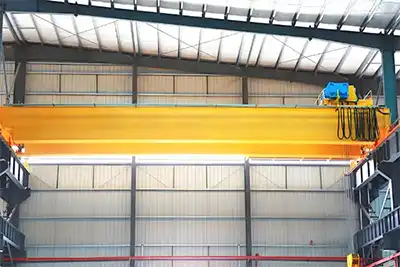
From Workshop to Field: Plan Crane Operations in Energy Projects
From Workshop to Field: Planning Efficient Crane Operations in Energy Projects
Most Important Takeaway
Efficient energy projects succeed when overhead crane planning in workshops is fully integrated with transport and field crane operations from day one—not treated as separate lifting stages.
Poor coordination between these phases is the leading cause of crane delays, re-handling, safety risks, and cost overruns.
- Overhead cranes are critical not only in workshops but across the entire energy project lifting workflow
- Early crane planning prevents re-lifting, misalignment, and structural stress on large components
- Matching overhead crane type, capacity, span, and duty class to energy project needs is essential
- Site preparation and logistics planning affect overhead crane efficiency as much as crane selection
- Involving the crane supplier early reduces risk and total project cost
Introduction: Why Crane Operations Cause Energy Project Delays
Energy projects—such as wind power plants, power substations, thermal and hydro power stations, oil & gas facilities, and renewable energy projects—all rely on moving large and heavy components safely and on time. These are not simple loads. We are usually talking about transformers, generator stators, steel skids, pressure vessels, wind turbine components, and other equipment that is expensive, oversized, and difficult to replace.
On paper, lifting is a short task. In reality, it often becomes one of the main sources of delay.
In many projects, the overhead crane used in the fabrication workshop is chosen only based on local production needs.
- Capacity is selected without checking how the load will be lifted on site
- Hook height and lifting orientation are different from the site crane
- Lifting lugs are welded to suit the workshop crane, not the final installation
When the equipment arrives on site, it suddenly does not “fit” the planned lift. Extra rigging, reorientation, or even redesign is required. Time is lost.
A component may be lifted horizontally in the workshop and vertically on site, or the reverse.
Common issues include:
- Lifting points that work under an overhead crane but are unsafe for mobile or crawler cranes
- Center of gravity shifting due to accessories added after workshop lifting
- Long components bending slightly because lifting methods were not coordinated
This often leads to re-lifting, temporary supports, or tandem crane lifts that were never planned.
This is another frequent problem, especially in energy projects in remote areas.
Typical site-related delays include:
- Ground bearing capacity not sufficient for crane setup
- Access roads not wide enough for heavy transport and cranes
- Power supply not prepared for electric overhead or gantry cranes
- Temporary crane rails or foundations not completed
The crane is on site, but it cannot work. Every idle day costs money.
Crane operations in energy projects are often treated as individual events:
- One lift in the workshop
- One lift during loading
- One lift during installation
In practice, these lifts are connected. Decisions made at the workshop stage affect everything that follows.
A more reliable approach is to treat crane operations as a continuous lifting workflow, starting in the fabrication workshop and ending at final installation.
This means:
- Overhead crane selection considers site lifting conditions
- Lifting points and orientations are planned once, then used consistently
- Site preparation is completed before the crane is mobilized
When crane planning is done this way, delays are reduced, risks are controlled, and the entire energy project moves forward more smoothly.
Lift Requirements Before Selecting an Overhead Crane
Before any overhead crane is specified, the lifting task itself needs to be clearly understood. In energy projects, problems rarely come from a lack of crane capacity. They usually come from mismatch—between the load, the lifting method, and how the same component must be handled later at site.
A crane that works well in the workshop but creates trouble during transport or installation is not a good choice.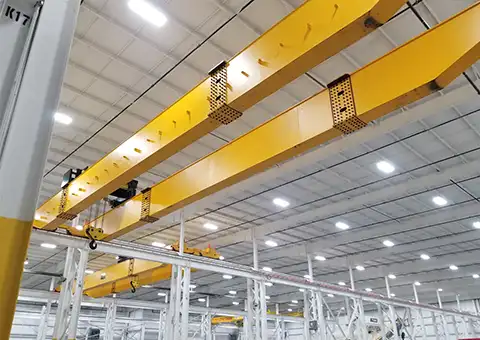
Overhead crane for sale , Yuantai Cranes
In energy projects, components are often heavy, long, and expensive. Their behavior during lifting matters more than the number printed on the crane nameplate.
Typical component weight range
- From 5 tons for auxiliary assemblies
- Up to 150 tons or more for main equipment
Loads commonly handled in energy projects
- Transformers and generator stators
- Wind turbine nacelles and tower sections
- Power skids and large welded steel structures
Many of these loads are:
- Long rather than compact
- Uneven in weight distribution
- Sensitive to deflection or twisting
These characteristics directly affect lifting speed, hook position, and crane control requirements.
Two loads with the same weight can behave very differently.
- Long components may bend if lifted from incorrect points
- Uneven loads can cause the hook to drift off center
- Installed piping or accessories can limit where slings are allowed
If these factors are ignored, operators are forced to compensate during the lift, which increases risk and slows down production.
Overhead cranes play a key role during controlled lifting phases, before components ever leave the factory.
Common application environments
- Fabrication workshops for welding and machining
- Assembly halls for trial fitting and modular build-up
- Transformer and generator manufacturing plants
In these locations, overhead cranes provide:
- Straight vertical lifting
- Smooth travel along fixed rails
- Repeatable positioning for serial production
This level of control is difficult to achieve with mobile cranes indoors.
Once the load and environment are understood, selecting the right crane becomes straightforward.
Single girder overhead cranes (5–20 tons)
- Typical use: Auxiliary equipment, light steel assemblies, maintenance handling
- Best for: Lower duty cycles, shorter spans, lighter loads
Double girder overhead cranes (20–100+ tons)
- Typical use: Heavy transformers, generator components, large skids, turbine parts
- Advantages: Greater lifting height, better load stability, higher duty class
Synchronized overhead crane systems (2 × 20–50 tons)
- Used when: Single-hook lifting is not suitable
- Typical loads: Long stators, wind tower sections, deformation-sensitive structures
- Benefits: Even load sharing, controlled alignment, reduced structural stress
Synchronized control is essential for long or flexible components where deformation or uneven loading could affect quality.
Planning the End-to-End Crane Workflow (Workshop to Field)
In energy projects, lifting problems rarely come from a single bad decision. More often, they come from many small choices that were made without looking at the full path of the load. A generator or steel skid does not care where it is lifted—it behaves the same way whether the crane is in a workshop or on site. This is why crane workflow has to be planned end to end.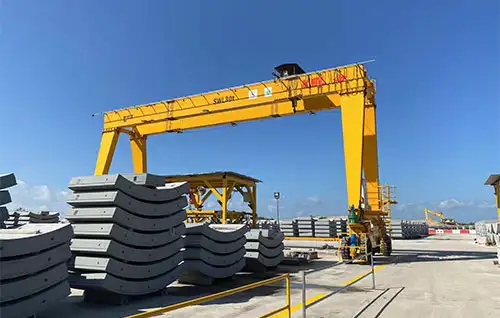 Gantry crane for outdoor use, crane in the pictutre is an tailored rtg gantry crane for construction
Every large component follows a lifting sequence. Once this sequence is clear, crane selection and planning become much more practical.
Typical lifting stages
- Inside the workshop
Overhead cranes handle fabrication, fitting, and early assembly - Outdoor staging area
Gantry cranes prepare components for transport and temporary storage - During transport operations
Cranes load and unload trailers, barges, or rail systems - At the project site
Mobile or crawler cranes complete final erection
Problems usually appear when these stages are planned by different teams without shared lift data.
The overhead crane is usually the first machine to lift the component. That first lift sets important limits.
Well-planned overhead crane use allows:
- Pre-assembly in a controlled environment, reducing work at site
- One set of lifting points used throughout the project
- Stable lifting orientation, so the load does not need to be turned or re-rigged
When these points are not considered, site crews often spend more time modifying the load than installing it.
Pre-assembly saves time on site but only if the crane can handle the full load safely.
Typical capacities:
- 10–32 tons: Auxiliary equipment, partial modules, electrical/mechanical assemblies
- 32–80 tons: Large skids, structural modules, main assemblies ready for transport
Choosing cranes based on actual working load rather than nominal rating keeps workshop operations smooth and efficient.
Delays often appear in the space between stages, not during the lift itself.
Typical warning signs include:
- Extra lifting just to change orientation
- Temporary supports added because cranes cannot hold the load safely
- Additional crane rentals that were not in the original plan
These are symptoms of disconnected crane workflow planning.
Before locking in crane specifications, walk through the lifting process step by step.
- Is the load lifted the same way in the workshop and on site?
- Does the crane capacity cover the heaviest pre-assembly condition?
- Are lifting accessories compatible across all stages?
When the answer is yes at every stage, crane operations become predictable—and projects stay on schedule.
Site Preparation: A Hidden Bottleneck
Proper site readiness is often overlooked but is essential for safe and efficient crane operations. Even minor issues with alignment, power, or staging can cause significant delays.
Crane performance depends on the physical setup in the workshop or yard. Proper alignment and clearance prevent downtime and safety issues.
- Runway alignment and load capacity: Ensure beams and rails can handle the crane and planned loads.
- Headroom and hook clearance: Verify there's enough vertical space for lifts without obstruction.
- Duty class matching production intensity: Select cranes rated for the frequency and weight of lifts expected.
Reliable power is critical for continuous operations and safety. Planning ensures cranes can operate without interruption.
- Standard supply: 380V / 50–60Hz, compatible with crane requirements.
- Backup power: Keeps cranes running during outages or critical lifts.
Outdoor staging introduces additional risks that must be planned for to avoid delays.
- Gantry cranes (10–50 tons): Used for temporary lifts, loading, or unloading large components.
- Weather and wind conditions: Ensure lifts stop when conditions exceed safe thresholds, and staging areas are level and secure.
Proper site preparation creates a foundation for smooth, predictable crane operations from workshop to field.
Selecting the Right Overhead Crane Configuration
Choosing the right overhead crane involves more than just picking a model—it requires matching crane type, lifting capacity, and accessories to the component, workflow, and environment. Proper selection ensures safety, efficiency, and minimal risk of component damage throughout the project.
Different energy project environments and component types demand specific crane designs:
- Top-running double girder cranes: Ideal for heavy lifts in large workshops, offering high capacity, long spans, and stable load handling. Perfect for transformers, generator components, and large skids.
- European-design cranes: Built for precise handling where headroom is limited. They provide smooth travel, accurate positioning, and are often used for modular assembly or delicate equipment.
- Explosion-proof cranes: Required in oil & gas or hazardous areas to comply with strict safety regulations. Designed to operate safely in flammable or explosive atmospheres.
Selecting the appropriate type ensures the crane is fit for the load type, workspace, and safety requirements.
Rated capacity alone does not guarantee safe lifting. Real-world conditions must be considered:
- Lift height, span, and dynamic effects: Components may sway, twist, or generate dynamic loads; cranes must handle these without overstress.
- Safety margin: Always allow extra capacity beyond the calculated load to account for unexpected stress, uneven distribution, or rigging variations.
Understanding the working radius and dynamic factors prevents overloading, equipment damage, and safety incidents.
Cranes must be compatible with rigging, frames, and load-specific accessories to ensure smooth operations:
- Spreader beams: Keep long or flexible components stable and prevent bending during lifts.
- Custom frames and hooks: Adapt to irregular shapes or oversized equipment for safe handling.
- Coordination: Rigging, crane, and accessories must be planned together to ensure lifts are precise, efficient, and safe.
Proper integration of crane configuration and lifting accessories reduces downtime, prevents damage, and maintains project timelines.
Coordination Between Teams and Suppliers
In energy projects, successful lifting operations rely on clear communication and alignment between all stakeholders. Delays and safety risks often arise when teams plan in isolation or responsibilities are unclear.
Each party plays a specific role in ensuring smooth lifting from workshop to field:
- EPC Contractor: Oversees overall project execution, making sure lifting sequences align with construction schedules and milestones.
- Workshop Production Team: Handles fabrication, pre-assembly, and the first overhead crane lifts, ensuring components are ready for transport.
- Transport Company: Responsible for safe loading, securing, and moving components between workshop, yard, and site.
- Crane Supplier: Provides technical expertise on crane selection, capacity limits, and safe operation, and ensures cranes match project requirements.
Every stakeholder must understand the full workflow, not just their individual role. Early coordination prevents rework, reduces delays, and improves safety across all lifts.
Aligning all teams before the first lift saves time, reduces costs, and lowers risk.
- Prevent redesign of lifting points: Ensure hooks, slings, and lifting lugs work both in the workshop and on site.
- Align crane capacity with transport frames: Confirm both workshop and field cranes can safely handle pre-assembled modules.
- Reduce installation time on site: Components arrive ready to lift with minimal temporary supports.
Even small oversights in the workshop can turn into multi-day delays on site, making early coordination essential.
Crane suppliers are partners in lifting planning, not just equipment vendors. Early involvement improves workflow and safety.
- Review lifting workflows: Recommend crane types, capacities, and control methods for each stage.
- Provide synchronized crane solutions: Enable safe lifting of long or deformation-sensitive loads with multiple cranes.
- Support commissioning and operator training: Ensure operators understand the crane and lifting plan before lifts.
Integrating supplier expertise from the start ensures realistic plans, safer operations, and faster project execution.
Safety and Control in Energy Project Crane Operations
In energy projects, safety is not optional—it's integral to efficient crane operations. Large components are often heavy, long, and sensitive to twisting or bending. Without proper planning and control, a single lift can cause delays, equipment damage, or even accidents.
Every lift requires careful planning, considering both load behavior and environmental factors.
- Load sway and deflection: Long or flexible components can bend or swing; proper rigging, lifting points, and hoist speed minimize movement.
- Wind limits: Outdoor lifts, like wind turbine sections, must pause if gusts exceed safe thresholds.
- Emergency planning: Define stopping points, lowering procedures, and clear zones; ensure all teams know the plan.
Small oversights can escalate quickly with heavy or sensitive loads, making thorough planning essential.
Some loads are too long or delicate to lift safely with a single crane. Synchronized crane systems allow multiple cranes to lift one component simultaneously, maintaining alignment and reducing stress.
Typical applications:
- Generator stators in power plants
- Wind tower sections and nacelles
- Long structural skids and pre-assembled modules
Benefits of synchronized lifts:
- Precision: Components are aligned correctly on the first lift
- Safety: Balanced load reduces the risk of tip-over or damage
- Reduced deformation: Long or flexible components maintain shape during lifting
Using synchronized crane systems requires careful planning, training, and compatible control systems, but the results often save significant time and reduce project risk.
Common Mistakes That Cause Crane-Related Delays
Even experienced teams can run into unexpected delays if crane planning is treated as an afterthought. In energy projects, where components are heavy and schedules are tight, small planning errors quickly become major problems. Recognizing the most common mistakes can prevent costly disruptions.
Many projects assume that overhead cranes are only needed in fabrication workshops. This mindset leads to:
- Lifting points designed for the workshop but incompatible with site cranes
- Extra handling, re-rigging, or temporary supports at the installation site
- Delays during transport because pre-assembled modules are too heavy or awkward for mobile cranes
The key is to plan lifts as a continuous workflow—from workshop to final installation.
Waiting until the project is underway to select a crane often results in:
- Cranes that cannot handle pre-assembled loads safely
- Oversized cranes that are costly and may exceed building load limits
- Last-minute redesigns of lifting accessories or lifting points
Crane capacity should be determined during early design and pre-assembly planning, based on actual component weights and handling requirements.
Crane duty class defines how frequently and how heavily a crane can lift over time. Ignoring this can cause:
- Faster wear on crane components
- Frequent maintenance interruptions
- Limits on future operations if project scope grows
Planning for duty class and potential expansion ensures the crane will remain reliable throughout the project lifecycle.
Delays often occur not because of the crane itself but because of gaps in communication between teams. Typical problems include:
- Loads not aligned with transport frames
- Staging areas unprepared for crane operation
- Mismatched lifting sequences between workshop and site
Early alignment of all stakeholders—EPC, workshop, transport, and crane supplier—reduces missteps and keeps lifts on schedule.
FAQ: Crane Operations in Energy Projects
Energy projects typically use a combination of single girder, double girder, and synchronized overhead cranes depending on the component and stage of the project:
- Single girder cranes (5–20 tons): Auxiliary equipment and light assemblies
- Double girder cranes (20–100+ tons): Heavy transformers, generator stators, large skids, and turbine sections
- Synchronized overhead cranes (2 × 20–50 tons): Long or deformation-sensitive components that require multiple cranes to lift in unison
These cranes are mainly installed in fabrication workshops, assembly halls, and manufacturing plants, providing stable, precise lifting before transport to the site.
Crane capacity depends on the component size and weight:
- 10–32 tons: Pre-assembly of auxiliary systems or partial modules
- 32–80 tons: Large skids, structural modules, or pre-assembled sections ready for transport
- Above 100 tons: Rare, but may be required for very large transformers or wind turbine nacelles
Capacity planning considers not just the nominal weight, but also safety margins, lifting accessories, and component behavior during transport and installation.
Overhead cranes set the stage for all later handling:
- Components are lifted, positioned, and pre-assembled in the workshop
- Gantry cranes or temporary lifts stage loads outdoors for transport
- Transport frames are designed to match workshop lifting points
- Mobile or crawler cranes on site lift components directly using the same lifting points
Proper planning ensures smooth end-to-end crane workflow from fabrication to field installation, avoiding re-lifting and delays.
Delays are usually caused by planning gaps rather than crane failure:
- Overhead cranes treated as workshop-only equipment
- Crane capacity selected too late in the project
- Ignored duty class or future expansion requirements
- Poor coordination between lifting, transport, and site teams
Addressing these issues early reduces downtime, improves safety, and keeps projects on schedule.
EPC contractors can improve efficiency by:
- Planning lifts as an end-to-end workflow, from workshop to field
- Aligning crane selection with component size, weight, and handling sequence
- Coordinating with transport teams and crane suppliers early
- Designing lifting points and accessories to work consistently across all lifts
Early planning reduces re-handling, prevents equipment conflicts, and ensures faster installation on site.
Synchronized or tandem crane systems are needed for:
- Long or flexible components that might bend under a single crane
- Heavy loads that exceed a single crane's safe working capacity
- Precision lifts where alignment across the full component length is critical
Examples include generator stators, wind tower sections, and long structural skids, where balanced lifting reduces deformation and improves safety.
Conclusion: Efficient Crane Planning Is a Competitive Advantage in Energy Projects
In energy projects, moving large, heavy, and often delicate components is a complex task. Success depends on seeing crane operations as a connected system, not as isolated lifts in the workshop or on site.
By integrating overhead crane selection, workflow planning, site preparation, and supplier coordination, teams can achieve a smoother, safer, and more predictable project execution.
Key benefits of planning crane operations from workshop to field:
- Minimized project delays – Components move efficiently from fabrication to installation without unexpected re-handling
- Reduced safety risks – Proper lifting points, rigging, and synchronized crane control protect both personnel and equipment
- Lower total project cost – Fewer idle days, reduced temporary supports, and fewer last-minute crane adjustments
In short, crane planning is not just a technical step—it’s a strategic decision that directly affects project timeline, cost, and safety.