Single vs Double Girder 20 Ton Gantry Crane, Which Fit Your Needs
Single vs Double Girder 20-Ton Gantry Cranes: Which One Suits Your Industry?
What Is a 20-Ton Gantry Crane Used For?
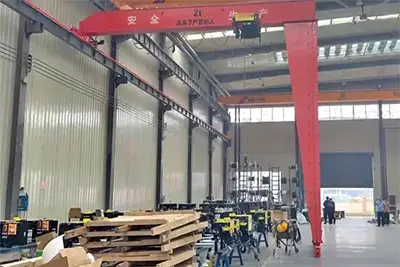
In many factories and construction sites, a 20-ton gantry crane is a daily workhorse. It’s built to lift and move heavy materials—steel beams, machinery parts, molds, or large concrete pieces—with steady control. You’ll find it in steel fabrication yards, workshops, and open storage areas where an overhead runway isn’t available.
These cranes come in two main types: single girder and double girder. Both handle the same rated load, but their designs—and how they perform in different working conditions—are quite distinct.
Why Choosing the Right Design Matters
Selecting between a single or double girder gantry crane is not just a technical detail; it affects nearly every part of your operation.
- A single girder design may save cost and space, but it’s not always suitable for continuous or heavy-duty use.
- A double girder design can handle tougher jobs, yet it comes with higher installation and maintenance demands.
Choosing wrongly could mean spending more later on for repairs, foundation strengthening, or even replacing the entire system.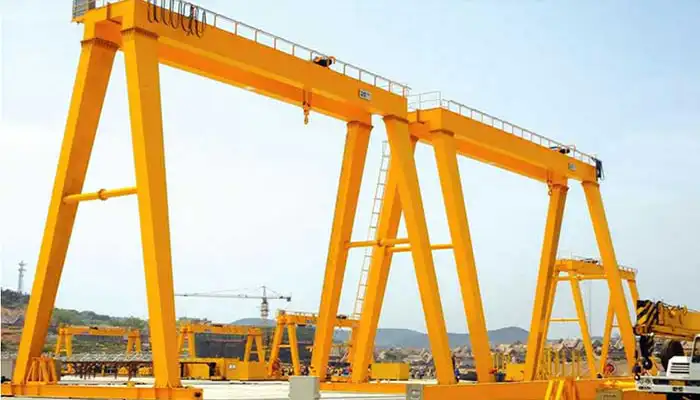
Purpose of This Guide
This article is written for industrial buyers, engineers, and workshop owners who want a clear comparison before purchasing a 20-ton gantry crane.
Here’s what we’ll cover:
- The key design differences between single and double girder gantry cranes.
- The operational pros and cons of each design in real working conditions.
- The ideal industrial applications and how to match a crane type to your plant’s workload.
By the end, you’ll have practical knowledge—not sales talk—to help you decide which 20-ton gantry crane design fits your industry best.
When buyers look at a 20-ton gantry crane, the first big question is—should it be single girder or double girder?
Both designs can lift the same rated load, but their structure and operating performance differ in several practical ways. Understanding these differences will help you select the right design for your working site, lifting height, and frequency of use.
The most visible difference lies in the number of main beams that span between the gantry legs.
Single Girder Gantry Crane
- Built with one main beam, making it lighter, simpler, and more economical.
- The overall structure is compact, meaning it requires less material and is easier to install or relocate.
- Ideal for medium-duty lifting and applications where height clearance or budget is limited.
- Typically uses standard hoists mounted directly under the beam.
Double Girder Gantry Crane
- Designed with two main beams running parallel, joined by cross members for added strength.
- This setup offers better rigidity and higher load stability, especially for long spans and frequent operations.
- Can support auxiliary equipment such as a maintenance platform, operator cabin, or walkway.
- Commonly chosen for heavy-duty industrial environments like shipyards or large fabrication yards.
The hoist arrangement directly affects the lifting height and maintenance convenience.
Single Girder Type
- The hoist typically travels on the lower flange of the girder, known as a top-running or underslung configuration.
- This design is simple, easy to maintain, and suitable for areas with limited headroom.
- However, the lifting height is restricted since the hoist body hangs below the main beam.
Double Girder Type
- The hoist operates on rails installed above the girders, allowing it to lift the hook higher relative to the ground.
- Provides a greater lifting height and clearer hook approach—important for large or tall materials.
- Easier to integrate with dual hoist systems or specialized lifting attachments.
The crane's span (distance between the legs) and lifting height determine how it fits into your workspace and what it can handle safely.
- Single Girder Gantry Cranes usually cover shorter spans (up to around 25–30 meters) and medium lifting heights.
- Double Girder Gantry Cranes can achieve larger spans (up to 40–50 meters or more) and higher lifting heights, making them suitable for outdoor or large-scale industrial sites.
Note: When working with bulky loads or high stacking requirements, the double girder type provides better vertical clearance and travel flexibility.
How the crane's load is transmitted through its structure affects not only performance but also the foundation and track design.
Single Girder Design:
- Concentrates load directly onto the main beam and gantry legs.
- Because it's lighter, it exerts less stress on the ground or rails, reducing foundation costs.
- Best suited for standard concrete floors or moderate ground strength.
Double Girder Design:
- Distributes load more evenly across two beams and multiple connection points.
- This improves stability but also means heavier structural weight, requiring stronger foundations and wheel systems.
- Recommended for continuous heavy lifting or long-span operations where load balance is critical.
In short, a single girder 20-ton gantry crane fits better for light to medium-duty work, where simplicity and cost efficiency matter most. A double girder design, on the other hand, is the right choice when your operation demands higher lifting height, longer spans, or continuous heavy-duty service.
- Single girder: economical, compact, easier installation, ideal for medium-duty work and limited space.
- Double girder: higher rigidity, larger span, greater lifting height, suitable for heavy-duty and continuous operations.
- Choose based on your site's span, lifting height, load frequency, and available budget.
Operational Pros and Cons
The way a gantry crane performs in real work depends not only on its structure but also on how it’s used day after day. A 20-ton single girder gantry crane behaves quite differently from a double girder one when it comes to daily lifting, power use, and long-term upkeep. Below is a practical look at what each type offers—both the advantages and the trade-offs—to help you choose based on your site conditions and workload.
Single Girder 20-Ton Gantry Crane
A single girder gantry crane is often the preferred option for factories, fabrication shops, and warehouses that handle moderate loads or operate in shorter work cycles. Its simple design keeps things efficient and cost-friendly without compromising reliability.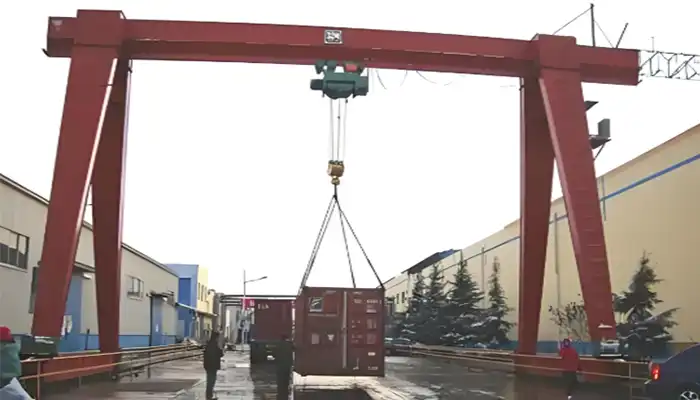
20 ton gantry crane single girder for sale
Advantages:
- Lower cost and faster installation
The single main beam means less material, fewer components, and reduced fabrication time. It can be installed quickly, making it ideal for facilities looking to start operations without long setup delays. - Lightweight and space-efficient
With a compact frame, it takes up less headroom and floor space. This makes it suitable for small or medium spans and indoor areas with low ceilings. - Easier maintenance and inspection
Fewer structural parts and mechanical interfaces mean simpler upkeep. Regular checks can be done by in-house maintenance teams without specialized equipment.
Limitations:
- Restricted lifting height
Since the hoist hangs below the girder, the available lifting height is limited. This may not work well for operations that need to lift tall machinery or stack materials high. - Less suited for continuous or heavy-duty service
While sturdy, the single girder structure isn’t built for nonstop or extremely heavy operations. Over time, continuous loading may increase wear on joints and wheels.
In short, the single girder design is a practical, low-cost option for moderate workloads—but not the best fit if your process demands long hours or frequent heavy lifting.
Double Girder 20-Ton Gantry Crane
A double girder gantry crane steps up in strength and precision. It’s the go-to choice for yards, ports, or manufacturing plants that handle heavy or oversized materials all day long.
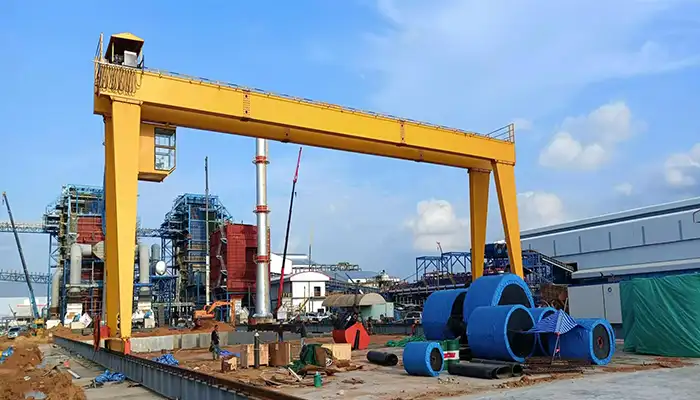
double girder gantry crane 20 ton
Advantages:
- Higher lifting height and longer span capacity
The hoist runs on rails above the girders, allowing a higher hook position and wider coverage area. This is crucial in outdoor yards or large workshops handling bulky loads. - Built for continuous heavy-duty work
Its dual-beam design provides greater load stability and allows smoother motion during frequent lifts. The structure is more rigid, which means less deflection and better control. - Supports additional attachments
Double girders can accommodate operator cabins, maintenance walkways, and lighting or camera systems. These add-ons improve safety and convenience for large-scale or specialized lifting tasks.
Limitations:
- Higher initial and installation costs
The added strength and precision come with extra material, engineering, and foundation work. However, the longer lifespan and load stability often balance this cost over time. - Heavier structure requiring stronger ground support
Because of the dual-beam setup and larger components, the crane exerts greater wheel loads. It needs a reinforced foundation or track system to maintain safe operation.
Overall, a double girder 20-ton gantry crane is a heavy-duty solution built for demanding operations—best suited for plants or yards that run multiple shifts or handle large-scale lifting every day.
Ideal Industrial Applications
Not every factory or yard operates under the same conditions. Some run around the clock with continuous material flow, while others lift heavy loads only a few times a day. That’s why understanding where each type of 20-ton gantry crane performs best is so important. The right match between crane design and work environment leads to smoother operations, longer equipment life, and fewer maintenance headaches.
Single Girder 20-Ton Gantry Crane – Best For
A single girder 20-ton gantry crane is a reliable choice for plants that don’t require nonstop lifting or extra lifting height. It’s practical, compact, and efficient for lighter workloads and smaller sites.
Typical Uses and Work Environments:
- Light to medium-duty industries
Ideal for general manufacturing, machinery assembly, and equipment maintenance areas where loads are handled occasionally. - Steel fabrication yards, warehouses, and workshops
Commonly used for loading and unloading steel plates, small beams, or machine parts where moderate lifting is enough. - Occasional or low-frequency lifting tasks
Perfect for operations that don’t need continuous heavy lifting—like moving finished products or spare materials between work zones. - Areas with limited headroom or small workspaces
Its compact frame fits easily inside workshops with height restrictions. The lighter structure also makes relocation or extension easier if production layouts change.
Practical Example:
A medium-sized steel processing workshop that needs to lift 10–20 tons of material several times a day can rely on a single girder gantry crane to get the job done safely and economically without overinvesting in a heavier system.
Double Girder 20-Ton Gantry Crane – Best For
A double girder 20-ton gantry crane is built for demanding work conditions. It’s designed to handle heavy-duty cycles, high lifting heights, and long spans—making it the backbone of large industrial operations.
Typical Uses and Work Environments:
- Heavy fabrication, shipbuilding, and steel coil yards
Suited for lifting large components, welded structures, and heavy coils that require stable handling and high precision. - Large outdoor material handling yards
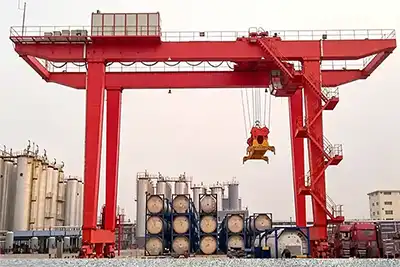
Performs well in open areas such as construction material depots, logistics terminals, and container yards, where wind load and long travel distances are common. - Continuous-duty or multi-shift operations
Designed for plants running 24-hour production or heavy equipment assembly lines. The dual-beam structure ensures durability and stable operation over time. - Applications requiring precise lifting and positioning
The stiffer frame and accurate motion control make it suitable for machinery assembly, mold handling, or equipment installation where precision matters.
A shipbuilding yard or steel rolling mill using double girder 20-ton gantry cranes can efficiently move large blocks or steel coils from one line to another—all day, every day—with the stability and safety such work demands.
Maintenance and Cost Comparison
When it comes to 20-ton gantry cranes, thinking beyond the purchase price is essential. Maintenance, operating costs, and long-term performance can make a huge difference in how cost-effective a crane really is. A crane that's inexpensive upfront but costly to maintain may not be the best choice in the long run. Here's a practical look at the differences between single and double girder designs.
When it comes to 20-ton gantry cranes, thinking beyond the purchase price is essential. Maintenance, operating costs, and long-term performance can make a huge difference in how cost-effective a crane really is. A crane that's inexpensive upfront but costly to maintain may not be the best choice in the long run. Here's a practical look at the differences between single and double girder designs.
Maintenance needs vary significantly between single and double girder cranes. Knowing what to expect helps plan your budget, downtime, and staffing.
Single Girder Crane
- Simple structure with fewer components, which makes inspections straightforward.
- Focused checks on the hoist, trolley, wheels, and beam connections.
- Maintenance can usually be handled in-house, without needing specialized tools.
- Ideal for medium-duty or occasional lifting, where downtime must be minimal.
Because of its simplicity, a single girder crane can often stay in service longer with minimal intervention, making it a practical choice for smaller workshops or facilities with lighter workloads.
Double Girder Crane
- More complex system: two main beams, additional rails, and cross members.
- Requires regular inspections of beams, hoist rails, trolleys, and mechanical joints.
- Some maintenance tasks may require specialized personnel or tools.
- Designed to handle continuous, heavy-duty operations reliably over time.
The double girder's complexity allows it to manage heavy and frequent loads safely. Regular maintenance is critical to preserve stability, prevent wear, and ensure that the crane can operate reliably in demanding industrial settings.
Cost is another key factor where single and double girder cranes differ. It's not just about the initial investment; operating and maintenance costs can add up over the crane's lifetime.
Initial Investment
- Single girder cranes are generally less expensive, due to simpler design and lighter steel structure.
- Double girder cranes cost more upfront because of heavier materials and more complex fabrication.
Operation & Maintenance Costs
- Single girder cranes usually have lower energy use and simpler upkeep.
- Double girder cranes may require more energy and more frequent maintenance, but they deliver higher stability and long-term reliability for heavy workloads.
Long-Term ROI
- Single girder cranes offer quick payback in light to medium-duty environments.
- Double girder cranes provide better performance and durability in continuous or high-frequency operations, making the extra investment worthwhile in the long run.
Looking at both maintenance and cost together, the single girder crane is ideal for operations that are moderate, occasional, and budget-conscious. The double girder crane is better for facilities that demand heavy-duty, continuous lifting with minimal compromise on safety, precision, and long-term reliability.
Selecting the right 20-ton gantry crane for your operation requires careful consideration. Every plant has unique lifting requirements, space limitations, and operational patterns. Making the wrong choice can lead to reduced efficiency, higher maintenance costs, or even safety risks.
Before deciding, it's important to evaluate the key factors that will impact performance and return on investment:
- Duty cycle: How frequently the crane will operate each day. Continuous heavy lifting favors a double girder design, while occasional or medium-duty lifting may be handled well by a single girder crane.
- Lifting height: Consider the maximum height your loads need to reach. Double girder cranes provide higher lifting clearance, which is especially useful for tall stacks or oversized materials.
- Span: The distance between the gantry legs affects which design is more suitable. Longer spans typically require the extra rigidity of a double girder crane.
- Space constraints: Indoor workshops with limited headroom may benefit from the compact design of a single girder crane. Outdoor yards with open space can accommodate larger double girder cranes.
- Budget: Upfront cost and long-term maintenance should be weighed together. A single girder crane may save on installation and upkeep, while a double girder crane delivers long-term durability for demanding operations.
It's also wise to discuss your project details with a crane manufacturer before finalizing any purchase. Sharing information about your load types, lifting frequency, environment, and future expansion plans allows the manufacturer to recommend a solution tailored to your needs.
Conclusion
Choosing between a single and double girder 20-ton gantry crane comes down to matching the crane to your operational needs. Each design has its strengths, and understanding them helps avoid costly mistakes while improving efficiency and safety.
A single girder gantry crane is economical, compact, and easy to maintain. It’s ideal for light-to-medium duty operations, workshops with limited space, or facilities that lift loads occasionally rather than continuously. Its simplicity keeps costs down while still providing reliable performance for most standard industrial applications.
On the other hand, a double girder gantry crane is robust, precise, and built for continuous heavy-duty work. It’s the right choice for operations that require higher lifting heights, longer spans, or frequent, heavy loads. Although the initial investment and maintenance are higher, the double girder design delivers long-term stability, efficiency, and safety for demanding industrial environments.