Cost-Saving Tips for Buying a 20-Ton Gantry Crane
Introduction
Buying a 20-ton gantry crane is no small decision. It’s not just about the purchase price — it’s about how well the crane fits your operation over time. Smart choices at the buying stage can help you save thousands later on installation, operation, and maintenance. In other words, a careful decision today means lower ownership costs for years to come.
When comparing options, it’s important to strike the right balance between price, performance, and reliability. The cheapest crane isn’t always the most cost-effective, and the most advanced model isn’t always necessary. What matters is matching the crane’s features and specifications to your actual working conditions.
Here are a few key factors that influence the overall cost of a 20-ton gantry crane:
- Design Type – Single girder cranes are generally more affordable and easier to install, while double girder cranes handle heavier duty cycles and offer more lifting height.
- Duty Class (A3–A6) – The higher the duty class, the more robust the design and the higher the cost. For example, a crane running multiple shifts daily needs a higher class than one used occasionally.
- Span and Lifting Height – Larger spans and higher lifts require stronger structures and more materials, directly increasing the price.
- Optional Add-ons – Features like anti-sway control, remote operation, or weatherproof protection add convenience and safety but also raise the initial investment.
In short, before asking for quotations, it’s worth defining your real needs and usage frequency. A well-matched crane doesn’t just perform better — it saves on energy, parts replacement, and downtime in the long run.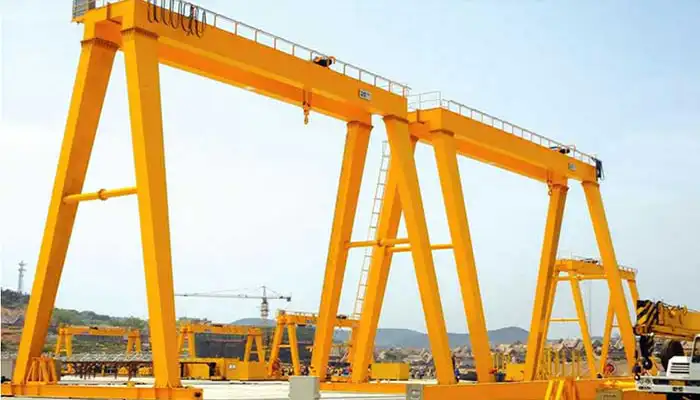
20 ton gantry crane for sale, Yuantai crane, bettercrane.com offfers 20 ton gantry crane with single girder vs double girder design
Choosing Optional Features Wisely
Selecting the right optional features for your 20-ton gantry crane can make a big difference in cost and long-term value. The key is knowing which features are essential for safety and efficiency, and which are simply “nice-to-have” extras that may not justify the added expense.
Identify Must-Have vs. Nice-to-Have Features
Some features are non-negotiable because they directly affect the crane’s safety, reliability, and day-to-day performance. Others can be added later or skipped if your operation doesn’t require them.
Must-have features:
- Overload protection: Prevents damage to the crane and reduces risk of accidents.
- Limit switches: Stop the hoist or trolley at the correct positions, ensuring precise and safe operation.
- High-quality hoist system: Ensures smooth lifting and longer equipment life.
Optional features:
- Anti-sway control: Reduces load swing, useful for high-precision or long-span lifts.
- Remote monitoring: Lets operators track usage, faults, and maintenance needs.
- Auto-positioning or frequency conversion controls: Improves accuracy but may not be needed in low-frequency operations.
Practical Tip: Focus on features that will save labor, prevent downtime, or improve safety. Avoid paying extra for upgrades that won’t be fully used.
Match Features to Application Frequency
Not every crane needs the same level of sophistication. Think about how often and in what environment your crane will operate:
- Light-duty or indoor use: Single girder cranes with basic controls are usually sufficient. Advanced weatherproofing, dual hoists, or anti-sway systems may not be necessary.
- Heavy-duty or outdoor steel handling: Dual hoists, anti-sway systems, and full weatherproof protection may be worth the investment because they reduce downtime and extend crane life.
Practical Tip: Observe your actual lifting cycles before specifying extras. Features should match your real operational needs, not just “possible future use.”
Avoid Over-Specification
It’s easy to get caught up in advanced technology and over-engineer a crane for “just in case” scenarios. Over-specification increases upfront cost without adding proportional value.
- Example: Choosing A5 duty class instead of A6 for moderate indoor workshop lifting can save on both purchase price and maintenance, while still meeting operational needs.
- Always ask: “Does this feature really improve efficiency, safety, or reliability for my application?” If not, it can be skipped.
Practical Tip: Consult your supplier about the expected working cycles and environmental conditions. They can recommend a configuration that balances cost and performance effectively.
Reducing Installation and Maintenance Costs
Saving money on a 20-ton gantry crane isn’t just about the purchase price. How you handle installation and maintenance can have an even bigger impact on your total ownership cost. Planning ahead and using practical strategies can help avoid unnecessary expenses and downtime.
Plan Site Preparation Efficiently
Proper preparation of the installation site is critical. Skipping this step or rushing it can lead to redesigns, delays, or extra costs.
- Assess foundation and rails early: Make sure the floor or rails meet the crane’s load requirements. This avoids last-minute modifications.
- Coordinate with local contractors: Civil work, electrical setup, and site leveling should be planned together to save time and money.
- Check for overhead clearance and obstructions: Avoid surprises that can slow down assembly or limit crane movement.
Practical Tip: A thorough site survey before ordering the crane can save weeks of work and reduce extra costs.
Simplify Crane Assembly
Choosing the right assembly method can lower shipping and labor costs significantly.
- Use pre-assembled modules or crane kits: If your team has basic assembly skills, modular cranes reduce on-site work.
- Benefits: Less on-site labor, faster installation, and fewer mistakes during assembly.
- Consider local fabrication options: Some components, like rails or runway beams, can be sourced locally to cut shipping costs.
Practical Tip: Ask the manufacturer whether they provide modular kits for easier assembly — it often reduces both time and cost.
Schedule Preventive Maintenance
Maintenance is not optional — it keeps your crane running safely and prevents expensive downtime.
- Regular inspections: Check the hoist, trolley, motors, and structural components according to recommended schedules.
- Use OEM parts when possible: They ensure compatibility and reliability, especially for critical components.
- Source consumables locally: Items like lubricants, grease, and standard fasteners can be bought locally to save on costs.
- Plan downtime: Schedule maintenance during off-hours or slower production periods to minimize disruption.
Practical Tip: A well-planned preventive maintenance program can prevent small issues from turning into major repairs, saving both money and production time.
Standard vs. Customized Models: When to Choose Which
Choosing between a standard and a customized 20-ton gantry crane can have a big impact on both upfront costs and long-term efficiency. Understanding your actual needs and operational conditions is key to making the right decision.
When Standard Models Are Enough
Standard cranes are designed to handle common lifting tasks and are often sufficient for many operations.
- Ideal applications: General material handling, warehouses, small to medium fabrication shops, and indoor workshops.
Advantages:
- Shorter delivery time — usually available faster than custom-built models.
- Lower purchase cost — standard designs use proven components and require less engineering.
- Simpler installation and maintenance, as parts and documentation are widely available.
Practical Tip: If your lifting requirements are typical and the environment is controlled, a standard crane often meets your needs without extra expense.
When Customization Pays Off
Sometimes, standard options won’t fit your operation. Custom cranes can be tailored to meet specific challenges.
Ideal scenarios:
- Unique spans or lifting heights that exceed standard models.
- Outdoor operations exposed to harsh weather, corrosive environments, or dust.
- Special safety or regulatory requirements, such as explosion-proof zones or coastal installations.
Benefits of customization:
- Optimized for your site, which can extend crane life.
- Reduced long-term maintenance costs, since the crane is built to withstand its specific working conditions.
- Better operational efficiency — tailored features improve workflow and safety.
Practical Tip: A higher upfront cost for a custom crane can pay off over time by reducing downtime and maintenance expenses.
Evaluate Total Cost of Ownership (TCO)
When deciding between standard and customized models, consider the full picture, not just the purchase price.
- Compare initial savings of a standard crane with the long-term efficiency and maintenance costs of a custom model.
- Use ROI or payback analysis to determine which option is more economical over the crane’s expected lifespan.
- Consider factors like expected usage frequency, environmental exposure, and downtime costs.
Practical Tip: Sometimes paying a little more upfront for the right custom solution saves money and headaches over the crane’s entire service life.
Conclusion
Saving money on a 20-ton gantry crane isn’t about picking the cheapest option. It’s about choosing the right crane for your specific needs—one that balances cost, performance, and long-term reliability.
Before making a decision, it’s essential to share your actual working conditions with the manufacturer. Details like lifting frequency, load types, span, height, and environmental factors will help them recommend the most suitable configuration, avoiding unnecessary extras or over-specification.
- Get multiple quotes: Compare suppliers to see how base prices and optional features differ.
- Check feature breakdowns: Ensure you understand which add-ons are essential and which are optional.
- Consider long-term costs: Factor in installation, operation, maintenance, and potential downtime.
Practical takeaway: A well-matched crane may cost a little more upfront, but it reduces maintenance, prevents downtime, and delivers better efficiency—saving money and effort over its lifetime.
This approach ensures your 20-ton gantry crane investment is practical, safe, and cost-effective, giving you the best value for your money.