Cantilever gantry cranes: cost, ROI, and budgeting tips
Learn how to budget for cantilever gantry cranes. Understand costs, ROI, payback periods, and practical tips for new or expanded operations.
Cost and ROI Analysis of Cantilever Gantry Cranes – Practical Budgeting for New or Expanded Operations
When planning a new workshop or expanding an existing yard, one of the biggest decisions is how to move materials efficiently and safely. A cantilever gantry crane is often an excellent choice when one side of the working area is limited or open for loading trucks, but before you invest, you’ll want to know if it truly pays off.
This article aims to help crane buyers and project planners understand the real costs involved—both the ones you can see on the quotation sheet and the ones that appear later, during operation. It also explains how to estimate the return on investment (ROI) and how long it may take for the crane to start paying for itself through improved workflow and reduced labor costs.
In short, if you’re planning to install or upgrade a gantry system, this guide will give you the practical numbers and reasoning you need before spending a single dollar.
Why It Matters
A cantilever gantry crane isn’t just a piece of lifting equipment—it’s part of your long-term production plan. The right crane design can improve material flow, reduce downtime, and even free up yard space for future expansion. But here’s the catch: the total cost isn’t limited to the crane price itself.
You’ll also need to consider installation conditions, power supply setup, operator training, and ongoing maintenance. These factors can quietly add up if not planned early.
In other words, understanding your total investment up front helps you avoid budget overruns later and gives you a realistic view of what kind of performance and ROI to expect.
Typical cost areas to plan for include:
- Crane purchase and customization – girder type, span, and control system all affect pricing.
- Foundation and rail construction – may vary depending on soil type and access.
- Installation and commissioning – local labor cost and crane complexity matter.
- Operational costs – electricity, maintenance, and replacement parts over time.
When you break these down and analyze them properly, you’ll find that a well-chosen cantilever gantry crane can pay for itself faster than expected.
Target Readers
This guide is written for those who deal directly with crane purchasing, planning, or operation decisions, including:
- Project Engineers – who evaluate load handling needs and site layout.
- Procurement Managers – who compare supplier quotations and handle budgeting.
- Facility Planners – who coordinate workshop or yard expansion and must align equipment with available space and logistics flow.
- Industrial Buyers – who care about long-term operational cost, maintenance access, and value for money.
Whether you’re preparing your first gantry project or upgrading an existing crane, this article will help you form a clearer financial picture before making any commitments.
Cantilever Gantry Crane Configurations
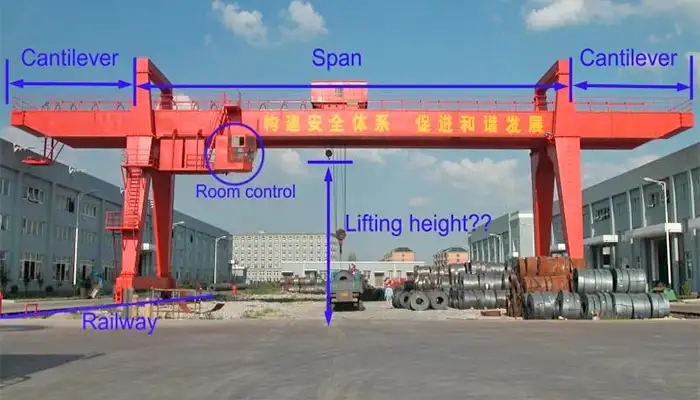
cantilever gantry crane for sale
Basic Definition and Function
A cantilever gantry crane is a type of gantry crane where one or both ends extend beyond the supporting rails, allowing the crane to reach areas outside the main runway—like loading trucks, accessing storage zones, or handling oversized materials that don’t fit directly under the beam.
Unlike a standard gantry crane, which moves strictly between two parallel rails, a cantilever design offers extended working coverage. This added reach helps operators load or unload materials directly from outside the span area without repositioning the crane or the vehicle.
In practice, it’s ideal for yards or workshops where:
- Space is limited on one side due to walls or equipment.
- Trucks or containers must be loaded from outside the main operating span.
- The working area needs flexible coverage without installing a longer runway system.
In short, it’s a smart solution when you need both lifting power and access flexibility without a major structural overhaul.
Common Applications
Cantilever gantry cranes are used in many industries that handle heavy, long, or irregular materials. Their open-end design allows for quick side access, which is especially useful in outdoor or semi-outdoor operations.
Typical application areas include:
- Shipyards and Dockyards – for handling ship parts, containers, or large sections during maintenance and assembly.
- Steel Yards and Rolling Mills – for lifting billets, coils, or steel plates that require side loading or stacking.
- Prefabrication and Construction Plants – where precast components or beams need to be moved between assembly zones.
- Logistics and Freight Depots – for loading or unloading trucks and trailers parked outside the crane span.
- Expansion Projects – where one side of the runway is blocked by an existing building or structure, and full gantry rails can’t be installed.
In these settings, a cantilever crane acts as a bridge between confined and open spaces, improving the workflow without redesigning the whole yard layout.
Design Variables Affecting Cost
The total cost of a cantilever gantry crane can vary widely depending on its design features, capacity, and level of customization. Buyers should understand the main variables that influence pricing and installation.
Key factors to consider include:
Span Length and Cantilever Projection
- Longer spans require stronger girders and heavier end carriages.
- Extended cantilever arms increase bending moments, which may raise the structural steel cost.
Load Capacity (e.g., 10–100 tons)
- Higher capacity means larger hoists, reinforced girders, and heavier-duty components.
- Light-duty cranes (under 20 tons) are more cost-effective for small workshops.
Girder Design (Box or Truss Type)
- Box girders offer higher rigidity and smoother operation, suited for heavy-duty or high-precision use.
- Truss girders are lighter and cheaper, suitable for long spans with moderate loads.
Drive and Control System
- Manual or semi-automatic systems are affordable and easy to maintain.
- Automated or remote-controlled options increase upfront cost but reduce operator fatigue and improve efficiency.
Each of these choices affects not only the price but also the long-term operating cost, so it’s worth balancing performance needs with practical usage frequency.
Key Cost Components in Cantilever Gantry Crane Projects
Understanding the total cost of a cantilever gantry crane is more than just looking at the quotation for the equipment itself. Several components—both obvious and hidden—can significantly impact your budget. Breaking them down helps you plan realistically and avoid surprises later.
The most visible part of your budget is the crane itself. This includes all major components that make the crane operational.
- Crane Main Structure: The girder, cantilever arms, trolley, and hoist. These define the crane's lifting capacity and span, and directly affect material and fabrication costs.
- Electrical and Control Systems: Motors, drives, control panels, push-button stations, or advanced remote control systems. More sophisticated control systems increase cost but can improve efficiency.
- Rail System and Power Supply: Rails, end stops, busbars, and cable carriers. Proper installation is critical for smooth and safe crane operation.
- Optional Add-Ons: Features like remote control, wind protection covers, anti-sway devices, or automated load positioning can add flexibility and safety but also increase the upfront investment.
The trick is balancing essential features with optional add-ons so you don't overspend on items you rarely use.
Even a perfectly designed crane is useless if it's not installed correctly. Installation costs can be substantial depending on site conditions.
- Foundation and Rail Installation: Includes concrete footings, anchor bolts, leveling, and alignment. Costs vary depending on soil condition, crane span, and cantilever length.
- Power Connection and Grounding: Electrical hookup, proper grounding, and safety devices. Often requires licensed electricians, adding to the labor cost.
- Testing, Alignment, and Calibration: Ensures smooth movement, accurate hoist operation, and safety compliance before the crane enters service.
Proper commissioning reduces the risk of early wear and unexpected downtime, which can save money in the long term.
These are the expenses that don't always appear on the initial quote but can impact your budget significantly.
- Transport and Customs Duties: Particularly relevant for imported cranes. Freight, insurance, and import taxes add up.
- Operator Training and Safety Certification: New systems may require certified operators. Skipping this can risk accidents or insurance issues.
- Maintenance Tools and Spare Parts Inventory: Keeping key spare parts on hand avoids long downtime, but it's an extra investment.
- Downtime Costs During Setup or Upgrade: While the crane is being installed, operations may slow down. This opportunity cost should be factored in.
Factoring in these hidden costs early prevents nasty surprises after the purchase.
Several variables can push the cost higher or lower depending on your specific situation.
- Customization Level: Special duty classes, environmental considerations (like corrosive or outdoor environments), or unique spans can increase manufacturing complexity and cost.
- Country of Manufacture and Freight Distance: Domestic cranes may save on shipping but might be costlier to produce; imported cranes can have lower production costs but higher logistics expenses.
- Frequency of Use and Working Duty: ISO working duty classifications (A3–A6) affect component durability. Higher frequency and heavier duty cranes require reinforced components, increasing cost.
ROI (Return on Investment) Framework for Buyers
When planning a cantilever gantry crane purchase, the upfront cost is only part of the picture. Understanding ROI helps you see how quickly the investment starts paying off and whether the crane is a financially sound choice for your operation.
ROI is a simple way to measure the financial return on your crane investment. The basic formula is:
看图片
- Annual Benefits: Include cost savings from faster handling, reduced labor, and minimized downtime.
- Annual Costs: Include electricity, maintenance, and any recurring operational expenses.
- Total Investment: The full cost of the crane, installation, commissioning, and setup.
A clear calculation allows you to compare different crane options objectively, rather than just looking at the sticker price.
Several practical factors determine how much return you can expect from a cantilever gantry crane:
- Productivity Improvement: How many tons can the crane move per hour or per day? Faster handling means more throughput without hiring extra labor.
- Labor Savings: Replacing forklifts or manual handling with a single crane reduces the number of operators needed. Fewer people on the floor also lowers training and insurance costs.
- Reduced Loading/Unloading Time: Cantilever cranes can reach areas that forklifts or mobile cranes struggle with, cutting time spent maneuvering trucks or arranging materials.
- Lower Maintenance Frequency: Compared to mobile or fixed cranes, a well-designed cantilever crane often requires less ongoing maintenance, saving both parts and labor over the long term.
When you quantify these benefits, it becomes easier to justify the initial investment and plan your budget with confidence.
The payback period tells you how long it will take before the crane effectively "pays for itself."
- Typical Payback: 1.5–3 years, depending on how frequently the crane is used and how much it improves operations.
- Practical Example: Replacing three forklifts with a single 20-ton cantilever gantry crane. The crane handles the same load faster and more safely. Labor and fuel costs drop. After about 2 years, the savings cover the initial purchase and installation costs.
Comparative Cost Insights
When planning a material handling setup, it helps to compare cantilever gantry cranes with other types of cranes. This gives a practical perspective on cost, flexibility, and return on investment, helping you decide which solution fits your operation best.
Comparison Overview
Not all cranes are created equal. Each type has strengths and limitations, and the “best” choice depends on your yard layout, load type, and long-term budget. Here’s a side-by-side look at the main factors:
| Factor | Cantilever Gantry Crane | Standard Gantry Crane | Overhead Crane |
|---|---|---|---|
| Foundation | Moderate Only one side clearance |
High Both sides required |
High Runway beams & columns |
| Flexibility | High Reach outside main span |
Medium Limited to rails |
Low Fixed indoor span |
| Maintenance | Medium Accessible checks & lubrication |
Medium Regular upkeep required |
Low Simpler indoor maintenance |
| Investment Cost | Medium–High More than standard gantry |
Medium Straightforward structure |
High Heavy structure & installation |
| ROI Period | 2–3 years Fast payback |
3–4 years Moderate payback |
4–5 years Slower ROI |
Practical Takeaways
- Cantilever gantry cranes are ideal when one side of your yard is blocked or you need to load/unload trucks directly.
- Standard gantry cranes work well for open areas with regular, predictable lifting patterns.
- Overhead cranes fit indoor operations where the crane runs along fixed beams, but they are costly and less flexible.
Practical Budget Planning Tips
Budgeting for a cantilever gantry crane isn't just about the purchase price. Practical planning upfront can save you headaches, time, and money down the road. Here are some tips based on real-world experience:
Before you order anything, take a hard look at your yard or workshop layout.
- Measure the available space on the operating side.
- Determine how far the cantilever needs to extend to reach trucks, storage areas, or loading docks.
- Factor in clearance for vehicles, materials, and pedestrian walkways.
Getting these measurements right upfront avoids costly redesigns or crane modifications later.
If you have access to local fabrication facilities, consider producing parts like girders or end carriages locally.
- Shipping large crane components can be expensive and risky.
- Local fabrication can reduce freight cost and lead time.
- It also gives flexibility to adjust designs on-site if minor changes are needed.
This approach works particularly well for medium-duty cranes or modular systems.
Think beyond the initial cost—maintenance is part of the long-term budget.
- Keep a list of required spare parts for the crane's lifespan.
- Make sure components are accessible for inspection and repair.
- Check the availability of local service providers for specialized parts like hoists, trolleys, or control systems.
Planning for maintenance reduces downtime and prevents unexpected costs.
A crane installed today may need to work in a bigger yard tomorrow.
- Consider adding extra span or cantilever length for future growth.
- Modular designs allow for extending rails or upgrading hoists without replacing the whole crane.
- Build in some buffer for heavier loads that may appear as operations grow.
Future-proofing your investment saves both money and operational headaches.
Not all quotes are created equal. Make sure you compare apples to apples:
- Check the materials, components, and duty class specified in each offer.
- Verify installation and commissioning costs are included.
- Ask about optional add-ons and whether they are necessary or can be added later.
Case Study: 20-Ton Cantilever Gantry Crane for Steel Yard Expansion
Sometimes seeing the numbers in a real-world scenario makes it easier to understand how a cantilever gantry crane affects both operations and budget. Here’s a practical example based on a steel yard expansion project.
Project Overview
A mid-sized steel yard needed to improve material handling efficiency while reducing dependence on multiple forklifts. The solution was a 20-ton cantilever gantry crane, chosen for its ability to reach trucks and storage areas on one side of the yard where space was limited.
Investment and Savings
- Initial Investment: USD 85,000. Includes crane, hoist, control system, installation, and commissioning.
- Annual Labor and Time Savings: USD 45,000 Fewer forklift operators required. Faster loading and unloading reduced downtime and improved throughput.
Financial Performance
- Payback Period: ~1.9 years. The crane quickly recouped its cost through labor and time savings.
- ROI after 5 Years: ~165%. After covering the initial investment, the crane continues to provide substantial cost savings year after year.
Practical Takeaways
- Choosing the right crane for the yard layout directly impacts ROI.
- Factoring in operational savings like labor and reduced handling time gives a more realistic picture of financial benefit.
- Even a mid-sized crane can provide rapid payback when it replaces multiple smaller machines and optimizes workflow.
This example illustrates that a well-planned cantilever gantry crane installation isn't just about lifting capacity—it's an investment that can pay for itself in under two years while improving operational efficiency.
Conclusion
Cantilever gantry cranes are more than just lifting equipment—they are an investment in efficiency, flexibility, and long-term operational savings. For operations that require open-end access or areas where standard gantry cranes can’t reach, a properly designed cantilever crane can dramatically improve workflow and reduce labor costs.
When budgeting for a new crane, it’s important to look beyond the initial purchase price. Installation, commissioning, ongoing maintenance, and operational efficiency all contribute to the total cost and ultimately shape your ROI.
Engaging with manufacturers early in the planning process is key. It allows you to:
- Optimize crane design for your yard layout and workflow.
- Make informed choices about span, cantilever length, and hoist capacity.
- Balance cost and performance to achieve the best long-term value.
A thoughtful approach ensures your crane meets both operational needs and financial goals.
Send Us An Inquiry
Planning to expand your yard or workshop? Don’t leave your investment to guesswork.
Contact Yuantai Crane for a detailed cost–benefit analysis and a customized quotation for your cantilever gantry crane solution. Our team can help you:
- Evaluate your layout and lifting requirements.
- Identify the most cost-effective configuration.
- Plan for future expansion without unnecessary overspending.
Take the first step toward smarter, more efficient material handling today.