Comparing Straddle Carrier Cranes: Chain vs Toplift
Most Important Takeaway
Choosing the right straddle carrier crane—chain-type, toplift, or telescopic—directly impacts yard efficiency, load handling safety, and operational costs. Selecting based on load capacity, stacking height, and workflow ensures maximum ROI.
- Understand load capacity differences and which crane suits your heaviest containers.
- Compare stacking heights for multi-tier container storage or industrial applications.
- Evaluate operational efficiency for faster container handling or modular cargo movement.
- Learn which straddle carrier type minimizes maintenance and downtime.
- Determine yard layout compatibility and route flexibility.
Solve practical questions:
- Which straddle carrier type handles oversized or heavy containers safely?
- What is the fastest option for frequent lifting and repositioning?
- Which model offers long-term cost efficiency and low maintenance?
Introduction
Straddle carrier cranes are a common sight in container ports, logistics hubs, and industrial yards. You see them moving containers from trucks to stacks, shifting heavy modules across a yard, or lifting loads that forklifts simply can't handle. These machines are not just lifting equipment—they are central to keeping operations smooth and safe. Choosing the right type of straddle carrier can make a noticeable difference in efficiency, cost, and safety for any industrial or port operation.
Picking the wrong crane isn't just an inconvenience. It can slow down your workflow, increase maintenance costs, and even create safety risks. That's why understanding the differences between chain-type, toplift, and telescopic straddle carriers matters before making a purchase.
- Operational efficiency: A well-matched crane moves the right load at the right speed without bottlenecks.
- Safety: Different lifting mechanisms behave differently under heavy loads; the right match reduces accidents.
- Cost management: Avoid overspending on equipment that doesn't fit your yard layout or load requirements.
- Long-term reliability: Using a crane suited for your workload minimizes breakdowns and maintenance downtime.
- Chain-type straddle carriers: Known for their ability to handle heavy containers and consistent lifting for repetitive moves. Ideal for high-weight yards but usually slower in cycle times.
- Toplift straddle carriers: Pick containers from the top frame. They are faster than chain-types and more precise in placement, especially useful in high-turnover container yards.
- Telescopic straddle carriers: Feature extendable lifting arms that adapt to different container lengths and stacking needs. Flexible and efficient for multi-tier stacking, but they come with slightly higher complexity and cost.
In practical industrial projects, choosing the right type isn't just about specs. You have to look at the loads you handle, the stacking height you need, the layout of your yard, and how fast containers need to move. By the end of this guide, you'll have a clear understanding of which type fits your operation best and what trade-offs to expect.
Types of Straddle Carrier Cranes
Straddle carrier cranes aren’t all the same. Each type has a specific way of lifting and moving containers, and knowing the differences helps you pick the right one for your yard, workflow, and cargo. Let’s break them down.
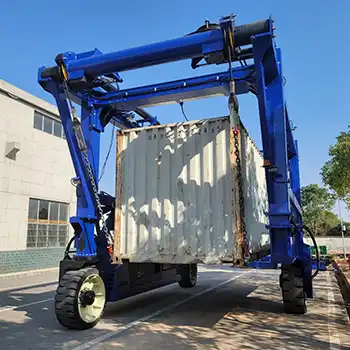 chain type container straddle carrier
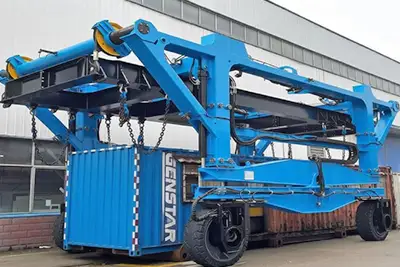
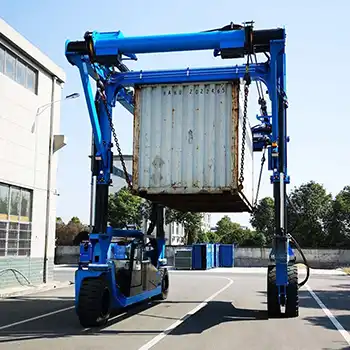 Telescopic Chain Container Straddle Carrier
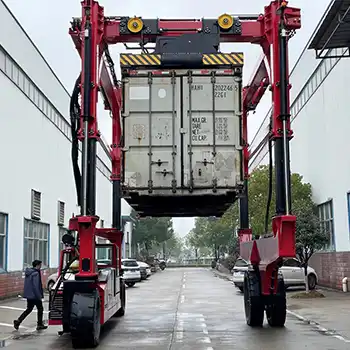 Telescopic Toplift Container Straddle Carrier
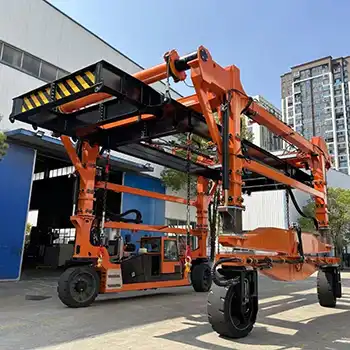 Multifunctional straddle carrier
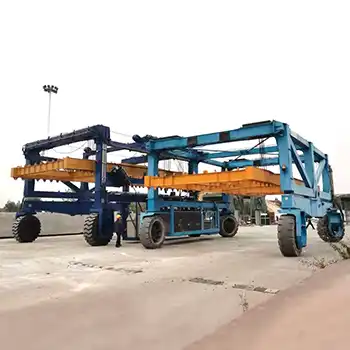 Multifunctional straddle carrier
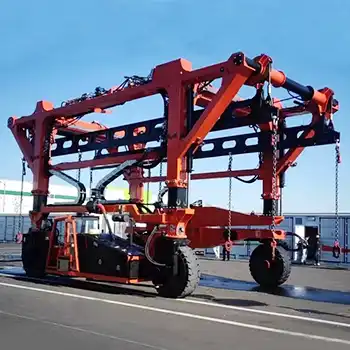 Multifunctional straddle carrier
Chain-type carriers lift using a chain hoist mechanism. They’re the classic choice for yards that handle heavy loads regularly.
How it Works:
- The crane lifts containers from the bottom using chains connected to the hoist.
- Simple, mechanical, and reliable.
Where It Excels:
- Handling very heavy containers or industrial modules.
- Operations with predictable, repetitive moves.
Practical Pros:
- Very strong and stable under maximum load.
- Straightforward mechanical design, so maintenance is simpler.
- Reliable in tough yard conditions.
Things to Consider:
- Slower than other types—cycle times can be longer.
- Stacking height is limited; not ideal for multi-tier storage.
- Less adaptable to varying container lengths.
Bottom Line:
If your main concern is lifting heavy loads safely, chain-type carriers get the job done. But don’t expect speed or multi-tier stacking.
Toplift carriers grab containers from the top, using an overhead frame. They’re built for faster operations, making them common in high-turnover ports and yards.
How it Works:
- Clamps onto container corners from above.
- Lifts and moves containers quickly.
Where It Excels:
- Fast-moving container yards.
- Medium-weight containers handled frequently.
Practical Pros:
- Faster lifting and placement compared to chain-types.
- Precise container alignment for stacking.
- Efficient in yards with standard container sizes.
Things to Consider:
- Maximum load slightly lower than chain-type cranes.
- Not ideal for very heavy or oversized containers.
- Flexibility is limited for variable container lengths.
Bottom Line:
Toplift carriers are a solid choice when speed and precision are critical—but you trade a bit of lifting power.
Telescopic carriers feature extendable arms, making them highly adaptable to different container lengths or modular loads. They’re perfect for yards where space is tight or loads vary in size.
How it Works:
- Arms extend or retract to fit the container.
- Lift from container corners for multi-tier stacking or varied cargo.
Where It Excels:
- Multi-tier stacking and mixed container sizes.
- Yards with limited space that need flexible handling.
Practical Pros:
- Can handle containers of different lengths without changing equipment.
- Maximizes yard space through multi-tier stacking.
- Ideal for mixed operations where loads vary.
Things to Consider:
- More complex machinery requires skilled operators.
- Higher upfront cost than chain-type or toplift carriers.
- Maintenance is more involved due to telescopic components.
Bottom Line:
Telescopic carriers offer the most flexibility but come with higher costs and complexity. They’re worth it if your operation demands adaptability and efficient space use.
- Chain-type: heavy loads, simple, robust, slower.
- Toplift: faster, precise, moderate loads, limited flexibility.
- Telescopic: flexible, multi-tier stacking, higher cost and complexity.
| Feature | Chain-Type Straddle Carrier | Toplift Straddle Carrier | Telescopic Straddle Carrier |
|---|---|---|---|
| Lifting Mechanism | Chain hoist lifts load from bottom |
Overhead frame clamps top corners |
Extendable arms adjust to container length |
| Ideal Load | Very heavy containers or industrial modules |
Medium-weight containers | Mixed container sizes or modular loads |
| Stacking Height | Limited usually single-tier |
Moderate standard stacking |
Multi-tier optimized for space |
| Speed / Cycle Time | Slower | Faster than chain-type | Moderate depends on arm extension |
| Precision | Basic alignment stable under load |
High precision accurate placement |
Flexible handles variable lengths |
| Yard Suitability | Heavy-duty industrial yards | High-turnover terminals | Flexible yards with space constraints |
| Pros | Robust, durable simple maintenance |
Fast, precise efficient for repetitive moves |
Flexible, multi-tier stacking adaptable to different sizes |
| Cons | Slow, limited stacking less flexible |
Lower max load less flexible for oversized loads |
Higher cost, complex requires skilled operators more maintenance |
| Practical Notes | Best for predictable, heavy loads minimal training |
Great for standard containers frequent moves |
Best for mixed loads & limited space plan for training & higher cost |
Critical Comparison Metrics
When choosing a straddle carrier crane, understanding key performance metrics is essential. These metrics help buyers match the crane to their operational needs, yard layout, and cargo type. Let’s break down the most important factors.
The maximum load a straddle carrier can safely lift directly affects your yard operations.
- Why it matters: Choosing a crane with insufficient capacity can slow down work, increase the risk of accidents, and reduce overall efficiency.
- Chain-type: Handles very heavy containers reliably, ideal for industrial yards with consistent heavy loads.
- Toplift: Best for moderate-weight containers, balances speed and lifting capacity.
- Telescopic: Can adapt to various container sizes, but individual load limits are slightly lower than chain-types.
- Practical note: Always account for a 10–20% safety margin above your heaviest container or module.
How high a crane can stack containers affects storage efficiency and yard layout.
- Why it matters: Dense ports or storage yards require multi-tier stacking to maximize space.
- Chain-type: Limited stacking height; usually suitable for single or low-tier storage.
- Toplift: Moderate stacking, works well with standard containers.
- Telescopic: Excellent for multi-tier storage; adjustable arms allow optimal use of space.
- Practical note: Consider your maximum stacking height requirements before selecting a crane type.
Operational efficiency covers lifting speed, transport, and placement, which directly impacts yard productivity.
Key factors:
- Lifting and transport cycle times.
- Fuel or electricity consumption.
- Automation features for faster or safer operation.
- Operator visibility and control system ergonomics.
Comparison:
- Chain-type: slower cycles, very stable for heavy loads.
- Toplift: faster, precise placement, ideal for repetitive container moves.
- Telescopic: moderate speed, highly flexible for varied container sizes.
Practical note: Efficiency is not just speed—it’s about smooth operation, low downtime, and minimal operator fatigue.
Every crane type has different maintenance requirements, which affect long-term reliability and safety.
- Chain-type: Simple mechanical parts, easier to maintain, robust under heavy load.
- Toplift: Moderate maintenance, especially for hydraulic and lifting frame components.
- Telescopic: More complex; telescopic arms require regular inspection and skilled operators.
- Practical note: Factor in maintenance schedules, downtime, and availability of spare parts when planning operations.
Cost goes beyond the initial purchase—it includes operating and lifecycle costs.
- Initial investment: Telescopic carriers are generally the most expensive, chain-types the least.
- Operating costs: Fuel, electricity, and maintenance vary by type and usage intensity.
- Trade-offs: A higher upfront cost may be offset by faster operations, lower downtime, or better space utilization.
- Practical note: Evaluate total cost of ownership rather than just the purchase price.
Practical Applications & Use Cases
Straddle carrier cranes perform differently depending on the type, load, and yard layout. Understanding which type fits which scenario can save time, reduce costs, and improve safety. Here’s a practical breakdown.
Chain-type carriers are designed for strength and reliability, making them ideal for heavy-duty industrial work.
Best For:
- Moving very heavy containers or industrial modules.
- Yards with predictable, repetitive heavy loads.
- Environments where durability is more important than speed.
Example Use Case:
- A steel plant in Europe uses chain-type carriers to transport 20–25 ton steel coils from production lines to storage racks. The robust chain hoist ensures safe handling of heavy loads, even during long shifts.
Key Point: Heavy-duty, reliable, and low-maintenance—but slower and less flexible.
Toplift carriers excel at speed and precise container placement, making them perfect for high-turnover operations.
Best For:
- Container terminals handling high volumes of TEUs per day.
- Logistics hubs with repetitive modular cargo handling.
- Operations where moderate-weight containers are moved frequently.
Example Use Case:
- A medium-sized container terminal in Asia uses toplift carriers to move standard 20–40 ft containers from trucks to storage stacks. The fast cycle times reduce yard congestion and improve overall throughput.
Key Point: Fast, precise, and efficient for frequent container handling—but limited in maximum load.
Telescopic carriers are flexible, with extendable arms for varying container sizes, allowing multi-tier stacking in tight spaces.
Best For:
- Yards with limited space that require multi-tier stacking.
- Operations handling containers of different lengths or oversized modular units.
- Flexible operations needing one crane to handle multiple load types.
Example Use Case:
- An inland depot in Europe uses telescopic carriers to stack containers up to four tiers. The adjustable arms handle both 20 ft and 45 ft containers efficiently, maximizing storage capacity.
Key Point: Flexible and space-saving—but higher cost and more complex to operate.
- Chain-Type: Heavy loads, high stability, slower cycles.
- Toplift: Fast, precise, moderate loads.
- Telescopic: Flexible, multi-tier stacking, adaptable to mixed container sizes.
Buyer Decision Guide
Selecting the right straddle carrier crane isn’t just about picking the biggest or fastest model. It’s about matching the equipment to your yard, workflow, and operational goals. This guide helps buyers make informed choices.
Before committing to a purchase, get clarity on these points:
- Load and Capacity: What is the maximum weight the crane can handle, and does it cover your heaviest containers or modules?
- Stacking Height: How high can the crane safely stack containers, and does it fit your storage layout?
- Speed and Cycle Time: How quickly can it lift, move, and place containers? Will it match your operational tempo?
- Customization Options: Are telescopic arms, multiple lifting modes, or automation features available?
- Maintenance Requirements: What is the maintenance schedule, and are spare parts readily available?
Your yard’s layout, container types, and move frequency directly influence the ideal crane type:
- Narrow or compact yards may benefit from telescopic carriers for multi-tier stacking.
- Yards with consistent heavy loads are better suited for chain-type carriers.
- Fast-moving, high-turnover terminals gain the most from toplift carriers for speed and precision.
- Consider travel paths, turning radii, and stacking patterns when planning equipment placement.
- Ensure the crane meets local safety regulations and industry standards.
- Check if it has features to reduce operator fatigue, sway control, or automated safeguards.
- Plan for future expansion: Will your crane handle higher stacking, heavier loads, or additional yard automation as operations grow?
- Factor in total cost of ownership—initial price, maintenance, and operational efficiency over the long term.
A successful purchase balances capacity, efficiency, safety, and flexibility. By asking the right questions, evaluating your yard, and planning for growth, you avoid costly mistakes and select a straddle carrier that fits your operation for years to come.
Conclusion
Choosing the right straddle carrier crane is more than a technical decision—it directly impacts your yard’s efficiency, safety, and long-term return on investment. Selecting a model that matches your operational needs ensures smooth workflow, reduces downtime, and protects both your cargo and workforce.
- Chain-type straddle carriers excel in heavy-duty yards where maximum load stability is essential.
- Toplift carriers offer speed and precision, making them ideal for fast-moving terminals.
- Telescopic carriers provide flexibility and space optimization, especially in yards handling mixed container sizes or multi-tier stacking.
Understanding your load types, stacking requirements, and operational workflow is key before making a purchase. These factors help determine which crane type fits your yard layout, cargo handling, and long-term operational plans.
Finally, always consult with suppliers to explore tailored solutions. A crane that matches your specific needs—whether in capacity, reach, or efficiency—delivers better results and a safer, more cost-effective operation.