Straddle Carrier for Sale: Buyer’s Guide to Choosing the Right Model
Selecting the right straddle carrier directly impacts operational efficiency, safety, and ROI. Buyers must match load capacity, stacking height, and yard layout to the carrier type and features.
Key Takeaways
- Determine the maximum load weight and include a safety margin to avoid overloading.
- Match carrier type (chain, toplift, telescopic) with yard operations and container sizes.
- Consider stacking height, lane width, and turning radius to optimize yard layout.
- Assess operating environment—indoor/outdoor, ground conditions, climate—to ensure durability.
- Understand pricing drivers, including customization, automation, and after-sales support.
- Ask suppliers precise questions about delivery, maintenance, multi-layer lifting, and warranty.
Questions Solved Here:
- Which straddle carrier capacity fits my containers?
- What type of straddle carrier is best for my yard layout?
- How to plan for multi-layer stacking and ground clearance?
- What affects the price of a straddle carrier, and what should I ask suppliers?
Introduction
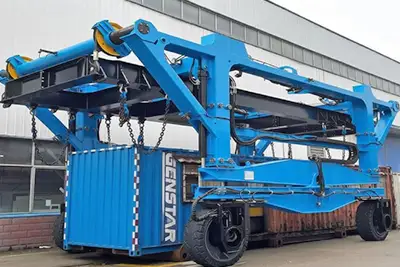
A straddle carrier is a machine built to lift, move, and stack containers in ports, container yards, and industrial sites. Unlike forklifts or gantry cranes, it carries containers while straddling them, so you don't need extra lifting equipment.
This design allows it to move containers over lanes smoothly, keeping operations flowing. If your yard has a lot of container traffic, a straddle carrier keeps things moving without constant delays. It's not fancy; it's practical and gets the job done day in and day out.
What is a Straddle Carrier?
A straddle carrier is a machine built to lift, move, and stack containers in ports, container yards, and industrial sites. Unlike forklifts or gantry cranes, it carries containers while straddling them, so you don't need extra lifting equipment.
This design allows it to move containers over lanes smoothly, keeping operations flowing. If your yard has a lot of container traffic, a straddle carrier keeps things moving without constant delays. It's not fancy; it's practical and gets the job done day in and day out.
Straddle carriers are commonly seen in:
- Ports: For loading and unloading containers from trucks or ships quickly.
- Container yards: To stack containers in multiple layers while keeping traffic moving.
- Industrial sites: To safely move heavy equipment or materials across the yard.
By lifting and moving containers directly, straddle carriers reduce the need for other machines. That means fewer delays, less risk of dropping or damaging cargo, and smoother yard operations.
- Safety: The right carrier reduces the risk of accidents and container damage.
- Efficiency: Matching carrier capacity with container weight and stacking height keeps workflow smooth.
- Cost control: Using equipment designed for your yard lowers maintenance and operational costs.
- Future readiness: A well-chosen carrier can handle more containers if traffic grows or the yard expands, without needing immediate upgrades.
When looking for a straddle carrier for sale, think about these points:
- Maximum container weight and how often they need to be moved.
- Stacking height and multi-layer handling requirements.
- Yard layout, lane width, and how tight the turning radius is.
- Ground conditions, weather, and exposure to the elements.
- Expected lifespan and long-term maintenance needs.
Choosing a straddle carrier isn't just buying a machine—it's planning how your yard will operate for years. By understanding your specific needs first, you can pick a carrier that keeps operations safe, reliable, and productive, without surprises down the line.
Determining Your Requirements
Choosing the right straddle carrier isn't just about picking a model off the shelf. Your yard, container types, and workflow all matter. Before you make a purchase, it's important to understand exactly what your operation needs. This ensures the carrier you buy will work safely, efficiently, and last for years.
The first thing to look at is how much weight the carrier will need to lift. Start by calculating the weight of the containers and any heavy cargo they might carry. Don't just take an average—consider the heaviest load you'll lift regularly.
Next, add a safety margin of around 10–20%. This protects the equipment from overloading during peak operations. Underestimating the tonnage isn't just risky—it can shorten the lifespan of your carrier, lead to costly repairs, and even create safety hazards in the yard.
Key points to check:
- Maximum container weight vs. peak load weight.
- Frequency of heavy lifts per day.
- Safety margin of 10–20% to account for unexpected weight.
- Avoid under-specifying tonnage to prevent premature wear.
Stacking isn't just about how high you can lift containers. Think about the space in your yard, lane widths, and turning radius. A carrier might lift containers high, but if the lanes are too narrow or the ground uneven, it can slow operations or cause accidents.
Plan for both current needs and future growth. If your yard may handle more containers or higher stacks in the coming years, pick a carrier that can handle that expansion without needing a complete replacement.
Practical considerations:
- Single-layer vs. multi-layer stacking requirements.
- Lane width and turning radius for smooth movement.
- Ground stability to avoid tipping or uneven lifts.
- Future scalability based on expected container throughput.
Where you operate the carrier matters a lot. Outdoor yards face rain, sun, and wind, while indoor sites may have space or height limitations. Weather-proofing, corrosion resistance, and surface handling are important considerations.
The ground surface type—concrete, asphalt, or compacted soil—affects the carrier's performance. Poorly prepared lanes increase wear and reduce efficiency. Temperature, humidity, and exposure to salt or chemicals can also shorten the lifespan of the carrier if the right materials and coatings aren't used.
Things to assess:
- Indoor vs. outdoor usage.
- Ground conditions and lane design.
- Climate factors: temperature, humidity, and corrosion risk.
- Protective features needed for long-term durability.
How fast the carrier moves and turns directly affects productivity. A faster carrier means more containers moved per hour, but it also requires precise lane planning to avoid accidents. Acceleration and deceleration times can influence how efficiently the yard operates.
Don't just focus on top speed—look at overall maneuverability, how tight it can turn, and how smoothly it handles when fully loaded. Balancing speed and safety keeps your operation both fast and reliable.
Points to consider:
- Turn radius relative to yard lanes.
- Travel speed and acceleration.
- Impact of speed on cycle time and workflow.
- Need for precision in tight spaces.
Types of Straddle Carriers
Not all straddle carriers are built the same. Different types are better suited for certain containers, yard layouts, and workloads. Choosing the right type ensures safe handling, smooth operations, and better efficiency. Let's take a closer look at the main types commonly available.
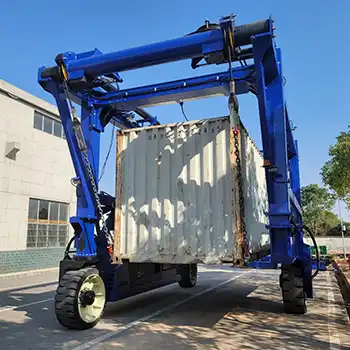 chain type container straddle carrier
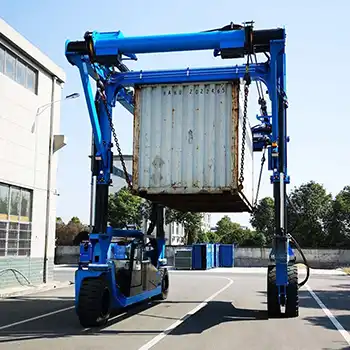 Telescopic Chain Container Straddle Carrier
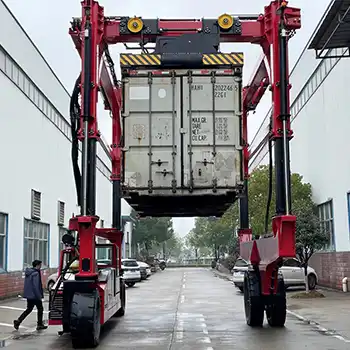 Telescopic Toplift Container Straddle Carrier
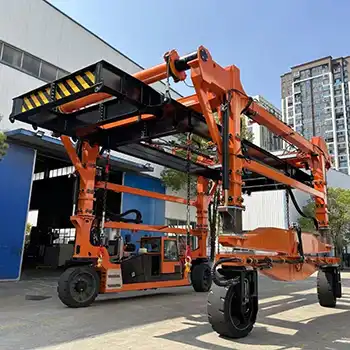 Multifunctional straddle carrier
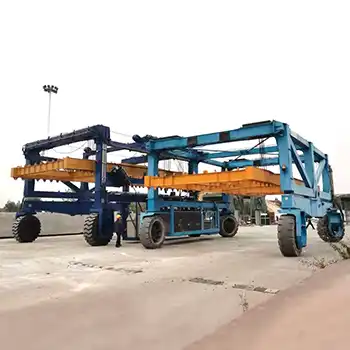 Multifunctional straddle carrier
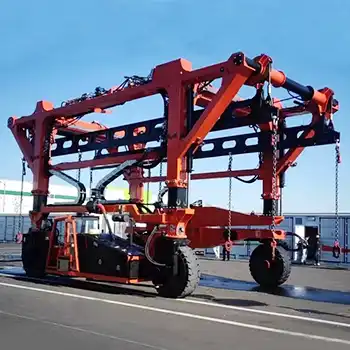 Multifunctional straddle carrier
Chain-type carriers are built for heavy-duty work. They are stable and strong, capable of handling high-capacity containers without strain. Because of their design, they move a bit slower than other types, but that stability is a big advantage when lifting the heaviest loads.
Key points:
- Ideal for high-capacity containers and dense workloads.
- Offers excellent stability during stacking.
- Slower travel speed but very reliable under heavy weight.
- Best for yards where heavy containers are frequently moved.
Toplift carriers focus on speed. They lift containers faster than chain-type carriers, making them ideal for operations with standard containers that have moderate weight. These are often used in busy ports or yards where efficiency and throughput are priorities.
Key points:
- Best for standard containers with moderate loads.
- Faster lifting and travel speed for quicker yard operations.
- Suitable for operations with frequent container moves.
- Less suited for very heavy or uneven loads.
Telescopic carriers are flexible. Their reach can adjust, allowing them to handle containers of different sizes or stack at varying heights. This type is useful for yards with mixed container sizes or where stacking flexibility is important.
Key points:
- Adjustable reach for containers of different sizes.
- Handles multi-layer stacking efficiently.
- Flexible solution for mixed-load yards.
- May be slightly more complex to maintain due to moving parts.
| Type | Lifting Capacity | Speed/Agility | Ideal Applications | Notes |
|---|---|---|---|---|
| Chain-Type | High | Moderate | Heavy containers, high-capacity yards | Very stable, slower travel |
| Toplift | Moderate | Fast | Standard containers, high-frequency moves | Quick lifting, less suited for very heavy loads |
| Telescopic | Variable | Moderate | Mixed container sizes, flexible stacking | Adjustable reach, slightly complex maintenance |
This breakdown helps you see at a glance which type matches your yard, container size, and operational needs. Remember, speed, capacity, and stacking flexibility are all connected—choosing the wrong type can slow down operations or increase maintenance costs.
Pricing Considerations
Buying a straddle carrier is a significant investment, and price is more than just a number on a quote. Understanding what drives the cost, the typical price ranges, and how to approach procurement can save you money and prevent headaches later.
Several factors influence the price of a straddle carrier. The main ones are straightforward, but they can add up quickly:
- Load Capacity & Stacking Height: Larger carriers that lift heavier containers or stack multiple layers cost more. Bigger engines, stronger frames, and reinforced components all increase the price.
- Optional Automation & Features: Remote operation, sensors, and control systems improve efficiency but add to upfront costs. Think of them as optional upgrades that can pay off if your yard has high traffic.
- Material Quality & Brand: Well-known brands and high-quality materials can be more expensive, but they typically last longer and require less maintenance.
- Local Support & Maintenance: Carriers that are easy to service locally, with available spare parts and trained technicians, reduce downtime. That reliability is part of the overall cost.
- Long-Term Operational Costs: Don't just look at the purchase price. Fuel or power consumption, spare parts, and periodic maintenance can make a cheaper carrier more expensive in the long run.
While prices vary by region and specifications, you can get a general idea:
- Small Carriers: Suitable for light containers or limited yard space. Often more affordable and easier to operate.
- Mid-Size Carriers: Balance capacity and speed, ideal for moderate yard operations with standard containers.
- High-Capacity Carriers: Designed for heavy containers or large-scale yards. They are more expensive but necessary for high-volume or heavy-duty work.
Adding features like remote operation, onboard sensors, or advanced control systems can increase the price noticeably. However, these features can improve productivity and reduce labor costs, so they're often worth the investment.
Purchasing a straddle carrier requires planning. A few practical tips can help you make the right choice and avoid surprises:
- Request Multiple Quotes: Ask several suppliers for detailed specifications and pricing to compare what's included and what's extra.
- Verify Factory Testing & Delivery: Make sure the carrier is fully tested before shipping, and confirm realistic delivery timelines.
- Check Installation Support: Some suppliers include setup or training, which can be crucial if your yard staff are new to straddle carriers.
- Evaluate Warranty & Service Contracts: Look for warranties covering major components and easy access to spare parts.
- Consider Supplier Reputation: Suppliers with a track record in your region are usually easier to work with, especially for ongoing maintenance.
Questions Buyers Should Ask Suppliers
Before purchasing a straddle carrier, buyers should clarify key technical and operational details with suppliers. These questions help ensure the equipment matches real yard conditions, not just catalog specifications.
A: Make sure the carrier can safely lift your heaviest containers plus an extra 10–20% margin.
- This prevents overloading during peak operations.
- Ensures the equipment maintains stability and durability even under heavier loads.
A: Verify that the carrier can stack containers two or three layers high safely and without tipping risks.
- Some carriers move containers well horizontally but are limited in vertical reach.
- Confirming stacking capability avoids delays and accidents when organizing containers in tight yards.
A: Check that the carrier matches your yard's lane width, turning radius, and surface conditions.
- Uneven or soft surfaces can reduce efficiency or damage equipment.
- Adequate lane spacing allows faster travel and smooth container handling.
A: Ask about realistic delivery schedules, installation help, and warranty coverage.
- Some suppliers offer factory testing and on-site setup, which saves time.
- Reliable spare parts availability and maintenance services ensure uninterrupted container handling.
A: Confirm whether the carrier can support remote operation, sensors, or future automation upgrades.
- Future-proofing your purchase avoids costly replacements later.
- Automation can improve cycle times, reduce labor needs, and keep yard operations more consistent.
Conclusion
Choosing the right straddle carrier isn’t just picking a machine off a catalog—it’s about matching the carrier to your yard’s workload, container sizes, and operational environment. You need to balance lifting capacity, stacking height, lane layout, and long-term maintenance when making a decision.
A carefully selected carrier improves safety, keeps containers moving efficiently, and reduces costly downtime. Over time, this translates into real savings and a smoother workflow across your yard or port. By considering all the details—weight limits, multi-layer stacking, ground conditions, and potential automation—you make an investment that pays off daily.
Practical takeaways:
- Pick a carrier that handles the heaviest loads with a proper safety margin.
- Ensure multi-layer stacking fits your yard layout and container throughput.
- Match the carrier’s speed, maneuverability, and durability to your operating environment.
- Factor in pricing, maintenance, and after-sales support for long-term cost efficiency.
- Future-proof your purchase with options for upgrades or automation if needed.
If you’re ready to improve container handling, reduce risks, and maximize productivity, reach out to suppliers today. Get a tailored quote for a straddle carrier for sale that matches your yard’s specific needs, load requirements, and operational workflow. A well-chosen carrier keeps your operation running reliably and efficiently, year after year.