
China RTG Gantry Crane Guide for Global Buyers 2026
China RTG Gantry Crane: Comprehensive Guide for Global Buyers and Industrial Applications
Choosing the right China RTG gantry crane is not only about price. Global buyers must evaluate crane configuration, automation level, structural quality, operating environment, lifecycle cost, compliance standards, and supplier engineering capability to ensure long-term operational efficiency and investment reliability.
Key Takeaways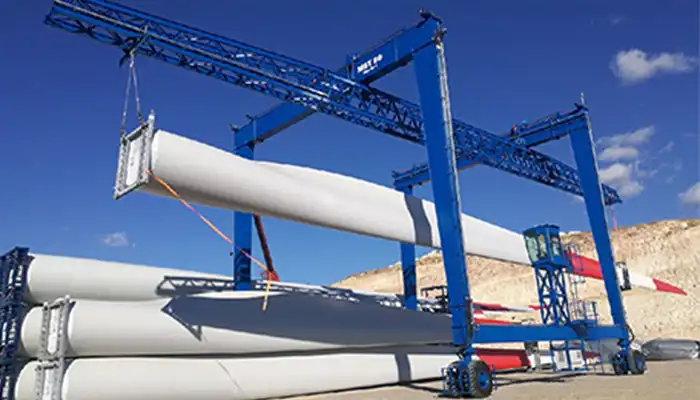
Rubber tyred gantry crane - Yuantai BetterCrane Solution
- Understand the differences between port RTG cranes and industrial RTG gantry cranes
- Learn how Chinese RTG crane manufacturers design cranes for container terminals, railway logistics, precast yards, steel plants, and heavy industries
- Compare diesel, hybrid, and electric RTG crane systems
- Discover how RTG crane span, lifting height, stacking capacity, and wheel loads affect operations
- Learn how to evaluate RTG crane quality, safety systems, and factory testing procedures
- Understand China RTG crane pricing factors and long-term operational costs
- Learn how automation, anti-sway systems, OCR, GPS, and smart yard technologies improve efficiency
- Discover the most important inspection and supplier evaluation checkpoints before purchasing
- Understand international certifications and export compliance requirements
- Learn how to reduce procurement risks when importing RTG cranes from China
Questions Solved in This Guide
This guide provides comprehensive answers to the most important technical, commercial, and operational questions related to RTG (Rubber Tyred Gantry) cranes. It is designed for port operators, EPC contractors, and industrial buyers evaluating Chinese RTG crane solutions for long-term investment and terminal development.
An RTG (Rubber Tyred Gantry) crane is a mobile container handling crane designed for yard stacking and intermodal logistics operations.
It operates on rubber tires instead of fixed rails, allowing flexible movement across container yards.
- Uses hoisting, trolley, and gantry travel systems for container movement
- Operates via diesel, hybrid, or electric power systems
- Controlled through cabin, remote, or automated systems
RTG cranes are widely used for stacking containers up to 1-over-8 levels in modern terminals.
China RTG cranes are widely adopted due to strong industrial capacity, cost efficiency, and growing engineering capability.
- Large-scale heavy equipment manufacturing ecosystem
- Competitive pricing compared to European suppliers
- Strong customization and project engineering capability
- Rapid production and global export logistics experience
- Increasing adoption of automation and smart port systems
These advantages make China a dominant supplier in global port infrastructure projects.
Correct configuration selection depends on operational demand, yard design, and future expansion planning.
- Lifting capacity based on container weight and peak load scenarios
- Span and stacking height based on yard density requirements
- Wheelbase designed for stability and travel flexibility
- Power system selection (diesel, hybrid, or electric)
- Automation level aligned with terminal digitalization strategy
Engineering evaluation is essential to avoid under-specification or over-investment.
RTG cranes:
- Rubber-tyred mobility with flexible yard movement
- No rail infrastructure required
- Suitable for dynamic or changing yard layouts
RMG cranes:
- Rail-mounted fixed track operation
- Higher positioning accuracy and stability
- Best for automated high-density terminals
RTGs prioritize flexibility, while RMGs prioritize precision and automation potential.
RTG cranes are widely used across multiple heavy industrial sectors beyond container ports.
- Container terminals and marine logistics hubs
- Rail intermodal freight yards
- Precast concrete and infrastructure projects
- Steel manufacturing and distribution yards
- Wind energy component logistics
- Shipbuilding and offshore fabrication yards
Their mobility and lifting capacity make them suitable for diverse heavy-duty material handling environments.
Yes, provided the manufacturer has proven engineering capability and export experience.
- Compliance with FEM, ISO, CE, and IEC standards
- Advanced fabrication and welding quality systems
- Factory testing and FAT verification procedures
- Increasing adoption of automation and smart control systems
Reliability depends heavily on supplier qualification and project execution capability.
RTG cranes manufactured in China typically comply with international and domestic standards.
- FEM standards (structural design and safety)
- ISO 9001 quality management systems
- CE certification for export markets
- IEC electrical safety standards
- GB/T Chinese national crane standards
Compliance ensures safe operation across global port environments.
- Standard RTG: USD 600,000 – 1,200,000
- Heavy-duty RTG: USD 1,000,000 – 1,800,000+
- Automated RTG systems: USD 1,500,000 – 2,500,000+
Final pricing depends on configuration, automation level, and compliance requirements.
- Lower fuel consumption and operational cost (hybrid systems)
- Zero-emission operation (electric RTG systems)
- Reduced maintenance requirements
- Compliance with green port regulations
- Improved energy efficiency through regenerative braking
These systems are increasingly preferred in modern sustainable port developments.
- Material traceability and certification checks
- Welding inspection (UT, MPI, RT testing)
- Electrical system verification and control testing
- Factory Acceptance Testing (FAT)
- Third-party inspection audits (SGS, BV, TÜV)
These steps ensure compliance with safety and performance standards before shipment.
Introduction
Why China Has Become a Global RTG Gantry Crane Manufacturing Center
China has become one of the largest manufacturing bases for RTG gantry cranes because the country combines large-scale steel fabrication capability, port equipment engineering experience, mature supply chains, and strong export infrastructure. Over the last two decades, Chinese crane manufacturers have supplied RTG cranes not only to domestic ports, but also to container terminals, railway logistics yards, and industrial projects across Asia, Africa, the Middle East, South America, and Europe.
Today, buyers looking for RTG gantry cranes from China are not only comparing prices. They are also evaluating automation systems, energy-saving technologies, production quality, and long-term service support. This shift has pushed Chinese RTG crane manufacturers to improve design standards, welding quality, electrical systems, and intelligent control technologies.
In many projects, buyers now expect Chinese RTG cranes to meet international standards while still maintaining cost advantages over European or locally fabricated alternatives.
Main Reasons China Became a Major RTG Crane Supplier
- Large domestic demand from ports and logistics hubs
- Strong heavy steel fabrication capability
- Mature crane component supply chains
- Competitive manufacturing costs
- Growing automation and smart crane technologies
- Extensive export experience for overseas projects
- Faster production lead times compared with some Western suppliers
China's crane manufacturing industry expanded rapidly alongside the country's port construction and industrial development. Large coastal ports such as Shanghai, Ningbo, Qingdao, Shenzhen, and Tianjin created strong demand for container handling equipment, including RTG gantry cranes, rail mounted gantry cranes, ship-to-shore cranes, and automated yard systems.
As demand increased, Chinese crane factories invested heavily in:
- CNC steel processing equipment
- Large welding workshops
- Heavy-duty machining centers
- Automated painting lines
- Electrical assembly systems
- Load testing facilities
This industrial growth allowed Chinese manufacturers to produce RTG cranes in larger quantities and with more consistent quality.
Another important factor is the concentration of crane manufacturing clusters in regions such as Henan Province and coastal industrial cities. Suppliers of motors, reducers, electrical systems, spreaders, wire ropes, and steel structures are located close to major crane factories. That reduces production costs and shortens delivery schedules.
For overseas buyers, this manufacturing ecosystem often means:
- Faster spare parts supply
- Easier customization
- More flexible production arrangements
- Better control of manufacturing costs
What Buyers Should Pay Attention To
Not all Chinese RTG crane factories have the same capability. Some factories mainly assemble standard cranes, while others can independently design automated RTG systems for large container terminals.
Buyers should evaluate:
- Engineering team experience
- Welding quality systems
- Automation integration capability
- Export project references
- Factory testing facilities
- Compliance with international standards
One of the biggest drivers behind China's RTG crane industry is the rapid expansion of container terminals and smart logistics infrastructure.
China operates some of the busiest ports in the world. These ports handle massive container volumes every year, which creates continuous demand for:
- High-efficiency RTG cranes
- Automated stacking systems
- Smart yard management
- Remote-controlled crane operations
- Energy-saving container handling equipment
Modern container terminals are no longer simple storage yards. They operate as highly coordinated logistics systems where crane movement, container positioning, truck dispatching, and yard planning are integrated through software platforms.
Because of this, RTG crane manufacturers in China have increasingly focused on:
- Automation technology
- OCR container recognition
- GPS positioning systems
- Anti-sway control
- Remote monitoring
- Fleet management software
Many ports are also moving toward electric RTG cranes and hybrid RTG cranes to reduce fuel consumption and emissions.
Smart Port Development Is Changing RTG Crane Design
In older container terminals, diesel RTG cranes were the standard option. But newer smart ports are demanding:
- Lower energy consumption
- Reduced maintenance downtime
- Better container positioning accuracy
- Remote operation capability
- Reduced operator fatigue
- Lower emissions
As a result, Chinese RTG crane manufacturers are developing:
- Fully electric E-RTG systems
- Battery-assisted hybrid RTGs
- Automated RTG cranes (ARTG)
- Intelligent anti-collision systems
This is one reason many overseas buyers now source RTG cranes from China for smart logistics projects.
RTG gantry cranes are large steel structures with high load requirements and strict dimensional accuracy standards. Manufacturing these cranes requires advanced fabrication capability.
Over time, Chinese RTG crane factories developed the infrastructure needed for large-scale production, including:
- Heavy steel plate rolling equipment
- Large submerged arc welding systems
- Precision machining centers
- Large blasting and painting workshops
- Structural assembly platforms
- Full-load testing systems
Some factories can fabricate multiple RTG cranes simultaneously for overseas port projects. This production scale is important for buyers who need several cranes delivered within tight project schedules.
Large Fabrication Capacity Helps Buyers In Several Ways
- Shorter manufacturing lead times
- Better schedule control for large projects
- More consistent structural fabrication quality
- Easier spare parts matching
- Better production efficiency
For large container terminal projects, buyers often require:
- Multiple RTG cranes with identical specifications
- Unified electrical systems
- Standardized spare parts
- Consistent automation systems
Factories with strong fabrication capability are generally better equipped to manage these requirements.
Structural Quality Is Critical for RTG Cranes
The structural performance of an RTG crane directly affects:
- Crane stability
- Wheel load distribution
- Long-term fatigue resistance
- Wind resistance performance
- Maintenance frequency
That is why experienced buyers carefully review:
- Steel material selection
- Welding procedures
- NDT inspection reports
- Structural stress calculations
- Load testing procedures
Rising Global Demand for Automated Container Handling Systems
Container terminals are under pressure to move more containers in less time while reducing operational costs. This is driving global demand for automated RTG gantry cranes.
Many logistics operators now want:
- Faster container stacking
- Reduced labor dependency
- Better yard utilization
- Lower fuel consumption
- Improved operational safety
- Real-time equipment monitoring
Automated RTG cranes help achieve these goals.
Chinese RTG crane manufacturers have expanded quickly in this area because they can combine:
- Mechanical fabrication
- Electrical integration
- PLC programming
- Remote control technology
- Smart logistics software
In many modern terminals, RTG cranes are connected to central yard management systems that automatically assign container positions and optimize crane movement paths.
Automation Features Becoming Common in RTG Cranes
- Remote operator cabins
- Automatic steering correction
- Container positioning systems
- OCR and RFID identification
- Anti-sway motion control
- Collision avoidance systems
- Predictive maintenance monitoring
For buyers planning long-term container yard expansion, automation compatibility has become an important purchasing factor.
Growing Demand for RTG Cranes Across Multiple Industries
Although RTG gantry cranes are mainly associated with container terminals, their applications now extend far beyond ports. Many industries use RTG cranes because of their mobility, large span capability, and flexibility in outdoor material handling operations.
Container handling remains the largest application for RTG gantry cranes worldwide.
RTG cranes are widely used in:
- Container stacking yards
- Intermodal terminals
- Marine logistics hubs
- Inland container depots
Their rubber tire design allows flexible movement between yard blocks without rail infrastructure.
Why Ports Prefer RTG Cranes
- Flexible yard layout
- High stacking efficiency
- Lower infrastructure costs compared with RMG systems
- Easy expansion of storage areas
- Better adaptability for changing container volumes
Modern ports increasingly choose:
- Hybrid RTG cranes
- Electric RTG cranes
- Automated RTG systems
Railway logistics terminals are another major market for RTG gantry cranes in China and overseas.
These cranes are used for:
- Rail-to-container transfer
- Truck loading operations
- Inland cargo distribution
- Intermodal freight handling
As railway freight networks expand, more inland logistics hubs require RTG cranes for efficient container transfer between trains and trucks.
Common RTG Features for Railway Terminals
- Wide span designs
- Fast trolley travel speed
- Precision container positioning
- High operational frequency
- Remote monitoring systems
RTG gantry cranes are also widely used in the precast concrete industry.
They handle:
- Precast bridge segments
- Concrete beams
- Full-span girders
- Tunnel components
- Large structural elements
Compared with fixed gantry cranes, rubber tyred gantry cranes provide better mobility across large casting yards.
Why RTG Cranes Work Well in Precast Yards
- Flexible movement between production zones
- Ability to handle long precast components
- Reduced need for rail installation
- Better yard utilization
In bridge construction projects, large-capacity RTG cranes are often used for:
- Beam storage yard operations
- Girder transportation
- Segment turning operations
Steel plants use RTG cranes for outdoor storage and material handling applications.
Typical handling tasks include:
- Steel coil transportation
- Billet handling
- Pipe storage operations
- Steel plate yard logistics
These environments require heavy-duty RTG crane structures because steel products are extremely heavy and operating conditions are demanding.
Important Design Features for Steel Industry RTGs
- High lifting capacity
- Heat-resistant electrical systems
- Heavy-duty wheel assemblies
- Strong anti-sway performance
- Reliable continuous-duty operation
Wind energy manufacturing facilities use RTG cranes for handling oversized components such as:
- Wind turbine towers
- Blade sections
- Nacelles
- Heavy machinery assemblies
These components are long, heavy, and difficult to transport with conventional lifting equipment.
RTG gantry cranes allow manufacturers to:
- Move components across open yards
- Store oversized equipment
- Improve assembly workflow
- Reduce transportation bottlenecks
Shipyards and heavy industrial plants also use RTG cranes for outdoor handling operations.
Applications include:
- Large steel section handling
- Ship block movement
- Heavy equipment assembly
- Industrial storage yard operations
In shipbuilding yards, RTG cranes are often selected because they can travel freely without requiring fixed rail foundations.
Why RTG Crane Selection Matters
Selecting the correct RTG gantry crane affects far more than lifting performance. It directly impacts yard efficiency, operating costs, maintenance workload, and long-term project profitability.
A crane that looks cheaper at the beginning may create higher operating costs later if:
- Fuel consumption is high
- Tire wear is excessive
- Automation systems are unreliable
- Spare parts are difficult to source
- Structural maintenance becomes frequent
That is why experienced buyers evaluate the full operational picture before purchasing an RTG crane.
RTG crane performance directly affects yard productivity.
Important operational factors include:
- Hoisting speed
- Trolley travel speed
- Gantry travel speed
- Positioning accuracy
- Operator visibility
- Automation response time
Even small improvements in cycle time can significantly increase daily container throughput.
Stacking configuration determines how efficiently a terminal uses available yard space.
Buyers must evaluate:
- Number of container rows
- Stacking height
- Container clearance requirements
- Truck lane arrangement
- Future expansion needs
Incorrect crane sizing can reduce yard efficiency and increase truck waiting time.
RTG crane dimensions must match yard layout conditions.
This includes:
- Span width
- Turning radius
- Travel path clearance
- Pavement strength
- Container block arrangement
Poor layout planning often creates operational bottlenecks later.
Energy cost is becoming a major issue for container terminals and industrial yards.
Many buyers now compare:
- Diesel fuel consumption
- Hybrid energy savings
- Electric RTG operating costs
- Maintenance requirements
- Emission reduction targets
In high-duty applications, energy-efficient RTG cranes can reduce operating costs considerably over time.
Lifecycle cost is often more important than initial purchase price.
Buyers should evaluate:
- Tire replacement frequency
- Wire rope service life
- Electrical system reliability
- Spare parts availability
- Maintenance accessibility
- Technical support response time
Well-designed RTG cranes generally provide:
- Lower downtime
- More stable operation
- Easier maintenance access
- Better long-term operating efficiency
What Is an RTG Gantry Crane?
An RTG gantry crane, also called a Rubber Tyred Gantry crane, is a mobile gantry crane designed mainly for container handling operations in ports, railway terminals, logistics yards, and industrial storage areas. Unlike rail mounted gantry cranes, RTG cranes move on rubber tires, which gives them greater flexibility in outdoor yard operations.
RTG cranes are widely used in container terminals because they can stack containers efficiently while covering multiple container rows and truck lanes. In many modern ports, RTG cranes are one of the core pieces of yard handling equipment. They help move containers between trucks, trailers, railcars, and stacking areas quickly and safely.
Over the years, RTG gantry cranes have evolved from basic diesel-powered machines into highly automated systems with:
- Remote operation capability
- Anti-sway control
- GPS positioning
- OCR container recognition
- Hybrid or electric power systems
- Smart yard management integration
Today, RTG cranes are not limited to marine terminals. They are also used in:
- Railway intermodal logistics
- Precast concrete yards
- Steel storage facilities
- Wind turbine manufacturing plants
- Shipyards
- Heavy equipment assembly areas
Their mobility and large-span design make them suitable for handling heavy loads across wide outdoor work areas.
Definition of Rubber Tyred Gantry Crane
A Rubber Tyred Gantry crane is a gantry-type lifting machine that travels on rubber tires instead of rails. The crane structure typically consists of:
- Main girder
- Supporting legs
- Hoisting system
- Trolley mechanism
- Rubber tire traveling system
- Spreader or lifting attachment
- Electrical control system
The crane straddles container rows and moves along container blocks while lifting and stacking containers underneath the gantry frame.
In container terminal operations, RTG cranes are commonly used for:
- Container stacking
- Truck loading and unloading
- Container transfer operations
- Yard storage management
- Intermodal cargo handling
Depending on the design, RTG cranes can stack containers:
- 4+1 rows
- 5+1 rows
- 6+1 rows
- Wider custom yard configurations
The "+1" usually refers to the truck lane located beside the container stacking rows.
The primary role of an RTG crane is to improve container yard efficiency. The crane allows terminals and logistics facilities to maximize storage density while maintaining organized cargo movement.
Main functions include:
- Lifting ISO containers
- Stacking containers vertically
- Moving containers between trucks and storage areas
- Supporting rail-to-yard transfer operations
- Managing container storage flow
- Improving yard space utilization
In industrial applications, RTG cranes may also handle:
- Steel coils
- Precast concrete beams
- Wind turbine components
- Large fabricated structures
- Heavy machinery parts
Key Features of RTG Cranes
- Rubber tire mobility
- Outdoor operating capability
- High stacking efficiency
- Flexible yard arrangement
- Large span coverage
- Lower infrastructure requirements compared with rail systems
The operating principle of an RTG gantry crane is relatively straightforward, but the coordination between systems is highly precise.
The crane uses a hoisting mechanism mounted on a trolley system to lift containers vertically. The trolley then moves horizontally along the gantry beam to position the load accurately. Meanwhile, the entire crane can travel longitudinally on rubber tires across the yard.
This combination of vertical lifting, transverse trolley travel, and longitudinal gantry movement allows the RTG crane to handle containers efficiently within large stacking blocks.
Core Operating Movements
- Hoisting movement for lifting containers
- Trolley travel for side-to-side positioning
- Gantry travel for moving across the yard
- Steering movement for directional adjustment
Modern RTG cranes often use:
- Variable frequency drives (VFD)
- PLC control systems
- Anti-sway technologies
- Automated positioning systems
These technologies improve:
- Positioning accuracy
- Operating speed
- Load stability
- Energy efficiency
- Safety performance
A standard container handling cycle usually includes:
- Positioning the crane above the container
- Lowering the spreader
- Locking onto the container
- Hoisting the load
- Moving the trolley to the target position
- Traveling the crane if required
- Lowering and placing the container
- Releasing the spreader locks
In busy container terminals, this process repeats continuously throughout the day.
RTG cranes are an important part of container yard logistics flow. Their role is to organize and transfer containers efficiently between different transportation systems.
A typical workflow inside a container terminal includes:
- Containers arriving from ships via STS cranes
- Transport vehicles moving containers to yard blocks
- RTG cranes stacking containers in designated storage areas
- Retrieval and loading operations for outbound transport
The crane operator or automation system must manage:
- Container positioning
- Stacking sequence
- Weight distribution
- Retrieval efficiency
- Traffic coordination
RTG Cranes Help Improve Yard Operations By:
- Reducing truck waiting time
- Increasing storage density
- Improving container retrieval speed
- Optimizing yard traffic flow
- Supporting high-throughput logistics operations
In automated terminals, RTG cranes may communicate directly with:
- Terminal Operating Systems (TOS)
- GPS positioning systems
- OCR container recognition systems
- Fleet management software
This allows real-time coordination across the entire container yard.
Difference Between RTG and RMG Cranes
RTG cranes and RMG cranes are both widely used for container handling operations, but their design philosophy and operating methods are different.
The biggest difference is the traveling system:
- RTG cranes move on rubber tires
- RMG cranes move on fixed rail tracks
This difference affects:
- Mobility
- Infrastructure cost
- Yard flexibility
- Automation complexity
- Maintenance requirements
Choosing between RTG and RMG cranes depends heavily on:
- Yard layout
- Container throughput
- Expansion plans
- Budget
- Automation goals
RTG cranes offer higher mobility because they are not fixed to rails.
They can:
- Move between yard blocks
- Change operating zones
- Adjust to changing container flows
- Operate in flexible yard layouts
This flexibility makes RTG cranes suitable for:
- Medium and large container terminals
- Expanding logistics yards
- Multi-purpose industrial sites
RMG cranes, on the other hand, travel only along fixed rail tracks. Their movement path is predetermined during yard construction.
RTG Crane Mobility Advantages
- Flexible deployment
- Easier yard expansion
- No rail alignment limitations
- Better adaptability for changing operations
RMG Crane Mobility Limitations
- Fixed travel path
- Rail maintenance requirements
- Less flexible yard reconfiguration
Infrastructure cost is another major difference between RTG and RMG systems.
RTG cranes generally require:
- Reinforced concrete pavement
- Yard leveling
- Tire load capacity analysis
RMG cranes require:
- Rail foundations
- Rail alignment systems
- Electrical conductor systems
- Precise installation tolerances
Because RTG cranes do not require rail installation, the initial infrastructure investment is often lower.
This is one reason many developing ports and inland logistics terminals prefer RTG systems.
Infrastructure Comparison
RTG Crane Infrastructure
- Lower initial civil work cost
- Faster installation
- Easier yard modification
- Simpler expansion capability
RMG Crane Infrastructure
- Higher rail installation cost
- More precise foundation requirements
- Longer construction period
- Higher alignment maintenance requirements
RTG cranes provide more operational flexibility in dynamic container yards.
Operators can:
- Reassign cranes to different blocks
- Adjust yard layouts
- Expand storage areas more easily
- Handle irregular traffic patterns
RMG systems usually provide:
- Higher automation precision
- More stable travel motion
- Better energy efficiency in fixed operations
However, they are less flexible when yard conditions change.
RTG Cranes Are Commonly Preferred For:
- Expanding ports
- Mixed cargo yards
- Industrial handling applications
- Multi-functional logistics terminals
RMG Cranes Are Often Preferred For:
- Fully automated terminals
- Fixed rail intermodal yards
- High-density automated container storage
Although both crane types perform container handling functions, their applications often differ.
Typical RTG Crane Applications
- Marine container terminals
- Inland logistics depots
- Railway intermodal facilities
- Precast concrete yards
- Steel storage yards
- Heavy industrial handling areas
Typical RMG Crane Applications
- Automated rail terminals
- Fixed container transfer corridors
- High-density stacking terminals
- Rail-mounted logistics systems
In many cases, RTG cranes are selected because they provide a balance between:
- Mobility
- Capacity
- Cost
- Operational flexibility
How RTG Gantry Cranes Work
RTG gantry cranes operate through coordinated movement systems that allow containers to be lifted, transported, and stacked accurately within container yards.
The crane combines:
- Vertical hoisting motion
- Horizontal trolley movement
- Longitudinal gantry travel
- Steering control systems
Modern RTG cranes use automated electrical controls to synchronize these movements efficiently.
The hoisting system is responsible for lifting and lowering containers.
It typically includes:
- Hoist motors
- Wire ropes
- Drums
- Sheaves
- Brake systems
The spreader locks onto the container corner castings before lifting begins.
Important hoisting considerations include:
- Lifting speed
- Load stability
- Sway control
- Wire rope safety
- Precise positioning accuracy
Heavy-duty RTG cranes may handle:
- 40-foot containers
- Twin-lift containers
- Oversized industrial components
The trolley travels horizontally along rails mounted on the main girder.
Its purpose is to:
- Position the load accurately
- Transfer containers across the stacking area
- Support efficient loading and unloading cycles
Modern trolley systems often include:
- Frequency-controlled drives
- Anti-sway systems
- Laser positioning
- Automated travel correction
Smooth trolley motion is important because sudden movement can increase load sway and reduce operational safety.
The entire RTG crane moves on multiple rubber tires mounted on bogie assemblies.
These systems allow the crane to:
- Travel between yard rows
- Reposition between blocks
- Operate without rail infrastructure
RTG cranes may use:
- Straight travel systems
- 90-degree steering
- Pivot steering
- Automatic steering correction
The tire system must support:
- Heavy wheel loads
- Continuous outdoor operation
- Uneven pavement conditions
- High-duty travel cycles
Container stacking is one of the main operational tasks of RTG gantry cranes.
Containers are stacked in organized rows and tiers to maximize yard storage capacity.
The stacking process involves:
- Container identification
- Position confirmation
- Load lifting
- Precise placement
- Stack stability management
Typical stacking configurations include:
- 4-high stacking
- 5-high stacking
- 6-high stacking
Some automated RTG systems can stack even higher depending on terminal design.
Important Factors Affecting Stacking Efficiency
- Crane span
- Hoisting height
- Trolley speed
- Yard traffic flow
- Automation systems
- Operator experience
- Container tracking software
Efficient stacking operations help:
- Reduce yard congestion
- Improve truck turnaround time
- Increase container throughput
- Lower operational delays
Main Components of China RTG Gantry Cranes
The performance of an RTG gantry crane depends heavily on the quality and coordination of its major components. A modern China RTG crane is not simply a steel structure with wheels. It is a complete handling system that combines structural engineering, mechanical transmission, electrical control, automation technology, and intelligent monitoring.
For buyers, understanding the main RTG crane components is important because component selection directly affects:
- Lifting performance
- Structural stability
- Operating efficiency
- Energy consumption
- Maintenance workload
- Spare parts availability
- Long-term reliability
In many overseas projects, the visible structure may look similar between suppliers, but the actual differences often appear in:
- Steel fabrication quality
- Motor and reducer selection
- Electrical system design
- Automation integration
- Welding standards
- Safety protection systems
That is why experienced buyers usually evaluate RTG cranes component by component instead of only comparing total price.
The gantry structure is the main load-bearing framework of an RTG crane. It supports the lifting mechanism, trolley system, electrical equipment, and traveling assemblies while carrying heavy container loads during continuous operation.
In container terminals and industrial yards, RTG cranes operate under:
- Repeated load cycles
- Wind loads
- Dynamic movement forces
- Uneven pavement conditions
- Outdoor corrosion environments
Because of this, structural design and fabrication quality are critical.
The main girder is the horizontal beam spanning across the container rows. It carries the trolley system and transfers lifting loads to the supporting legs.
In China RTG crane manufacturing, the main girder is usually fabricated using:
- Box girder structures
- Welded steel plate assemblies
- High-strength structural steel
Box girder designs are commonly used because they provide:
- High bending resistance
- Better torsional rigidity
- Improved fatigue resistance
- Stable trolley rail alignment
The girder design must account for:
- Maximum lifting capacity
- Span length
- Wind load conditions
- Dynamic stress during trolley movement
- Container sway forces
For larger RTG cranes with wide spans and high stacking heights, girder stiffness becomes especially important.
Excessive structural deflection can affect:
- Trolley travel alignment
- Spreader positioning accuracy
- Anti-sway system performance
- Wheel load distribution
Important Buyer Inspection Points
- Structural calculation reports
- Steel plate thickness
- Weld seam quality
- Deflection standards
- NDT inspection reports
- Paint coating specifications
Fatigue resistance is a key concern in export projects due to long-term repetitive loading.
The supporting legs transfer the crane load from the main girder to the tire assemblies.
RTG crane legs are designed to withstand:
- Vertical lifting loads
- Lateral travel forces
- Wind pressure
- Braking forces
- Torsional stress during steering
Depending on crane size and application, manufacturers may use:
- Rigid leg structures
- Flexible leg designs
- Reinforced box-section legs
The leg structure also affects:
- Crane stability
- Tire load distribution
- Yard clearance
- Travel smoothness
Leg spacing must allow:
- Truck passage
- Container stacking clearance
- Safe operational movement
Structural Stability Is Extremely Important
- Uneven wheel loads
- Tire overloading
- Structural vibration
- Maintenance issues
- Alignment problems
Wind conditions in coastal terminals further increase structural requirements.
Most China RTG gantry cranes use high-strength low-alloy structural steel for major load-bearing components.
Common steel materials include:
- Q355 steel
- Q390 steel
- Q420 steel
- Equivalent high-strength grades
High-strength steel helps reduce:
- Overall crane weight
- Structural stress concentration
- Wheel load pressure
It improves:
- Fatigue resistance
- Structural stiffness
- Long-term durability
Why Material Selection Matters
- Crack resistance
- Welding performance
- Corrosion resistance
- Structural lifespan
Buyers typically verify:
- Steel mill certificates
- Material traceability
- Chemical composition reports
- Mechanical testing data
Marine applications require strong corrosion protection systems.
The traveling system allows RTG cranes to move across container yards using rubber tires instead of rails.
Configurations may include:
- 4-wheel systems
- 8-wheel systems
- 16-wheel systems
- 32-wheel systems
Travel systems include:
- Bogie assemblies
- Drive motors
- Gear reducers
- Axles
- Suspension systems
- Hydraulic equalization
Why Multi-Wheel Configurations Matter
- Reduced pavement stress
- Improved stability
- Lower tire wear
- Smoother travel motion
Wheel load distribution is critical for infrastructure protection.
RTG Crane Standards and Technical Specifications in China
RTG gantry crane standards and technical specifications play a major role in crane safety, operational reliability, export compliance, and long-term maintenance performance. For global buyers, understanding these standards is important because RTG cranes are large outdoor handling systems operating under heavy-duty conditions and continuous load cycles.
In many container terminals and industrial yards, RTG cranes operate continuously and are exposed to:
- Wind loads
- Repetitive lifting stress
- Outdoor corrosion
- High wheel pressure
- Frequent acceleration and braking
- Heavy container stacking operations
Because of this, RTG crane design must meet structural safety standards, electrical protection requirements, welding quality rules, and operational performance specifications.
For export projects, buyers often require compliance with both Chinese national standards and international project-specific technical specifications.
China has a complete technical standard system for RTG cranes covering structural design, mechanical systems, electrical equipment, safety protection, materials, welding, inspection, and testing.
- Structural design
- Mechanical systems
- Electrical equipment
- Safety protection
- Material selection
- Welding procedures
- Inspection requirements
- Testing methods
GB/T 14783 is the core Chinese standard for Rubber Tyred Gantry cranes. It defines technical parameters, operating conditions, design requirements, and structural guidelines.
- RTG terminology
- Main technical parameters
- Operating conditions
- Design requirements
- Structural considerations
- Environmental conditions
Key areas include:
- Rated lifting capacity
- Span dimensions
- Lifting height
- Duty classification
- Wind resistance requirements
- Temperature conditions
- Ground slope limits
- Power supply conditions
RTG cranes are subjected to dynamic loads, fatigue stress, wind pressure, and uneven ground conditions.
- Load combinations
- Stress distribution
- Deflection limits
- Fatigue resistance
- Structural stability
- Wind load resistance
Structural design considerations include:
- Maximum wheel loads
- Dynamic impact factors
- Torsional stress
- Skewing forces
- Emergency braking loads
Electrical systems control hoisting, trolley movement, gantry travel, automation, and safety monitoring.
- Cabinet design
- Power distribution
- Cable protection
- Grounding systems
- Insulation requirements
- Motor protection
- Safety devices
Environmental requirements include:
- Humidity resistance
- Salt corrosion protection
- Temperature variation
- Vibration resistance
- Continuous operation loads
Welding quality directly affects structural integrity and fatigue life of RTG cranes.
- Structural cracking prevention
- Fatigue failure prevention
- Deformation control
- Maintenance cost reduction
- Welding procedures
- Welder qualifications
- Inspection methods
- NDT testing
- Acceptance criteria
Inspection methods include:
- Ultrasonic testing (UT)
- Magnetic particle testing (MT)
- Radiographic testing (RT)
- Dye penetrant testing (PT)
Export RTG crane projects often require compliance with international standards in addition to Chinese standards.
- Operational safety
- Design consistency
- Regulatory compliance
- Inspection approval
- Long-term reliability
FEM standards include:
- Structural classification
- Duty cycles
- Load combinations
- Fatigue calculations
- Safety factors
ISO requirements include:
- Container compatibility
- Quality management (ISO 9001)
- Environmental management (ISO 14001)
- Safety systems (ISO 45001)
CE certification includes:
- Electrical safety
- Mechanical safety
- Risk analysis
- Safety devices
- Emergency systems
IEC compliance includes:
- Motor protection
- Insulation systems
- Cable standards
- Grounding systems
- Control systems
Technical parameters determine operational capability, efficiency, and structural requirements.
- Lifting capacity
- Span
- Lifting height
- Stacking rows
- Travel speed
- Wheel load
Lifting capacities include:
- 40 tons
- 41 tons
- 50 tons
- 65 tons
Span configurations include:
- 4+1
- 5+1
- 6+1
Lifting heights include:
- 1 over 4
- 1 over 5
- 1 over 6
Wheel load considerations include:
- Static load
- Dynamic load
- Tire pressure
- Ground bearing pressure
Types of RTG Gantry Cranes Manufactured in China
China manufactures a full spectrum of Rubber Tyred Gantry (RTG) cranes, ranging from conventional container yard equipment to advanced automated and electrified systems. These variations are primarily defined by power system, automation level, and application engineering requirements in ports and industrial logistics environments.
6 Types of Hot Sale RTG Gantry Cranes
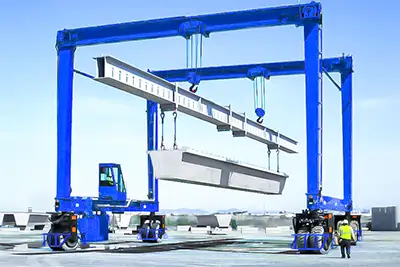
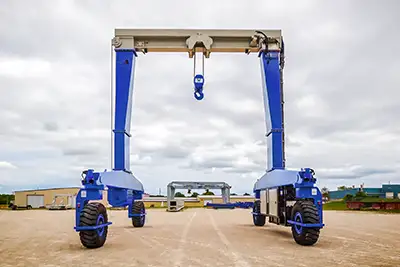
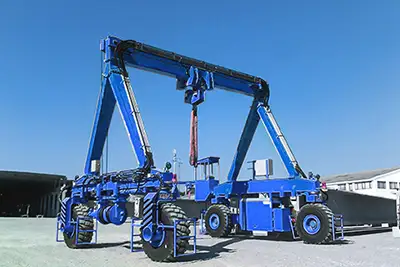
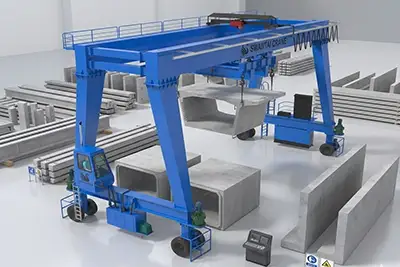
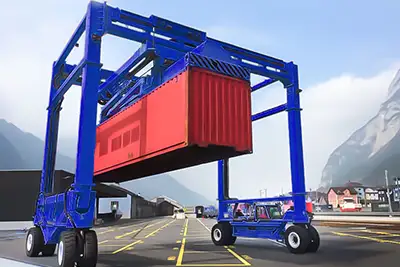
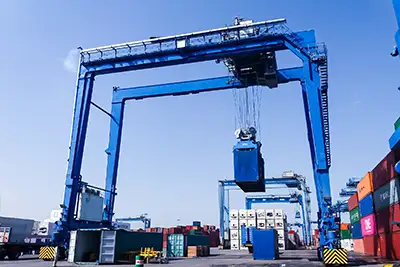
Standard RTG cranes are the most widely deployed configuration in global container terminals. They are designed for flexible yard operations where mobility and layout adaptability are required.
Typical applications include:
- Port container yards
- Intermodal logistics terminals
- Inland container depots
These cranes generally operate in 6-high stacking layouts with 6+1 lane coverage and are powered by diesel or diesel-electric systems, depending on project specifications.
Key characteristics:
- High mobility on rubber tires
- Flexible yard repositioning without rails
- Medium-to-high lifting capacity (typically 35–65 tons)
Automated RTG (ARTG) cranes integrate intelligent control systems, enabling semi- or fully unmanned container handling operations.
Core functions include:
- Remote-controlled operation via terminal control systems
- Automated container positioning and stacking logic
- Integration with smart yard management systems (TOS/IoT platforms)
Automation trends in RTG systems are increasingly focused on reducing labor dependency and improving stacking precision in high-throughput terminals.
Key characteristics:
- Sensor-based positioning systems
- Driverless or remote-operated modes
- High accuracy in container alignment and handling efficiency
Hybrid RTG cranes combine diesel engines with energy storage systems such as batteries or supercapacitors, forming a dual-power architecture.
Engineering objectives include:
- Fuel consumption reduction
- Lower lifecycle operating cost (OPEX)
- Reduced emissions during peak yard operations
Typical configuration:
- Diesel generator + lithium battery or supercapacitor system
- Energy recovery from hoisting and lowering cycles
- Intelligent power distribution via DC bus systems
Key advantages:
- Significant fuel savings compared to conventional diesel RTGs
- Lower carbon emissions
- Improved energy efficiency in cyclic operations
Electric RTG cranes are fully electrified systems powered through external grid connection, eliminating onboard diesel engines entirely.
Common electrification methods:
- Cable reel systems
- Busbar (conductor bar) power supply
This configuration is strongly associated with green port development strategies and environmental compliance initiatives.
Key technical benefits:
- Zero on-site emissions
- Lower energy cost per lifting cycle
- Reduced mechanical maintenance requirements
Typical applications:
- Green port terminals
- Emission-controlled coastal logistics hubs
- High-density container yards with stable power infrastructure
Industrial RTG cranes are specialized adaptations of standard RTG systems designed for non-containerized heavy cargo handling.
Unlike port RTGs, these cranes are optimized for irregular, oversized, or high-weight industrial loads.
Typical applications:
- Precast concrete beam handling
- Steel coil and slab transportation
- Wind tower segment logistics
- Shipyard heavy component handling
Key engineering adaptations:
- Reinforced spreader or hook systems
- Customized lifting attachments
- Enhanced structural rigidity for non-standard loads
- Adapted duty classification for heavy-cycle operations
These cranes extend RTG mobility advantages beyond container terminals into industrial production and infrastructure logistics environments.
Industrial Applications of China RTG Gantry Cranes
RTG (Rubber Tyred Gantry) cranes manufactured in China are widely deployed across heavy logistics and industrial sectors due to their mobility, high lifting capacity, and flexible yard configuration. Their rubber-tyred mobility makes them particularly suitable for outdoor environments where rail-mounted systems are impractical.
Container ports remain the primary application domain for RTG cranes. In marine logistics environments, they are used for:
- Container stacking and yard storage management
- Ship-to-yard and yard-to-ship container transfer operations
- High-density container yard optimization
RTGs provide flexible lane coverage and high stacking efficiency, making them essential for modern terminal throughput optimization.
In intermodal freight terminals, RTG cranes support seamless transfer between rail and road logistics systems.
Typical functions include:
- Loading and unloading ISO containers from flat wagons
- Cross-docking between trucks and railcars
- Temporary container staging for distribution hubs
Their ability to move freely across multiple rail tracks improves operational flexibility in intermodal yards.
RTG cranes are widely used in precast manufacturing yards and large-scale infrastructure construction projects.
Key applications include:
- Handling precast beams, bridge girders, and segmental components
- Transporting oversized structural elements within casting yards
- Supporting modular bridge and viaduct construction workflows
Their high lifting stability and long-span coverage make them suitable for heavy precast logistics.
In steel production and distribution facilities, RTG cranes are used for handling heavy and irregular steel products.
Applications include:
- Transporting steel coils, slabs, and plates
- Yard stacking and inventory management of raw steel materials
- Loading steel products onto trucks and rail wagons
Their robust lifting systems are designed to handle high-density, high-temperature industrial loads.
The wind energy sector uses RTG cranes for handling large structural components in manufacturing and staging yards.
Typical operations include:
- Transporting wind turbine tower sections
- Handling nacelle and hub assemblies
- Organizing blade storage and dispatch logistics
RTG flexibility supports the movement of oversized components without fixed rail constraints.
Shipyards and offshore fabrication facilities rely on RTG cranes for heavy assembly logistics and component movement.
Common applications include:
- Moving large ship sections and modular hull blocks
- Supporting dry dock assembly operations
- Handling offshore platform components and subsea modules
Their wide span and high lifting capacity enable efficient large-scale marine construction workflows.
In mining operations and heavy industrial zones, RTG cranes are adapted for rugged material handling tasks.
Key uses include:
- Transporting mining machinery and oversized equipment
- Handling ore-related containers and bulk material modules
- Supporting maintenance and assembly of heavy mining assets
Their rubber-tyred mobility is particularly advantageous in uneven or semi-prepared terrain environments.
Advantages of Buying RTG Cranes from China
China has become a leading global supplier of RTG (Rubber Tyred Gantry) cranes due to its combination of industrial scale, engineering capability, and cost efficiency. For port operators, logistics companies, and industrial users, sourcing RTG cranes from China offers a strong balance between performance, customization, and lifecycle value.
China's heavy equipment manufacturing base is one of the largest in the world, enabling:
- High-volume RTG crane production for global port projects
- Fast lead times even for large or multi-unit orders
- Scalable manufacturing for standard and customized configurations
This production scale is particularly important for large terminal expansions and phased infrastructure development projects.
Chinese RTG crane manufacturers benefit from optimized industrial ecosystems, which translate into:
- Lower overall fabrication and assembly costs
- Efficient raw material sourcing (steel structures, electrical systems)
- Competitive pricing compared to European and North American suppliers
This cost advantage allows buyers to achieve lower capital expenditure (CAPEX) without sacrificing functional performance.
Chinese RTG manufacturers typically offer high levels of engineering flexibility, including:
- Customized span, lifting height, and wheelbase configurations
- Adaptation for specific port layouts or industrial workflows
- Special spreaders for containers, coils, or precast elements
- Structural reinforcement for heavy-duty or extreme-duty environments
This customization capability is critical for projects with non-standard yard conditions or specialized cargo requirements.
Modern RTG cranes from China increasingly incorporate intelligent control systems, such as:
- Semi-automated and fully automated operation modes (ARTG systems)
- Remote control and centralized dispatch integration
- Anti-collision and positioning sensor systems
- Smart yard management system (TOS) connectivity
These technologies improve operational efficiency, safety, and stacking accuracy in high-throughput terminals.
Chinese RTG manufacturers have extensive experience supplying international markets, including:
- Asia-Pacific container terminals
- Middle Eastern logistics hubs
- African port infrastructure projects
- European and South American industrial ports
This export experience ensures compliance with diverse international standards such as FEM, ISO, CE, and IEC requirements, depending on project specifications.
China's crane industry benefits from a highly integrated supply chain, offering:
- Reliable availability of structural steel, hoisting systems, and electrical components
- Shorter procurement cycles for replacement parts
- Established global logistics and after-sales support networks
- Standardized spare parts compatibility across multiple crane models
This reduces downtime risk and improves long-term operational reliability for end users.
How to Choose the Right China RTG Gantry Crane
Selecting the correct RTG (Rubber Tyred Gantry) crane is a systems engineering decision, not just an equipment purchase. It must align with operational throughput, yard geometry, structural constraints, and long-term energy strategy. A well-specified RTG directly impacts productivity, lifecycle cost, and terminal efficiency.
Lifting capacity is the foundational parameter and should be defined based on actual operational demand rather than nominal assumptions.
Key considerations include:
- Maximum container weight (including heavy-loaded 40ft units)
- Frequency of heavy lift cycles
- Requirement for twin-lift or special spreader configurations
- Future capacity expansion margins
Common RTG capacities typically range from 35 tons to 65+ tons, depending on terminal class and cargo profile.
Span and stacking configuration must match yard geometry and storage density requirements.
Key design factors:
- Number of container rows across rail/truck lanes
- Required stacking height (commonly 1-over-5 to 1-over-8)
- Clearance for truck circulation lanes and safety buffer zones
- Compatibility with container handling reach (20ft/40ft/45ft units)
Incorrect span selection can significantly reduce yard efficiency and crane utilization rates.
RTG crane selection is strongly dependent on yard design logic.
Critical layout elements:
- Block arrangement (linear, U-shaped, or modular grids)
- Traffic flow for trucks and straddle carriers
- Crane travel paths and turning radius constraints
- Interference zones with adjacent equipment
A poorly matched RTG configuration can create bottlenecks even if the crane itself is high-performance.
Since RTG cranes operate on rubber tires, ground engineering is a critical design factor.
Key technical requirements:
- Maximum wheel load distribution per axle group
- Ground bearing capacity (typically reinforced concrete pavement required)
- Settlement control for long-term operation
- Drainage and surface durability under dynamic loads
Insufficient ground design can lead to structural instability and uneven crane movement.
RTG cranes operate in open-air environments and must be designed for site-specific conditions.
Important factors include:
- Maximum wind speed resistance during operation and parking
- Seismic design requirements (if applicable)
- Temperature range and humidity conditions
- Corrosion protection for coastal or marine environments
High wind stability systems and storm locking mechanisms are often required in port applications.
Power system selection directly affects operating cost, emissions, and infrastructure requirements.
Main configurations:
- Diesel RTG: High mobility, no external infrastructure required
- Hybrid RTG: Reduced fuel consumption and emissions via energy recovery systems
- Electric RTG: Zero-emission operation using cable reel or busbar systems
The choice depends on port electrification level, environmental regulations, and energy pricing.
Automation level determines both operational efficiency and system integration complexity.
Options include:
- Manual RTG with driver cabin operation
- Semi-automated RTG with assisted positioning
- Fully automated RTG (ARTG) integrated with TOS systems
Automation selection should align with terminal digitalization strategy and labor model.
Duty classification defines the crane's structural and mechanical design life.
Key considerations:
- Operating intensity (light, medium, heavy, or continuous duty cycles)
- Number of lifting cycles per hour/day
- Maintenance intervals and fatigue design limits
- Expected service life of 20–25 years or more in port environments
Proper duty classification ensures structural safety and prevents premature wear of hoisting and travel systems.
RTG Crane Automation and Smart Port Technologies
RTG crane automation is a core component of modern smart port development. By integrating control systems, sensing technologies, and data-driven optimization tools, RTG cranes evolve from standalone lifting machines into networked logistics assets within digital terminal ecosystems. These technologies primarily aim to improve throughput efficiency, operational safety, and equipment lifecycle reliability.
Remote operation systems allow RTG cranes to be controlled from a centralized control room rather than an onboard cabin.
- Real-time crane operation via low-latency control interfaces
- Video-assisted monitoring with multi-camera systems
- Centralized operator management for multiple cranes
- Enhanced safety by removing operators from high-risk yard environments
This approach is widely used in semi-automated and fully automated terminal configurations.
Anti-sway and precision positioning systems are essential for maintaining load stability and improving stacking accuracy.
- Automatic sway suppression algorithms
- Laser or encoder-based positioning systems
- GPS/RTK-assisted outdoor localization
- Speed synchronization of hoist, trolley, and gantry travel
These systems reduce container swing and improve safety and cycle efficiency.
OCR systems automatically identify container information during handling operations.
- Reading ISO container codes in real time
- Integration with terminal operating systems (TOS)
- Reduction of manual data entry errors
- Support for automated yard tracking workflows
Often combined with RFID and AI vision systems for higher accuracy.
Smart yard management systems coordinate RTG cranes, vehicles, and port infrastructure.
- Real-time container tracking and yard mapping
- Automated RTG task assignment
- Stacking optimization and space utilization
- Integration with vessel and gate operations
Improves yard efficiency and operational sequencing significantly.
AI systems optimize RTG crane and terminal logistics performance.
- Dynamic task scheduling and prediction
- Container flow and dwell time optimization
- Energy-efficient movement planning
- Congestion prediction in yard operations
AI continuously improves efficiency based on operational data.
IoT-based predictive maintenance monitors RTG crane health in real time.
- Motor temperature and vibration tracking
- Wire rope wear monitoring
- Structural stress analysis
- Electrical system diagnostics
Benefits include reduced downtime, optimized maintenance scheduling, and extended equipment lifespan.
RTG Crane Safety Systems and Compliance
RTG crane safety systems are engineered to ensure stable operation in dynamic outdoor environments, where wind load, heavy lifting cycles, and multi-equipment interaction introduce significant operational risk. Modern China-manufactured RTG cranes integrate multiple layers of mechanical, electrical, and digital protection to meet international port safety requirements.
Anti-collision systems prevent operational conflicts between cranes, vehicles, and yard infrastructure.
- Laser or radar-based distance detection
- Crane-to-crane synchronization systems in adjacent lanes
- Travel limit switches and soft-stop buffers
- Real-time obstruction detection during gantry movement
These systems are essential in high-density container yards where multiple RTGs operate in parallel blocks.
RTG cranes operate in exposed environments, making wind safety control a critical design requirement.
- Real-time wind speed anemometers
- Automatic alarm thresholds for shutdown
- Storm anchoring and locking devices
- Emergency travel brakes
In coastal ports, wind protection systems are often mandatory for compliance.
Emergency stop systems provide immediate shutdown capability in hazardous conditions.
- Multi-point E-stop buttons (cab, ground, remote)
- Fail-safe braking systems
- Main power circuit interruption
- Safety interlocks preventing restart
These systems ensure rapid response during mechanical or human safety risks.
Load monitoring systems ensure safe lifting by continuously tracking lifting forces.
- Real-time weight measurement via load cells
- Overload protection with automatic cut-off
- Load moment limiting systems
- Dynamic load monitoring during movement
These systems prevent structural overstress and improve load stability.
Tire condition directly affects RTG crane mobility and operational safety.
- Tire pressure monitoring sensors
- Temperature monitoring systems
- Wear and lifecycle tracking
- Uneven load distribution alerts
Proper monitoring improves stability and reduces unexpected downtime.
Electrical protection systems safeguard equipment and operators from high-power faults.
- Overvoltage, undervoltage, phase-loss protection
- Short-circuit and overload protection
- Grounding and insulation monitoring
- Emergency power isolation systems
Advanced RTG systems integrate these protections with PLC-based diagnostics for real-time fault detection.
China RTG Crane Manufacturing Process
The manufacturing of RTG (Rubber Tyred Gantry) cranes in China follows a highly structured industrial process that combines heavy steel fabrication, precision machining, electrical system integration, and multi-stage testing. Each stage is designed to ensure structural integrity, operational reliability, and compliance with international port equipment standards.
The process begins with raw material preparation and steel structure fabrication, which forms the main load-bearing framework of the RTG crane.
- High-strength steel plate cutting and profiling (CNC flame/plasma cutting)
- Beam and girder forming for main gantry structure
- Shot blasting and surface preparation for corrosion resistance
- Pre-assembly alignment for dimensional accuracy
This stage determines structural rigidity and fatigue resistance.
Welding is a critical stage that directly impacts crane safety and lifespan.
- Full penetration welding for primary joints
- Submerged arc welding (SAW) for long seams
- Certified WPS-controlled welding procedures
NDT inspection methods:
- Ultrasonic testing (UT)
- Magnetic particle inspection (MPI)
- Radiographic testing (RT)
Ensures compliance with international safety standards.
Precision components are produced using CNC machining to ensure tight tolerances.
- Wheel assemblies and bogie machining
- Gearbox housing and motor mount fabrication
- Precision drilling for structural joints
- Alignment processing for travel systems
Ensures mechanical accuracy and long-term stability.
All major components are assembled in a controlled factory environment.
- Gantry structure alignment and joining
- Installation of hoisting, trolley, and travel systems
- Hydraulic and mechanical integration
- System calibration and synchronization
Ensures coordinated operation of all subsystems.
Electrical systems complete the crane control architecture.
- PLC and drive cabinet installation
- Power and signal cable routing
- Sensor integration (limit switches, encoders, load cells)
- Control system debugging and communication setup
Ensures safe and stable system operation.
FAT verifies full system performance before shipment.
- No-load functional testing of all movements
- Speed and braking performance verification
- Control system and fault simulation testing
- Safety interlock validation
Confirms compliance with technical specifications.
Final validation occurs at the installation site.
- Static and dynamic load testing
- Structural deflection measurement
- System calibration under working conditions
- Full operational commissioning
Ensures safe long-term industrial operation.
RTG Crane Quality Inspection and Factory Audits
Quality inspection and factory auditing are critical stages in the manufacturing of RTG (Rubber Tyred Gantry) cranes in China. These processes ensure that every crane meets structural safety requirements, operational performance standards, and international certification expectations before delivery to global ports and industrial projects.
Material inspection verifies that all raw materials meet required mechanical and chemical properties before fabrication begins.
- Verification of steel grade certificates (MTCs)
- Chemical composition analysis for structural steel
- Hardness and tensile strength testing
- Incoming inspection of wheels, axles, gearbox housings
Ensures all materials are suitable for heavy-duty crane applications.
Welding inspection ensures structural integrity of all load-bearing joints.
- Visual weld seam inspection
- Ultrasonic testing (UT)
- Magnetic particle inspection (MPI)
- Radiographic testing (RT)
All welding follows certified WPS standards for consistency and safety.
Electrical inspection ensures safe and stable crane control performance.
- PLC logic testing
- VFD drive validation
- Insulation resistance testing
- Sensor calibration (encoders, load cells, limit switches)
- Emergency stop and interlock testing
Ensures reliable operation under continuous duty cycles.
Dimensional inspection ensures compliance with engineering drawings and tolerances.
- Gantry span and wheelbase alignment
- Rail gauge and travel geometry accuracy
- Main girder deflection measurement
- Hoist height and trolley travel precision
Laser and 3D measurement systems are commonly used.
Third-party inspections provide independent quality verification for global buyers.
- SGS
- Bureau Veritas
- TÜV
- Lloyd's Register
Services include FAT witnessing, compliance audits, and certification checks (FEM, ISO, CE, IEC).
Manufacturing Capability
- Production capacity and workshop scale
- Heavy fabrication and machining equipment
- Assembly and testing facilities
Quality Management System
- ISO 9001 certification
- Quality control documentation
- Material and component traceability
Engineering and Design Capability
- In-house design and engineering team
- CAD/CAE simulation tools
- Customization capability
Production Process Control
- Welding qualification records
- CNC machining control systems
- Assembly inspection checkpoints
Testing and Inspection Facilities
- Load testing platforms
- Electrical test benches
- FAT and commissioning procedures
After-Sales and Spare Parts Support
- Spare parts availability system
- Global service response capability
- Technical documentation and training support
RTG Crane Automation and Smart Port Technologies
RTG crane automation is a core component of modern smart port development. By integrating control systems, sensing technologies, and data-driven optimization tools, RTG cranes evolve from standalone lifting machines into networked logistics assets within digital terminal ecosystems.
Remote operation systems allow RTG cranes to be controlled from a centralized control room rather than an onboard cabin.
- Real-time crane operation via low-latency control interfaces
- Video-assisted monitoring with multi-camera systems
- Centralized operator management for multiple cranes
- Enhanced safety by removing operators from high-risk yard environments
Anti-sway and precision positioning systems are essential for maintaining load stability and improving stacking accuracy.
- Automatic sway suppression algorithms
- Laser or encoder-based positioning systems
- GPS/RTK-assisted localization
- Speed synchronization across motion axes
OCR systems automatically identify container information during handling operations.
- Real-time ISO container code recognition
- TOS integration
- Reduced manual entry errors
- AI-enhanced vision recognition
Smart yard management systems coordinate RTG cranes, vehicles, and port infrastructure.
- Real-time container tracking
- Automated job assignment
- Stacking optimization
- Vessel and gate integration
Artificial intelligence optimizes RTG operations and terminal logistics flow.
- Dynamic scheduling
- Flow prediction
- Energy-efficient routing
- Congestion forecasting
IoT-based monitoring enables real-time crane health diagnostics.
- Motor vibration and temperature monitoring
- Wire rope condition tracking
- Structural fatigue detection
- Electrical system diagnostics
RTG Crane Maintenance and Lifecycle Cost Analysis
RTG crane performance is not only determined by initial manufacturing quality, but also by how effectively the equipment is maintained throughout its service life. A well-structured maintenance strategy directly reduces downtime, extends equipment lifespan, and significantly improves total lifecycle economics in port and industrial operations.
Preventive maintenance is the core strategy for ensuring long-term RTG crane reliability and operational stability.
- Scheduled inspection cycles based on operating hours and duty class
- Lubrication plans for hoisting, trolley, and gantry travel systems
- Periodic inspection of structural components for fatigue and deformation
- Condition-based monitoring for early wear detection
This system reduces unplanned breakdowns and extends service life beyond 20 years in many applications.
Tire condition is critical due to RTG rubber-tyred mobility systems.
- Tire pressure monitoring and adjustment
- Wear pattern and surface damage inspection
- Wheel group load distribution checks
- Heat buildup monitoring during continuous operation
Proper tire management ensures stable movement and reduces gantry structural stress.
Wire ropes are critical load-bearing components requiring strict inspection.
- Detection of broken wires, corrosion, deformation
- Diameter reduction measurement
- Lubrication condition checks
- End termination integrity inspection
Magnetic flux testing may be used for internal defect detection.
Electrical systems control RTG operations, safety, and automation.
- PLC and control panel inspection
- VFD performance verification
- Insulation and grounding testing
- Sensor calibration (encoders, load cells)
- Cabinet cooling system maintenance
Stable electrical maintenance ensures uninterrupted automated operation.
Energy consumption is a major lifecycle cost driver in RTG operations.
- Diesel fuel consumption per cycle
- Energy recovery in hybrid systems
- Electric power usage in grid-connected RTGs
- Idle time and efficiency optimization
Diesel systems offer flexibility, while electric RTGs deliver lowest long-term cost.
Lifecycle optimization focuses on reducing total cost of ownership (TCO).
- Energy-efficient drive systems and regenerative braking
- Predictive maintenance implementation
- Workflow and logistics optimization
- High-durability component selection
- Spare parts standardization
Effective lifecycle strategies significantly improve ROI for operators.
Common RTG Crane Problems and Troubleshooting
RTG cranes operate under high-duty outdoor conditions, which makes them susceptible to mechanical wear, electrical faults, and environmental stress. Effective troubleshooting requires understanding both the root cause mechanisms and the system-level interactions between mechanical, electrical, and control subsystems.
Tire-related problems are among the most common operational issues in RTG cranes.
Typical problems:
- Uneven tire wear across wheel groups
- Excessive tire temperature during long duty cycles
- Steering misalignment or drift
- Reduced traction on uneven surfaces
Common causes:
- Unequal load distribution across axles
- Improper tire pressure maintenance
- Wheel bogie misalignment
- Poor pavement conditions
Troubleshooting approach:
- Recalibrate wheel alignment
- Maintain tire pressure regularly
- Inspect bogie structural alignment
- Balance load distribution across wheel groups
Electrical and control failures can interrupt RTG automation and operations.
Typical faults:
- PLC communication errors
- VFD drive alarms
- Sensor signal loss
- Power phase imbalance
Common causes:
- Loose wiring connections
- Electromagnetic interference
- Outdated control parameters
- Unstable power supply
Troubleshooting approach:
- Check PLC diagnostic logs
- Verify grounding and insulation
- Reset and recalibrate sensors
- Update control software if needed
Anti-sway systems are essential for stable and precise container handling.
Typical issues:
- Excessive container swing
- Delayed sway response
- Positioning inaccuracy
Common causes:
- Sensor calibration drift
- Incorrect control parameters
- Mechanical wear in motion systems
- High wind interference
Troubleshooting approach:
- Recalibrate sensors and encoders
- Adjust control parameters
- Inspect mechanical backlash
- Reduce speed in windy conditions
Hybrid RTG systems combine diesel and electrical energy systems.
Typical problems:
- Battery degradation or charging failure
- Generator overload shutdown
- Unstable power switching
- Inefficient energy recovery
Common causes:
- Battery aging
- Fuel system issues
- EMS control faults
- Cooling system problems
Troubleshooting approach:
- Test battery capacity and health
- Service generator system
- Check EMS configuration
- Inspect cooling systems
Spreader performance directly impacts container safety and handling accuracy.
Typical issues:
- Incomplete twist-lock engagement
- Container misalignment
- Hydraulic locking failure
- Uneven positioning
Common causes:
- Mechanical wear of locking parts
- Hydraulic leakage or pressure loss
- Sensor misalignment
- Poor recalibration after maintenance
Troubleshooting approach:
- Replace worn locking components
- Check hydraulic system integrity
- Recalibrate sensors
- Test under no-load conditions
Wind conditions significantly affect RTG crane safety and stability.
Typical problems:
- Crane instability in high winds
- Automatic shutdown activation
- Load swing amplification
- Reduced positioning accuracy
Common causes:
- Wind exceeding operational limits
- Insufficient storm locking
- Reduced damping efficiency
Troubleshooting approach:
- Monitor wind speed via sensors
- Activate storm locking systems
- Stop operations in extreme weather
- Adjust anti-sway parameters
RTG Crane Safety Systems and Compliance
RTG crane safety systems are engineered to ensure stable operation in dynamic outdoor environments, where wind load, heavy lifting cycles, and multi-equipment interaction introduce significant operational risk. Modern China-manufactured RTG cranes integrate multiple layers of mechanical, electrical, and digital protection to meet international port safety requirements.
Anti-collision systems prevent operational conflicts between cranes, vehicles, and yard infrastructure.
- Laser or radar-based distance detection
- Crane-to-crane synchronization systems in adjacent lanes
- Travel limit switches and soft-stop buffers
- Real-time obstruction detection during gantry movement
RTG cranes operate in exposed environments, making wind safety control a critical design requirement.
- Real-time wind speed anemometers
- Automatic shutdown alarms
- Storm anchoring and locking devices
- Emergency travel brakes
Emergency stop systems provide immediate shutdown capability in hazardous conditions.
- Multi-point E-stop buttons
- Fail-safe braking systems
- Main power isolation circuits
- Safety interlocks preventing restart
Load monitoring systems ensure safe lifting operations by tracking real-time forces.
- Real-time weight measurement via load cells
- Overload protection systems
- Load moment limiting devices
- Dynamic load monitoring during movement
Tire condition directly affects RTG crane stability and mobility safety.
- Tire pressure sensors
- Temperature monitoring
- Wear condition tracking
- Load imbalance detection
Electrical safety systems protect operators and equipment from high-power system faults.
- Overvoltage and overload protection
- Short-circuit breakers
- Grounding and insulation monitoring
- Emergency power isolation systems
How to Select a Reliable RTG Crane Manufacturer in China
Selecting a reliable RTG crane manufacturer in China is a strategic procurement decision that directly affects equipment safety, lifecycle cost, delivery reliability, and long-term operational performance. Because RTG cranes are heavy-duty capital equipment with 20+ years of service life, supplier evaluation must go beyond pricing and focus on engineering and execution capability.
A physical or remote factory audit is the first step in verifying manufacturing capability.
- Workshop scale and heavy fabrication capacity
- CNC machining and precision assembly equipment
- Certified welding workshops and skilled labor force
- Load testing facilities for RTG systems
- Structured production flow and QC checkpoints
A well-structured factory clearly separates fabrication, assembly, electrical integration, and testing zones.
Engineering capability determines whether a manufacturer can deliver customized and reliable RTG solutions.
- In-house mechanical and structural design team
- Finite element analysis (FEA) capability
- Customization of span, height, and duty class
- Experience with precast, steel, wind, and industrial applications
- Automation and smart port integration capability
Strong engineering reduces design risk and ensures project compliance.
Certifications ensure safety compliance and international acceptance.
- ISO 9001 Quality Management System
- CE certification for EU compliance
- FEM crane design standards
- IEC electrical compliance standards
- ISO 14001 environmental systems (where applicable)
Verification must include traceable documentation, not only certificate copies.
Export experience reflects capability in handling international project execution.
- Completed port and terminal projects globally
- Experience with EU, Middle East, Africa, Americas standards
- Heavy equipment shipping and packaging capability
- Overseas installation coordination experience
- On-time delivery performance history
Strong export experience significantly reduces project execution risk.
After-sales service determines long-term operational reliability.
- Remote technical support systems
- On-site commissioning and training support
- Overseas service engineer availability
- Fault response time performance
- Lifecycle service agreements
Reliable support ensures reduced downtime and stable operations.
Spare parts availability is critical for continuous port and industrial operation.
- Standardized spare parts inventory system
- Critical component availability (motors, brakes, PLCs, sensors)
- Global logistics support for urgent shipments
- Cross-model component compatibility
- Technical manuals and maintenance documentation
A strong system ensures fast replacement and long-term operational continuity.
Future Trends of China RTG Gantry Cranes
The future development of RTG (Rubber Tyred Gantry) cranes manufactured in China is closely aligned with global trends in smart ports, decarbonization, and digitalized logistics systems. The next generation of RTG cranes is evolving from mechanically operated equipment into data-driven, low-emission, and highly automated terminal assets.
Smart port initiatives are reshaping RTG integration into terminal ecosystems.
- Full integration with Terminal Operating Systems (TOS)
- Real-time data exchange between cranes, trucks, and yard systems
- Centralized multi-crane control platforms
- Digital workflow optimization across operations
RTG cranes are becoming networked logistics nodes rather than standalone machines.
Automation is reducing or eliminating human intervention in yard operations.
- Driverless RTG operation (ARTG systems)
- AI-based stacking and positioning logic
- Automated truck and vessel coordination
- Multi-crane synchronization in shared blocks
This improves throughput consistency and reduces labor dependency.
Alternative energy systems are replacing diesel powertrains in RTG cranes.
- Lithium battery RTG systems
- Regenerative braking energy recovery
- Hydrogen fuel cell RTG prototypes
- Hybrid diesel + battery + grid systems
Goal: zero or near-zero emissions with continuous operation capability.
Electrification is driven by global carbon reduction and ESG requirements.
- Expansion of busbar and cable reel systems
- Shore power integration for terminals
- Reduced diesel dependency in port operations
- Compliance with carbon neutrality targets
Electric RTG systems are becoming the default solution in modern ports.
AI and digital twins are transforming RTG design and operational optimization.
- Digital twin simulation of crane behavior and stress
- AI-driven yard scheduling and optimization
- Real-time decision support systems
- Traffic and loading flow simulation
These systems enable continuous performance optimization.
Future RTG systems rely on predictive and remote maintenance technologies.
- IoT-based real-time condition monitoring
- Cloud-based diagnostic platforms
- AI-driven fault prediction systems
- Remote updates and optimization
- Lifecycle tracking of key components
Maintenance shifts from reactive to fully predictive strategies.
Frequently Asked Questions About China RTG Cranes
This section addresses the most common technical, commercial, and operational questions related to RTG (Rubber Tyred Gantry) cranes manufactured in China. The answers focus on practical industry usage and procurement considerations.
RTG and RMG cranes differ mainly in mobility and installation method:
RTG (Rubber Tyred Gantry Crane):
- Equipped with rubber tires for free yard movement
- No rail infrastructure required
- Flexible layout for changing yard operations
RMG (Rail Mounted Gantry Crane):
- Runs on fixed rails
- Higher stability and precision in container stacking
- Suitable for high-density, fixed-layout terminals
In general, RTGs offer flexibility, while RMGs provide higher automation potential and structural stability.
Stacking capacity depends on design configuration, typically:
- Height: 1-over-5 to 1-over-8 containers high
- Width: 6 to 8 container rows across lanes
- Capacity varies by yard layout and spreader type
Higher stacking configurations require stronger structural design and increased stability control systems.
Yes. Modern Chinese RTG cranes are widely used in global ports and are considered reliable when manufactured by qualified suppliers.
- Compliance with international standards (FEM, ISO, CE)
- Mature heavy-equipment manufacturing ecosystem
- Advanced welding, machining, and testing processes
- Increasing adoption of automation and smart control systems
Reliability depends heavily on selecting a reputable manufacturer with proven export experience.
Typical price ranges for China-manufactured RTG cranes:
- Standard diesel RTG: USD 600,000 – 1,200,000
- Heavy-duty RTG: USD 1,000,000 – 1,800,000+
- Automated or special configurations: USD 1,500,000 – 2,500,000+
Final pricing depends on lifting capacity, automation level, and customization requirements.
For container terminals, the most suitable RTG type depends on operational strategy:
- Standard diesel RTG: flexible and cost-effective for general terminals
- Hybrid RTG: best balance of fuel efficiency and operational flexibility
- Electric RTG: ideal for green ports and low-emission zones
- Automated RTG (ARTG): best for high-throughput smart terminals
Most modern ports are transitioning toward hybrid or electric solutions.
Common certifications and standards include:
- ISO 9001 (quality management system)
- CE marking (European compliance)
- FEM standards (crane structural design)
- IEC standards (electrical systems)
- ISO 14001 (environmental management)
Import requirements vary by country and port authority regulations.
Typical RTG crane production timelines:
- Standard configurations: 3 to 5 months
- Customized or heavy-duty systems: 5 to 8 months
- Highly automated systems: 6 to 10 months
Lead time may vary depending on order size, engineering complexity, and production scheduling.
Yes. RTG cranes are highly customizable beyond container handling applications.
- Precast concrete beam handling systems
- Steel coil and slab lifting configurations
- Wind turbine component logistics support
- Shipyard heavy assembly applications
Customization may involve structural reinforcement, special spreaders, and modified control systems.
Conclusion: Get Your Tailored RTG Cranes
RTG (Rubber Tyred Gantry) cranes are long-life capital equipment, and procurement decisions directly influence terminal efficiency, safety performance, and total operating cost over decades of service. A structured evaluation approach is essential when sourcing from China to ensure both technical suitability and long-term investment value.
Successful RTG crane selection depends on aligning engineering parameters with real operational needs rather than focusing solely on purchase price.
Matching technical specifications with operational requirements
- Lifting capacity must reflect actual container or industrial load profiles
- Span, stacking height, and wheelbase must match yard geometry
- Duty class must align with expected daily operating cycles
Understanding lifecycle costs beyond initial purchase price
- Fuel or electricity consumption over 20+ years
- Maintenance frequency and component replacement cycles
- Downtime costs due to operational interruptions
Evaluating automation compatibility and future expansion capability
- Integration with terminal operating systems (TOS)
- Upgrade potential to semi or fully automated operation
- Scalability for future yard expansion and digitalization
Importance of quality inspection and compliance verification
- Structural welding and material traceability
- Electrical system safety and control logic validation
- Third-party inspection and FAT verification before shipment
The technical strength of the manufacturer is a decisive factor in RTG crane reliability and performance consistency.
Structural reliability
Strong engineering design ensures long-term resistance to fatigue, wind load, and heavy-duty cycles.
Automation integration expertise
- Anti-sway and positioning systems
- Remote and semi-automated operation solutions
- Smart yard integration with logistics platforms
Long-term spare parts support
- Standardized spare parts systems
- Fast global logistics response
- Compatibility across crane fleets and models
Overseas technical service capability
- On-site installation and commissioning support
- Operator training programs
- Remote diagnostics and troubleshooting assistance
To ensure a successful investment in RTG crane systems, global buyers should adopt a structured procurement strategy:
Conduct detailed technical evaluations before procurement
- Review engineering drawings and specifications
- Validate compliance with international standards
- Compare multiple configuration options
Prioritize operational efficiency and lifecycle value
- Focus on total cost of ownership (TCO) rather than initial CAPEX
- Consider energy efficiency and automation readiness
- Evaluate long-term maintenance implications
Verify factory production and inspection capability
- Confirm manufacturing capacity and workflow organization
- Ensure proper welding, machining, and testing systems are in place
- Require FAT and third-party inspection where necessary
Build long-term partnerships with experienced China RTG crane manufacturers
- Select suppliers with proven export track records
- Prioritize engineering-driven manufacturers over trading intermediaries
- Establish long-term service and spare parts agreements