Cost Factors for Buying a 5-Ton Jib Crane
Learn key cost drivers for 5-ton jib cranes, including crane type, hoist, installation, maintenance, and supplier choices for industrial applications.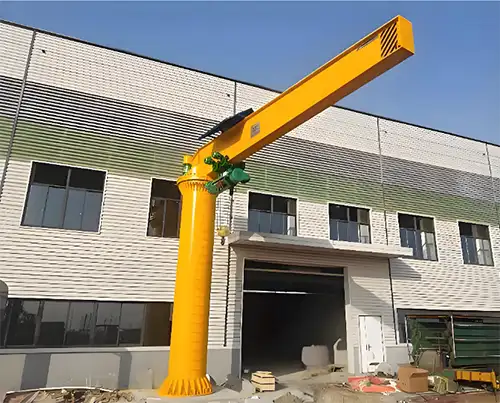
Introduction
Choosing a 5-ton jib crane is not just a technical decision—it's a cost decision. A well-matched crane keeps your operations smooth, avoids unnecessary spending, and prevents the headaches that come from buying equipment that doesn't fit your actual work needs.
5-ton jib cranes are widely used in fabrication workshops, machinery plants, steel structure factories, automotive repair bays, and general warehouses. Each environment has its own lifting height, working radius, and duty cycle, which is why prices can vary quite a bit.
A compact but practical view of why early cost planning helps buyers make smarter choices:
- Avoid buying more than you need
Longer arms, higher hoists, or electric rotation can push up cost quickly. If the work doesn't require them, they turn into wasted budget. - Avoid under-sizing the crane
A crane that's too short, too low, or too light slows work and often requires expensive modifications later. - Match the crane to real workshop conditions
Daily usage frequency, indoor humidity, welding dust, and temperature all affect both cost and durability. - Plan for ownership, not just purchase
Installation, foundation work, spare parts, and routine checks all contribute to long-term cost.
A quick overview of typical applications:
- Fabrication workshops – lifting plates, assemblies, and tools.
- Machinery manufacturing – moving machined parts between stations.
- Steel structure factories – supporting welding and cutting lines.
- Warehouses – loading and unloading within small zones.
- Automotive and maintenance shops – handling engines or equipment.
Each of these applications requires different configurations, which directly affects cost.
Even small choices influence total cost:
- Lifting height must clear equipment but shouldn't be oversized.
- Jib arm length should cover the working area only; extra length means extra cost.
- Hoist type (chain or wire rope) should match lifting frequency.
- Future needs should be considered early to avoid later changes.
A compact, accurate specification reduces cost and ensures the crane fits your daily workflow.
Floor-mounted vs. wall-mounted jib cranes affect steel, foundation, and installation costs. Floor-mounted cranes require columns and concrete foundations; wall-mounted cranes reduce steel cost but require strong supporting walls.
Longer arms increase steel size, bearing requirements, and motor power. Lifting height impacts hoist selection and overall column height. Safety clearances are essential to avoid collisions.
Manual rotation is cost-effective for occasional use. Electric motorized rotation suits frequent operation. Chain hoists are economical and easier to maintain; wire rope hoists handle heavy-duty or frequent cycles. Explosion-proof or environment-specific hoists increase cost.
Foundation construction, steel grade, and surface treatment affect fabrication cost. Electrical requirements, control modes, and add-ons influence installation and operating cost. On-site installation, testing, and certification are necessary for safe commissioning.
Core Cost Components of a 5-Ton Jib Crane
Understanding the main cost drivers helps buyers see where the price comes from and decide what features are truly needed for their work. A 5-ton jib crane may look simple, but several technical choices directly influence its total cost.
The first cost factor comes from choosing floor-mounted or wall-mounted.
Floor-Mounted (Pillar Jib Crane)
- Requires a support column, which uses more steel.
- Needs a concrete foundation with anchor bolts; this adds installation cost.
- Suitable when there is no supporting wall or when the crane must rotate freely around a workstation.
Wall-Mounted Jib Crane
- No column required, so lower steel cost.
- Installation is simpler—typically bolted to an existing column or building structure.
- Requires sufficient building strength; if reinforcement is needed, cost increases.
Practical note: Floor-mounted cranes cost more upfront because of the column and foundation, but they offer more flexibility. Wall-mounted versions are economical when the building can support them safely.
The jib arm length directly affects material usage and mechanical design.
How Arm Length Impacts Cost
- Longer arms mean heavier steel sections, larger bearings, and sometimes stronger rotation motors.
- Increased arm length may require structural reinforcement to handle bending stress.
- A longer radius also affects how much space the crane needs for safe rotation.
Typical Working Radius
- Most 5-ton jib cranes operate within 3–6 meters, depending on workstation layout.
- Special applications may extend to 7–9 meters, but cost increases sharply.
Practical takeaway: Choose the shortest radius that comfortably covers your working area. Every extra meter adds weight and cost.
Lifting height affects both the hoist selection and the crane's column height.
Why Lifting Height Changes Cost
- Higher lifting requires more hoist rope or chain, increasing hoist price.
- A taller column means more steel and a larger base plate.
- Clearance must be added for hook height, trolley height, and overhead obstructions.
Safety Clearances
- Maintain space for the hook to reach the top limit without hitting structure.
- Allow headroom for any machines, fixtures, or pipes under the crane.
Practical rule: Don't oversize lifting height unless necessary—taller cranes cost more and are harder to install.
Rotation options also affect the price.
Manual Rotation
- Uses simple bearings or a slewing ring.
- Most cost-effective option.
- Suitable for light use or short radii.
Electric Rotation (Motorized Slewing)
- Includes a motor, reducer, and drive control.
- Provides smoother rotation, especially under full 5-ton loads.
- Needed when rotation is frequent or when the arm is long.
Cost insight: Motorized rotation is often added for convenience, but it can add a noticeable increase to the final price. Buyers who move loads frequently or have long work cycles usually see the value; occasional-use workshops may not.
The hoist is one of the most influential cost factors.
Electric Chain Hoist
- Lower cost and easier maintenance.
- Best for light- to medium-duty operations.
- Suitable for most workshops and small fabrication shops.
Wire Rope Hoist
- Higher speed and smoother lifting.
- Better for frequent lifting or long-duty cycles.
- Higher cost due to structure and motor design.
Special Versions
- Explosion-proof, dust-proof, or high-temperature hoists add cost due to sealed motors, upgraded wiring, and certified components.
- Required in chemical plants, paint workshops, or steel mills.
Brand and Performance Level
- Well-known brands cost more but offer longer service life and easier spare parts sourcing.
- Budget hoists lower the initial cost but may increase maintenance later.
Practical tip: Match hoist duty class to actual lifting frequency. Most buyers save money by selecting a chain hoist unless high-speed or heavy-duty cycles are required.
Structural & Fabrication-Related Costs
Structural components form the backbone of a 5-ton jib crane, and even small changes in steel size, foundation design, or surface protection can shift the overall cost. Buyers who understand these factors can plan more accurately and select the right configuration for their workshop.
Floor-mounted jib cranes require a stable foundation to handle the bending force created by lifting and rotating a 5-ton load.
What the Foundation Includes
- Anchor bolts sized according to load and rotation forces
- Concrete thickness (often 300–600 mm depending on soil condition)
- Reinforcement steel bars to prevent cracking or tilting
- Leveling and curing time before installation
New Construction vs. Retrofit
- New factory projects can integrate the crane base during slab construction, which lowers cost and reduces installation time.
- Retrofits require cutting, digging, and reconstructing the foundation—this usually increases cost and adds downtime in operating workshops.
Practical note: If the crane is planned early during a building project, foundation cost can be reduced by 20–40%.
The crane column, arm, and base plate rely on steel strength and thickness to safely carry the rated load.
Factors That Change Steel Requirements
- Duty class – Higher duty cycles (A5–A6) require thicker or higher-grade steel.
- Rotation frequency – Frequent slewing increases stress, requiring heavier reinforcement at the arm-column joint.
- Industrial environment – Hot workshops, welding bays, or machining areas may demand reinforced sections.
Reinforced Designs
- Heavier box beams or I-beams for long arms
- Stronger gussets and ribs at high-stress points
- Larger base plates for extra stability
Practical takeaway: Steel is one of the biggest cost components. Overspecifying thickness adds weight and price, while underspecifying risks bending and long-term deformation.
Surface treatment protects the crane from corrosion, wear, and environmental damage. The required coating depends heavily on the application area.
Common Types of Treatment
- Standard industrial painting – suitable for indoor workshops with normal humidity.
- Sandblasting + primer + topcoat – for cleaner bonding and longer paint life.
- Hot-dip galvanizing – ideal for coastal regions or outdoor installations with high moisture or salt exposure.
- Chemical-resistant coatings – needed in paint shops, chemical plants, and areas with corrosive fumes.
Why This Affects Cost
- Higher-grade coatings require more labor time and material.
- Galvanizing needs special processing and adds weight to the structure.
- Certain industries require certified coatings, which increase both material and inspection cost.
Practical tip: Choose coatings based on your environment—not all cranes need heavy-duty protection. The right treatment can extend service life by years while keeping costs under control.
Electrical & Control System Costs
Electrical components play a major role in how a 5-ton jib crane operates day-to-day. They affect not only cost but also safety, ease of use, and long-term reliability. Below is a compact and practical breakdown of the main electrical factors buyers should consider.
Different industrial facilities operate on different voltages, so the crane's electrical system often needs customization.
Voltage Options
- 380V / 50Hz (common in many regions)
- 400V or 415V (Europe, Middle East)
- 440V or 460V (North America, some heavy industries)
Custom voltage requires adjustment to motors, control panels, and protection devices, which adds to cost.
VFD (Variable Frequency Drive) Options
- Allows smooth acceleration and deceleration for both rotation and lifting
- Reduces mechanical shock and wear on the hoist
- Ideal for workshops with frequent, precise positioning
Practical note: Adding VFDs increases electrical cost but helps reduce long-term maintenance and improves control, especially for 5-ton loads.
How operators control the crane also affects overall price.
Pendant Control
- Most economical and simple to maintain
- Wired to the crane, typically hanging from the jib arm
- Suitable for routine lifting tasks
Wireless Remote Control
- Offers better mobility and keeps operators at a safe distance
- Reduces obstruction and cable wear
- Higher cost due to receivers, transmitters, and safety coding
Safety Devices
- Limit switches for upper and lower hook travel
- Overload protection to prevent dangerous lifting conditions
- Optional rotation stop limits for precise working zones
Practical takeaway: Pendant control works for most workshops, but remote control is worth the upgrade when operators need freedom of movement or when safety distance is important.
These upgrades improve safety and operational control, especially in busy or high-risk environments.
Common Add-Ons
- Travel limiters – stop the hoist trolley at safe endpoints
- Rotation limiters – prevent the arm from hitting machines or walls
- Emergency shut-off systems – instantly cut power during abnormal situations
- Phase protection and voltage monitoring – prevent motor damage
Why They Matter
- Reduce accidental damage to equipment
- Improve operator safety
- Protect motors and electrical boards from voltage problems
Practical tip: Most of these add-ons are inexpensive compared to the cost of repairs or downtime. They are usually worth including from the start.
Installation & Commissioning Costs
Even with the right design and components, a 5-ton jib crane only starts delivering value once it is installed correctly and passes all required safety checks. Installation and commissioning often make up a noticeable part of the total project cost, especially for heavy-duty industrial sites.
The cost of installation varies widely based on location and on-site conditions.
What Influences Installation Cost
- Geography – Labor rates differ from region to region. Remote sites or islands often have higher installation fees.
- Workshop height – Taller buildings require scissor lifts, boom lifts, or scaffolding, increasing labor and rental cost.
- Foundation complexity – For floor-mounted cranes, deeper concrete bases and anchor setting work raise installation hours.
Special Lifting Equipment
- Forklifts or mobile cranes may be needed to erect the jib column.
- For workshops with limited access, compact cranes or manual handling tools may be required.
- Additional rigging tools (slings, shackles, spreader bars) add minor but necessary costs.
Practical note: Buyers who prepare the working area in advance—such as clearing space and confirming power access—usually reduce installation time and overall cost.
After installation, the crane must pass performance and safety tests before entering service.
Typical Testing Requirements
- Static load test – Usually 125% of rated capacity to verify structural strength.
- Dynamic load test – Checks performance under moving conditions.
- Operational test – Ensures smooth rotation, hoisting, braking, and limit switches.
Certification & Documentation
- CE or ISO compliance reports if required by the client or local regulations.
- Third-party inspection for industries with strict safety rules (oil & gas, chemical, government projects).
- Operation and maintenance manuals, wiring diagrams, and hoist certificates are often needed for site handover.
Practical tip: Certification fees are usually small compared to the crane price, but mandatory for many industrial plants. Confirm early whether your project requires third-party inspection to avoid delays.
Operational & Lifetime Costs
The long-term cost of owning a 5-ton jib crane often exceeds the initial purchase. Understanding maintenance, spare parts, energy use, and downtime risks helps buyers choose a crane that stays reliable throughout its service life.
Routine maintenance keeps the crane operating safely and extends its lifespan.
Common Maintenance Areas
- Hoist components – brake pads, motors, chains or wire ropes wear over time.
- Bearings – especially in the slewing joint; require periodic inspection and greasing.
- Slewing mechanisms – manual slewing uses bushings; electric slewing adds gears and reducers that need lubrication.
- Lubrication systems – regular oiling reduces friction and prevents premature wear.
Service Frequency
- Light-duty workshops may need monthly checks.
- Higher-duty cycles (A5–A6) require more frequent maintenance.
Practical note: A well-maintained 5-ton jib crane can operate for 10–15 years with stable performance, reducing unexpected repair costs.
Spare parts availability affects both cost and downtime.
Chain Hoist vs. Wire Rope Hoist Parts
Chain hoists:
- Parts are generally cheaper.
- Components like chain bags, hooks, and limit switches are widely available.
- Faster lead times.
Wire rope hoists:
- Higher-cost parts such as rope drums, wire ropes, and gearbox components.
- Longer lead times due to more complex designs.
Brand Influence
- Well-known brands have stable availability and predictable pricing.
- Uncommon brands may save money initially but lead to longer delays when parts wear out.
Practical takeaway: Always confirm spare parts availability before purchase. A crane with hard-to-find parts becomes expensive to maintain.
Energy use depends on the type of motor, working frequency, and rotation system.
Where Energy Is Consumed
- Hoisting motor – main power draw, especially during frequent lifting cycles.
- Motorized rotation – consumes additional energy; more noticeable on long jib arms.
- Standby power – small but present for remote receivers and control panels.
VFD (Variable Frequency Drive) Benefits
- Reduces peak power draw during start-up.
- Smooth lifting reduces mechanical strain and saves energy.
- Helps extend motor life, lowering long-term operating costs.
Practical tip: Workshops with frequent movement can reduce power costs by choosing VFD-controlled systems.
Downtime is one of the hidden but most expensive costs of an industrial lifting system.
Causes of Avoidable Downtime
- Under-sized hoists that overheat or slow down during busy periods.
- Low-quality slewing mechanisms that become hard to rotate under load.
- Inaccurate installation causing misalignment or uneven load distribution.
- Delayed maintenance due to unavailable spare parts.
Operational Impact
- Slower lifting reduces throughput in fabrication lines.
- Production schedules get delayed when the crane cannot operate.
- Workers spend additional time manually adjusting loads or waiting for repairs.
Practical takeaway: Investing slightly more in a robust and well-specified jib crane often saves far more money by minimizing downtime and maintaining workflow continuity.
Environment & Application-Specific Cost Adjustments
Different working environments place different demands on a 5-ton jib crane. These environmental and application factors can shift the final price more than many buyers expect. Understanding them early helps avoid under-specification and costly upgrades later.
Workshops with welding sparks, grinding dust, or high ambient temperatures require more durable electrical and mechanical protection.
Key Requirements
- Explosion-proof or dust-proof hoists for environments with flammable particles or heavy dust.
- Sealed motors and electrical boxes to prevent dust ingress that can cause overheating or electrical faults.
- Heat-resistant wiring and insulation for foundries, steel plants, and casting workshops.
- Extra ventilation or cooling features for motors operating in hot zones.
Cost Impact
- Explosion-proof hoists are more expensive due to specialized motors, enclosures, and compliance testing.
- Dust-proof systems require additional seals, filters, and protective covers.
Practical tip: If your workshop has continuous welding or grinding, dust-proofing is not optional—it directly affects equipment lifespan.
Jib cranes installed outdoors face humidity, UV exposure, rain, and corrosion risks. Even semi-outdoor areas like open bays or dockside warehouses need stronger protection.
Environmental Protections
- Weather-proof control panels with IP54/IP55 rating.
- Galvanized or corrosion-resistant steel for columns and arms.
- Canopy or cover for the hoist to protect motors and electrical parts from rain.
- UV-resistant wiring to prevent cracking in sunlight.
Cost Impact
- Surface treatments and galvanized finishes add to material and processing cost.
- Higher-grade electrical enclosures and sealed components increase the electrical cost slightly.
Practical takeaway: Outdoor cranes cost more up front, but the right protection prevents rust, electrical failures, and early replacement.
Some industrial sites run jib cranes continuously—lifting, rotating, and lowering loads throughout the shift. This demands a stronger design.
Upgraded Duty Class Options
- A4 (light to medium duty) – standard workshops
- A5 (medium to heavy duty) – fabrication shops with frequent cycles
- A6 (heavy duty) – steel plants, machining lines, assembly lines
Why Duty Class Increases Cost
- Larger motors and higher-grade hoists
- Reinforced bearings, gearboxes, and rotation joints
- Thicker steel sections and stronger structural connections
- Better heat dissipation for motors during continuous operation
Practical tip: If your crane operates several times per hour, choosing A5 or A6 from the start avoids overheating, early wear, and unplanned downtime.
Supplier-Related Cost Differences
Where you source your 5-ton jib crane can significantly affect total cost, delivery time, and support. Supplier choices influence not just the initial price but long-term reliability and service convenience.
Buying directly from a manufacturer like Yuantai Crane often offers clear cost advantages.
Benefits of Direct Sourcing
- Lower equipment cost – no dealer markup.
- Easier customization – manufacturers can adjust jib arm length, lifting height, hoist type, or surface treatment to match your needs.
- Better lead times – direct coordination avoids delays caused by intermediaries.
- After-sales support – manufacturers often provide technical guidance and spare parts directly.
Local Dealer Considerations
- Faster local delivery if stock is available.
- May offer bundled service packages.
- Can be more expensive due to dealer margins and limited customization.
Practical takeaway: Direct manufacturer sourcing works best for planned purchases and custom requirements. Dealers may suit buyers who need a quick, off-the-shelf solution.
A crane's long-term reliability depends on both product quality and support.
Key Factors
- Extended warranty options – longer coverage for hoists, motors, and structural components.
- Service contracts – regular maintenance visits, spare parts kits, and emergency repair support.
- Local service availability – technicians nearby reduce downtime and travel costs.
Practical tip: Even if the purchase price is slightly higher, a robust warranty and accessible service can save significant money over the crane's lifespan.
For buyers sourcing cranes internationally, shipping and import fees add to the total cost.
Cost Considerations
- Container loading fees – depends on crane size and packaging.
- Shipping variations – ocean freight, air freight, or inland transport.
- Customs duties and import taxes – vary by country and affect final landed cost.
- Insurance and handling – optional but recommended for expensive cranes.
Practical note: Request a detailed all-in quote including logistics and customs to avoid unexpected costs.
Practical Cost-Saving Tips for Industrial Buyers
Buying a 5-ton jib crane doesn’t have to break the budget. Small, informed choices can save significant costs without compromising safety or performance.
- Choose the right crane type
Floor-mounted cranes need foundations; wall-mounted cranes reduce steel and installation cost if the building can support it. - Avoid overspecifying hoist duty class
Light-to-medium workloads rarely need high-duty hoists. Selecting the correct class prevents unnecessary cost. - Verify power supply early
Confirm voltage and frequency requirements before ordering. Avoid expensive electrical adjustments later. - Standardize hoist models for multiple cranes
Using the same hoist across several cranes reduces spare parts complexity and lowers maintenance costs. - Request a complete “all-in” quote
Ensure installation, testing, certification, and logistics are included to prevent hidden fees.
Conclusion
Careful evaluation of cost factors ensures your 5-ton jib crane is both safe and durable while remaining cost-efficient.
Consider foundation needs, hoist selection, electrical requirements, and environmental conditions. Tailoring the crane to your actual industrial application, working radius, lifting height, and power supply helps avoid overspending, reduces downtime, and extends operational life.
Requesting a customized quotation from a reliable supplier is the final step in securing a crane that meets your workflow, budget, and safety requirements.