Cost vs Safety: Hazardous Environment Crane Investment Guide
Quick Takeaway
- Upfront price alone is a poor indicator of value when investing in hazardous environment cranes.
- High-spec cranes reduce safety risks, unplanned downtime, and long-term maintenance costs.
- Evaluating Total Cost of Ownership (TCO) provides clearer financial justification than comparing purchase prices.
- Certified, environment-specific cranes often deliver higher ROI through improved safety, compliance, and productivity.
- For financially focused buyers, the right crane is a risk-management investment—not just a capital expense.
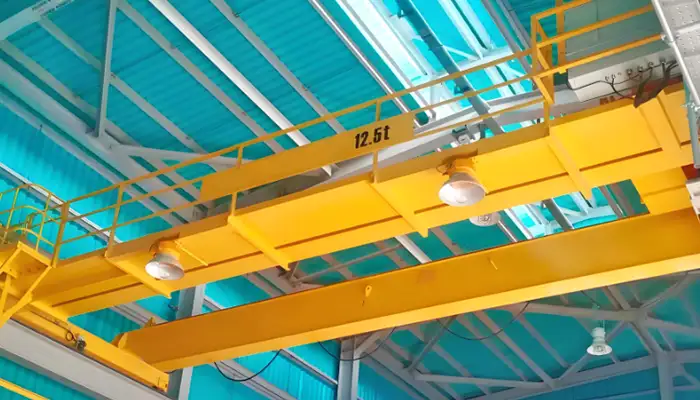
Explosion proof overhead crane for hazardrouse environment
Introduction
Hazardous environment cranes are specialized lifting equipment designed to operate safely in areas where standard cranes might pose risks. These include explosion-proof cranes for flammable atmospheres, chemical-resistant overhead cranes for corrosive environments, and high-temperature rated hoists for operations involving heat or molten materials.
- Explosion-proof cranes prevent sparks and ignition in volatile environments.
- Chemical-resistant cranes use coatings and materials that withstand acids, alkalis, and other corrosive substances.
- High-temperature hoists are built to operate reliably in heat-intensive processes, protecting motors and electrical systems.
- Lower long-term maintenance and repair costs.
- Improved workplace safety and fewer accidents.
- Consistent operational performance and higher productivity.
- Financially-focused crane buyers who need to justify higher-spec equipment.
- Industrial procurement managers responsible for budgeting and sourcing cranes.
- Plant safety and operations managers who prioritize workplace safety and operational reliability.
Costs in Hazardous Environment Cranes
Understanding the full cost structure of hazardous environment cranes is essential for making informed purchasing decisions. Beyond the initial price, buyers must evaluate installation complexity, compliance requirements, and long-term maintenance to avoid unexpected expenses.
- Explosion-proof bridge cranes – built to prevent sparks in flammable environments, often including explosion-proof motors and control systems.
- Chemical-resistant gantry cranes – coated or constructed with materials that resist acids, alkalis, or other corrosive substances.
- High-temperature overhead cranes – designed to operate reliably in environments with high heat or molten materials, protecting hoists, motors, and electrical components.
- Price varies depending on capacity, span, hoist type, and environmental protection level.
- Certified hazardous cranes cost more initially but reduce the risk of operational interruptions and accidents.
- Comparing crane quotes should include features and safety certifications, not just base price.
- Crane runway preparation – beams must support the crane's weight plus maximum load safely. Reinforcements may be needed for heavy-duty or long-span cranes.
- Grounding and electrical setup – explosion-proof cranes require proper grounding and certified electrical connections to prevent sparks.
- Environmental protection – measures to prevent corrosion, dust ingress, or heat damage during operation.
- Scheduled inspections of motors, brakes, wire ropes, and control systems.
- Replacement of spare parts like explosion-proof components or corrosion-resistant materials.
- Certification renewals for compliance with safety standards in hazardous areas.
Safety Considerations and Financial Implications
In hazardous environments, safety decisions are inseparable from financial outcomes. Regulatory compliance, accident prevention, and productivity performance directly influence both risk exposure and long-term operating costs.
- OSHA (Occupational Safety and Health Administration) requirements for workplace safety in the U.S.
- ATEX certification for explosive atmospheres in Europe.
- IECEx certification for global hazardous area standards.
- Local codes and safety regulations that may vary by country or region.
- Legal penalties, fines, or forced shutdowns.
- Increased liability in the event of accidents or equipment failure.
- Insurance complications or denied claims due to non-compliance.
Practical takeaway: Choosing a certified hazardous environment crane is an upfront investment that avoids legal risks and protects both employees and the company's finances.
- Medical expenses for injured personnel.
- Legal fees and potential litigation costs.
- Operational downtime, which can halt production and affect delivery schedules.
- Explosion-proof motors and control systems prevent sparks that could ignite flammable gases or dust.
- Chemical-resistant coatings reduce degradation, preventing mechanical failure.
- High-temperature rated components maintain performance in heat-intensive processes.
Real-world insight: Facilities that invest in the right crane often see fewer accidents, lower insurance premiums, and a measurable return on investment from reduced downtime and safer operations.
- Improved operational uptime: High-spec cranes continue running safely under challenging conditions, reducing unplanned stops.
- Higher throughput: Fewer stoppages and maintenance delays mean more materials moved efficiently.
- Long-term ROI: Although hazardous environment cranes cost more upfront, the combined savings from reduced accidents, maintenance, and downtime often exceed the initial investment.
- Evaluate crane reliability in real-world plant conditions.
- Consider the potential loss in production hours when comparing crane options.
- Factor in lifecycle savings alongside upfront purchase price for a realistic ROI estimate.
Balancing Cost vs Safety
Achieving the right balance between cost and safety requires structured analysis rather than price-driven decisions. For hazardous environment cranes, strategic evaluation helps buyers control risk while maximizing long-term financial value.
- Purchase cost of standard vs. high-spec cranes (explosion-proof, chemical-resistant, high-temperature rated).
- Installation and setup expenses, including runway preparation, grounding, and compliance training.
- Maintenance and spare parts over the crane's operational life.
- Downtime costs from failures or safety incidents.
By evaluating TCO, buyers can see how a higher upfront investment in a certified hazardous crane can pay off over time. Many facilities report ROI within a few years due to fewer accidents, reduced maintenance, and more reliable production schedules.
- Explosion-proof motors to prevent sparks in flammable environments.
- Chemical-resistant coatings or materials for corrosive or caustic areas.
- High-temperature rated wire ropes and hoists for heat-intensive processes.
- Conduct a detailed hazard assessment to identify environmental risks.
- Prioritize crane features that directly address those risks.
- Avoid paying extra for features that are not necessary for your operation.
Choosing the right combination of features ensures safety without unnecessary overspending.
- Crane type selection: Single girder vs. double girder, gantry vs. overhead bridge, based on load capacity, span, and plant layout.
- Load and duty analysis: Ensure the crane can safely handle maximum expected weight and operational cycles.
- Future-proofing: Plan for potential plant expansions or upgrades to avoid premature replacement.
- Maintenance planning: Schedule inspections and preventive maintenance to minimize unexpected downtime.
A strategic approach to crane selection and risk management reduces safety hazards and long-term costs, giving decision-makers greater confidence in their investment.
Practical Tips for Buyers
Making the right purchasing decision for hazardous environment cranes requires practical, methodical evaluation. The following tips help buyers reduce risk, control costs, and ensure long-term operational safety.
- Identify flammable, explosive, chemical, or high-temperature areas in your facility.
- Document load types, maximum weights, and lifting frequencies.
- Note environmental conditions such as dust, moisture, corrosive substances, or extreme heat.
- Consult with plant safety officers and engineers to ensure nothing is overlooked.
A detailed hazard assessment ensures that you purchase a crane that meets safety requirements without paying for unnecessary features.
- Upfront purchase price versus expected maintenance costs.
- Certification, installation, and operator training expenses.
- Downtime and repair costs if a crane fails in hazardous conditions.
- How safety features reduce risks and potential liability costs.
Evaluating costs in terms of long-term savings and operational continuity supports informed investment in certified hazardous environment cranes.
- Verify certifications and experience supplying explosion-proof, chemical-resistant, or high-temperature cranes.
- Request case studies or references from similar industrial applications.
- Ensure the supplier offers customized solutions rather than one-size-fits-all cranes.
- Confirm after-sales support, operator training, and preventive maintenance services.
Working with a knowledgeable manufacturer minimizes risk, avoids costly specification errors, and ensures the crane aligns with your plant's operational requirements.
Case Studies
Long-Term Savings from High-Spec Explosion-Proof Cranes
In one chemical processing plant, the management decided to invest in high-spec explosion-proof overhead cranes despite a higher upfront cost. The cranes were designed with certified explosion-proof motors, corrosion-resistant coatings, and high-temperature hoists.
Results observed over 5 years:
- Reduced maintenance costs: Preventive inspections and durable components lowered repair frequency.
- Fewer safety incidents: No sparks or electrical failures occurred, avoiding workplace accidents.
- Operational reliability: Minimal downtime, allowing production schedules to stay on track.
- Financial impact: The plant calculated a return on investment within three years, factoring in saved repair costs and reduced downtime.
This example highlights how spending more initially on the right crane can save significant costs and improve plant safety over the crane’s lifetime.
Downtime Costs from Low-Cost, Non-Compliant Cranes
Conversely, a steel fabrication facility opted for a cheaper overhead crane not rated for the plant’s chemical-laden environment. Within the first year, the crane experienced repeated failures due to corrosion and electrical issues.
Consequences:
- Unexpected downtime: Production halted multiple times, delaying delivery schedules.
- Repair costs: Emergency repairs were expensive, including replacement of damaged motors and control systems.
- Safety risks: Operators were exposed to potential chemical hazards and unsafe crane conditions.
- Financial loss: Total costs, including downtime and repairs, exceeded the initial savings from the lower purchase price.
This case shows the hidden risks of choosing cranes based solely on initial cost, emphasizing the importance of compliance, certifications, and lifecycle planning.
Conclusion
Investing in Safety is Investing in Value
Choosing the right hazardous environment crane isn’t just a safety decision—it’s a financial one. High-spec cranes, including explosion-proof, chemical-resistant, and high-temperature rated hoists, may cost more upfront, but they reduce long-term expenses by minimizing downtime, preventing accidents, and lowering maintenance costs.
Key takeaways:
- A properly specified crane ensures compliance with safety standards, protecting employees and your plant.
- Investing in certified, high-quality cranes leads to measurable ROI over the crane’s lifecycle.
- Safety-focused equipment reduces hidden costs, such as emergency repairs and lost production.
Adopt a Total Cost of Ownership (TCO) Perspective
Instead of evaluating cranes by purchase price alone, consider the total cost of ownership. This approach accounts for:
- Initial purchase and installation costs.
- Ongoing maintenance and certification renewals.
- Potential downtime and safety-related expenses.
A TCO perspective makes it easier to justify the investment in higher-spec cranes to finance teams and decision-makers.
Contact Us Now : Partner with Experienced Suppliers
For optimal results, work with certified hazardous crane manufacturers and suppliers who can provide tailored solutions:
- Customized cranes designed for your plant’s specific hazards.
- Expert guidance on compliance with local and international safety standards.
- Reliable after-sales support, training, and preventive maintenance programs.
Partnering with experienced suppliers ensures that your investment delivers both safe operations and long-term financial benefits.