Electric Chain Hoist vs Wire Rope Hoist: Choose Best Value Design
Quick Takeaway: Chain vs. Wire Rope Hoists
| Feature / Factor | Chain Hoist | Wire Rope Hoist | Practical Insight |
|---|---|---|---|
| Lifting Medium | Alloy steel load chain | Steel wire rope | Chains avoid tangling and are easier to maintain; ropes need careful alignment. |
| Capacity & Height | Low to medium lifts | Medium to heavy lifts, long heights | Choose based on actual load and lifting height, not just rated capacity. |
| Precision & Stability | Excellent for precise positioning | Good for large/heavy loads | Chain hoists provide controlled, step-by-step lifting; rope hoists handle bulkier loads. |
| Maintenance | Simple: chain & chain wheel | Complex: rope, drum, sheaves | Fewer parts = lower maintenance frequency and faster servicing. |
| Installation & Space | Compact, modular, low headroom | Larger footprint, higher headroom required | Chain hoists fit in smaller workshops; rope hoists need more vertical clearance. |
| Cost | Lower upfront and operating costs | Higher initial investment; higher maintenance | For light/medium duty, chain hoists deliver better ROI; rope hoists pay off in heavy-duty, continuous operations. |
| Best Applications | Workshops, assembly lines, maintenance bays | Steel mills, shipyards, construction, long lifts | Match hoist structure to operational needs for safety, reliability, and cost-effectiveness. |
Choose a hoist based on design suitability, maintenance capability, and lifecycle cost, not just rated capacity. Chain hoists are ideal for many everyday industrial applications, while wire rope hoists are essential for heavy-duty, high-lift operations.
Introduction: Why Hoist Design Matters More Than Price
When buyers compare lifting equipment, the first number they usually look at is capacity. One ton, two tons, five tons. It feels logical. But in real operation, capacity alone does not decide value. The internal structure of the hoist does.
Electric chain hoists and wire rope hoists are built on very different mechanical principles. Those differences affect how the hoist behaves day after day: how smooth it lifts, how often it needs service, how much space it takes, and how much it costs to keep running.
Electric Chain Hoists and Wire Rope Hoists: A Practical Overview
- Electric chain hoists use an alloy steel load chain that engages with a chain wheel (also called a pocket wheel). The load is lifted in a controlled, step-by-step motion.
- Wire rope hoists rely on a steel wire rope that winds and unwinds around a drum, guided by rope guides and supported by multiple components.
On paper, both can lift the same rated load. In practice, they behave very differently.
Common Buyer Misconception: “Same Capacity = Same Value”
Many buyers assume that if two hoists are both rated for 2 tons, their performance and cost over time will be similar. This is rarely true.
What is often overlooked:
- Maintenance effort
- Component wear patterns
- Sensitivity to installation accuracy
- Long-term operating cost
The hoist design determines these factors, not the nameplate capacity.
Why Structural Design Directly Affects Cost, Uptime, and Safety
The internal structure decides:
- How many parts can wear or fail
- How easy it is to inspect and service
- How stable the load remains during lifting and positioning
A simpler structure usually means fewer problems over time. This is why design matters just as much as price, sometimes more.
Structural Design Comparison: Chain Hoist vs. Wire Rope Hoist
The design of a hoist directly affects performance, maintenance, and long-term reliability. Understanding the differences between chain and wire rope hoists helps buyers make informed choices for their operations.
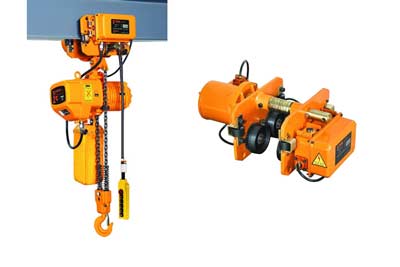
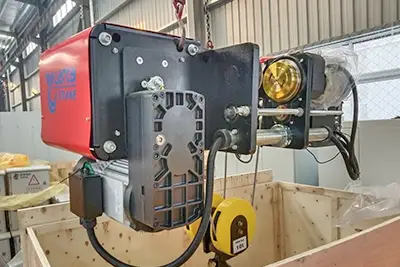
The lifting medium is the most obvious structural difference, but also the most important.
Electric Chain Hoist
- Uses high-strength alloy load chain
- Chain engages directly with a pocket wheel
- Load moves in fixed increments, with minimal slip
Wire Rope Hoist
- Uses steel wire rope
- Rope winds onto a grooved drum
- Load movement depends on correct spooling and rope guidance
Structural Impact on Load Control and Durability
- Chains do not overlap or cross during lifting
- Wire ropes can suffer from uneven winding, crushing, or birdcaging if alignment is off
- Chain hoists naturally resist twisting and tangling
- Rope hoists require careful installation and regular inspection to maintain correct winding
For many light- and medium-duty applications, the chain structure provides more predictable behavior over time.
The drive system is where complexity starts to show.
Chain Hoist Drive Structure
- Compact motor and gearbox
- Direct transmission to the chain wheel
- Fewer intermediate components
Wire Rope Hoist Drive Structure
- Motor
- Gear reducer
- Drum
- Rope guide
- Additional bearings and alignment points
Impact on Complexity and Failure Points
- More components mean more wear surfaces
- Rope guides and drums are sensitive to misalignment
- Chain hoists have fewer parts that require precise adjustment
- Troubleshooting is generally simpler on chain hoists
From a maintenance perspective, fewer components usually translate into lower service cost and less downtime.
Physical layout affects installation, headroom, and workspace flexibility.
Chain Hoist Body Design
- Integrated and compact housing
- Modular construction
- Smaller overall height
Wire Rope Hoist Body Design
- Larger frame due to drum length
- Multi-component assembly
- Greater vertical space requirement
Space and Headroom Considerations
- Chain hoists are better suited for workshops with limited headroom
- Wire rope hoists require more vertical clearance for the drum and rope system
- In low buildings, a chain hoist often allows higher usable lift height
For workshops, assembly lines, and maintenance bays, the compact structure of an electric chain hoist often makes installation easier and more flexible.
Rope Tangling vs. Chain Stability: A Structural Reality
One of the biggest headaches in wire rope hoists comes from the way the rope interacts with the drum. Unlike chains, which link securely through a pocket wheel, wire ropes are wound around a grooved drum. If the rope is not perfectly guided, it can overlap, twist, or pile unevenly. Even a small misalignment at the start can lead to problems after repeated lifts.
- Rope Overlap: Sections of rope cross over each other on the drum, reducing the effective diameter and limiting lifting capacity.
- Birdcaging: Rope strands separate under tension, creating loops that can snag or jam during operation.
- Uneven Spooling: When the rope does not layer correctly, it can rub against drum flanges, wear faster, or cause vibration during lifting.
- Crushing: Heavy loads on poorly aligned rope can compress strands, shortening rope life and increasing risk.
These problems aren't just inconvenient—they directly affect safety, reliability, and maintenance costs. Rope replacement or realignment is labor-intensive and often requires halting production.
Chains operate differently. The load chain engages the pocket wheel in a single, controlled line. There's no rope to wind, no drum to misalign. Even in frequent, repetitive lifts, the chain moves smoothly, maintaining consistent tension and direction.
- Chains naturally resist twisting or overlapping
- No need for constant visual inspection of winding
- Less risk of sudden failure from tangling or uneven wear
- Fewer unplanned stoppages: Chain hoists keep production moving.
- Lower maintenance costs: Minimal component replacement and easier servicing.
- Improved load stability: The load moves in a straight line, reducing swing and improving precision.
In short, the chain's simple, robust design reduces many of the common issues that come with wire rope hoists, making it a safer, more reliable choice for light- to medium-duty applications.
Maintenance Implications Driven by Structure
The design of a hoist doesn't just affect how it lifts—it also dictates how much time, effort, and money you'll spend keeping it running. Understanding the maintenance implications of chain vs. wire rope hoists can save buyers both downtime and unexpected costs.
Every hoist has parts that wear over time, but the type and number vary significantly depending on the design:
- Chain Hoist: The main wear points are the alloy load chain and the pocket wheel. Both are durable, easy to inspect, and relatively simple to replace if necessary.
- Wire Rope Hoist: The rope, drum, rope guides, and sheaves all experience wear. Each component requires careful inspection and precise alignment, increasing the number of potential failure points.
Fewer parts and simpler mechanics make the chain hoist more forgiving and easier to maintain in a busy workshop.
How often you need to service a hoist directly affects productivity and long-term costs:
- Chain Hoists: With fewer consumable parts, inspections and lubrication cycles are straightforward and less frequent. A properly installed chain hoist can run for years with minimal intervention.
- Wire Rope Hoists: Rope condition, drum alignment, and sheave wear must be checked regularly. Rope replacement cycles can be costly and time-consuming, especially in high-lift or high-frequency operations.
For operations that prioritize uptime, chain hoists often provide a clear advantage.
When something goes wrong, how easy it is to fix can make a huge difference:
- Chain Hoists: Servicing is usually fast. Replacing a chain or adjusting a chain wheel can often be done on-site with minimal disruption.
- Wire Rope Hoists: Repairs are more labor-intensive. Misaligned ropes or drum issues can require full disassembly, specialized tools, or even temporary removal of the hoist from the runway.
In short, chain hoists reduce both the frequency and complexity of maintenance, helping facilities maintain consistent workflow without long stops for repair or inspection.
Cost-Effectiveness Over the Equipment Lifecycle
When evaluating hoists, buyers often focus on the purchase price. But the true cost of a hoist extends far beyond the sticker. Over the equipment lifecycle, design choices have a direct impact on installation, maintenance, and long-term return on investment.
The upfront cost varies depending on complexity and materials:
- Chain Hoists: Compact design and fewer components make chain hoists less expensive to manufacture. Installation is also simpler, often requiring minimal headroom and basic alignment. This keeps the initial outlay lower, especially for small to medium workshops.
- Wire Rope Hoists: Larger drums, multi-component assemblies, and more precise alignment requirements increase both manufacturing and installation costs. Buyers should expect a higher upfront investment, particularly for higher-capacity models.
For buyers balancing budget constraints with operational needs, the lower initial cost of a chain hoist can be very appealing.
The day-to-day expenses of keeping a hoist running often outweigh the initial investment:
- Chain Hoists: Fewer moving parts mean fewer components to replace. Spare parts inventory is smaller, inspections are simpler, and lubrication requirements are minimal. This translates into lower ongoing costs.
- Wire Rope Hoists: Ropes wear, drums and guides need alignment, and sheaves require periodic replacement. High-frequency lifting increases these costs, and maintenance often demands skilled labor.
Lower operating costs make chain hoists particularly practical for facilities that prioritize consistent uptime without a large maintenance team.
When combining purchase price, installation, maintenance, and downtime, the overall picture becomes clear:
- Many light- to medium-duty users achieve better ROI with chain hoists because the lower initial cost is compounded by reduced maintenance and faster servicing.
- Wire rope hoists may still be cost-effective in heavy-duty, high-lift, or continuous-operation environments, but for most workshops, assembly lines, and repair bays, chain hoists deliver predictable, budget-friendly performance.
Investing in the right hoist design isn't just about capacity—it's about balancing long-term cost, reliability, and practical operation.
Application Suitability Based on Structural Design
Choosing the right hoist isn't just about price or capacity. It's about matching the hoist structure to the specific needs of your operation. The design differences between chain and wire rope hoists make each better suited for certain scenarios.
Chain hoists are compact, simple, and easy to maintain. Their structural advantages make them ideal for applications where precision, flexibility, and low-to-medium capacity are priorities:
- Low to Medium Lifting Capacities: Typically up to 10 tons, depending on the model, without overcomplicating installation or maintenance.
- Short Lifting Heights: Chain hoists are more efficient for heights where drum space is limited or precise positioning is required.
- High Positioning Accuracy Requirements: The step-by-step chain engagement allows for smooth, controlled lifting, ideal for assembly or repair tasks.
- Workshops, Assembly Lines, Maintenance Bays: Compact size and modular design make chain hoists perfect for areas with limited headroom or frequent repositioning.
For many light- to medium-duty industrial operations, a chain hoist offers reliable, cost-effective performance with minimal downtime.
Wire rope hoists remain the preferred choice in situations demanding high capacity, long lifts, or continuous heavy-duty operation:
- Heavy Loads: Large steel plates, machinery, or construction components where chain hoists may not provide sufficient strength.
- Long Lifting Heights: Wire rope drums can store much longer lengths of rope, enabling taller lifts without additional modifications.
- High-Duty or Continuous Operation: In facilities running 24/7 or handling repeated heavy cycles, wire rope hoists offer durability and robustness that withstand extended use.
In these environments, the structural design of wire rope hoists allows them to handle demands that chain hoists simply cannot match.
Safety & Reliability Considerations
When selecting a hoist, safety and reliability are not optional—they are central to both productivity and regulatory compliance. The structural differences between chain and wire rope hoists directly affect how they perform under load and over time.
Chain hoists offer excellent load control thanks to their simple and direct mechanism:
- Stable Lifting: The load chain moves in controlled increments along the pocket wheel, reducing sway or sudden shifts.
- Precision Positioning: Ideal for assembly lines, maintenance bays, and workshops where exact placement of components is required.
- Consistent Performance: Fewer moving parts mean fewer variables that could compromise safety.
For applications where accurate placement and low risk of load swing are critical, chain hoists provide a structurally reliable solution.
Wire rope hoists are built for heavy-duty tasks and long lifts, and their design offers different safety advantages:
- Load Distribution: The rope wraps around a drum, spreading stress across multiple strands and support points.
- Redundancy: In high-capacity or continuous operations, the multiple components help prevent total system failure if one part wears.
- High-Duty Reliability: Robust design allows wire rope hoists to handle extreme loads consistently, making them suitable for steel mills, shipyards, and construction sites.
The structural complexity adds safety for demanding applications but also increases the need for proper inspection and maintenance.
Both hoist types rely heavily on structural design to ensure safe operation:
- Chain Hoists: Compact gearboxes and direct transmission allow braking systems to engage quickly, providing immediate load holding.
- Wire Rope Hoists: Drum brakes and tensioned wire ropes require careful calibration. Misalignment or wear can affect control accuracy and stopping distance.
- Operational Impact: The design dictates not only how safely a load can be held, but also how precisely operators can control lifts, especially under variable loads or frequent cycles.
Understanding how the hoist structure affects braking and load control is critical for maintaining both workplace safety and operational efficiency.
Buyer Decision Checklist: Choosing Based on Structure, Not Habit
Selecting the right hoist isn't just about what you've used before or what's on sale. It's about matching the hoist design to the real-world needs of your operation. A few key factors can guide buyers to the hoist that delivers the best balance of performance, reliability, and cost.
- Determine the vertical distance the load needs to travel.
- Chain hoists are better for short to medium lifts where precise positioning is important.
- Wire rope hoists excel at longer lifts, where a drum can accommodate more rope without compromising safety or performance.
- Assess how often and how heavily the hoist will operate.
- Light-to-medium, intermittent lifting is ideal for chain hoists.
- High-duty, continuous cycles or heavy loads favor wire rope hoists, which are designed to handle stress over long periods.
- Measure the space between the runway and the floor or obstacles.
- Chain hoists are compact and fit easily into low-clearance areas.
- Wire rope hoists require more vertical space for the drum and rope system, so proper planning is essential.
- Consider the skill level and availability of maintenance personnel.
- Chain hoists are easier to inspect, service, and replace parts quickly.
- Wire rope hoists require more specialized maintenance, alignment checks, and rope replacements.
- Don't focus only on initial purchase price.
- Chain hoists offer lower upfront costs and simpler maintenance, giving better ROI in many light- to medium-duty applications.
- Wire rope hoists can be worth the investment in high-capacity or continuous-duty operations, but lifecycle costs—including maintenance and downtime—must be considered.
Conclusion: Which Design Actually Delivers Better Value?
When it comes to choosing between chain hoists and wire rope hoists, the decision isn’t just about lifting capacity. It’s about how the hoist is built, how it fits into your workflow, and what it costs over its lifetime.
For many light- to medium-duty applications, chain hoists provide a simpler, more cost-effective solution. Their compact, modular design reduces maintenance, avoids rope tangling, and allows precise positioning, making them ideal for workshops, assembly lines, and maintenance bays.
On the other hand, wire rope hoists remain essential for heavy-duty or long-lift operations. Their robust structure, rope redundancy, and ability to handle continuous high-frequency loads make them the right choice for steel mills, shipyards, and large construction projects.
The final takeaway for buyers is clear: value comes from choosing the hoist that matches your operational needs—not just the one with the highest capacity. By considering lifting height, duty class, available space, maintenance capability, and total cost of ownership, you can select a hoist that delivers both reliability and efficiency for years to come.
If you want, I can now combine all the sections into a fully formatted, SEO-optimized buyer’s guide, including relevant long-tail keywords, semantic keywords, and headings ready for publication. This will make it a complete article for electric chain hoist buyers. Do you want me to do that?