Free Standing Gantry Cranes for Expanding or Leased Facilities
Introduction: Gantry Cranes for Expanding or Leased Facilities
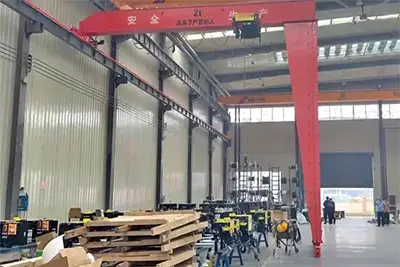
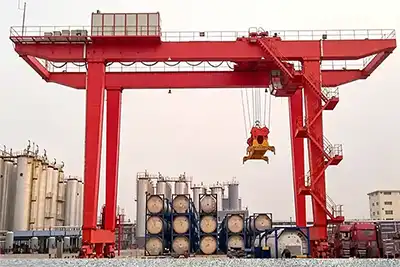
A free standing gantry crane is a type of overhead lifting system that stands on its own legs, without relying on the building structure for support. Unlike traditional overhead cranes that need roof-mounted runways or beams, these cranes have wheels or fixed bases that allow them to move along the floor. They come in a variety of sizes, spans, and lifting capacities, making them suitable for light to heavy-duty operations. The hoist moves along the bridge, lifting and transporting materials within the crane’s coverage area, while the entire crane can often be repositioned if needed.
For facilities that are leased or frequently expanding, flexibility in material handling becomes crucial. Traditional overhead cranes require significant building modifications, which can be costly and time-consuming. Free standing gantry cranes offer a practical solution because they can be installed quickly, adjusted to fit different spaces, and even relocated if your facility layout changes. This is particularly useful for factories, warehouses, or workshops that don’t have permanent infrastructure or may grow in the future.
Some key practical benefits include:
- Mobility: Many free standing gantry cranes are designed to move along rails or have wheels, allowing operators to reposition the crane as production needs change.
- Minimal Building Modification: No need to cut into the roof or reinforce walls—these cranes stand independently, which is ideal for rented or temporary facilities.
- Cost Efficiency: Reduced installation time and lower upfront structural costs help you save money. Plus, maintenance is straightforward since all key components are accessible from the floor level.
- Scalability: Modular designs allow you to adjust the crane’s height or span in the future, keeping your lifting solution relevant as your operations grow.
In short, free standing gantry cranes are practical, flexible, and designed to fit changing facility needs. They are not just lifting machines—they’re a tool to help your operation run smoother without locking you into permanent building changes.
Free Standing Gantry Cranes
A free standing gantry crane is a self-supporting lifting system designed to move heavy loads within a specific workspace without relying on the building’s structure. Unlike conventional overhead cranes that need roof-mounted runways, these cranes stand on their own legs, making them ideal for leased, temporary, or evolving facilities.
The key components of a free standing gantry crane include:
- Legs: The vertical supports that bear the crane’s weight and the load. Some are fixed, while others may have wheels for mobility.
- Bridge: The horizontal beam connecting the legs, along which the hoist travels. This defines the crane’s span.
- Hoist/Trolley: The lifting mechanism that moves along the bridge, raising and lowering loads. Depending on the application, it can be electric wire rope or chain hoist.
- Wheels or Tracks: Provide mobility, either allowing the entire crane to roll along the floor or run on a fixed track system.
- Control Systems: Can be pendant-operated, remote-controlled, or even automated in some industrial setups.
Types of Free Standing Gantry Cranes
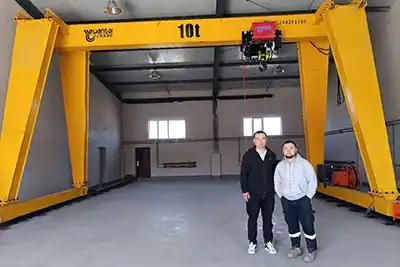
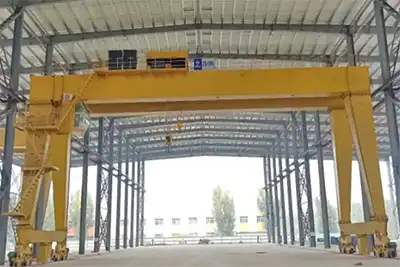
Standard Freestanding Gantry Cranes
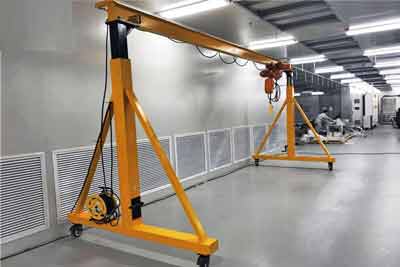
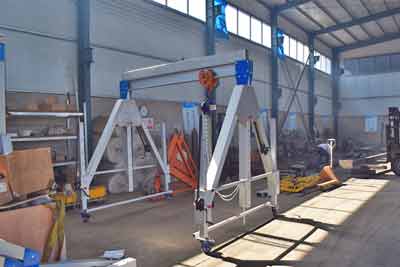
Adjustable Height or Modular Gantry Cranes
Load Capacity and Span
Free standing gantry cranes cover a wide range of capacities and spans, making them adaptable for many industries:
These specifications allow buyers to select a crane that matches their exact lifting needs without overpaying for unnecessary capacity or space. The versatility in design and configuration makes free standing gantry cranes a practical choice for facilities that need reliable lifting without permanent structural changes.
Advantages for Expanding or Leased Facilities
Free standing gantry cranes are designed with flexibility in mind, making them a smart choice for facilities that are leased, temporary, or constantly evolving. Unlike traditional overhead cranes, they don't tie you down to permanent building modifications, and they adapt easily to changes in production or layout.
- No drilling into ceilings or walls.
- No expensive steel reinforcements or structural alterations.
- Ideal for leased buildings or rented warehouses where modifications aren't allowed.
This saves both money and time while avoiding delays in starting your operations.
- Repositioning within the same workshop is simple and fast.
- Relocation to a new building doesn't require dismantling expensive structural components.
- Helps facilities adapt to changing production lines or temporary projects.
- Minimal installation time reduces downtime.
- No structural work lowers upfront expenses.
- Maintenance is easier since all components are accessible at floor level.
Overall, you get a reliable lifting system without breaking the budget.
- Heights and spans can be increased or reduced as needed.
- Additional hoists can be added for higher productivity.
- Modular sections allow for quick upgrades without buying an entirely new crane.
- CE and ISO-certified designs ensure the crane meets international safety and quality standards.
- Properly designed and installed gantry cranes provide stable lifting, reducing the risk of accidents.
- Easy access to key components makes inspections and maintenance straightforward.
Key Considerations for Buyers
Buying a free standing gantry crane is more than just picking a size and capacity. To get a crane that truly fits your facility and workflow, there are several practical factors to consider. Thinking about these ahead of time can save a lot of headaches later.
- Floor Load Capacity: Ensure the floor can support both the crane's weight and the maximum load it will lift. Overloading can cause floor damage or safety hazards.
- Headroom: Measure the vertical space available, including any beams, pipes, or lighting fixtures that could limit crane height.
- Available Space: Consider aisle widths and turning areas for the crane's mobility. The crane should move freely without obstructing workflows.
- Lifting Capacity: Match the crane's rated load with your heaviest expected lift, plus a safety margin of 10–20%.
- Span: The distance between legs affects the coverage area. Make sure it fits the workspace and material handling needs.
- Hook Height: Determine the vertical lifting clearance required for safe operation.
- Operating Speed: Consider how quickly loads need to be moved—some processes require faster travel or hoisting speeds.
- Adjustable heights or telescopic legs for flexible lifting.
- Modular bridge spans to fit changing layouts.
- Specialized hoists or trolleys for unusual loads, like coils, barrels, or bundled products.
- Electrical Requirements: Confirm voltage, phase, and frequency compatibility.
- Control Options: Pendant, remote, or wireless controls can improve safety and ease of use. Some sites may even consider automation for repetitive lifting.
- Regular inspection schedules for hoists, brakes, wheels, and structure.
- Weatherproofing or protective coatings if used outdoors.
- Easy access to components for lubrication, repair, and part replacement.
Common Applications
Free standing gantry cranes are versatile and can be used in a wide variety of industries. Their ability to operate independently of the building structure and adapt to changing layouts makes them particularly useful where flexibility is key.
- Easily adjusts to new layouts without major renovations.
- Handles heavy machinery, molds, or raw materials efficiently.
- Can be relocated if a line is moved or expanded.
- Load and unload pallets, coils, or containers with minimal effort.
- Move materials across wide aisles without requiring overhead runway installation.
- Ideal for leased spaces where permanent overhead cranes aren't allowed.
- No roof or wall alterations are needed.
- Can be installed quickly to start operations immediately.
- Modular designs allow the crane to grow with the facility or move to a new location later.
- Lift heavy equipment, beams, or machinery safely on uneven or changing ground.
- Easily transported and set up on different sites as projects progress.
- Reduces the need for renting cranes or relying on external lifting services.
Buyer Checklist Before Purchase
When buying a free standing gantry crane, it's easy to focus only on lifting capacity or price. But a smart buyer looks at the full picture to ensure the crane will meet current needs and future changes. Here's a practical checklist to guide your decision.
- Identify the heaviest load you'll handle regularly and include a safety margin of 10–20%.
- Measure the span between the crane's legs to cover your work area effectively.
- Consider future load increases—choosing a slightly higher capacity now can save a costly upgrade later.
- Check the floor's load-bearing capacity for both the crane's weight and the maximum lift.
- Ensure foundations or pads can handle wheel loads if the crane is mobile.
- For temporary installations, confirm that the floor surface allows safe movement of wheeled cranes.
- Determine if the crane needs to move frequently within the facility.
- Plan for potential relocation to a new workshop or warehouse.
- Verify that wheels or tracks are suitable for your floor type and layout.
- Look for CE, ISO, or other relevant safety certifications.
- Ask about inspection, maintenance, and repair support.
- Confirm availability of spare parts and technical guidance, especially if the crane is customized.
- Check if the crane height, span, or bridge sections can be adjusted.
- Modular cranes allow you to expand coverage or capacity without replacing the entire system.
- Adjustable hoists or trolleys make handling different types of loads easier.
Cases for References
Seeing real-world examples can make it easier to understand how free standing gantry cranes provide practical solutions for expanding or leased facilities. Here are a few scenarios that highlight their flexibility and cost-effectiveness.
Scenario 1: Avoiding Costly Roof Modifications in a Leased Warehouse
A warehouse leased for 3 years needed a lifting solution for palletized goods and medium-weight machinery. Installing a traditional overhead crane would have required cutting into the roof and reinforcing beams—a costly and time-consuming process.
Scenario 2: Relocating Crane After Facility Expansion
A metal fabrication workshop expanded its production area by 50%, requiring cranes to cover a larger workspace. A fixed overhead crane would have required major structural changes.
Scenario 3: Modular Gantry Crane Added to Growing Production Line
A manufacturing plant producing molds needed additional lifting capacity as its production line grew. Purchasing a new crane for the expanded area would have been expensive.
These scenarios demonstrate that free standing gantry cranes are more than just a lifting tool—they’re a practical investment that adapts to facility changes, reduces costs, and keeps operations flexible.
Conclusion
Free standing gantry cranes offer a practical solution for facilities that need reliable lifting without the constraints of permanent building modifications. Their key benefits—flexibility, cost efficiency, mobility, and scalability—make them suitable for a wide range of industrial and commercial applications.
These features make free standing gantry cranes especially suitable for leased, temporary, or expanding facilities. They give operators the freedom to handle heavy materials safely while adapting to evolving workflows.
Final Recommendation: For any operation that values practical, adaptable, and future-proof lifting solutions, investing in a free standing gantry crane is a smart choice. It provides a reliable system that grows with your facility, protects your budget, and simplifies material handling—without tying you to permanent structural changes.
- Fixed height and span.
- Typically used for consistent lifting operations in warehouses or production lines.
- Height and span can be changed as operational needs evolve.
- Useful in facilities with varying load sizes or when ceiling height is limited.
- Modular design allows for easy relocation and expansion in the future.
- Load Capacity: From as low as 500 kg for small workshops up to 50 tons or more for heavy manufacturing.
- Span (Bridge Width): Can range from 3 meters for compact spaces to 30 meters or beyond in larger industrial areas.
- Height: Adjustable cranes may have heights from 3 meters to over 10 meters, depending on factory layout and load requirements.
- Solution: A freestanding gantry crane was installed on the warehouse floor.
- Result: The crane provided full coverage for material handling without touching the roof structure.
- Benefit: The company saved both money and time, and could remove or relocate the crane at the end of the lease.
- Solution: The company opted for a modular free standing gantry crane.
- Result: The crane was moved to cover the new production zones without downtime.
- Benefit: Operations continued smoothly, and the crane could be relocated again in the future if needed.
- Solution: The plant installed a modular gantry crane with adjustable span and height.
- Result: The new crane seamlessly integrated into the existing line, handling both small and large molds.
- Benefit: The company expanded lifting capacity without buying a full-size overhead crane, saving on equipment and installation costs.
- Flexibility: They can be installed quickly, adjusted to fit different spaces, and relocated as operational needs change.
- Cost Efficiency: Minimal structural work and straightforward installation save money and reduce downtime.
- Mobility: Wheeled or track-mounted cranes can move across the floor, covering multiple areas as needed.
- Scalability: Modular designs allow adjustments in height, span, or lifting capacity as your facility grows.