
How to Install an Overhead Crane Without Corbels
Overhead Cranes in Concrete Workshops: Installation and Benefits
Overhead cranes are essential in concrete workshops for lifting, moving, and positioning heavy materials efficiently. Proper planning ensures safety, workflow optimization, and long-term reliability.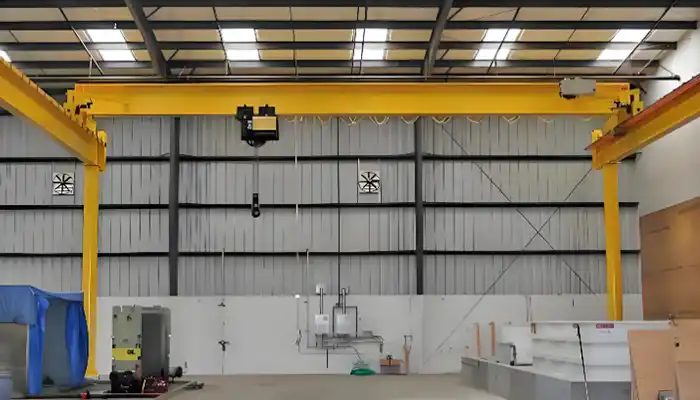
Single girder overhead crane installed in conceret workshop with no gorbels
- Used for lifting, moving, and positioning heavy materials
- Can cover large workshop areas without interfering with floor operations
- Often customized to match the workshop layout, lifting capacity, and workflow
- Load distribution: Runway beams must be supported differently to carry the crane's weight and the materials it lifts.
- Structural reinforcement: Concrete walls or columns may need extra reinforcement to handle the crane load.
- Limited options: Some cranes rely on corbels for alignment and stability, so alternative support systems must be designed.
- Safe and stable operations: Properly designed independent runway beams or steel frameworks can handle full loads without risk.
- Flexible workshop layout: You don't need to alter the existing concrete structure significantly.
- Long-term reliability: Good planning reduces maintenance issues and increases the lifespan of the crane.
- Optimized lifting workflow: Cranes can move materials efficiently across the workshop, even in tight spaces.
Workshop Constraints for Concrete Workshops
Before installing an overhead crane, understanding the physical layout and constraints of your concrete workshop is critical. Proper planning ensures safe operations and optimal crane performance.
Before installing an overhead crane, it's crucial to understand the physical layout of your concrete workshop. These details affect the type of crane you can install and how it will operate.
- Floor layout: The arrangement of machines, storage areas, and workstations determines where the crane can run. A crowded floor may limit trolley travel or crane positioning.
- Ceiling height: Taller ceilings allow for higher crane hooks and longer lifting clearance, but very low ceilings may require customized crane designs.
- Column spacing: The distance between concrete columns affects the crane's span. Wider spans need stronger beams or double girder cranes to avoid sagging.
Another critical factor is the load-bearing capacity of walls and columns. Overhead cranes exert both vertical and horizontal forces. If your columns or walls aren't strong enough, they could crack or deform under repeated crane operations. Sometimes, reinforcement is needed before installation.
- Check the concrete strength and column dimensions
- Assess whether additional steel supports or brackets are required
- Make sure the building structure can safely carry the crane's total load, including dynamic loads during lifting
Most traditional crane installations use corbels to support runway beams. Without corbels, you lose this convenient support point, which creates several challenges:
- No protruding supports for crane rails: You can't simply attach beams to columns at the usual height. You'll need alternative solutions like independent steel beams, brackets, or floor-mounted supports.
- Impact on crane span and load distribution: The crane's weight and the load it lifts must now be carried differently, which can affect beam size, deflection, and stability.
- Safety concerns: Improper support can lead to uneven crane movement, excessive stress on the structure, or even accidents during lifting.
Selecting the Right Overhead Crane for Concrete Workshops
Choosing the right overhead crane ensures safe and efficient lifting, especially in workshops without corbels. Crane type, capacity, and span must match workshop constraints.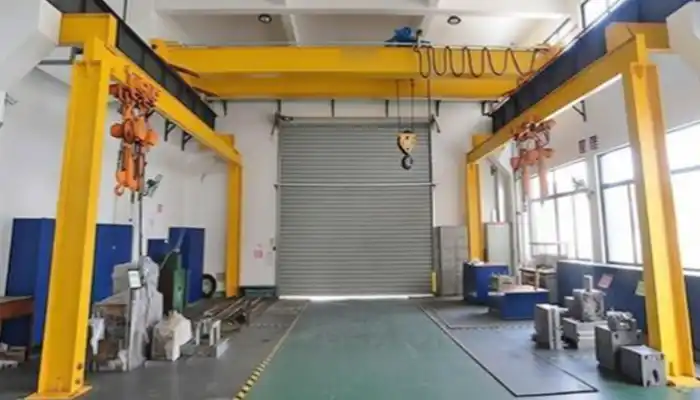
double gider overhead crane with freestanding runnway columns
Choosing the right type of overhead crane is critical, especially in workshops that don't have corbels. The support structure is different, so the crane must be compatible with alternative installation methods.
- Top-running single girder cranes: Lighter and simpler to install. Mounted on independent runway beams attached to columns or walls. Ideal for moderate loads and smaller spans, requiring less steel support.
- Top-running double girder cranes with independent runway beams: Suitable for heavier loads and longer spans. Distributes weight evenly, reducing beam deflection. Independent runway beams or steel frameworks are necessary without corbels.
- Gantry or semi-gantry cranes: Can work if partial floor supports or side brackets are available. Semi-gantry cranes reduce the need for full runway beams while still providing efficient lifting.
Once the crane type is chosen, determine the weight it needs to lift and the span required to ensure safety and efficiency.
- Calculating maximum lifting weight: Add the heaviest item to the crane's trolley and hook weight. Include a safety margin of 10–20% for dynamic forces.
- Adjusting span for existing column layout: Without corbels, spans are limited by column placement and beam strength. Measure clear distances and consider intermediate supports if necessary.
Other practical points to consider:
- Verify crane trolley and hook clearance at highest and lowest points
- Check that runway beams can handle total load without excessive deflection
- Confirm crane can operate without obstruction from equipment or walls
Careful selection of crane type, capacity, and span ensures safe, functional, and long-lasting installation—even without corbels.
Alternative Installation Solutions for Workshops Without Corbels
When corbels are absent, several engineering solutions allow overhead cranes to be installed safely and efficiently. These options provide structural support while adapting to workshop constraints.
Independent crane runway beams act as the main support for the crane, carrying both the crane weight and lifted load.
- Description and structural requirements: Usually made of high-strength steel and designed to handle dynamic lifting forces. Beams must be rigid enough to minimize deflection while spanning columns or supports.
Column-mounted or floor-supported options:
- Column-mounted beams: Attach directly to reinforced columns using brackets or bolts. Suitable if columns can handle additional loads.
- Floor-supported beams: Use vertical steel columns anchored to the floor to carry the load. Ideal for workshops with widely spaced or weak columns.
Proper engineering assessment ensures beams safely support the crane and its maximum load over time.
Custom steel brackets or frameworks attach to concrete walls or columns to act as artificial corbels.
- Custom steel structures anchored to concrete walls: Designed to fit the workshop layout and distribute crane load over multiple points.
- Load distribution considerations: Calculate how weight transfers to walls or columns. Uneven load distribution can cause structural stress, cracks, or premature wear. Reinforcement may be required for safety.
This solution works well when floor space is limited or adding full independent beams isn't practical.
Hybrid gantry systems combine floor-mounted supports with top-mounted beams for maximum flexibility.
- Combining floor-mounted and top-mounted supports: One side sits on a floor column while the other runs on an overhead beam. Covers long spans without corbels while keeping floor obstructions minimal.
- Flexibility for workshops without corbels: Adapts to uneven column spacing, low ceilings, or partial structural constraints. Ideal for heavy loads or large workshops.
With proper design, these alternative solutions allow overhead cranes to operate safely and efficiently in workshops lacking corbels.
Structural Assessment & Preparations for Crane Installation
Before installing an overhead crane, proper engineering assessment ensures safe operations and longevity of both the crane and workshop structure.
Overhead cranes exert both static and dynamic loads. Accurate calculations ensure beams, brackets, and supports handle real-world forces safely.
- Load per beam and deflection limits: Each runway beam must support the combined weight of the crane, hoist, and maximum load. Excessive deflection can cause uneven movement, wear, or structural failure.
- Crane dynamic effects on structure: Lifting, starting, stopping, and swinging loads create extra stresses on beams, columns, and anchors. Dynamic forces must be considered to avoid damage or hazards.
Workshops without corbels often rely on walls and columns for crane support. Reinforcement ensures they can safely carry the load.
- Strengthening weak points: Add steel plates, concrete jackets, or extra columns to increase load-bearing capacity. Repair small cracks or surface defects before installation.
- Anchoring methods for heavy-duty support: Use bolts, welded brackets, or embedded steel frameworks to attach runway beams or supports. Proper anchoring distributes load evenly and prevents failure.
Reinforcing walls and columns is critical for safe, long-term crane operation.
For semi-gantry cranes or floor-supported beams, assess the foundation carefully.
- Floor capacity for end trucks: End trucks transfer weight directly to the floor. Concrete must handle concentrated loads without cracking or settling.
- Inspect for cracks, uneven surfaces, or weak spots that could compromise stability.
- For heavy cranes, consider additional floor reinforcement or thickened concrete pads where trucks travel.
A solid foundation ensures smooth, safe crane operation with minimal maintenance over time.
Installation Step-by-Step for Overhead Cranes
Installing an overhead crane requires careful planning and precise execution. Each step ensures safety, alignment, and reliable operation.
Accurate measurement is the first step. Mistakes can cause misalignment or costly rework.
- Identify exact positions of runway beams, crane span, and trolley paths.
- Check clearances for hooks, hoists, and workshop equipment.
- Mark beam positions on columns, walls, or floor supports to guide fabrication and installation.
Double-check measurements before cutting or welding steel—small errors can become big problems later.
The runway beams form the crane's backbone. Proper fabrication and installation ensure stability and safety.
- Independent or column-mounted beams: Choose based on workshop structure. Independent beams rely on floor or wall-mounted columns, column-mounted attach to reinforced columns.
- Ensure beams are level, straight, and fully anchored.
- Verify welding, bolting, and connections meet engineering specifications.
Correct installation reduces deflection and ensures smooth crane operation.
With the runway in place, assemble the crane itself.
- Install the bridge, end trucks, trolley, and hoist according to manufacturer instructions.
- Check wheels and rails alignment; ensure the hoist moves freely along the trolley.
- Ensure safety components like limit switches are in place before testing.
This step sets the stage for smooth and safe crane operation.
Even small misalignments cause uneven wear. Ensure everything is level.
- Use precision instruments to check that runway beams are horizontal.
- Adjust end trucks and bridge until crane moves evenly without resistance.
- Confirm the hoist hook hangs straight and at the correct height along the travel path.
Proper alignment prevents mechanical issues and extends crane life.
Electrical systems are critical for crane safety and operation.
- Connect to stable power supply with proper voltage and grounding.
- Install control panels, push buttons, or remote control units.
- Test all safety circuits including emergency stops, overload protection, and limit switches.
Electrical safety is as important as structural integrity—never skip these checks.
Before daily use, trial lifts and load testing are essential.
- Start with lighter loads to verify smooth movement along the runway and trolley.
- Gradually increase to the maximum rated load while monitoring deflection, vibration, and alignment.
- Record test results and ensure compliance with safety standards.
Trial lifts confirm the crane is ready for real-world operation and build operator confidence.
Safety Considerations for Overhead Crane Operation
Safety is a top priority when installing and operating overhead cranes. Proper planning, equipment, and procedures protect both personnel and infrastructure.
Ensure the crane can handle the loads it lifts safely every time.
- Calculate total weight of the load, trolley, and hoist.
- Include a safety margin of 10–20% for dynamic lifting forces.
- Ensure runway beams, supports, and crane components are rated for maximum expected load.
Double-checking capacity prevents structural damage and protects both crane and staff.
Even strong cranes need safe access for operation and maintenance.
- Provide clear walkways and platforms for safe operator access.
- Ensure maintenance areas are accessible for inspections, lubrication, and part replacement.
- Use safety signage for pinch points, moving hooks, and trolley paths.
Good access and clear safety practices reduce accident risk and make maintenance efficient.
Mechanical safety features protect the crane and operators during malfunctions.
- Install emergency stop buttons reachable along the crane path.
- Limit switches prevent hoist or trolley from moving beyond safe boundaries.
- Test these systems regularly to ensure they function in real conditions.
Emergency stops and limit switches are essential for safe crane operation.
Following standards ensures safety, quality, and legal compliance.
- ISO standards: Cover crane design, load calculations, inspections, and testing.
- CE certification: Required in many regions for machinery safety.
- Local regulations: Follow building codes, electrical safety laws, and workplace safety rules.
Compliance protects workers, reduces liability, and ensures reliable crane operation over its lifespan.
Maintenance & Long-Term Operation of Overhead Cranes
Proper maintenance ensures cranes operate safely and efficiently over their entire lifespan. Routine care prevents downtime and costly repairs.
Regular inspections are the backbone of long-term crane safety and performance.
- Check runway beams and rails for cracks, corrosion, or bending.
- Inspect crane wheels, hoists, trolleys, and bridges for wear and alignment.
- Examine bolts, welds, and attachments to ensure they remain tight and secure.
Consistent inspections detect small issues before they become costly repairs.
Proper lubrication keeps moving parts smooth and prevents excessive wear.
- Apply grease to wheel bearings, hoist gears, and trolley mechanisms as per manufacturer recommendations.
- Monitor wear on hooks, wire ropes, chains, and sheaves; replace components before failure.
- Maintain records of maintenance activities to track the condition of each crane over time.
Well-maintained components extend crane life, reduce downtime, and maintain safe operations.
Workshops evolve and lifting needs change. Planning ahead keeps the crane system adaptable.
- Consider potential heavier loads or longer spans in the future.
- Ensure runway beams, columns, and foundations can accommodate upgrades.
- Factor in additional power supply or control requirements for higher-capacity cranes.
Planning for growth avoids expensive retrofits and keeps the crane system flexible for years to come.
Conclusion: Installing Overhead Cranes Without Corbels
Successfully installing an overhead crane in a concrete workshop without corbels requires careful planning, proper support solutions, and professional engineering input.
Installing an overhead crane without corbels is achievable with careful planning and proper support.
- Plan crane layout based on floor space, ceiling height, and column spacing.
- Reinforce walls, columns, or floors as needed to handle crane load.
- Follow a step-by-step installation process, including trial lifts and electrical setup.
Professional engineering input ensures safety, compliance, and long-term reliability.
- Structural analysis confirms beams, supports, and foundations are adequate.
- Engineering assessment ensures compliance with safety standards and codes.
Proper planning and alternative support solutions maximize efficiency and safety.
- Efficient use of space even with limited structural support.
- Safe operations with reinforced supports, aligned beams, and proper load handling.
- Flexibility to lift different loads across multiple workstations without interference.
A well-planned installation improves productivity and long-term safety in your workshop.