Corbel-Free Workshops: Free-Standing Crane Runway Solutions
Corbel-Free Concrete Workshops – Free-Standing Runway Workshop Overhead Crane Solutions
Introduction to Corbel-Free Concrete Workshops
Corbel-free concrete workshops are becoming increasingly common in modern industrial construction. Unlike traditional workshops, these buildings do not have projecting corbels or brackets on the columns to support overhead crane rails. The floors and columns are generally flat, giving a clean, uninterrupted interior. This design approach allows for more flexible layouts, easier movement of materials, and improved use of floor space.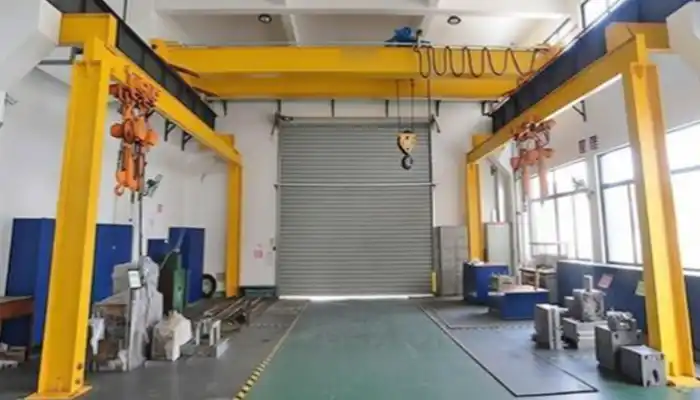
double girder overhead crane with freestanding runway columns
- Definition: A corbel-free workshop is a structure where crane rails cannot rely on projecting corbels for support. Instead, alternative methods are used to carry crane loads.
- Modern trend: Many industrial facilities now prefer corbel-free designs for clarity of space and future adaptability. Wide spans, open floor plans, and unobstructed ceiling areas are the standard in fabrication, assembly, and storage facilities.
Overhead cranes are essential in corbel-free workshops. Since the building itself does not provide natural support points, cranes must be carefully integrated into the structure using either free-standing runways or other independent support systems.
- Material handling: Cranes move heavy steel, machinery, and equipment across long spans safely.
- Efficiency: Properly installed cranes reduce workflow bottlenecks, speeding up production and minimizing manual labor.
- Safety: A well-planned crane layout prevents collisions, overloads, and structural stress, which is crucial in corbel-free environments where the building cannot carry extra loads.
This guide focuses on free-standing runway solutions for overhead crane installation in corbel-free concrete workshops. It explores practical installation methods, structural considerations, and workflow advantages. The goal is to provide buyers, engineers, and workshop managers with clear options to plan efficient and safe crane operations without relying on corbels or building modifications.
- Why it matters: Choosing the right free-standing system ensures long-term reliability and protects both the workshop structure and the equipment.
- Who this is for: Workshop planners, crane buyers, structural engineers, and facility managers evaluating crane options in corbel-free buildings.
Corbel-free workshops improve operational flexibility and space utilization.
- Uninterrupted interior allows for flexible layout changes.
- Floor space is fully usable, improving material flow and vehicle movement.
- Supports modern, long-span crane systems without relying on building modifications.
Without corbels, the crane support system must be independently engineered, which can create planning and structural challenges.
- Requires precise structural calculation for free-standing runways or independent supports.
- Building floors and columns must withstand concentrated loads if no natural support is present.
- Integration with existing workflows needs careful planning to avoid obstructions and maintain safety.
Several methods are used to install overhead cranes in corbel-free workshops safely.
- Free-standing steel runway systems anchored to the floor.
- Independent column supports placed along crane travel paths.
- Combination of floor and minimal wall supports for added stability where needed.
Proper crane planning ensures safe, efficient operations in corbel-free workshops.
- Crane placement must avoid workflow bottlenecks and allow vehicle access.
- Supports should minimize deflection, vibration, and structural stress.
- Regular inspections and maintenance are essential to protect both the crane and the workshop structure.
Corbel-Free Workshop Design Challenges
Corbel-free workshops provide open and flexible interiors, but this simplicity introduces unique structural traits that directly affect overhead crane installation. Careful planning is needed to ensure safety and reliability.
Most corbel-free buildings use flat slab or beam-slab construction, giving clean, uninterrupted ceilings and floors. While this design is excellent for workflow, it presents challenges for mounting cranes.
- Flat slab or beam-slab construction: The ceiling and supporting beams are flush, which keeps the interior clean but does not provide natural support points for crane rails.
- Wide spans: Many corbel-free workshops are built with long spans to allow large equipment or storage flexibility. While this improves workflow, it limits where a crane can be mounted because the structure must carry crane loads without corbels.
These characteristics require careful planning for overhead cranes. You cannot simply bolt crane rails to the slab without evaluating load transfer and structural reinforcement.
Installing an overhead crane in a corbel-free workshop requires alternative support methods since the building itself cannot carry the load directly.
- No corbels for direct rail mounting: Without corbels, columns and slabs cannot directly support crane rails, especially for heavy-duty lifting. Bolting rails without reinforcement may cause cracks or structural damage.
- Need for alternative load transfer methods: Free-standing runway beams, column-supported rails, or modular steel structures are commonly used. These systems transfer loads independently of the building.
- Coordination between building and crane system: Engineers and crane suppliers must work together early in planning. Runway layout, crane capacity, building spans, and foundations must be aligned to prevent vibration, uneven rail wear, or structural failure.
In short, corbel-free workshops offer flexibility but demand careful structural planning and dedicated crane support solutions to avoid long-term safety and maintenance issues.
Free-Standing Runway Solutions
Corbel-free workshops need independent runway systems to carry overhead crane loads safely. These systems remove stress from the building and allow cranes to operate freely. Here are the main options:
What it is:
Steel beams mounted on columns that carry the crane rails entirely, without relying on the building's corbels or slab.
Why it works:
- Can support heavy-duty cranes handling steel, machinery, or bulky materials.
- Keeps the building structure free from extra dynamic loads.
- Provides flexibility to install multiple cranes along the same runway.
Considerations:
- Requires a strong foundation for columns to handle crane loads safely.
- Higher upfront cost due to steel and installation requirements, but ensures long-term durability.
This system is ideal for medium to large workshops where heavy lifting is frequent and multiple cranes may be needed.
What it is:
Columns along the sides of the workshop carry the full runway beams, creating a mini gantry system for the crane.
Benefits:
- Works well for long-span workshops, letting cranes operate independently of the floor slab.
- Reduces stress on the building while covering wide areas efficiently.
Things to keep in mind:
- Columns take up some floor space, which may limit material handling below the crane path.
- Moderate cost—less than embedded rail systems but more than simple beam-mounted solutions.
This solution is often chosen for workshops with limited ceiling height or where multiple cranes need to operate over long spans without altering the building structure.
What it is:
Modular free-standing runway systems use pre-engineered steel modules that act as independent support structures for overhead cranes. They don't rely on the workshop's corbels or slab, making them suitable for corbel-free designs.
Why it works:
- Fast installation: Pre-engineered modules can be quickly assembled on site, reducing downtime.
- Scalable for future expansions: Additional modules can be added easily if you plan to install more cranes or extend the runway.
- Minimal interference with the building: The system works independently, so the existing structure doesn't need modification.
Things to keep in mind:
- Modules occupy some floor area, which may slightly limit movement underneath the crane path.
- Alignment is critical if multiple cranes will run on the same runway. Even minor misalignment can affect crane operation and safety.
Modular systems are ideal for workshops that may expand or reconfigure in the future, providing a flexible, durable, and relatively fast solution for overhead crane support.
Choosing the Right Free-Standing Runway Solution
Selecting the right runway system for a corbel-free workshop is more than picking a crane. It requires a careful balance of lifting needs, building layout, and long-term plans. Here's a practical guide to help make the right decision.
Before anything else, you need to understand how much weight the crane will lift and over what distance. The runway system must handle both the static and dynamic loads safely.
- Match the runway solution to the heaviest load your workshop will handle.
- Consider the span between supports—longer spans need stronger beams or gantry-style supports.
- Factor in dynamic load effects, such as starting, stopping, and moving the crane, not just the static weight.
A runway that is under-designed can lead to structural stress, uneven rail wear, or unsafe operation, so this step is critical.
The arrangement of your workshop strongly affects where you can place runway supports. Planning the layout properly ensures cranes operate efficiently and safely without interfering with daily workflow.
- Optimize column placement to allow smooth crane travel without obstructing production areas.
- Ensure columns don't block material flow, forklifts, or other equipment.
- Plan for multiple cranes if needed, considering spacing between runways and columns.
Good layout planning ensures cranes work efficiently without creating bottlenecks in the workshop.
Workshops often grow over time. Choosing a solution that allows for future expansion can save time, money, and downtime later.
- Modular free-standing systems are particularly useful for adding cranes or extending runways.
- Consider whether your building may need higher lifting capacity in the future.
- Select supports and foundations that can handle possible upgrades without major reconstruction.
A flexible design allows the workshop to adapt to new equipment or heavier loads without major disruptions.
Budgeting for a crane system goes beyond just the steel or concrete. You also need to consider how the system interacts with the building structure.
- Compare materials, foundation work, and installation complexity.
- Independent steel beams and gantry-style runways usually involve higher upfront cost but reduce stress on the building.
- Embedded or slab-mounted solutions may be cheaper but limit flexibility and may risk structural integrity.
Balancing cost with structural safety ensures a reliable system that lasts for years without expensive repairs or modifications.
Even the best crane system won't perform well if it can't be maintained easily. Accessibility should be part of the planning process.
- Ensure there is space to access rails, trolleys, and hoists for inspection and repair.
- Avoid placing columns or supports where they block access or complicate maintenance.
- Consider future service needs when choosing the runway height, spacing, and crane path.
Proper maintenance planning helps keep cranes operating safely and efficiently, minimizing downtime and extending equipment life.
Installation Considerations
Installing a free-standing runway for an overhead crane in a corbel-free workshop requires careful planning. Mistakes at this stage can lead to misalignment, structural stress, or costly downtime. The following considerations are essential to ensure safe and efficient crane operation.
The runway columns carry the full weight of the crane, its load, and dynamic forces. A strong foundation is critical to prevent settlement or tilting over time.
- Columns must be anchored to reinforced concrete footings sized for the crane load.
- Foundation design should account for both static and dynamic forces, including stopping and starting motions.
- Consider soil conditions—soft or uneven ground may require deeper or wider footings.
A properly designed foundation ensures that the runway system remains stable and safe throughout its lifespan.
Even minor misalignment can cause excessive wear on crane rails and trolley wheels. Precision during installation is essential for smooth and reliable crane movement.
- Conduct a detailed survey of the workshop layout before installation.
- Align rails carefully to ensure parallelism, level, and proper spacing.
- Check alignment for multiple cranes if they will share the same runway.
Accurate alignment reduces maintenance needs and keeps cranes running efficiently and safely.
Overhead cranes create dynamic loads that can affect both the runway structure and the workshop floor. These forces must be carefully managed.
- Account for vibrations caused by crane acceleration, deceleration, and hoist operation.
- Design runway beams and columns to handle deflection limits recommended for the crane type.
- Include damping or bracing if necessary to minimize sway and vibration.
Managing dynamic effects protects both the crane and building from premature wear or structural damage.
Successful installation requires input from both the crane supplier and the structural engineer. Collaboration ensures the system is safe, efficient, and compatible with the building.
- Review crane specifications with the engineer to confirm beam size, column spacing, and load capacity.
- Coordinate on installation sequence, lifting points, and required clearances.
- Discuss future expansions or modifications to avoid rework later.
Early collaboration reduces the risk of unexpected issues during installation or operation.
Overhead crane systems must meet all local safety codes and industrial standards. Compliance protects workers and ensures legal operation.
- Verify the runway system meets national and local crane standards.
- Include safety features such as rail stops, limit switches, and overload protection.
- Plan for regular inspection and maintenance according to regulations.
Following proper standards keeps your workshop safe, compliant, and reduces liability risks.
Practical Applications / Case Studies
Understanding how different free-standing runway solutions are applied in real workshops helps buyers and planners make the right decision. Here are practical examples across light, medium, and heavy-duty operations.
In smaller fabrication or assembly workshops, single girder cranes on independent steel beams provide a simple and cost-effective solution. These systems support lighter loads while keeping the building structure free from extra stress.
- Ideal for loads up to 10 tons or moderate lifting requirements.
- Independent beams allow multiple crane positions without altering the workshop slab.
- Easy to maintain, as crane rails and trolleys are fully accessible from the floor.
This setup is often used in component assembly, light machinery handling, or small steel fabrication shops where flexibility and ease of installation are priorities.
For workshops handling heavier materials or requiring future expansion, modular free-standing runways offer a flexible solution. Pre-engineered modules make installation faster and scalable.
- Supports moderate loads while providing options to add additional cranes later.
- Minimal interference with existing workshop layout, leaving floor space for material handling.
- Can be reconfigured or extended as production demands increase.
This solution works well for steel fabrication shops, medium-scale assembly plants, and workshops planning growth without rebuilding the structure.
In heavy-duty operations, such as large steel plants, the column-supported gantry style runway is often the preferred choice. These systems carry full crane loads independently of the building structure, even over long spans.
- Supports very heavy loads such as beams, slabs, and machinery components.
- Columns handle the full dynamic and static crane forces, protecting the workshop slab.
- Suitable for long-span workshops where multiple cranes may operate simultaneously.
This type of system is common in steel production, large fabrication facilities, and workshops with heavy material handling needs, providing reliability and long-term durability.
Conclusion
Free-standing runway systems provide effective solutions for installing overhead cranes in corbel-free workshops. By carrying the crane loads independently, they protect the building structure while allowing flexibility for workflow and future expansion. Choosing the right system requires a careful balance of crane capacity, workshop layout, and long-term planning.
Key Takeaways
Before finalizing a runway solution, keep these practical points in mind:
Summary of free-standing runway options:
- Independent steel beams: Best for medium to heavy loads, multiple cranes, and flexibility in layout.
- Column-supported gantry style: Ideal for long spans, heavy-duty operations, and minimizing stress on the slab.
- Modular free-standing systems: Fast installation, scalable, and suitable for workshops planning future expansion.
Collaboration is essential: Early coordination between the crane supplier, structural engineer, and workshop planners ensures the system is safe, efficient, and compatible with the building structure.
Practical recommendation:
- Choose the system based on crane load, span, workflow, and potential future expansion rather than just upfront cost.
- Consider maintenance access, dynamic loads, and alignment requirements to ensure reliable operation over time.
By planning carefully and selecting the right free-standing runway, workshop managers can maximize safety, efficiency, and flexibility in corbel-free industrial facilities.