Industrial Straddle Carrier Guide | Rubber-Tyred Straddle Carriers & Straddle Cranes
Industrial Straddle Carriers: The Essential Guide for Buyers Across Industries
Straddle carriers are versatile, high-capacity, multi-directional lifting solutions essential for handling heavy, oversized, or irregular industrial loads efficiently, safely, and flexibly across sectors.
Key Takeaways:
- Straddle carriers provide multi-directional mobility, precise placement, and lifting capacities from 5–100 tons, suitable for everything from battery cabinets to wind turbine components.
- They outperform forklifts, reach stackers, and fixed cranes in speed, safety, and flexibility.
- Proper selection requires evaluating load type, dimensions, weight, spreader compatibility, lifting height, and aisle clearance.
- Customization options allow adaptation to low headroom, narrow aisles, multi-load handling, and specialized industrial applications.
- Straddle carriers save time, reduce labor, minimize risk of damage, and improve overall operational efficiency.
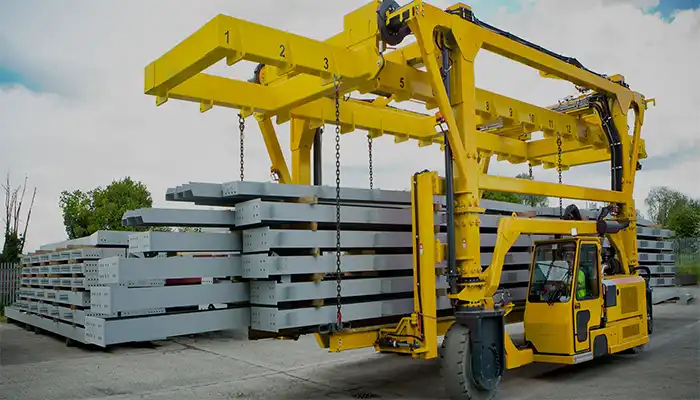
What is a Straddle Carrier?
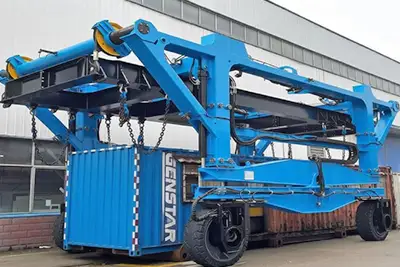
Straddle carriers are rubber-tyred, mobile lifting machines capable of moving heavy, oversized, or irregular industrial loads. Combining mechanical, hydraulic, and electronic systems, they allow precise multi-point lifting, multi-directional movement, and flexible deployment.
Practical Buyer Insight:
- Ideal for ports, steel plants, construction sites, shipyards, renewable energy projects, and industrial facilities.
- Supports a wide range of loads, including containers, modular buildings, steel structures, precast concrete, heavy machinery, and specialty components.
Advantages Over Other Lifting Equipment
| Equipment | Limitation | Buyer Advantage with Straddle Carrier |
|---|---|---|
| Forklifts | Limited height, cannot handle oversized loads | High-capacity, multi-directional, safe for heavy items |
| Reach Stackers | Limited multi-point precision | Handles heavier loads, multi-point lifting possible |
| Cranes / RTGs | Fixed foundations, slower horizontal movement | Mobile, fast deployment, precise placement |
| Manual Methods | Labor-intensive, unsafe | Reduces labor, increases operational efficiency |
Practical Tip: Buyers should map facility layout and load paths to optimize carrier type and size.
Industrial Applications
| Sector | Typical Loads | Practical Considerations |
|---|---|---|
| Ports & Terminals | Containers, steel coils, timber | Adjust spreader type, stacking height, yard path |
| Construction | Modular units, precast concrete panels | Check aisle clearance, lifting height, hydraulic strength |
| Steel Plants | Beams, trusses, fabricated frames | Multi-point lifting; durable hydraulic system |
| Shipyards | Hull sections, modules, machinery | Long-frame carriers; precise placement and sensors |
| Renewable Energy | Wind towers, blades, solar arrays | Tall frame configuration; multi-directional steering |
| Rail Depots | Bogies, rails, wagons | Track compatibility, long-frame stability |
| Industrial Facilities | Battery cabinets, gas tanks, heavy presses | Adjustable frame, aisle clearance, hydraulic control |
Practical Tip: Select carriers based on the heaviest or most irregular load to ensure flexibility across all yard operations.
Typical Objects Handled
| Object | Size/Weight | Buyer Considerations |
|---|---|---|
| Containers | 20–45 ft, ISO | Adjustable spreader; confirm stacking height |
| Modular Buildings | Residential, commercial, industrial units | Hydraulic durability for repeated lifts |
| Steel Structures | Beams, trusses, frames | Multi-point lifting; aisle width check |
| Precast Concrete | Panels, slabs, beams | Clamp compatibility; smooth hydraulic lift |
| Heavy Machinery | Engines, turbines, presses | Spreader footprint alignment; precise placement |
| Gas Tanks | 15–80 tons | Obstacle sensors; secure clamps |
| Battery Cabinets | 5–30 tons | Adjustable frame; aisle clearance |
| Pipes & Tubes | 20–50 tons | Long-path clearance; spreader adjustment |
| Wind Turbines | Towers, blades, nacelles | Multi-directional steering; tall frame |
| Steel Coils / Timber / Ship Modules | 10–100 tons | Specialized spreaders; yard layout |
| Solar Panels & HVAC Units | 5–40 tons | Stable platform; vertical clearance |
| Railway Equipment | Bogies, rails, wagons | Long-frame carriers; yard path planning |
Typical Capacity & Selection Tips
Choosing the right straddle carrier requires understanding the typical load capacities, operational considerations, and selection criteria for each type of material. Proper consideration ensures safety, efficiency, and reduced operational risks.
- Capacity: 30–80 tons
- Spreader adjustability for different container sizes (20', 40', 45')
- Stacking height capability for yard optimization
- Multi-point lifting stability for uneven or loaded containers
- Capacity: 20–50 tons
- Hydraulically durable carriers for frequent lifting cycles
- Protective spreaders to avoid structural damage
- Height clearance for stacking multiple modules
- Capacity: 30–100 tons
- Multi-point lifting spreaders for long or irregular steel beams
- Aisle clearance for large spans
- Frame reinforcement to prevent twisting or bending during transport
- Capacity: 25–70 tons
- Clamp compatibility for slabs, panels, or beams
- Smooth lift hydraulic motion to avoid cracks or surface damage
- Stacking height and spacing for yard storage efficiency
- Capacity: 30–80 tons
- Precise spreader footprint to match machinery base
- Accurate placement in workshops or assembly lines
- Stability during lifting for heavy and uneven loads
- Capacity: 15–80 tons
- Secure clamps and harnesses for cylindrical or pressurized loads
- Obstacle detection and path planning for safety in confined spaces
- Capacity: 5–30 tons
- Adjustable lifting frame width for varying cabinet sizes
- Aisle width and turning radius planning for warehouses
- Fragile load protection for sensitive electrical components
Practical Selection Table:
| Load Type | Capacity | Buyer Checklist |
|---|---|---|
| Containers | 30–80 tons | Spreader adjustability; stacking height |
| Modular Units | 20–50 tons | Hydraulic durability; protective spreaders |
| Steel Structures | 30–100 tons | Multi-point lifting; aisle clearance |
| Precast Concrete | 25–70 tons | Clamp compatibility; smooth lift |
| Heavy Machinery | 30–80 tons | Precise spreader footprint; placement |
| Gas Tanks | 15–80 tons | Secure clamps; obstacle detection |
| Battery Cabinets | 5–30 tons | Adjustable frame; aisle width |
| Pipes & Tubes | 20–50 tons | Long-path clearance; spreader flexibility |
| Wind Turbines | 40–80 tons | Steering flexibility; tall frame |
| Steel Coils / Timber / Ship Modules | 10–100 tons | Specialized spreaders; yard layout |
| Solar Panels / HVAC | 5–40 tons | Stable platform; vertical clearance |
| Railway Equipment | 30–80 tons | Long-frame carriers; path planning |
Tip: Consult manufacturers for customized spreaders, frame configurations, and low-headroom solutions for mixed industrial environments.
Customization Options
- Adjustable lifting frames and spreaders for irregular/oversized loads
- Hydraulic system upgrades for repeated heavy-duty handling
- Electronic guidance, obstacle sensors, and precise load placement controls
- Low-headroom and narrow-aisle configurations for confined industrial yards
- Modular carriers for multiple load types or future expansion
FAQS on Straddle Carriers for Different Industrial Sectors
Q: What exactly is a rubber-tyred straddle carrier and how does it differ from other lifting equipment?
A: A rubber-tyred straddle carrier is a mobile heavy-lifting machine designed for oversized or irregular industrial loads.
- Unlike conventional forklifts or overhead cranes, it straddles the load for precise multi-point lifting and safe transportation.
- Ideal for moving containers, modular buildings, and large steel or precast concrete components efficiently in busy industrial yards.
Q: Which industrial sectors benefit most from straddle carriers?
A: Straddle carriers are widely used in ports, steel mills, construction sites, shipyards, and industrial manufacturing facilities.
- They handle high-capacity cargo, such as shipping containers, heavy machinery, and structural steel, that requires safe and reliable yard handling.
- Particularly effective in operations where flexible movement, stacking, and multi-directional transport are critical.
Q: How do I choose the right capacity, spreader, and configuration for my loads?
A: Select a straddle carrier based on the maximum load weight, dimensions, and lifting footprint.
- Adjustable spreaders, modular lifting attachments, and customizable trolley configurations ensure compatibility with steel structures, precast concrete, or modular units.
- Consider load stability, stacking height, and multi-point lift requirements for optimal efficiency.
Q: What are the practical considerations for yard layout, aisle width, and load types?
A: Ensure your yard has sufficient aisle width, firm surfaces, and clear turning paths.
- Straddle carriers require precise aisle clearance for containers, steel coils, or heavy machinery.
- Ground conditions, load type, and stacking method directly affect safe operation and workflow efficiency.
Q: Which customization options are essential for mixed or specialized industrial applications?
A: Key customizations include adjustable spreaders, electronic controls, specialized tires, and modular lifting attachments.
- These allow handling of diverse cargo such as steel beams, precast concrete, heavy equipment, or mixed-size containers.
- Tailored options improve productivity, minimize handling risks, and maximize ROI in demanding industrial environments.
If you want, I can also create a version optimized specifically for buyers searching for “industrial straddle carriers for ports, steel, and construction”, making it fully scrollable for web use while keeping it natural and conversational. This usually increases engagement and leads. Do you want me to do that?
Rubber-tyred straddle carriers are practical, versatile, and essential lifting solutions for industrial buyers dealing with heavy, oversized, or irregular loads. By understanding load types, capacity requirements, yard layout, and customization options, buyers can maximize safety, efficiency, and ROI. Properly selected carriers save time, reduce labor, and outperform forklifts, reach stackers, and traditional cranes in industrial environments.
“Send Us an Inquiry on Rubber-Tyred Straddle Carriers & Straddle Cranes Tailored for Your Industrial Needs”