Port Logistics & Storage in Qatar: Industrial Guide for Crane Buyers
Port Logistics and Storage Industry in Qatar: Industrial Crane Buyers’ Guide
Most Important Takeaway
Qatar’s port logistics and storage industry is rapidly growing, with heavy emphasis on container handling, bulk cargo, and industrial equipment lifting. Crane buyers—spanning port operators, logistics companies, and industrial facilities—must select reliable, high-capacity, and weather-resistant cranes to maximize efficiency, safety, and long-term cost savings.
- High-Frequency Operations: Ports handle containers, bulk cargo, and machinery in large open or semi-enclosed yards, often outdoors.
- Crane Capacity Needs: Typical lifting requirements range from 10–40 tons, with 20t, 32t, and 40t cranes most commonly used.
- Crane Types: Buyers rely on double girder gantry cranes, semi-gantry cranes, heavy EOT bridge cranes, and customized container/coil handling cranes.
- Buyer Profiles: Major buyers include port operators, logistics companies, large industrial end users, and government entities.
- Purchase Drivers: Key factors are throughput efficiency, reliability in harsh climates, total cost of ownership, safety, and after-sales support.
- Industry Hubs: Main activity is concentrated in Doha and Al Wakrah, with connections to Hamad Port and industrial zones.
- Automation & Digitalization: Buyers increasingly look for remote control, PLC integration, semi-automated stacking, and smart yard management systems.
Overview of Port Logistics and Storage in Qatar
Qatar is strategically located on the Arabian Gulf, making it a vital hub for maritime trade and industrial logistics. The country’s ports handle a mix of containerized cargo, bulk goods, and industrial equipment. Efficient handling and storage are critical as Qatar continues to grow its imports and exports. The logistics system is closely linked to free zones and industrial parks, allowing goods to move quickly from port to warehouse or factory without unnecessary delays.
Ports in Qatar support not just shipping, but the backbone of several industries. Energy projects, manufacturing facilities, and construction operations rely on timely delivery of raw materials and equipment. This makes port logistics and storage an essential part of the national supply chain strategy.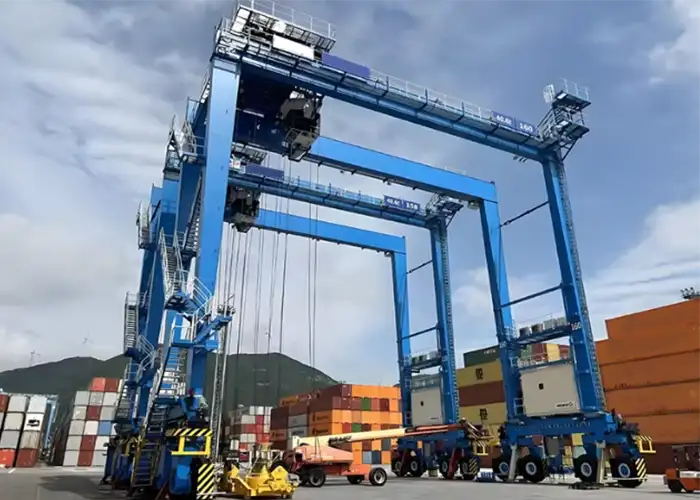
RTG Gantry Crane for Container Handling
Key Points:
Before diving into technical details, here’s what makes Qatar’s ports unique:
- Critical for container handling, bulk cargo, and industrial equipment storage – every major port operation in Doha or Al Wakrah depends on reliable cargo movement.
- Supports core industries like energy, manufacturing, and construction – ports supply machinery, raw materials, and components directly to projects and plants.
- Integration with free zones and industrial parks – helps reduce transport times and keeps supply chains smooth.
- Strategic location for regional and international trade – ships can reach GCC neighbors, Asia, and Europe quickly.
Industry Features
The operations in Qatar’s port logistics and storage sector are defined by several critical characteristics. These features determine how cranes are chosen, how yards are designed, and how the workforce is organized.
Before selecting cranes or lifting systems, it’s important to understand the cargo profile. Different materials have different handling requirements, weight distribution, and storage needs.
- Containers: Standard 20ft and 40ft containers dominate port operations. They carry everything from electronics to heavy machinery and require precise handling for stacking and transport.
- Bulk Cargo: Items like grains, ores, or construction aggregates often need grab-equipped cranes or specialized handling tools. They are usually heavier, loose, and less predictable in weight distribution.
- Palletized Goods: Small or medium loads that can be easily stacked on pallets for storage and movement. Pallets allow faster handling but require cranes or forklifts with precise lifting attachments.
- Steel Coils and Machinery Boxes: These heavy or irregularly shaped items demand specialized lifting solutions like spreaders, slings, or adjustable hooks. Safety and balance are key.
Operations in Qatar are mostly outdoors, and that creates specific challenges for equipment and personnel. Heat, occasional dust, and intense sun exposure are part of the daily routine.
- Durable equipment is required – cranes need heat-resistant motors, anti-corrosion coatings, and dust-protected electrical components.
- Operator safety matters – shaded cabins, cooling systems, and anti-slip surfaces are commonly implemented.
- Maintenance schedules are crucial – the harsh environment accelerates wear, so preventive checks and routine servicing are necessary.
Port and storage facilities run on tight schedules. Loading and unloading happen multiple times daily, often around the clock. The high frequency means that downtime can disrupt supply chains and affect multiple industries.
- Cranes must handle continuous lifting cycles without frequent breakdowns.
- Predictable maintenance reduces downtime – preventive checks, lubrication, and component replacement schedules are standard practice.
- Workforce coordination – efficient material movement requires careful timing between crane operators, yard staff, and transport teams.
Different cargo types and yard layouts determine how much a crane needs to lift and how often. Choosing the right capacity is critical for efficiency, safety, and long-term equipment reliability.
- Typical lifting range: 10–40 tons – small containers or pallets require 10–20t cranes, while heavy coils or machinery may need 32–40t capacities.
- Most common capacities: 20t, 32t, 40t – these sizes match most cargo profiles and handling frequencies.
- Cargo-specific lifting attachments – spreaders for containers, slings for machinery boxes, and grab buckets for bulk cargo ensure safe handling.
- Efficiency and safety – proper capacity selection prevents overloading, reduces accidents, and keeps operations on schedule.
Key Geographic Hubs
Qatar’s port logistics and storage operations are concentrated in a few key areas. Understanding where the main activity occurs is essential for crane buyers and logistics planners. Each hub has its own strengths, infrastructure, and cargo handling focus.
Doha serves as the country’s main port and logistics center. It handles the majority of container traffic and acts as a hub for freight consolidation. The city’s ports are connected to road and industrial networks, making it easier to move cargo efficiently to nearby warehouses or manufacturing sites.
- High container traffic: Doha handles thousands of TEUs daily, requiring fast and reliable crane operations.
- Freight consolidation: Many logistics companies consolidate smaller shipments here before shipping them onward.
- Infrastructure support: Access to roads, customs, and industrial parks ensures smooth cargo flow from port to end user.
Al Wakrah is an emerging logistics hub that has grown rapidly with the expansion of Hamad Port. It is well-suited for open stackyards and semi-enclosed handling stations, offering space for large-scale operations that cannot be accommodated in Doha.
- Linked to Hamad Port: Close proximity allows quick movement of containers, bulk cargo, and project equipment.
- Large open yards: Ideal for handling bulk materials, steel coils, and oversized machinery.
- Semi-enclosed stations: Offer protection for sensitive or high-value cargo while maintaining operational efficiency.
The efficiency of Qatar’s port operations depends not only on the hubs themselves but also on how well they are connected to the broader transport network. Roads, customs, and industrial zones are all integrated to ensure cargo moves quickly and reliably.
- Road network integration: Smooth transfer from port to warehouses, industrial plants, and free zones.
- Industrial zone access: Immediate connections to manufacturing and construction sites reduce handling time.
- Customs and inspection efficiency: Streamlined procedures keep cargo moving and reduce delays in storage yards.
Industrial Company & Facility Scale
The scale and type of facilities in Qatar’s port logistics and storage industry vary widely. Understanding the different company sizes and facility layouts is essential for crane buyers and logistics planners. Each type has specific operational needs and influences the kind of cranes and material handling equipment required.
Large logistics parks are the backbone of Qatar’s storage and cargo handling network. These parks are usually multi-tenant, supporting several companies under one management. They handle a variety of cargo types, from containers and pallets to heavy machinery, and often provide additional services beyond simple storage.
- Multi-tenant operations: Multiple companies share the same facility, requiring clear scheduling and yard management.
- Multimodal connectivity: These parks support container handling, trucks, and sometimes rail, allowing smooth transfer of goods between transport modes.
- Value-added services: Services such as packaging, labeling, and cross-docking help speed up the supply chain and reduce handling time.
Port terminal operators are among the largest crane buyers in Qatar. They handle high volumes of containers, bulk cargo, and project shipments daily. The reliability, capacity, and speed of cranes in these facilities directly impact throughput and operational efficiency.
- High-capacity lifting needs: Terminal operators require cranes capable of lifting 20t, 32t, and even 40t loads efficiently.
- Diverse cargo handling: From standard containers to heavy project cargo and steel coils, the cranes must be versatile.
- Operational reliability: Frequent use means downtime is costly, so maintenance and durability are top priorities.
Storage facilities complement port terminals by providing space to hold cargo temporarily before it is dispatched. The facility type varies depending on the cargo, with some goods needing weather protection while others are fine in open yards.
- Large open yards: Suitable for general cargo, bulk materials, and oversized equipment. These yards allow easy movement of forklifts, reach stackers, and gantry cranes.
- Semi-enclosed transload stations: Provide shelter for sensitive goods like machinery or palletized items, protecting them from heat, dust, or rain.
- Flexible layout: Facilities are designed to adapt to changing cargo volumes and seasonal peaks.
Crane Buyers in Qatar’s Industrial Sectors
Crane buyers in Qatar’s port logistics and industrial sectors come from different types of organizations, each with unique requirements. Understanding who these buyers are and what drives their decisions is crucial for suppliers and planners alike.
Before choosing the right crane, it’s important to know the types of buyers in Qatar and what they typically need:
- Port and Terminal Operators: These buyers handle large volumes of containers and bulk cargo every day. They need high-capacity, heavy-duty cranes capable of lifting 20t, 32t, or 40t loads reliably. Efficiency and uptime are critical, as any downtime can disrupt the entire supply chain.
- National & Regional Logistics Companies: These companies operate multiple storage yards and warehouses. They require flexible lifting systems that can handle a mix of containers, pallets, machinery, and bulk cargo. Versatility and quick setup are important for adapting to varying cargo types.
- Industrial End Users: Manufacturing plants, steel mills, and energy sector facilities often use cranes on-site for moving heavy machinery, raw materials, or project cargo. These buyers focus on durable, reliable equipment that can withstand constant use and tough working conditions.
- Government & State Enterprises: Infrastructure projects and government logistics hubs demand standardized and certified cranes. Safety, compliance, and interoperability with other equipment are top priorities for these buyers.
Crane buyers in Qatar evaluate equipment based on practical operational requirements, not just price. Understanding these needs can help suppliers provide the right solution:
- Throughput Efficiency: Buyers need cranes that can handle fast and continuous lifting cycles to avoid bottlenecks in busy yards or storage facilities.
- Reliability: Equipment must operate consistently under harsh outdoor conditions, including heat, dust, and occasional sandstorms. Downtime can be extremely costly.
- Total Cost of Ownership: Purchase price is only one factor. Buyers also consider energy consumption, maintenance costs, and expected lifespan to make a practical investment.
- Safety Compliance: Cranes must meet international standards such as ISO, FEM, and CMAA, and include features like overload protection, redundant braking systems, and ergonomic controls.
- After-Sales Support: Local maintenance, quick access to spare parts, operator training, and emergency response are often deciding factors when selecting a supplier.
In Qatar, crane buyers are highly operationally focused. They care about speed, reliability, safety, and cost efficiency more than marketing terms. Understanding the type of buyer and their specific challenges is essential for suppliers who want to match the right crane to the right facility.
Crane Types & Lifting Equipment
Selecting the right type of crane is critical for efficient port and industrial operations. In Qatar, different facilities have different needs depending on cargo type, yard layout, and lifting frequency. Understanding the range of cranes and lifting equipment available helps buyers make smarter choices and ensures smooth operations.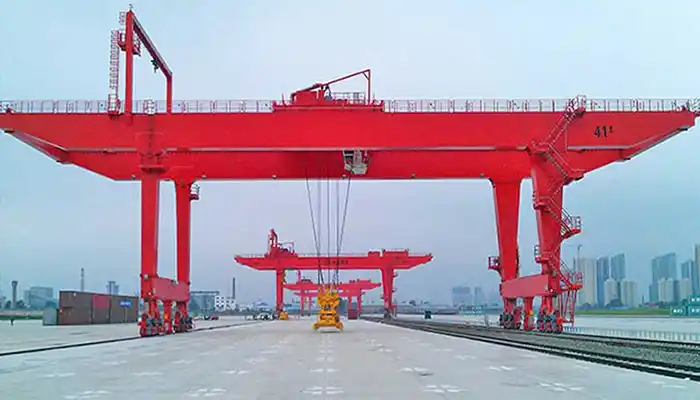
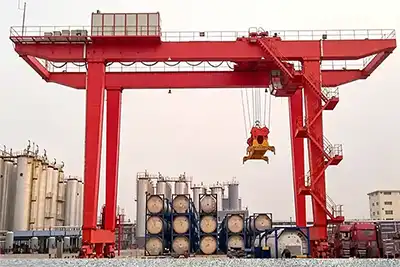
double girder gantry crane , tailored rail mounted gantry crane for container handling
Double girder gantry cranes are widely used in container yards and heavy cargo operations. Their design allows them to handle large weights and operate over long spans, making them a mainstay in busy port terminals.
- Ideal for high-capacity lifting: Typically used for containers, steel coils, and heavy machinery.
- Long spans: Can cover wide yards, reducing the need for multiple cranes.
- Reliable in continuous operations: Built for frequent use with minimal downtime.
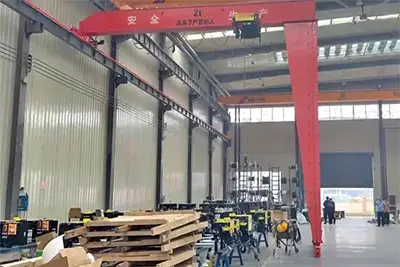
Semi-gantry cranes are a cost-effective solution for facilities that do not need full overhead coverage. They combine one leg on a floor track and one leg on a runway, offering flexibility without the full infrastructure of a traditional gantry.
- Partial coverage efficiency: Perfect for medium-lifting tasks where space or budget is limited.
- Lower installation cost: Requires fewer supports and less civil work compared to full gantries.
- Versatile for mixed cargo: Can handle containers, pallets, and machinery in smaller yards.
Heavy electric overhead (EOT) bridge cranes are used in indoor or semi-enclosed industrial applications. They are particularly suited for workshops, fabrication plants, and storage stations that require precise lifting.
- Indoor heavy-lifting: Suitable for machinery handling, steel coils, and industrial equipment.
- Smooth, controlled movement: High precision for repetitive tasks in workshops.
- Durable construction: Designed to operate in semi-enclosed environments with minimal maintenance.
Some operations require specialized lifting attachments to handle unique or irregular cargo. Customized solutions ensure safety and efficiency while reducing manual handling.
- Grab buckets: Ideal for bulk materials like sand, gravel, or grain.
- Spreader bars and container clamps: Securely lift containers and pallets without damaging cargo.
- Slings and clamps for steel coils or machinery: Adjustable solutions to safely handle irregular or heavy shapes.
Cranes do not operate in isolation. Forklifts, reach stackers, and terminal tractors complement crane operations, improving workflow and reducing idle time.
- Forklifts: Move palletized cargo within yards and warehouses.
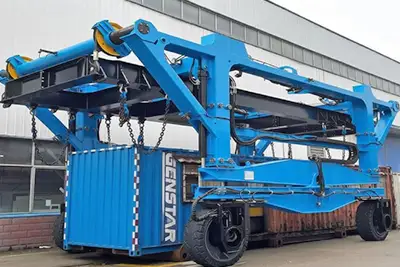
- Reach stackers: Lift containers short distances, useful in stacked storage areas.
- Terminal tractors: Efficiently transport containers and heavy loads between crane bays and storage areas.
Practical Insight:
The right combination of cranes and lifting equipment depends on cargo type, yard layout, and operational goals. In Qatar, high-frequency operations, outdoor conditions, and mixed cargo handling make double girder gantries, semi-gantries, and customized solutions essential for efficiency and safety.
Operational Considerations
Running cranes and material handling equipment in Qatar comes with its own set of challenges. Outdoor conditions, cargo variety, and high-frequency operations all influence how cranes are chosen, operated, and maintained. Buyers need to consider environmental adaptation, automation options, and maintenance planning to ensure equipment reliability and efficiency.
Qatar’s climate can be harsh, with high heat, dust, and occasional sandstorms affecting both machinery and operators. Cranes must be built to handle these conditions without compromising safety or performance.
- Corrosion protection: Coatings and rust-resistant materials extend the lifespan of cranes exposed to humid or dusty conditions.
- Heat-resistant components: Motors, control panels, and electrical systems must withstand high ambient temperatures to prevent breakdowns.
- Dust-proof enclosures: Protect sensitive parts like electronics and hydraulic systems from sand and dust, reducing maintenance needs and downtime.
Modern port and storage operations increasingly rely on automation to improve efficiency and reduce human error. Even partial automation can significantly speed up workflows and improve safety.
- PLC/SCADA integration: Centralized control systems allow operators to monitor crane operations, adjust loads, and optimize lifting cycles.
- Semi-automated stacking: Reduces manual intervention while increasing precision in placing containers, pallets, or bulk materials.
- Smart yard management: Integrates crane movements with forklifts, reach stackers, and transport vehicles to prevent delays and collisions.
High-frequency operations mean that even small equipment failures can disrupt the supply chain. Proactive maintenance is essential for reliability and safety.
- Preventive maintenance programs: Scheduled checks, lubrication, and component replacement keep cranes running smoothly and extend lifespan.
- Predictive maintenance: Sensors and monitoring systems detect early signs of wear, allowing timely repairs before failures occur.
- Reduced downtime: A well-maintained crane fleet ensures that operations stay on schedule, even in busy yards with continuous lifting cycles.
Practical Insight:
In Qatar, operational efficiency depends as much on planning and preparation as on the cranes themselves. Investing in environmental adaptations, automation systems, and structured maintenance not only prolongs crane life but also ensures continuous, safe, and reliable operations in port and storage facilities.
Future Trends in Crane Procurement & Industrial Lifting
The logistics and industrial sectors in Qatar are evolving fast. Rising cargo volumes, new industrial projects, and global trends are shaping how cranes are procured and used. Understanding these trends helps buyers plan purchases that will remain relevant and cost-effective over the long term.
As Qatar continues to expand its port capacity and handle larger construction and energy projects, the demand for heavy-lift cranes is increasing. Terminals and industrial facilities need equipment that can lift larger containers, steel coils, and project cargo safely and efficiently.
- Higher-capacity cranes required: Facilities are moving from 20–32 ton cranes to 32–40 ton or higher to keep up with bulk cargo volumes.
- Adaptable lifting systems: Cranes must handle irregularly shaped cargo like machinery or oversized steel coils without slowing operations.
- Impact on workflow: Investing in higher-capacity cranes reduces the number of lifts required and improves overall throughput.
Smart technologies are becoming standard in modern crane operations. Digital integration improves efficiency, safety, and decision-making, especially in busy port and storage facilities.
- Monitoring systems: Real-time performance tracking helps identify issues early and optimize lifting cycles.
- Remote control capabilities: Operators can control cranes safely from a distance, reducing risk in hazardous areas.
- Analytics for planning: Data-driven insights help plan maintenance, optimize yard layouts, and coordinate multiple lifts across the facility.
With rising energy costs and sustainability goals, buyers are prioritizing cranes that reduce power consumption and environmental impact.
- Electrified crane fleets: Electric motors reduce fuel use and lower emissions compared with diesel-powered alternatives.
- Regenerative braking: Captures energy during lowering operations and reduces overall electricity usage.
- Sustainability compliance: Meeting environmental standards is becoming a requirement for government projects and large-scale industrial clients.
Safety and compliance are more important than ever. Buyers increasingly demand certified cranes that meet international standards, reducing operational risks and improving reliability.
- Certified equipment: Cranes adhering to ISO, FEM, CMAA, and local regulations are preferred.
- Risk reduction: Standardized designs ensure predictable performance and reduce the chance of accidents.
- Operator and cargo safety: Features like overload protection, redundant braking, and emergency stop systems are now expected as standard.
Practical Insight:
For crane buyers in Qatar, planning for the future means investing in higher-capacity, digitally-enabled, energy-efficient, and certified cranes. Facilities that adopt these trends will see improved throughput, lower operational risks, and long-term cost savings.
Port Logistics and Storage Industry in Qatar: Crane Buyers' FAQ Guide
The port logistics and storage sector in Qatar is evolving rapidly. Rising container volumes, industrial expansion, and strategic infrastructure projects are increasing demand for efficient material handling. This guide answers the key questions crane buyers ask when evaluating equipment, operational setups, and future trends.
Qatar is a strategic hub on the Arabian Gulf. Ports handle a mix of containers, bulk cargo, and industrial equipment. The logistics network is closely integrated with free zones, industrial parks, and transport networks, allowing smooth transfer from port to warehouse or factory.
Key features:
- Ports support energy, manufacturing, and construction sectors.
- Operations are high-frequency, with multiple lifts daily.
- Facilities include large open yards, semi-enclosed handling stations, and multimodal logistics parks.
Qatar's logistics hubs are concentrated in a few key areas, each with unique operational advantages:
- Doha: Main port and logistics center, handling high container volumes. Integrated with roads and industrial zones.
- Al Wakrah: Emerging hub linked to Hamad Port, ideal for large open yards and semi-enclosed handling stations.
- Connectivity: Integrated with road networks, customs, and industrial parks, improving supply chain efficiency.
Crane buyers vary depending on their role in the supply chain:
- Port & Terminal Operators: High-capacity cranes for containers, bulk cargo, and project shipments.
- National & Regional Logistics Companies: Flexible lifting systems for mixed cargo and yard layouts.
- Industrial End Users: On-site cranes for machinery and heavy materials.
- Government & State Enterprises: Standardized, certified cranes for infrastructure projects.
Buyer priorities:
- Throughput efficiency for fast cycles.
- Equipment reliability in outdoor conditions.
- Total cost of ownership including maintenance and energy.
- Safety compliance with ISO, FEM, CMAA standards.
- Local after-sales support and training.
Qatar's climate and high-frequency operations shape crane selection:
- Double Girder Gantry Cranes: Heavy containers, steel coils, project cargo.
- Semi-Gantry Cranes: Cost-effective for partial coverage and medium-lifting tasks.
- Heavy EOT Bridge Cranes: Indoor or semi-enclosed industrial facilities.
- Customized Lifting Solutions: Grab buckets, spreaders, and clamps for various cargo types.
- Ancillary Equipment: Forklifts, reach stackers, terminal tractors for improved workflow.
Selection depends on cargo, yard layout, and operational requirements:
- Lifting capacity: 10–40 tons, with 20t, 32t, 40t most common.
- Work environment adaptation: Heat-resistant motors, dust-proof enclosures, corrosion protection.
- Automation & control: PLC/SCADA, semi-automated stacking, smart yard management.
- Maintenance planning: Preventive & predictive maintenance for high-frequency operations.
- Safety & compliance: Overload protection, redundant systems, certified equipment.
Key trends influencing crane procurement and operations:
- Heavy-lift demand growth: Need higher-capacity cranes.
- Digitalization: Smart cranes with monitoring, remote control, analytics.
- Energy efficiency: Electrified fleets, regenerative braking, sustainability compliance.
- Standardization & safety: ISO, FEM, CMAA, certified cranes for reliability.
Practical takeaway: Modern, high-capacity, energy-efficient, certified cranes provide better throughput, lower risks, and long-term cost savings.
Outdoor conditions, cargo variety, and high-frequency operations require environmental adaptation, automation, and maintenance planning.
- Environmental Adaptation: Corrosion protection, heat-resistant components, dust-proof enclosures.
- Automation & Control: PLC/SCADA, semi-automated stacking, smart yard management.
- Maintenance Planning: Preventive & predictive maintenance to reduce downtime.
Practical Insight: Planning, environmental adaptations, and structured maintenance ensure safe, reliable, and continuous operations.
Trends shaping future crane purchases in Qatar:
- Heavy-lift Demand Growth: Move toward 32–40t+ cranes for containers, steel coils, and project cargo.
- Digitalization: Real-time monitoring, remote control, and data analytics improve efficiency.
- Energy Efficiency: Electrified fleets, regenerative braking, sustainable operations.
- Standardization & Safety: Certified cranes reduce operational risk and improve reliability.
Practical Insight: Investing in high-capacity, digitally-enabled, energy-efficient, and certified cranes ensures throughput, safety, and long-term ROI.
Conclusion
The Port Logistics and Storage Industry in Qatar is growing fast. Rising container volumes, industrial expansion, and national infrastructure projects are driving demand for efficient material handling solutions.
Crane buyers—from port operators and logistics companies to industrial end users—face critical decisions about which equipment to choose. The right cranes must balance lifting capacity, reliability, environmental adaptation, safety, and overall cost efficiency.
- Double girder gantry cranes handle heavy containers, steel coils, and machinery across large yards.
- Semi-gantry cranes provide cost-effective solutions for partial coverage and medium-lifting needs.
- Customized handling equipment, including grabs, spreaders, and clamps, ensures safe lifting of irregular or specialized cargo.
- Automation and smart systems are increasingly integrated, improving efficiency, precision, and workflow coordination.
By aligning crane procurement with operational requirements and future expansion plans, buyers in Qatar can achieve maximum throughput, safer operations, and stronger return on investment. Proper planning now ensures that cranes remain efficient, reliable, and adaptable as the port and industrial sectors continue to grow.