Overhead Crane Buyer’s Blueprint: 10 Key Pre-Purchase Decisions
Introduction
Choosing the right overhead crane is about more than lifting heavy loads—it affects safety, efficiency, and long-term costs. A poorly matched crane can slow production, increase maintenance, or even cause accidents.
Many buyers make the mistake of focusing only on price or general specs, ending up with equipment that doesn’t fit their workflow or facility.
This guide walks you through 10 essential decisions to make before buying a crane. From environment and capacity to speed, safety, and service, you’ll learn how to:
- Match the crane to your facility and workflow.
- Determine the right load capacity, speed, and duty cycle.
- Plan for lift height, area coverage, and electrical needs.
- Evaluate safety features and long-term service options.
By the end, you’ll know exactly what to ask and check, helping you pick a crane that fits your operation—and avoids costly mistakes.
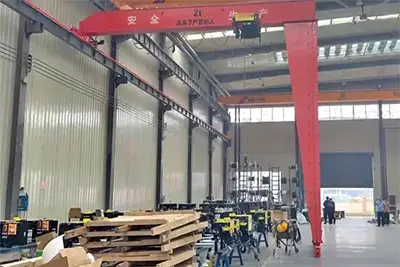
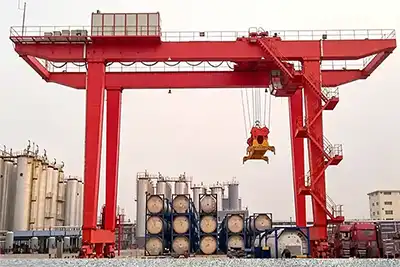
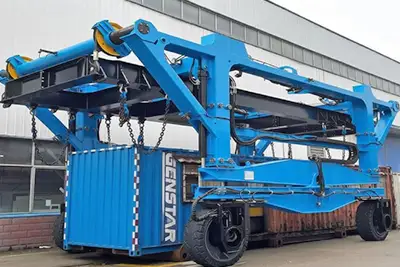
overhead crane with single girder and double girder design for sale
Environment: Matching Your Crane to Conditions
The environment where your crane operates has a big impact on its performance and lifespan. Factors like temperature, humidity, dust, chemicals, and altitude can wear down components faster than you might expect. Choosing a crane without considering these conditions can lead to frequent breakdowns and higher maintenance costs.
Key Points:
- Indoor vs. outdoor use: Outdoor cranes need protection against weather, sunlight, and rain, while indoor cranes may face dust or chemical exposure.
- Harsh conditions: Corrosive materials, extreme temperatures, or heavy dust require special coatings, sealed motors, or heaters.
- Required modifications: Consider weatherproofing, enclosures, or temperature controls to keep your crane running reliably.
Practical Tip: Gather detailed environmental data—temperature ranges, humidity levels, chemical exposure—before requesting quotes. This helps suppliers recommend the right modifications and avoids surprises later.
Buyer Question: “Which environmental factors could shorten my crane’s life, and what can I do to protect it?”
Duty Cycle & Classification: Selecting the Right Workhorse
A crane isn’t just about lifting capacity—it needs to handle the workload day in and day out without wearing out too quickly. Choosing the wrong duty cycle or classification can mean either an underperforming crane or spending extra on unnecessary overbuild.
Key Points:
- Duty cycle basics: Understand CMAA or FEM classifications to know how often and how hard the crane can work.
- Match to tasks: Production cranes running constantly need a higher duty class than maintenance cranes used occasionally.
- Avoid overbuilding: Oversized cranes may seem safer but add cost and complexity without real benefit.
Buyer Question: “How often will this crane lift near its maximum capacity, and does it match my workload?”
Capacity: Right-Sizing for Efficiency
Picking the right capacity is about more than lifting your heaviest load—it affects the crane’s lifespan, safety, and overall cost. A crane that’s too small risks frequent strain, while one that’s too large adds unnecessary expense.
Key Points:
- Include attachments: Always factor in the weight of hooks, slings, magnets, or grabs—not just the load itself.
- Slightly higher capacity: A modest increase can reduce stress on the crane, lower the duty class, and extend its service life.
- Avoid oversizing: Bigger cranes cost more in purchase, installation, and maintenance without adding real benefit.
Buyer Question: “Do I know my true maximum load, including all hooks and attachments?”
Speed: Balancing Productivity and Precision
Crane speed can make or break your workflow. Too slow, and your production drags. Too fast, and you risk accidents or product damage. The key is finding the right balance between productivity and control.
Key Points:
- Standard vs. customized speeds: Off-the-shelf speeds work for most operations, but some workflows need tailored adjustments.
- Variable frequency drives (VFDs): Smooth acceleration and deceleration reduce wear, improve safety, and make handling precise.
- Special cases: Ultra-slow speeds are useful for delicate assembly, while high-speed lifts help improve cycle times for repetitive tasks.
Buyer Question: “Do I need faster cycles for productivity or more precise handling for safety and accuracy?”
Safety & Smart Features: Protecting People and Assets
Safety isn’t optional—it’s essential. The right features not only protect your team but also reduce downtime and avoid costly accidents. Investing in smart technology can pay off in smoother operations and fewer repairs.
Key Points:
- Core safety features: Overload protection, sway control, VFDs, and radio control are critical for safe, reliable operation.
- Smart technology: Collision avoidance systems and automatic hook centering help prevent accidents and improve precision.
- Visibility and access: Proper lighting, catwalks, and maintenance platforms make inspections safer and easier.
Buyer Question: “Which features will reduce operator risk while keeping my crane running efficiently?”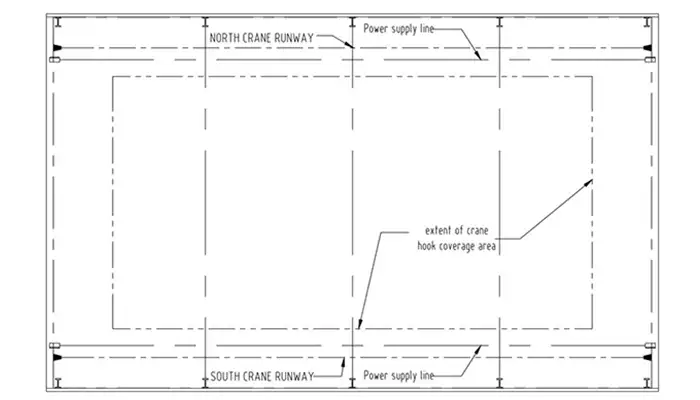
Area Coverage: Maximizing Reach & Usable Space
Making sure your crane can reach every lifting point is crucial. Poor coverage creates dead zones, forces extra handling, and slows down operations. Proper planning ensures you get the most out of your crane and your workspace.
Key Points:
- Hook approach: Understand end and side hook approaches to determine how the crane can access loads from different angles.
- Runway and span measurements: Accurate measurements of your runway and clear span prevent surprises and ensure smooth operation.
- Multiple cranes: If you plan more than one crane on a runway, careful layout avoids collisions and maximizes usable space.
Buyer Question: “Can the hook reach all the areas where I need to lift, now and in the future?”
Lift Height: Designing for Vertical Space
Lift height is more than just the distance from floor to hook—it determines what loads you can handle safely and efficiently. Ignoring vertical space limits can lead to cranes that can’t clear overhead obstacles, require awkward load handling, or even force expensive redesigns later.
Key Points:
- Measure carefully: For new installations, measure the full building height including beams, lighting, and ductwork. For existing systems, check for any overhead obstructions like cranes, hoists, or piping.
- Include product and attachment height: Don’t forget to factor in the height of the load plus any hooks, slings, or lifting devices. This ensures the crane can safely lift to the required maximum.
- Low-headroom solutions: In tight spaces, consider specialized low-headroom hoists, reduced trolley heights, or double-girder designs to maximize usable vertical space without modifying the building.
- Future-proofing: Think ahead—will taller loads or new products require more lift in the coming years? Planning for potential future needs can save costly upgrades.
Buyer Question: “What’s the highest point I need to lift to now, and what might I need in the future?”
Power Supply: Securing the Right Electrical Setup
Your crane is only as reliable as the power feeding it. A mismatch in voltage, phase, or feed location can cause downtime, frequent trips, or even damage to the crane’s electrical systems. Planning ahead avoids costly rewiring or delays during installation.
Key Points:
- Voltage and phase requirements: Confirm whether your crane needs 230V, 480V, or another voltage, and whether it requires single or three-phase power. Incorrect specs can lead to poor performance or motor burnout.
- Feed location and disconnects: Make sure the power source is positioned for easy connection and maintenance. Proper disconnects are essential for safety and quick servicing.
- Multiple cranes on one runway: If you have more than one crane operating on the same runway, plan electrical distribution carefully to prevent overloads and ensure each crane runs smoothly.
- Future capacity: Consider potential expansion—additional cranes, higher loads, or faster speeds may require extra power down the line.
Buyer Question: “Do I have enough power capacity and properly located feeds to keep my crane running reliably?”
Warranty & Service: Protecting Your Investment
Buying a crane is a long-term investment, and even the best equipment needs support to stay reliable. A solid warranty and responsive service team can prevent small issues from turning into costly downtime.
Key Points:
- Warranties: Check what’s covered—parts, labor, shipping—and for how long. Some suppliers also offer extended coverage for critical components.
- Local service teams: Fast, on-site support is invaluable. Cranes can’t wait days for repairs, so having a local technician saves time and keeps production moving.
- Inspections and maintenance: Regular inspections, preventive maintenance, and proper training for your operators prolong crane life and keep your facility compliant with safety standards.
- Training: Ensure your team knows how to operate the crane safely and perform basic checks to catch issues early.
Buyer Question: “Who will service, inspect, and train my team after installation to keep the crane running reliably?”
Conclusion
Selecting the right overhead crane means looking at more than just lifting capacity. By considering all 10 factors—environment, duty cycle, capacity, speed, safety features, area coverage, lift height, power supply, and service—you ensure a crane that fits your facility, supports your workflow, and lasts for years. Taking the time to plan now prevents costly mistakes later.
Next Steps:
- Gather accurate facility measurements and environmental data.
- Make a checklist of your lifting needs and workflow requirements.
- Consult a crane specialist to match the right model to your operation.
- Request detailed, informed quotes rather than relying on generic specs.