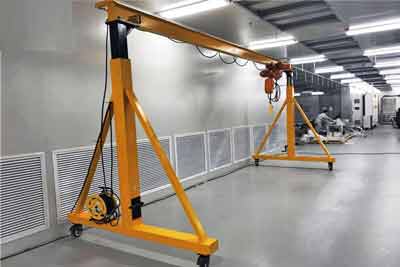
2.8 Ton Gantry Crane for Efficient Colored Steel Handling
Improve workshop efficiency with a 2.8-ton portable gantry crane. Safe, flexible, and cost-effective handling of steel coils and sheets.
Introduction
Colored steel processing workshops play a crucial role in producing roofing sheets, wall panels, and other construction materials. These workshops often handle large steel coils and cut them into precise sizes for different applications. While the work seems straightforward, anyone who has spent time in a workshop knows that moving heavy steel quickly and safely is never simple.
Common Operational Challenges
Many colored steel workshops face the same hurdles when it comes to daily operations:
- Limited space: Workshop floors are often crowded with machinery, storage racks, and partially processed steel, leaving little room for forklifts or large lifting equipment.
- Heavy coil handling: Steel coils can weigh several tons each, making manual handling impossible and forklift operations risky if the load isn’t stable.
- Frequent material movement: Coils and sheets need to be moved between cutting lines, coating stations, and storage areas multiple times per day, slowing down overall workflow.
These challenges can easily lead to delays, minor accidents, or even damage to the steel if proper lifting solutions are not in place.
The Practical Solution: 2.8-Ton Portable Gantry Crane
This is where a 2.8-ton portable gantry crane becomes very useful. Unlike fixed cranes, it doesn’t require a permanent foundation and can be adjusted or moved depending on your workflow. Its lifting capacity of 2.8 tons is ideal for handling most coils and steel sheets used in colored steel processing.
- Mobility: Move it easily across different stations without disrupting operations.
- Adjustable height: Handle different steel sizes safely.
- Compact design: Fits in tight spaces where large overhead cranes or forklifts cannot operate efficiently.
By integrating a 2.8-ton portable gantry crane into your workshop, you can reduce handling risks, save time, and make the daily workflow smoother—all without major changes to your existing setup.
Key Challenges in Colored Steel Handling
Handling colored steel in a processing workshop is more complicated than it looks. The steel may appear solid and easy to move, but the reality is that coils and sheets are heavy, awkward, and prone to damage if not handled carefully. Understanding these challenges is the first step in finding the right lifting solution.
Steel coils can weigh anywhere from one ton to several tons, while large sheets can be cumbersome to lift or maneuver manually.
- Requires precise lifting to avoid tipping or rolling.
- Needs proper equipment to prevent injuries to workers.
- Mishandling can cause dents or scratches, reducing the quality of the final product.
In most workshops, steel moves constantly between cutting, coating, and storage areas.
- Forklifts may need to stop and start repeatedly, slowing production.
- Manual handling increases fatigue and risk of accidents.
- Repeated movement without proper lifting tools increases wear on both equipment and materials.
Manual handling or using inappropriate lifting methods can easily damage steel.
- Forklifts may crush edges or leave marks on coils.
- Slips or drops during handling can result in significant material loss.
- Even minor surface damage can affect paint adhesion and product quality.
Workshop layouts are often tight, leaving little room for maneuvering.
- Large fixed cranes may not fit or may block workflow.
- Storage and processing areas compete for floor space, creating bottlenecks.
- Tight spaces increase the risk of collisions with machinery or walls.
By identifying these challenges, workshop managers can better understand why a compact and flexible solution, like a 2.8-ton portable gantry crane, can make a real difference in daily operations.
Overview of a 2.8 Ton Portable Gantry Crane
A 2.8-ton portable gantry crane is a versatile lifting solution designed to make workshop operations smoother, safer, and more efficient. Unlike fixed overhead cranes, it doesn’t require permanent installation, making it ideal for workshops that need flexibility in handling steel coils and sheets.
Definition and Key Features
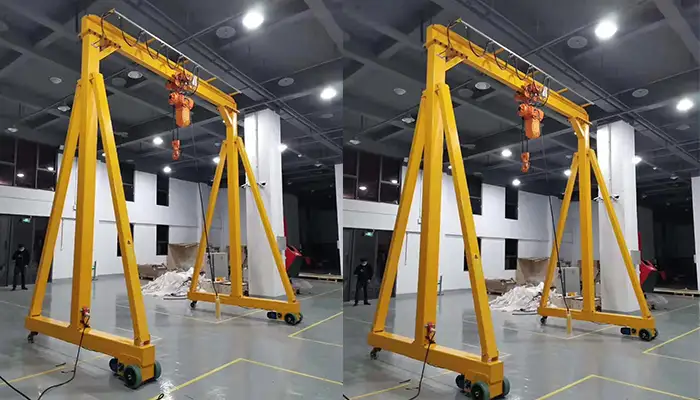
This type of gantry crane is a freestanding structure with a horizontal beam supported by two vertical legs, which are often on wheels for mobility. Its design focuses on practicality and adaptability.
- Adjustable height: Can be raised or lowered to match the size of steel coils or sheets being handled.
- Mobility: Wheels or casters allow easy movement between stations, even in tight workshop spaces.
- Compact footprint: Takes up minimal floor space, making it suitable for workshops with limited room for large machinery.
Lifting Capacity
The crane’s 2.8-ton capacity is enough for most coils and steel sheets used in colored steel processing. It handles typical workshop loads safely and efficiently, ensuring smooth operations without overloading the crane.
- Suitable for steel coils weighing up to 2.8 tons per lift.
- Can lift large sheets individually or in small bundles.
- Maintains stability even when lifting heavier or awkwardly shaped loads.
Ease of Setup and Relocation
One of the main advantages of a portable gantry crane is how quickly it can be set up and relocated.
- Minimal assembly required—can be ready for use in a few hours.
- Can be moved to different workstations as production needs change.
- No need for permanent foundations, reducing installation costs and downtime.
With its combination of mobility, adjustable height, and sufficient lifting capacity, the 2.8-ton portable gantry crane offers a practical solution for colored steel workshops looking to improve efficiency and reduce handling risks.
How a 2.8 Ton Gantry Crane Improves Efficiency
A 2.8-ton portable gantry crane isn't just a lifting device—it can actively make a workshop run smoother. By handling heavy steel more safely and efficiently, it reduces bottlenecks and keeps operations moving without unnecessary delays.
Moving steel coils and sheets is often the slowest part of the process. A portable gantry crane speeds things up and makes life easier for workers.
- Faster loading and unloading: Coils and sheets can be lifted and moved quickly between cutting, coating, and storage areas.
- Reduced reliance on forklifts or manual labor: Less dependence on forklifts means fewer delays caused by maneuvering in tight spaces, and workers are less fatigued from heavy lifting.
Workshops are rarely static; production areas change depending on the task. The portable gantry crane adapts to these changes effortlessly.
- Easy relocation: Move the crane from one station to another without disrupting ongoing operations.
- Adjustable height: Handle different sizes of steel coils and sheets safely, without improvising or risking damage.
Handling steel improperly often leads to scratches, dents, or bent edges, which lowers product quality. The crane keeps materials in good shape.
- Precise lifting and lowering: Smooth movement prevents collisions with other equipment or surfaces.
- Stable support: Coils and sheets remain steady during transport, protecting edges and surfaces.
Integrating a portable gantry crane into daily operations can make a noticeable difference in overall productivity.
- Continuous production: Minimizes delays in moving materials between processing points.
- Simultaneous operations: Multiple stations can work without interruption because the crane can be repositioned quickly, keeping material flow steady.
By improving handling speed, flexibility, and safety, a 2.8-ton portable gantry crane can directly contribute to smoother, more efficient colored steel workshop operations.
Safety and Ergonomics Benefits
Handling heavy steel coils and sheets day after day can take a toll on workers. A 2.8-ton portable gantry crane helps make lifting safer and less physically demanding, improving both workplace safety and ergonomics.
Reduced Manual Lifting
One of the biggest risks in a steel workshop is strain from lifting and moving heavy loads.
- Lower worker fatigue: The crane takes on the heavy lifting, allowing staff to focus on guiding and positioning materials safely.
- Fewer injuries: Reduced strain on backs, shoulders, and arms lowers the risk of long-term musculoskeletal problems.
Stable, Controlled Lifting
Accidents often happen when materials slip, tip, or collide with other objects. The crane provides controlled, steady lifting.
- Precise movement: Smooth hoisting reduces sudden drops or swings of heavy steel coils.
- Minimized collisions: Stable lifting helps prevent damage to materials and surrounding equipment.
- Better visibility: Operators can move materials slowly and clearly see their path, reducing accidents.
Compliance with Safety Standards
Portable gantry cranes are designed to meet industrial safety regulations for overhead lifting.
- Built-in safety mechanisms: Limit switches, lockable wheels, and load capacity ratings prevent misuse.
- Operator training: Simple operation reduces the risk of errors and unsafe handling.
- Audit-ready: Workshops can maintain compliance with local workplace safety inspections.
By reducing the physical strain on workers and providing controlled lifting, a 2.8-ton portable gantry crane not only improves efficiency but also creates a safer, more ergonomic working environment.
Cost and Operational Advantages
Investing in lifting equipment doesn’t have to be expensive, especially when compared to larger, fixed cranes or automated systems. A 2.8-ton portable gantry crane provides practical cost benefits while improving daily operations.
- Affordable compared to fixed cranes: No need for large overhead installations or structural modifications.
- Flexible for small to medium workshops: Ideal for operations that don't require a full-scale overhead crane system.
- No permanent foundation needed: The crane can be used on any flat workshop floor.
- Quick setup: Can be ready for use in hours instead of days or weeks.
- Reduced labor costs: Less manual lifting and fewer forklift operations mean less workforce fatigue and higher productivity.
- Lower material damage: Stable, controlled lifting reduces dents, scratches, and scrap losses, saving money over time.
By keeping upfront costs low and providing operational efficiency, a portable gantry crane quickly pays for itself in savings and productivity gains.
Practical Considerations for Selection
Choosing the right portable gantry crane isn’t just about lifting capacity. Several practical factors ensure the crane fits your workshop layout and workflow.
Lifting Height and Span
- Measure your workflow needs: Determine the highest point materials need to be lifted and the maximum span required to reach different stations.
- Adjustable height options: Ensure the crane can handle both small sheets and larger steel coils safely.
Load Capacity
- Assess maximum load per lift: Include a 10–20% safety margin above the heaviest coil or sheet.
- Avoid overloading: Overcapacity reduces the lifespan of the crane and increases safety risks.
Floor and Mobility Compatibility
- Floor strength and type: Confirm the workshop floor can support the crane on wheels or casters.
- Smooth mobility: Ensure the crane can move easily without obstacles between workstations.
Optional Add-Ons
- Motorized trolley: For faster, automated material movement.
- Safety locks or brakes: Prevent unintended movement during lifting.
- Weatherproof coatings: Useful for outdoor use or areas with high humidity.
Considering these practical points ensures that the portable gantry crane will operate safely, efficiently, and reliably in your specific workshop environment.
Conclusion
A 2.8-ton portable gantry crane can make a noticeable difference in the day-to-day operations of a colored steel processing workshop. By handling heavy coils and sheets efficiently, it helps reduce delays and keeps production moving smoothly.
- Improved safety: Reduces manual lifting, lowering the risk of worker fatigue and injuries.
- Greater flexibility: Easily relocates between stations and adjusts to different material sizes.
- Cost-effectiveness: Minimal installation, lower labor requirements, and less material damage save money over time.
- Faster operations: Speeds up material handling, supporting continuous production and better workflow.
For workshop managers and buyers, understanding your specific workflow needs is key. Choosing the right crane that matches your lifting requirements, floor layout, and daily material handling will ensure long-term benefits.
If you want to make your colored steel workshop safer, faster, and more efficient, a 2.8-ton portable gantry crane is a practical solution.
- Take the next step: Request a free consultation or quotation tailored to your workshop.
- Expert guidance: Suppliers can help you select the right crane configuration, optional features, and safety options to meet your exact needs.
Start optimizing your workshop operations today with a portable gantry crane that fits your workflow.