Buy Overhead Crane Sets in Bulk — Save Time and Money Daily
Identical cranes simplify maintenance, streamline operations, cut procurement headaches, reduce downtime, and lower long-term costs across busy industrial facilities daily.
Standardized Crane Systems: Why Buying in Sets Saves Time and Cost
Introduction
When a factory or workshop needs cranes, it’s not just about buying one piece of equipment. Often, several cranes are needed to handle different tasks or cover multiple work areas. Buying cranes is a big investment, and the way you purchase them can impact costs, maintenance, and day-to-day operations down the line.
Standardized crane systems simply mean buying multiple cranes that are the same or very similar in design, capacity, and components. Instead of buying different cranes for each task or area, companies purchase sets of identical cranes.
Why does this matter? Well, there are practical benefits that go beyond just the initial price tag. This article will walk you through why buying cranes in sets can save time and money when it comes to maintaining the cranes, training the operators, and managing procurement.
- What exactly makes a crane system “standardized”?
- How does buying multiple identical cranes help with maintenance and repairs?
- What operational advantages come from having uniform cranes?
- Why can procurement become easier and less costly?
By the end, you’ll understand why many businesses choose to buy cranes in sets rather than individually, and how this approach can make your life easier if you’re in charge of crane purchasing.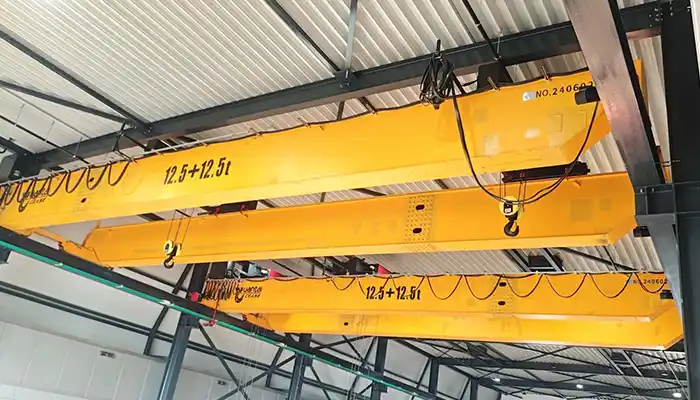
12.5 + 12.5 ton overhead crane double girder 2 sets for sale Poland
What Are Standardized Crane Systems?
Standardized crane systems are basically sets of cranes that share common features and specifications. This means the cranes are built with the same design, capacity, and parts. Instead of customizing each crane for a specific spot or job, you use one proven model over and over.
The idea is to keep things simple and consistent across your facility or multiple locations. This can make a big difference when it comes to maintenance, operation, and even budgeting.
Here’s what usually gets standardized:
- Design: The overall crane structure, like single girder or double girder types, stays the same across the set.
- Capacity: All cranes in the set lift roughly the same weight — say 5 tons, 10 tons, or 20 tons — depending on your needs.
- Components: Motors, hoists, control panels, and safety devices are consistent, making it easier to stock spare parts.
Common examples of standardized crane sets include:
- Single Girder Overhead Cranes: Ideal for light to medium loads, these are simpler cranes with one main beam. They are common in workshops and warehouses.
- Double Girder Overhead Cranes: Used for heavier loads, they have two main beams and can cover larger spans.
- Electric Hoists: These can be standardized on capacity and speed, often paired with single or double girder cranes.
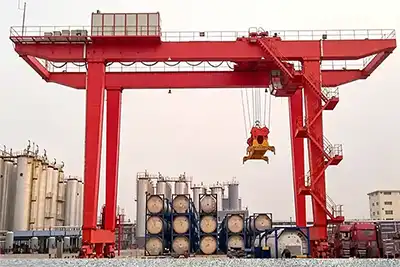
- Gantry Cranes: Mobile or fixed cranes that use the same hoist and control units across a set for outdoor or yard applications.
How Standardization Differs From Custom, One-Off Purchases
When companies order a custom crane, it’s built specifically for one job or location. That might sound good at first, but it comes with some challenges:
- Each crane needs its own parts and drawings.
- Maintenance teams need to learn how to service different models.
- Spare parts have to be ordered and stored separately.
- Operators may struggle when switching between cranes with different controls or handling.
Standardized cranes, on the other hand, use the same blueprint. The parts fit any crane in the set, and the whole team becomes familiar with one system. This reduces downtime, simplifies training, and often cuts costs over the crane’s lifetime.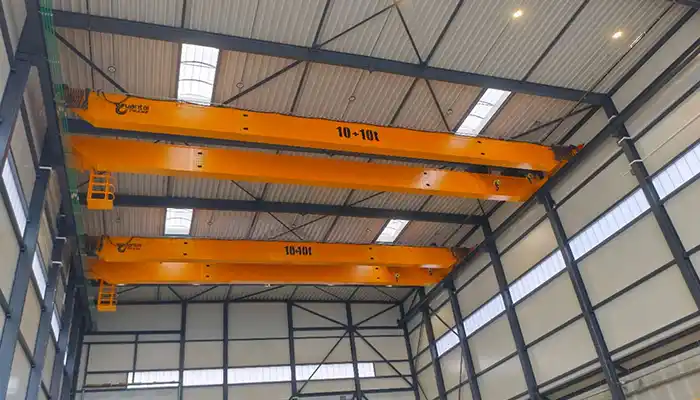
10 + 10 ton overhead crane double girder 2 sets for sale Poland
Advantages of Buying Cranes in Sets
Buying cranes in sets isn’t just about getting multiple machines at once. It brings real benefits in how you maintain, operate, and buy those cranes — benefits that add up over time.
Maintenance Efficiency
When your cranes are all the same model, maintenance becomes a whole lot easier. You don’t have to juggle different parts or worry about which crane needs what specific component.
- Uniform spare parts inventory reduces storage costs and complexity
Instead of stocking a wide variety of spare parts for different cranes, you only need to keep a limited set of parts. This cuts down on storage space and the risk of running out of critical components. - Simplified training for maintenance staff on identical equipment
Technicians only need to learn one system. That means they can fix problems faster and with more confidence. - Faster troubleshooting and repairs due to familiarity
When maintenance staff are familiar with the cranes, identifying and solving issues happens quicker, reducing downtime. - Consistent maintenance schedules and procedures
You can apply the same routine checklists and maintenance plans across all cranes, making management straightforward and reliable.
Operational Consistency
Standardized cranes create a smooth working environment for operators and supervisors alike. When everyone works with the same equipment, it reduces confusion and mistakes.
- Operators trained on one crane type can seamlessly operate all units
Training becomes faster and more effective. Operators can move between cranes without a learning curve. - Uniform control systems and handling characteristics improve safety
Knowing exactly how the crane responds lowers the chance of operator error, which keeps both people and products safe. - Predictable performance across multiple workstations or areas
You get reliable, repeatable crane behavior whether it’s in one bay or spread across several. - Easier scheduling and load balancing between cranes
When cranes are interchangeable, you can assign jobs based on availability, not compatibility, making workflows more flexible.
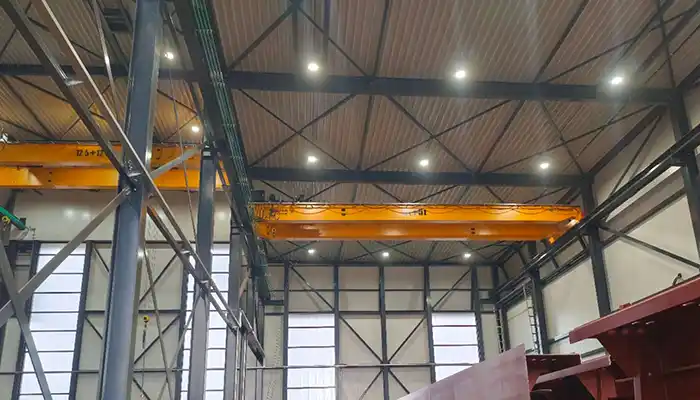
5 + 5 ton overhead crane double girder 2 sets for sale Poland
Procurement and Cost Benefits
Buying several cranes at once usually means you get more value for your money, with less hassle.
- Volume discounts from manufacturers and suppliers
Ordering in bulk often qualifies you for better pricing — saving money upfront. - Reduced engineering and design costs when replicating existing models
Once you have a proven design, there’s no need to spend extra on custom drawings or engineering work for each crane. - Streamlined procurement process with single vendor contracts
Dealing with one supplier for multiple units simplifies ordering, invoicing, and communication. - Lower shipping and installation costs through batch orders
Shipping cranes together cuts freight expenses. Similarly, installing multiple cranes in one project can reduce labor and setup time.
In short, buying cranes in sets means smoother maintenance, safer operations, and smarter spending. The advantages build on each other, making standardized systems a smart choice for many businesses.
Potential Challenges and How to Overcome Them
While standardized crane systems offer many advantages, they’re not a one-size-fits-all solution. In some cases, going with identical cranes may not suit every need within a facility. But most of these issues can be managed — if you plan ahead.
Let’s look at some common challenges and how to deal with them effectively.
Limitations of Standardization
Standardization can hit limits when individual work areas have very different requirements. For example, one bay might need a crane with higher lifting height due to taller equipment, while another may require a longer span.
Possible issues:
- Varying building structures or clearance heights
- Uneven loads or unique product sizes in certain zones
- Different crane usage frequency (e.g., heavy-duty vs. occasional use)
How to address it:
- Use standardization in clusters — group cranes with similar operating conditions and standardize within those groups.
- Consider partial standardization — same hoist and controls, but customized girder lengths or lifting heights as needed.
- Work with your crane supplier to balance consistency with practicality. Some variation is okay if the core components stay uniform.
Flexibility Concerns — What If Needs Change Later?
Another concern is whether standardized cranes can adapt if your production process changes. It’s a valid worry, especially in industries where product lines or workflows evolve.
To maintain flexibility:
- Choose modular crane systems. Many modern cranes offer modular options — meaning components like hoists, end trucks, and controls can be swapped or upgraded later.
- Use adjustable features where possible, such as variable speed drives or remote-control upgrades that can be added later.
- Design with expansion in mind. For example, if you might later extend a workshop, consider specifying cranes that can accommodate runway extension or additional hoists.
Standardized doesn’t have to mean rigid — it just needs to be thoughtfully planned.
Importance of Initial Assessment
The key to successful standardization is getting the specifications right from the beginning. If the base crane spec doesn’t fit all core needs, then the benefits of standardization could be lost or even cause inefficiencies later.
What to do early in the planning phase:
- Conduct a thorough site and operations assessment — look at span, headroom, lifting height, power supply, and clearance in every bay.
- Involve both maintenance and operations staff — they can offer input on practical handling, wear points, and daily usage patterns.
- Define the worst-case scenario — the most demanding load, longest lift distance, or tightest operating space — and ensure the standard model can handle it.
By choosing a base design that covers 80–90% of your application needs, you can standardize with confidence and tweak only where absolutely necessary.
So while standardization has its limits, most challenges can be worked through with careful planning and smart choices. The goal isn’t to force one model into every corner, but to build a system that makes sense for your operations — without overcomplicating things.
12.5 + 12.5 ton overhead crane double girder 2 sets for sale Poland
Recommendations for Buyers
Before you place a bulk order, take a step back and map out exactly what you need. A little groundwork now prevents costly surprises later.
- Assess operational needs to shape your standard crane specs
Make a simple table of the heaviest loads, tallest lifts, and widest spans you handle. Compare those figures across all bays. Pick a base crane spec that comfortably covers the toughest bay, then verify it still fits everywhere else. If one or two bays push the limits, decide whether to standardize in clusters or allow a minor variant for those outliers. - Tap your supplier early to tweak a “standard” model
Most crane makers keep a catalog of proven designs. Ask them what options can be swapped without scrapping the whole platform—longer girders, heavier-duty hoists, or different control packages. Small changes cost much less than a ground-up custom build, yet they keep the key components (motors, brakes, electrics) uniform. - Plan spare-parts and maintenance logistics at the start
List every wear part—wire ropes, contactors, brake linings—and set minimum stock levels. Order a starter kit of spares with the cranes so you’re covered from day one. At the same time, build a shared maintenance calendar; identical cranes can be serviced together, saving labour and shutting down only once. - Look at total cost of ownership, not just the purchase price
Add up parts inventory, training hours, downtime risk, and energy use over ten years. Standardized sets usually win on those hidden costs even if the sticker price is only slightly lower. Ask your finance team to run the numbers; a small premium up front can pay for itself many times over in reduced interruptions and simpler upkeep.
Follow these steps and you’ll choose a crane set that fits today’s workload, adapts to tomorrow’s tweaks, and stays economical for the long haul.
Conclusion
When it comes to crane procurement, standardization isn’t just about buying in bulk — it’s about buying smart. As we’ve covered throughout this article, choosing to purchase cranes in matched sets can offer solid, long-term benefits across maintenance, operations, and cost management.
Let’s recap the key takeaways:
- Maintenance becomes simpler and faster
With standardized systems, you reduce the variety of spare parts needed, make training more efficient for technicians, and speed up troubleshooting thanks to equipment familiarity. - Daily operations run smoother
Operators can work across multiple stations without adjusting to different controls or handling quirks. Performance stays consistent, safety improves, and task planning becomes more flexible. - Procurement is more efficient and cost-effective
From volume discounts and easier vendor management to shared engineering resources and reduced installation costs — buying standardized cranes just makes the whole process more streamlined.
If you’re planning to install multiple cranes across your facility — or even at different locations — it’s well worth sitting down and revisiting your crane procurement strategy. Instead of piecing together one crane at a time, think in sets. What functions are repeated across your operation? Where can you benefit from using the same system more than once?
Standardized crane systems don’t just save money — they reduce complexity, increase uptime, and support long-term productivity. For any business that wants to grow while keeping things manageable, this approach offers a practical path forward.