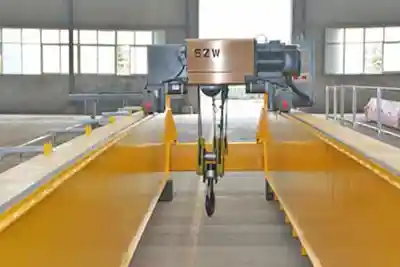
How to Choose and Set Up a 20 Ton Overhead Crane for Your Plant
Introduction
Choosing the right 20-ton overhead crane for your plant isn't just about picking a heavy-duty lifting machine. It's about making sure your operations run smoothly, safely, and cost-effectively for years to come. A poorly matched crane can lead to frequent breakdowns, increased maintenance costs, and even safety risks for your team. On the other hand, the right crane, properly set up, keeps your workflow efficient and protects your investment.
Overhead cranes play a central role in handling heavy loads in factories, warehouses, and workshops. For plant managers, engineers, and buyers, understanding how to select and set up a 20-ton crane is crucial. You need to consider load capacity, workshop layout, operational frequency, and safety standards—not just the initial price tag.
Why Proper Setup Matters
- Safety First: Incorrect installation or wrong crane choice can lead to accidents, damage to goods, or injury to personnel.
- Efficiency in Operations: A well-planned crane reduces material handling time and increases overall productivity.
- Long-Term Costs: Investing time in proper setup minimizes repair costs and downtime, saving money over the crane's life.
This guide is written specifically for plant managers, engineers, and buyers who want practical, actionable advice. It focuses on helping you make decisions that fit your plant's needs—not just technical specs, but real-world operations.
Understanding Your Lifting Needs
Before you even start comparing crane models, it's essential to understand what your plant actually needs. Lifting requirements vary widely depending on the type of material, how often it's moved, and the working environment. Getting this right upfront makes a huge difference in efficiency, safety, and long-term costs.
Assess Load Requirements
Not all loads are created equal. Knowing both the maximum and average weight your crane will handle is the first step.
- Maximum Load: This is the heaviest single item your crane will lift. Always add a safety margin—typically 10–20% above your heaviest load.
- Average Load: Knowing the typical weight helps in selecting the right hoist speed and reducing wear on components.
- Load Dimensions and Shape: Long, bulky, or irregularly shaped items require special attention. They may need custom hooks, spreader bars, or adjustable lifting beams to prevent swinging or imbalance.
Frequency of Operation
How often your crane operates matters just as much as what it lifts.
- Light Duty: Occasional lifting, a few times per day. Standard hoists and trolleys may suffice.
- Moderate Duty: Multiple lifts per day, usually within one shift. Look for components rated for repeated use.
- Heavy Duty: Continuous lifting across multiple shifts. Requires robust cranes with durable hoists and more frequent maintenance schedules.
Type of Material Handling
Different materials require different handling strategies. The right attachments and crane configuration can save time and improve safety.
- Common Materials: Pallets, steel plates, machinery, molds, containers, or bulk materials.
- Attachments: Consider hooks, magnets, grabs, or lifting beams depending on load type and shape. The correct choice reduces load damage and operator fatigue.
- Special Handling Needs: Fragile, hot, or coated items may need extra precautions such as heat-resistant slings, padded clamps, or custom lifting solutions.
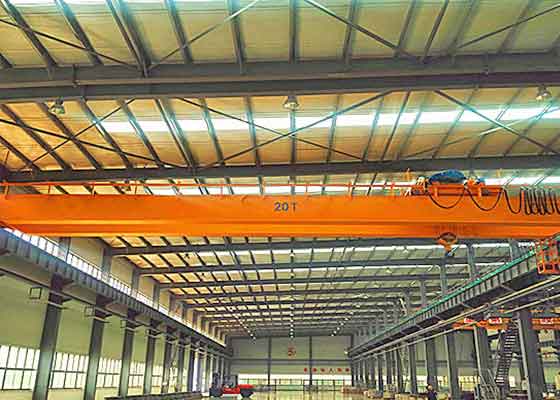
Key 20 Ton Overhead Crane Types
Choosing the right crane type is one of the most important decisions you'll make. The type you select affects installation, operating efficiency, and long-term maintenance. Let's break down the main options for a 20-ton capacity crane.
Your choice on 20 ton overhead cranes here mainly depends on span, lifting height, and floor space.
Single Girder Overhead Cranes 20 Ton :
- Span & Height: Typically used for shorter spans and lower lifting heights.
- Space Efficiency: Requires less headroom and is lighter, making installation easier.
- Pros: Lower cost, easier maintenance, lighter structure.
- Cons: Limited lifting height and capacity flexibility; less suitable for very heavy or wide loads.
Double Girder Overhead Cranes 20 Ton :
- Span & Height: Better suited for longer spans and higher lifting heights.
- Load Capacity: Can handle heavier, bulkier loads more safely.
- Pros: Stronger, more stable, can support higher-speed operation.
- Cons: Higher upfront cost, more complex installation, requires more headroom.
Where your crane will operate—indoors or outdoors—plays a big role in choosing the type.
Bridge Cranes (Overhead Cranes) 20 Ton :
- Installation: Mounted on fixed runway beams inside a building.
- Use Cases: Ideal for factories, workshops, and warehouses.
- Pros: Protected from weather, quieter, and can operate continuously in indoor settings.
- Cons: Limited to fixed locations; installation can be more involved.
20 Ton Gantry Cranes (Outdoor or Mobile Cranes):
- Installation: Stand-alone crane with legs that move on ground rails.
- Use Cases: Shipping yards, construction sites, or areas without permanent overhead structures.
- Pros: Flexible location, can span outdoor spaces, mobile options available.
- Cons: Exposed to weather; may require more maintenance; less precise for delicate lifting.
Sometimes standard cranes aren't enough. Certain environments require additional customization:
- Weatherproof Cranes: For outdoor use, exposed to rain, sun, or dust.
- Explosion-Proof Cranes: For hazardous environments with flammable gases or dust.
- Temperature-Controlled Cranes: For extremely hot or cold environments where standard components may fail.
Selecting the Right Hoist and Trolley
- Lifting Speed: Some hoists offer variable speeds for delicate or precise operations. Fast lifts are ideal for high-volume tasks, but slower speeds may be safer for heavy or irregular loads.
- Duty Cycle: Indicates how often the hoist can safely operate in a set period. Light-duty hoists may suffice for occasional lifts, but continuous operations require heavy-duty cycles.
- Safety Features: Look for overload protection, limit switches, anti-sway mechanisms, and thermal protection. These prevent accidents and protect the hoist from damage.
- Standard Trolleys: Suitable for most indoor applications with regular headroom and spans.
- Low-Headroom Trolleys: Ideal when the building has limited overhead clearance. They maximize lifting height within tight spaces.
- Customized Trolleys: For unique plant constraints, such as curved rails, special attachments, or heavy-duty continuous operations.
- Compatibility: Ensure the hoist fits the crane's girder type (single or double) and the trolley properly aligns with the runway rails.
- Maintenance & Durability: Easy access to motors, gears, and brakes simplifies maintenance. Choose components known for long service life and spare part availability.
- Operational Fit: Consider how operators will use the crane daily. Smooth movement, responsive controls, and minimal vibration improve efficiency and reduce fatigue.
Electrical and Control Systems
- Voltage: Check whether your facility provides the correct voltage for the crane and hoist motors. Incorrect voltage can lead to poor performance or equipment damage.
- Phase: Most industrial cranes use three-phase power, but confirm compatibility with your existing electrical system.
- Frequency: Ensure the crane's motor frequency aligns with the local supply to avoid overheating or inefficient operation.
- Pendant Control: A wired remote that hangs from the crane; reliable and cost-effective for indoor use.
- Radio Remote Control: Offers mobility and flexibility; operators can move freely while maintaining full control.
- Cabin Control: Suitable for large plants or long-span cranes, providing operators with a full view of the workspace and precise handling.
- Overload Protection: Prevents the crane from lifting beyond its rated capacity, avoiding structural stress or accidents.
- Anti-Sway Devices: Reduce load swing, improving safety when lifting irregular or long loads.
- Emergency Stops: Instantly halts crane operation in case of hazards or unexpected situations.
Workshop and Installation Requirements
- Building Height: Ensure there's enough clearance for the crane's lifting height and operator movement. Low ceilings may require low-headroom cranes or customized solutions.
- Runway Beam Strength: The beams that support the crane must handle both the crane's weight and the maximum load. Reinforcement may be necessary for older structures.
- Floor Support: For gantry cranes or mobile equipment, the floor must be level and strong enough to support concentrated loads. Uneven or weak flooring can lead to instability.
- Span: Measure the distance between runway rails to determine the correct bridge length. Too short limits coverage; too long may be wasteful and expensive.
- Lifting Height: Calculate the maximum height needed for the tallest load plus clearance for hooks or attachments.
- Clearance & Obstructions: Check for overhead lights, ventilation ducts, and other obstacles that could interfere with crane travel or hoist operation.
- Runway Beams First: Install and align runway rails precisely; this sets the foundation for safe crane operation.
- Crane Structure: Lift and assemble the bridge, girders, and end trucks. Ensure all connections are secure.
- Hoist and Controls: Attach the hoist, trolley, and control systems. Perform testing and fine-tuning before commissioning.
Safety and Compliance
- ISO Standards: Cover design, performance, and testing for overhead cranes to ensure reliability and safety.
- CE Certification: Required for cranes sold in the European market, indicating compliance with essential safety and health regulations.
- Local Codes: Always check national or local safety regulations, as they may include additional requirements for installation, operation, and maintenance.
- Daily Checks: Visual inspections of hoist, trolley, hooks, and control systems before operation.
- Periodic Maintenance: Lubrication, gear inspection, motor checks, and structural integrity assessments at intervals recommended by the manufacturer.
- Record Keeping: Maintain logs of inspections, repairs, and parts replacement to comply with regulations and track crane performance.
- Load Testing: Lift a test weight at or above the crane's rated capacity to verify performance and structural integrity.
- Operational Testing: Check all motions—lifting, lowering, trolley travel, and bridge movement—to ensure smooth and safe operation.
- Commissioning: Confirm that safety devices, limit switches, and emergency stops work correctly before handing over to operators.
Cost Considerations
- Crane Structure: Bridge girders, end trucks, and framework. Size, span, and material quality affect price.
- Hoist: Electric hoists vary in speed, duty cycle, and lifting mechanisms; higher-quality hoists cost more but last longer.
- Trolley: Standard or low-headroom trolleys add to the cost, depending on design and capacity.
- Controls: Pendant, radio, or cabin control systems with integrated safety features impact cost.
- Automation: Programmable movements, sensors, and anti-collision systems.
- Special Hooks or Attachments: Lifting beams, magnets, grabs for unique loads.
- Safety Devices: Overload protection, anti-sway, and limit switches enhance safety but require extra investment.
- Shipping Costs: Depend on crane span, weight, and whether it fits in standard containers or requires special transport.
- Installation Fees: Labor, crane assembly, and commissioning add to the total cost.
- Infrastructure Preparation: Runway reinforcement or floor leveling may be necessary for safe operation.
- Durability: Higher-quality materials and components reduce maintenance and downtime.
- Energy Efficiency: Modern motors and controls can lower operating costs.
- Resale or Upgrade Potential: Modular or customizable cranes can adapt to future plant changes, improving long-term value.
Choosing the Right Supplier
- Reputation: Look for reviews, case studies, or client references to gauge reliability.
- Certifications: ISO, CE, and other relevant certifications indicate compliance with international safety and quality standards.
- Factory Capabilities: Ensure the supplier can handle custom designs, large orders, and high-quality fabrication for heavy-duty cranes.
- Industry Expertise: Whether it's steel, plastic manufacturing, shipbuilding, or heavy machinery, experience matters.
- Customized Solutions: Suppliers with a track record in your sector can provide attachments, hoist types, or structural modifications tailored to your operation.
- Maintenance Support: Quick response to service requests keeps downtime minimal.
- Spare Parts Availability: Easily accessible parts reduce repair time and costs.
- Training: Some suppliers provide operator and maintenance training, improving safety and efficiency.
- Factory Visit: Verify production quality, meet engineers, and inspect equipment firsthand.
- Online Consultation: For international buyers, video calls and digital layout reviews can save time and clarify technical details.
Planning for Future Needs
- Higher Load: Ensure the crane structure and hoist can be upgraded or replaced to handle heavier items in the future.
- Additional Spans: Check if the runway can be extended or additional cranes can be added for increased coverage.
- Multiple Cranes: Plan for potential simultaneous operations to prevent interference and maximize workflow efficiency.
- Interchangeable Components: Hoists, trolleys, and controls can be replaced without dismantling the entire crane.
- Automation Ready: Consider systems that can be upgraded to semi-automatic or fully automatic operations.
- Custom Attachments: Ensure future load types can be handled with adaptable hooks, grabs, or lifting beams.
- Maintenance Planning: Schedule preventive inspections and parts replacement to extend service life.
- Spare Parts Strategy: Keep essential parts in stock to minimize operational interruptions.
- End-of-Life Planning: Understand expected crane lifespan and plan for eventual replacement or major upgrades.
Step-by-Step Setup Checklist
- Measure your building's height, width, and floor strength to confirm it can safely accommodate the crane.
- Conduct a detailed load study to determine maximum and average lifting requirements, including unusual or oversized items.
- Double-check that the selected crane type—single girder, double girder, bridge, or gantry—matches your operational needs.
- Ensure the span, lifting height, and hoist capacity are sufficient for current and future tasks.
- Verify power supply compatibility: voltage, phase, and frequency.
- Test all safety systems, including overload protection, limit switches, anti-sway devices, and emergency stops.
- Confirm that control methods (pendant, radio, or cabin) are functioning properly.
- Perform empty test runs along the full span to check smooth operation of the bridge and trolley.
- Conduct load tests with gradually increasing weights to ensure stability and performance.
- Train operators on safe handling, controls, emergency procedures, and routine inspections.
- Perform final inspections and adjustments to the crane and hoist.
- Ensure documentation, certificates, and maintenance schedules are provided.
- Officially hand over the crane for full operation with a clear understanding of responsibilities and safety procedures.
Conclusion
Setting up a 20-ton overhead crane is more than just buying heavy equipment—it's about making smart choices that affect safety, efficiency, and long-term costs. Every step, from understanding your lifting needs to selecting the right hoist and control system, matters.
Key Takeaways
- Plan Ahead: Evaluate load requirements, workshop layout, and operational frequency before selecting a crane.
- Prioritize Safety: Follow standards, install safety systems, and schedule inspections to protect both personnel and equipment.
- Think Long-Term: Choose durable components and plan for maintenance to maximize uptime and return on investment.
- Work with Experts: Professional guidance ensures proper setup, operator training, and smooth commissioning.
With careful planning and the right support, your 20-ton crane will deliver reliable, efficient, and safe material handling—today and for years to come.